Top Chiropractor in San Leandro, CA

San Leandro Chiropractor

  • About Our Practice
  • What is Chiropractic?
  • SERVICES
    • Personal Injury
    • Cold Laser Therapy
    • Massage
    • Ultrasound
    • Electric Stimulation
    • Sports Injury
    • Workers Compensation
  • Testimonials
  • FAQs
  • Locations
  • CONTACT US
  • New Patient Forms
  • Nutrition Store
  • Tele Chiropractic Health
  • Memberships
  • Home

Powered by Genesis

Questions/Answers #1-#5

August 17, 2010 by drburt

#1 Falling asleep on arm numbness?

Lately I have been waking up just about every night with a tingling, numb arm because I have been falling asleep on it. I figure it becomes like this because the circulation is cut off. Can this be potentially dangerous or hint toward something of greater significance and severity?

Answer:

Thank you for visiting and asking a question. Sleeping for a prolonged period of time on your arm will cut-off a blood circulation to your upper extremity. As a result you will experience symptoms such as: tingling, numbness and loss of sensation. Central Nervous System (CNS – Brain) has a unique defense mechanism. When it senses that your body is in danger it will alarm you automatically. In your particular case your CNS sent you a wake up message. This is not dangerous if it happens only because of the sleeping position. You have to try to change sleeping positions and patterns and the problem should go away on its own. However, if you have something like TOS (Thoracic Outlet Syndrome) misaligned Clavicle and even Subluxated Vertebrae in the early stage, the symptoms you experience could be because of these conditions. Please have yourself checked by a local chiropractor when you get chance. Hope you feel better.

#2 My ankle is the size of a softball. Help?

Today at camp I rolled my ankle pretty bad in one of my games. It hurts so bad when I stand on it for even a second :/ What are some tips and pointers you can give me to ensure a speedy recovery? And have you ever sprained an ankle really bad before??? Your help will be greatly appreciated thank you!! 🙂

Answer:

Hello,                                                                                                                                                                                                                                                                                                                                                                                                                                                                The severity of your injury depends on how badly you have hurt the soft tissue that supports your ankle. From you description it sounds like it is pretty severe due to the size of the swelling you have described. At this point and time I would use ice – 15 minutes on and 45 minutes off every waking hour. This will help to keep inflammation under control. Pick up your phone and make an appointment with your orthopedist or local chiropractor. Most likely your doctor of choice will have XRAYS done on your ankle and order MRI. XRAY will help to rull out a potential fracture and MRI will help to see how sever is the sprain/strain of your ankle. When diagnosis is established you should start rehabilitation process. Assuming you did not rapture your ligaments or tendons I would recommend the following – PT modalities such as Erchonia Cold Laser PL 5000, Ultrasound, and Electric Muscle Stimulation followed by deep tissue massage from CMT.

If your tendon or ligament has severe tear arthroscopic surgery is inevitable.

#3 I thought I pulled a muscle but….?

A couple of weeks ago I was at the gym as usual running on the treadmill, towards the end of my session, I started to feel a pain which is centered on my left buttock. Since then I have not been able to run at all as it is too painful & sometimes I can feel a discomfort just walking around normal or sitting.
At first I thought i pulled a muscle but since it’s now been two weeks… I think it is probably something else.
Thanks

Answer:

From your description it sounds that you have Sacroilliac Joint (SI) misalignment. When SI joint is subluxated symptoms will get worse upon walking. The reason why pain level goes up is because SI joint plays a very important and active biomechanical role in a walking process.

You can self diagnose if your SI joint is misaligned. Stay in front of the mirror with your eyes closed and march in one place for 5 seconds. When you are done marching open your eyes and look at your – 1) ear level, 2) shoulder level, 3) hip level. If one side of your hip is higher than the other your SI joint is misaligned. An even better way is to have someone else take a digital photo of yourself with your eyes closed. You will be able to see it for yourself how the shoulders and neck compensate for your SI joint problem. I would suggest to see your local D.C. and fix the problem in a couple of sessions.

#4 A Fourth Sprained Ankle?

I sprained my ankle twice in the past year. One time I slid on ice and sprained on side in late February and then in March sprained the other side as well as the first side. During June I wore an ankle stabilizer so I would not injure it again in PE but in July the pain came back and went away in a few days. Now I can’t really walk that great on it. I told my Mom but she says it’s fine. After injuring it in Feb and March I was prescribed physical therapy but it isn’t covered by insurance unless it follows a surgery. Does anyone think I may have injured it for a fourth time??
~~~Sorry for the long description.~~~

Answer:

Most likely you have a flare up of an old injury that has never been properly rehabilitated. Weak ligaments and tendons are very easy to injure again. Post traumatic soft tissue fibrosis makes your soft tissue less elastic. Since you do not have insurance I would suggest to find local CMT get some deep tissue done on your ankle. MRI of your ankle would tell the entire story, but it is very expensive. Also Cold Laser therapy by Erchonia PL 5000 and Ultrasound will be able to get some good results. Those modalities should be available in your local D.C. office.

#5 Should I still work if I have a herniated Disc in my back?

I just had an MRI done and found out not only do i have a disc protrusion in the lumbar section of my lower back, I also have chronic arthritis in my spine and degenerative disc disease. Is it good for me to continue at a job that I have to lift heavy objects repeatedly?

Answer:

Repetitive heavy lifting will accelerate the degeneration of your lumbar disc and osteoarthritis. As a result it will cause more pain and your ability to perform Activities of Daily Living. It would be great if you could find a different place of employment that does not require repetitive lifting. You can also ask your employer to provide a modified duty for you if such is available.


Filed Under: Low Back Pain, Modalities, Neck Pain, Questions/Answers, Soft Tissue Injury, Spine Tagged With: ankle, answer question, answering, answers, arms numbness, arthroscopy, back, blood circulation, burt, defense mechanism, fall asleep, injuries, massage, medicine, orthopedic surgery, questions, sacroiliac joint, sleeping positions, spinal disc herniation, sprain, sprained ankle, surgery, thoracic outlet syndrome

13 Facts for Chiropractic and Wellness Care

August 16, 2010 by drburt

In medicine, there are different ways to treat a patient. Some go for a surgery and this is usually the case when the patient’s problem cannot be resolved by other means. Surgery is the last resort with any injury or chronic pain. Some go for physical therapy while others prefer the chiropractic treatment. Many people utilize chiropractic services on a daily bases. However, how many people understand the theory scientific explanation behind chiropractic treatments. The philosophy in chiropractic care is that our body has the ability to heal itself without any medications. Our body naturally has the capacity to heal. It is also said that every few years, we get a completely new body. Our skin shed to make way for new skin and so do our organs but it does take awhile and with this knowledge we know that our body can really heal itself. It is the human spine that forms the foundation of our body and when it’s in the right position and there are no hindrances to it, we are at our best shape both in mind and body. The goal of chiropractic treatment is to achieve healing by regulating and maintaining a stable condition for our body.

1. Chiropractic Care Focuses on Health and Optimal Function

  1. Chiropractic offers a holistic approach
  2. The patient is the center of care, not a disease or symptoms
  3. The goal of care is to achieve a more effective life, to restore & maintain full function & well being

The Continuum of Health:

       ↑      Optimal Health                                                                                    

↑      Fitness           

↑      Good Function      

●      No Symptoms  

↓      Minor Symptoms/Dysfunction

↓      Moderate Symptoms/Dysfunction/Pathology

↓      Sever Symptoms/Pathology/Disease

↓      Death

2. Health  is More Than the Absence of Symptoms, Health is Viewed in Positive Terms of

  1. Human Potential
  2. Quality of life
  3. Optimal Function
  4. Resistance to disease
  5. Vitality
  6. Strenght
  7. Endurance
  8. Balance
  9. Coordination 

3. Patients and Chiropractors Work Actively Together to Maintain Health

  1. Health care is a dynamic process & a cooperative effort
  2. Patient education & self-care are important goals
  3. Patients are empowered to take responsibility & control of their own health

4. Symptoms Don’t Tell the Whole Story:

  1. Many problems arise gradually & symptoms appear only when problems are advanced
  2. Wellness care helps detect & correct problems at an early stage by restoring & maintaining normal function & biomechanics
  3. Good functioning muscles & joints are healthier & more resistant to injury, illness or degeneration. 

5. Chiropractic Care Focuses on a Natural Approach

  1. Chiropractic uses natural & conservative methods to promote the body’s own healing capacity
  2. It encourages healthful living: good nutrition, exercise, stress management & posture. 

6. Regular Chiropractic Care Helps

  1. Restore & Maintain full range of motion
  2. Promote full function
  3. Improve biomechanics
  4. Optimize performance & coordination
  5. Maintain joint stability
  6. Induce a sense of well-being & relaxation
  7. Improve nutrition to discs & other joints
  8. Reduce the risk of injury & degeneration 

7. Motion and Nutrition of Discs and Joints

  1. Chiropractors check the spine regularly to evaluate the motion of joints
  2. Good motion is essential for the health & nutrition of discs & joints because it permits the exchange of nutrients, fluid & waste
  3. Without movements, discs & joints may degenerate quickly
  4. Motion also reduces the formation of fibrosis (scar tissue)
  5. Fibrosis occurs in motionless joints & can lead to stiffness & degeneration 

8. Loss of Motion Can Occur Without Pain or Symptoms

  1. A chiropractic exam can detect disturbed motion & mechanics whether there are symptoms or not
  2. Through adjustments & exercises, motion and nutrition can be restored & maintained 

9. Coordination and Control of Muscle Tone, Balance and Joint Stability

  1. Restricted, painful injured or degenerated joints transmit information to the nervous system which is not harmonious with input from other muscles & joints
  2. This disturbs coordination, fine motor control & joint stability
  3. Chiropractors identify such joints and use adjustments & exercises to help normalize sensory input, function & motion
  4. This improves agility, balance, coordination, stability & fine motor control 

10. Joints Can Have Disturbed Biomechanics Without Pain or Other Symptoms

  1. Disturbed biomechanics can:   a) Alter load distribution, Increase risk of injury, b) Accelerate degeneration, c) Reduce optimal performance
  2. Chiropractors identify such joints & by adjustments, help restore normal biomechanics and load distribution
  3. This helps optimize function & may reduce the risk of future problems or injuries 

11. Well-Being and Relaxation

  1. In daily life we are exposed to many stresses that can make us tense
  2. This tension can be stored in our bodies
  3. Chiropractors check for signs of tension & by adjustments, help relax muscles, restore motion, & reduce stress
  4. Relaxation & a sense of well- being are very common results of chiropractic care 

12. As a partner with Exercise and Sports

  1. Chiropractic care isn’t a substitute for exercise but a valuable partner that can help enhance its benefits
  2. Joints with good biomechanics, relaxed muscle tone & stability will benefit the most from exercise & be the least likely to be injured 

13. Chiropractic and Athletic Performance

  1. Many athletes seek regular chiropractic care because  they find it improves their performance & reduces the risk of injury
  2. Some studies suggest chiropractic can improve athletic  ability, agility, balance, kinesthetic awareness, power & speed reaction time.

 This post was based on Dr. Malik Slosberg’s research.

Question: What is Your Opinion About Wellness?  What is Your Definition of  Wellness?


Filed Under: Chiropractic, Spine Tagged With: alternative medicine, care, chiropractic, Chiropractic Care, chiropractic in canada, chiropractic services, chiropractic treatment, chronic pain, facts, health care, manipulative therapy, medicine, optimal health, scientific explanation, spinal adjustment, wellness

Nervous System, Spine And Its Relationship To Organs

August 10, 2010 by drburt

nervous system

Nervous System, Spine And Its Relationship To Organs

Dr. Henry Windsor, who was a Medical Doctor from the University of  Pennsylvania, has performed a medical experiment in 1921. In his clinical research he wanted to proof the existence of diseased organs and its interconnection to the curvatures of the spine (improper posture and misaligned vertebrae). In this study he made experiments on 50 cadavers from the pathology department. Dr. Windsor dissected the bodies and looked at the diseased organs. Out of 50 bodies he found 139 organs that were in a different degree of disease. He found diseased kidneys, livers, pancreases, hearts, , gall bladders, lungs etc, etc. Dr. Windsor traced the nerve root of each diseased organ back to the spine and found out that 128 diseased organs from 50 cadavers had a relationship with the curve of the vertebrae or postural disturbances. These nervous system roots belonged to the same sympathetic segments as the diseased organs 128 times. 11 other diseased organs had different origin of a disease.

My previous posts: 96 Tips For a Perfect Posture and 11 Symptoms as a Sign of Warning That Your Spine is in Trouble are good prerequisite reading materials. Both of these articles go in depth about DOs and DONT’s on keeping your Posture in Check and what will happen to a spine if one will not take a good care of it.

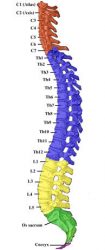
Without the right signals from our brains, our organs cannot function at their optimum level. When a subluxation is present, musculoskeletal factors around one or more vertebrae interfere with the normal function of the nerves, affecting the nerves ability to transmit information from the brain to the rest of the body and vice-versa. Below is a list of 26 nerve roots that provide neurological supply to the vital organs and musculoskeletal system and the symptoms that associated with these nerve roots. Each vertebral Level will have a hyperlink to a 3D view of the relationship of the nervous system and spine to organs for a better visual understanding.


C1  AREAS & PARTS OF  BODY: Blood supply to the head, the pituitary gland, the scalp, bones of the face, the brain itself, the  middle and inner ear, the sympathetic nervous system

POSSIBLE SYMPTOMS: Headaches, nervousness, insomnia, head colds, high blood pressure, migraine headaches, nervous breakdown, amnesia, chronic tiredness, dizziness or vertigo.

C2  AREAS & PARTS OF  BODY : Eyes, optic nerve, auditory nerve, sinuses, mastoid bones, tongue, forehead

POSSIBLE SYMPTOMS: Sinus trouble, allergies, crossed eyes, deafness, eye trouble, earache, fainting spells, certain causes of  blindness.

C3 AREAS & PARTS OF  BODY :Cheeks, outer  ear, face bones, teeth, face bones, teeth, trifacial nerve

POSSIBLE SYMPTOMS: Neuralgia, neuritis, acne or pimples, eczema


C4  AREAS & PARTS OF  BODY : Nose, lips, mouth, eustachian tube

POSSIBLE SYMPTOMS: Hat fever, catarrh, hard of hearing, adenoids, runny nose


C5  AREAS & PARTS OF  BODY : Vocal cords, neck, glands, pharynx

POSSIBLE SYMPTOMS: Laryngitis, hoarseness, throat conditions like a sore throat or quinsy


C6  AREAS & PARTS OF  BODY : Neck Muscles, shoulders, tonsils

POSSIBLE SYMPTOMS: Laryngitis, hoarseness, throat conditions like a sore throat, stiff neck, pain in upper arm, tonsilitis, chronic cough, croup


C7  AREAS & PARTS OF  BODY : Thyroid gland, bursae in the shoulders and elbows

POSSIBLE SYMPTOMS: Laryngitis, hoarseness, throat conditions like a sore throat, bursitis, colds, thyroid conditions


T1  AREAS & PARTS OF  BODY : Arms from the elbow down, including the hands, wrists, fingers, also the esophagus and trachea.

POSSIBLE SYMPTOMS: Asthma, cough, difficult breathing, shortness of breath, pain in lower arms and hands.


T2  AREAS & PARTS OF  BODY : Heart, including its valves and covering, coronary arteries.

POSSIBLE SYMPTOMS: Functional heart conditions and certain chest conditions.


T3  AREAS & PARTS OF  BODY : Lungs, bronchial tubes, pleura, chest, breast

POSSIBLE SYMPTOMS: Bronchitis, pleurisy, pneumonia, congestion, influenza.


T4  AREAS & PARTS OF  BODY : Gallbladder, common duct.

POSSIBLE SYMPTOMS: Gallbladder conditions, jaundice, shingles.


T5  AREAS & PARTS OF  BODY : Liver, solar plexus, circulation (general)

POSSIBLE SYMPTOMS: Liver conditions, fevers, blood pressure  problems, poor circulation, arthritis.


T6  AREAS & PARTS OF  BODY : Stomach.

POSSIBLE SYMPTOMS: Stomach trouble including: nervous stomach, indigestion, heartburn, dyspepsia.


T7  AREAS & PARTS OF  BODY : Pancreas, duodenum

POSSIBLE SYMPTOMS: Ulcers, gastritis.


T8  AREAS & PARTS OF  BODY : Spleen, diaphragm

POSSIBLE SYMPTOMS: Lowered resistance, hiccoughs


T9  AREAS & PARTS OF  BODY : Adrenal and suprarenal glands.

POSSIBLE SYMPTOMS: Allergies, hives


T10  AREAS & PARTS OF  BODY : Kidneys.

POSSIBLE SYMPTOMS: Kidney troubles, hardening of the arteries, chronic tiredness, nephritis, pyelitis.


T11  AREAS & PARTS OF  BODY : Kidneys, ureters

POSSIBLE SYMPTOMS: Skin conditions such as acne, pimples, eczema, boils.


T12  AREAS & PARTS OF  BODY : Small intestine, lymph circulation

POSSIBLE SYMPTOMS: Rheumatism, gas pains, certain types of sterility


L1  AREAS & PARTS OF  BODY : Large intestines, inguinal rings

POSSIBLE SYMPTOMS: Constipation, colitis, dysentery, diarrhea, some ruptures or hernia


L2  AREAS & PARTS OF  BODY: Appendix, abdomen, upper leg.

POSSIBLE SYMPTOMS: Cramps, difficult breathing, minor varicose veins.


L3  AREAS & PARTS OF  BODY : Sex organs, uterus, bladder, knees.

POSSIBLE SYMPTOMS: Bladder troubles, menstrual troubles such as painful or irregular periods, miscarriages, bed wetting, impotency, change of  life symptoms, many knee pains.


L4  AREAS & PARTS OF  BODY: Prostate  gland, muscles of the lower back, sciatic nerve

POSSIBLE SYMPTOMS: Sciatica, lumbago, difficult and painful or too frequent urination, backaches.


L5  AREAS & PARTS OF  BODY : Lower legs, ankles, feet

POSSIBLE SYMPTOMS: Poor circulation in the legs, swollen ankles, weak ankles and arches, cold feet, weakness in the legs, leg cramps.


Sacrum AREAS & PARTS OF  BODY : Hip bones, buttocks.

POSSIBLE SYMPTOMS: Sacroiliac conditions, spinal curvatures.


Coccyx AREAS & PARTS OF  BODY : Rectum, anus.

POSSIBLE SYMPTOMS: Hemorrhoids (piles), pruritus (itching), pain at end of spine on sitting


Below is the summary in a SlideShare Presentation that I have created when I was in Chiropractic School. This Presentation has some additional useful information.

RELATIONSHIP OF THE NERVOUS SYSTEM AND SPINE TO ORGANS from Eduard Burt, D.C., MUAC

Questions:  Have You Had Any of the Above Mentioned Symptoms and Medications Were Not Helpful at All? Has Your Doctor Referred You to Other  Health Care Practitioners in Order to Improve Your Health? Have You Checked Your Posture Lately?


Filed Under: Chiropractic, Spine Tagged With: disease, health, nervous system, vital organs

96 Tips For a Perfect Posture

August 5, 2010 by drburt

The spine, same as our feet, gets the hardest job in our body as it is used in practically every movement we make and it takes pressure from other body parts such as from the neck, shoulders, head and our arms. As we walk, stand, sit, carry a heavy object or dance, our spine takes the pressure to keep our body erect but at the same time it also has to have the flexibility to make other kinds of movements while keeping our balance.

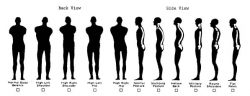
One of the following can be noticed when one has a bad posture: high shoulder, a forward stooping head, a rotated trunk (torso), a hunch back, a high hip, and a side-bent neck and one of the feet will be externally or internally rotated.  Abnormal  posture can result from trauma (like a car accident or fall), repetitive movements (turning your neck towards the monitor), and certain bad postural habits  (sleeping on your stomach).

The human body is often in a state of strain which causes a loss of proper balance between parts of the body and gravity. Such imbalance of posture distortion usually indicates internal body changes before  any  body functions appear disturbed.

All parts of the body are situated so this so this that they can interact efficiently with one another as well as with gravity. The body is able to repair itself and adjust to the many forces to which it is subjected, both internally and externally. This relationship produces a feeling of youth, energy and vitality.

By having correct posture, we are keeping our spinal vertebrae from being misaligned or subluxated.  Our spine is not only reliant on the strength of our back muscles but it also relies on its two arches (lumbar and cervical lordosis) which is why correct posture is vital. If we have poor posture, these natural arches would disappear and there’s going to be nothing left  that can absorb shock in our back. Once this happens, a person will experience pain in the neck and lower back. This paves the way for vertebral osteoarthritis, herniated disc and excessive pressure on the peripheral nerve. Osteoarthritis and herniated disc caused by uneven weight distribution on the vertebral bodies of the spine. Poor posture can lead to difficulty breathing by interfering with proper ribcage expansion, muscle soreness along the back of your neck, shoulders and upper back, as well as lower back pain.

When you already have poor posture, you can start practicing the correct posture by keeping yourself aware of the correct positions to maintain a good posture. There is a correct sitting position where you sit while keeping your back straight and your buttocks should be touching the back of the chair. When you want to lift a heavy object, you have to maintain your back straight and bend your knees & hips to lift the object up. You can start doing your research as to the correct positions to maintain a healthy spine. Also, muscle strengthening exercise is a must for a spine, for a better support of the spine.  Improper posture weakens muscles of the spine because they are not being used. By providing musculature the strength it needs, one can achieve a better maintenance of a good posture.

Also remember that this is not going to be a quick solution as it will take time especially with muscle strengthening. You may want to correct your posture now but won’t take it to heart and practice it daily then you won’t see real results. There should be a lifestyle change so that your body will get used to the correct posture that eventually you don’t even have to think about it.

You are probably wondering by now where  is the part about 96 tips for a perfect Posture. Below are the 5 links that  brings up total to 96 tips. Without further ado:

  1. 10 Tips for improving Posture and Ergonomics, by Dr. Kelly Andrews, D.C.
  2. 13 Tips on Getting a Good Posture, by  Celestine Chua
  3. 20 Tips from Yoga to Go, by Nancy Wile, Ed. D
  4. 32 Tips on how to Improve your Posture, by Savialeigh, Ben Rubenstein, Krystle C and many others
  5. 21 Tips on How to Maintain Good Posture, by ACA

To help you out, try finding ways to get yourself reminded of keeping a good posture. Perhaps you can put post-it notes on places that you would see on a regular basis. Like on your computer, put a small post-it note that says “stop slouching” or other reminders. You can also use an alarm that is set every 30 minutes or so to keep yourself aware and maintain a good posture.  I phone or any other smart phone has a build in calendar that can be set up as whatever time frequency you desire. I think it is one of the best ways to remind yourself about good posture habits. No one ever leaves a house without a cell phone in our days. These are simple solutions that really work as you exert an effort to inculcate the correct posture into your lifestyle.

Question: Have You Checked Your Posture Lately?  Do You Have Any Tips on How to Keep a Good Posture?

Filed Under: Posture, Spine Tagged With: anatomy, back posture, bad posture, body, correct posture, exercise, for a, health, human behavior, human body, improve posture, neck pain, necked, neutral spine, pain, perfect posture, poor posture, posture, posture and occupational health, posture brace, prevention, shoulder, sitting, spinal cord, spine, tips

  • « Previous Page
  • 1
  • …
  • 51
  • 52
  • 53
  • 54
  • 55
  • …
  • 59
  • Next Page »

PLEASE FOLLOW & LIKE B.C.

RSS
Follow by Email
Facebook
Facebook
fb-share-icon
Twitter
Visit Us
Follow Me
Post on X
YouTube
YouTube
LinkedIn
LinkedIn
Share
Instagram

Burt Chiropractic Rehabilitation Center

15200 Hesperian Blvd #104

San Leandro, CA. 94578

(510) 481-2225

drburt@burtchiropractic.com

https://shorturl.at/nDHP2

SEARCH

Categories

Recent Posts

  • “Understanding Headaches: Exploring the Role of Chiropractic Care in Relief”
  • Decoding Soft Tissue Injuries: A Comprehensive Exploration of Motor Vehicle Accidents (MVAs) and Their Impact on Health
  • The Role of Chiropractic Care in Whiplash Injury Recovery
Get Microsoft Windows OS or Microsoft Office suite activated free.
Activated kms activator