Top Chiropractor in San Leandro, CA

San Leandro Chiropractor

  • About Our Practice
  • What is Chiropractic?
  • SERVICES
    • Personal Injury
    • Cold Laser Therapy
    • Massage
    • Ultrasound
    • Electric Stimulation
    • Sports Injury
    • Workers Compensation
  • Testimonials
  • FAQs
  • Locations
  • CONTACT US
  • New Patient Forms
  • Nutrition Store
  • Tele Chiropractic Health
  • Memberships
  • Home

Powered by Genesis

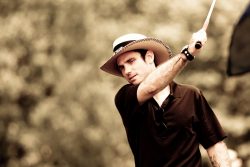
Golfer’s Elbow Treatment and Rehabilitation Options

September 22, 2010 by drburt

What immediate treatments to follow?

The golfer’s elbow is an injury to the soft tissue of the tendons and muscles that surrounds the elbow joint. Treatment for such injury would be similar to other soft tissue injury therefore immediately after the injury occurred or when the pain started to first set in, the patient must follow the RICE+R regime. RICE is Rest, Ice, Compression and Elevation with an additional R meaning Referral to a professional for a proper diagnosis. The RICE regime must be implemented for at least 48 hours for optimum results.

You can ice the injured elbow for 15 minutes at a time, 6 times a day for 2 days. Give it enough time to rest and after 2 days of icing, you can start applying heat to your elbow. To help with its healing, you can use an elbow support or brace to reduce the load on the elbow. If this won’t work, you should seek a professional to rehabilitate the elbow.

Golfer’s Elbow Rehabilitation by a Sports Injury Specialist

If immediate treatment does nothing to ease the pain on your elbow, a sports injury specialist would be able to treat your injured elbow by having an ultrasound, electrical stimultation or with the use of a laser treatment. If you see a Medical Doctor as your PCP he or she may prescribe you with pain and antiinflammatory medications such vicodin and ibuprofen. You will also undergo rehabilitation exercises. You will begin with some light exercises that will mostly be stretching exercises. By doing so, the level of pain could substantially be reduced and you will gain your range of motion again. Strengthening exercises would also be required to bring back the strength of your elbow and wrist. Do take note that your elbow and arms must not be exercised to the point that it gets painful. If pain is felt, the exercise must be stopped or lessened.

It is advisable that stretching begins as soon as possible gradually increasing the duration as rehabilitation progresses. Stretches can start by holding the stretch position for just 10 seconds at a time gradually increasing it to 40 seconds. Do this 5 times per set at 3 sets a day.

The specialist may also prescribe you with sports massage therapy. This is to be applied after the acute stage and must begin lightly just below the pain level of the patient. After treatment, cold therapy would be applied.

The last stage of rehabilitation is the returning to activity. This is done gradually as well and this stage must only begin when the patient can perform his or her activity with no pain. If pain is felt, this stage must be delayed further. This stage may begin once the strengthening exercises won’t cause the patient any pain. The use of a brace or strap is recommended once you begin this stage. Gradually increase the activity in duration of 6 weeks. If during the increase of activity the patient starts to feel pain, the activity must be reduced by one notch or until there’s no pain experienced. Stretching and strengthening exercise must be maintained throughout this routine. If you don’t have the time to see your local chiropractor or pain specialist you might want to try to read this great guide: “Discover How to Eliminate Golfers Elbow Pain In As Little As 72 Hours And Cure It Completely Within 30 Days, Guaranteed” (affiliate link). All It Takes Is 5 Simple, Easy-to-Follow Techniques You Can Do Sitting In A Chair Watching Your Favorite Television Show from the Comfort of Home – Without Any Special Exercise Equipment!

Question: Was this Post Helpful in Answering Your Question Regarding Golfer’s Elbow?
 

Filed Under: Golfer's Elbow

Ultrasound Therapy and Chiropractic Rehabilitation

September 17, 2010 by drburt

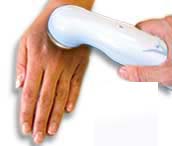
When people hear the word “ultrasound” the first thing that comes to mind is the ultrasound from the OB-GYN where you can view a 2-dimensional or 3-dimensional image of what’s inside your tummy. But, this therapy is not this type of ultrasound as it is a therapeutic procedure that uses sound waves in treating injuries such as with soft tissues, muscles or joints.

The sound waves would vibrate at a frequency that is higher than the range that human ears could hear and it provides a mechanical vibration that provides a micro-massage.  I can either be a thermal or non thermal application at frequencies ranging from 0.72 MHz to 3 MHz.

Ultrasound therapy had been used as a treatment for years for musculoskeletal injuries as it helps in rapidly healing the injured tissue as well as decreasing the pain. However, it is underutilized despite its great potential and this is because of a few factors including the lack of education for therapists to use this treatment. The technique in using this treatment is very specific and some therapists are reluctant as they have been disappointed with previous outcomes which may have been a result of their insufficient training regarding ultrasound therapy.

Therapists must understand how this treatment works in order to get the desired outcome. The potential for success is increased as you combine the knowledge, correct technique and pathology of injury. Things that should be considered by the therapists to ensure a maximum effect for patients are the factors that would affect the absorption of the muscles, hemoglobin and fat, the physiology as well as the delivery process and contraindications for this treatment.

The basic benefits of the ultrasound therapy includes an increased in the elasticity of the collagen found in joint capsules, tendons and scar tissues; an increase in the motor as well as the sensory nerve conduction that helps in reducing the pain; the increase in blood flow; the reduction of muscle spasm from an altered contractile activity of the skeletal muscle; and the muscle spasm reduction through the reduction of the activity of the muscle spindle.

US therapy is just one of the treatments that must be considered in treating musculoskeletal injuries. Other treatments to be considered are electromagnetic radiation, hot packs, electrical stimulation, massage, cryotherapy, heat therapy, Erchonia Cold Laser PL 5000 and exercise. The choice really depends on the therapist and with the type of injury and the location of the injury as well as the condition of the patient.

There certain contraindications. If the patient has these medical conditions then this treatment must be avoided. Medical conditions include malignancy, pregnancy, myositis ossificans, circulatory insufficiency, acute infection, sepsis (severe) infection. Also, if the injury is situated over the heart, spine, eyes, testes, growing bones, carotid sinuses, epiphyseal plates, cervical stellate ganglion, pacemaker or vagus nerve then ultrasound therapy must also be avoided.

Precautions must also be observed for hypersensitivity to the treatment, area of the tendon repair, cemented prosthesis, or of reduced in circulation and with the diminished sense of pain and change in temperature or the lack of it. This type of therapy is available in our office for rehabilitation of our injured patients.

Question: Have you ever experienced ultrasound therapy while rehabilitating your injury?

Filed Under: Ankle, Modalities Tagged With: 3d ultrasound, cryotherapy, frequencies, frequency range, heat therapy, human ears, manipulative therapy, massage, mechanical vibration, medicine, orthopedic surgery, physical therapy, sounds waves, therapy, trigger point, ultrasound, ultrasound therapy, vibrates, wave

Electric Stimulation and Chiropractic Rehabilitation

September 15, 2010 by drburt

Electric stimulation rehabilitation or electrotherapy had been discovered way back in 400 BC with the help of a torpedo fish that produces an electric shock reaching up to 150 volts. People used to take these fish from streams and they place them on the body’s painful area and the electricity produced from the fish controlled the pain.

It was when the gate control theory of pain in 1965 that reintroduced electric stimulation rehabilitation after it had lost the interest of many skeptics in the nineteenth century. The theory suggests that when the large nerve fibers activity increases, it tends to close the gate blocking information or signals of pain to the brain.

Electric stimulation rehabilitation is a form of therapy that introduces electricity to stimulate the muscles and treat the pain & spasms. This type of therapy can be administered to the patient by a professional or you can purchase a home kit and use it at home.

There are three types of the electrical stimulation rehabilitation and they are the general electric therapy, muscular electric therapy and the transcutanous electrical nerve stimulation otherwise known as TENS. The general electric therapy relieves the pain and also heals wounds while the muscular electrical therapy helps in strengthening the muscles by reducing the spasms, while the TENS is used for treating chronic types of pain.

Electric stimulation rehabilitation has several applications. It is used to manage pain either acute or chronic. TENS is most successful in the control of the postoperative incision pain especially if it’s on a small area and self limiting with regards to time, severity and course.

IFC or interference current is another form of the electric stimulation rehabilitation treatment used for pain control. Some clinicians believe that this is more effective in treating muscle pain compared to TENS.

Electrotherapy is also applied to reduce edema of various types. Edema can be a result of trauma that disrupts the blood vessels and the electrical stimulation with voluntary muscle pump activity is effective. Other than this approach, sensory level stimulation is also used but this does not contract the muscles.

Electric stimulation also improves circulation through the neuromuscular electrical stimulation or NMES. It is most effective at a frequency of just 20 to 30 pps with a 10 to 30% contraction at a maximum of 30 minutes of treatment at a time.

Electric stimulation is also applied for a speedier wound healing.

This type of treatment has contraindications. It should not be placed peripherally to the heart or when the patient has a pacemaker. It shouldn’t be placed near the phrenic nerve and must not be used in the presence of malignancy.

If a recently sutured tendon or nerve is present, a superficial metallic implant, pregnancy during the first trimester and active bleeding are experienced by the patient then this type of treatment must also be avoided.

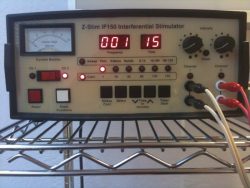
There are several electric stimulators available such as the Z-Stim IF 150 and the H-Wave electric stimulator. The Z-Stim IF 150 produces TRUE interferential therapy by its two channels with 4 pad output. It is used to stimulate the nerves and muscles for edema, acute pain and for rehabilitation of muscles. The H-Wave is an ultra low frequency electric stimulator that helps in pain control and functional restoration. It has a 3-channel and 2-channel models. The 3-channel model is used in clinics while the 2-channel is a home therapy model. Both of these models are available for rehabilitation of our patients.

Question: Have you ever experienced electrical stimulation therapy while rehabilitating your injury?

Filed Under: Ankle, Modalities Tagged With: bc, electric shock, electric stimulation, electric therapy, electrical muscle stimulation, electrical stimulation, electroanalgesia, electrotherapy, fishing, functional electrical stimulation, medicine, neuroprosthetics, neurotechnology, nociception, pain, produce, rehabilitation, sacral nerve stimulation, torpedo fish, transcutaneous electrical nerve stimulation

Patient’s Questions Dr. Burt’s Answers #6-#13

September 13, 2010 by drburt

Does sitting up straight really help you?

If you sit straight (back straight, legs in front of you, shoulders back) does it help you in later life? Or will you get a hunch back?

Answer:

Please read these articles. These two posts describe everything you need to know about the posture.

Why is Posture So Important and 96 Tips for a Perfect Posture

Back Pain/Lower back joint grinding?

Hello, I have a curve in my spine, and also have arthritis in my lower spine. For the last year or so I have been having really bad grinding noises in my lower back when I move my hips back and forth—if I lay on my side and stretch and move you can feel this as well. It’s kind of painful with a lot of grinding and popping. I have posted this before with no success only scams–so please any help would be great as I don’t have any medical insurance and I don’t want to go to M.D. if this is something everyone feels?!

Answer:

The symptoms you are experiencing correlate with symptoms of someone having osteoarthritis in the spine. The presence of scoliosis (curve in my spine) is most likely a contributing factor over a long period of time. I don’t know your age but is sounds that you have had it for a very long time. Lack of proper biomechanics in your lower back (lumbar spine) took its toll on your vertebral joints and proper articulations of each vertebrae. I would suggest for you to go see a specialist in your area ASAP. Doctor of Chiropractic would be the first choice – he/she has X Ray machine in the office and will be able to determine how advanced is the stage of osteoarthritis. If things went beyond the point where chiropractor can’t help your next choice should be an Orthopedist.  My advise was given on a description of the problem that was provided in your question. I hope you feel better.

Leg pain after soccer practice?

My friend has bad leg pains. In her soccer practice she kicked the soccer ball full power at the same time as someone else did (and they are the best on the team btw…) and now when she steps with it she feels a rush of pain. But when she stretches like by pulling it towards her it does not hurt as much. Do you know what the problem is??? Is it serious?!?!?

Answer:

It sounds like your friend has sprain/strain in her leg. Since you do not provides specific region of the leg I will use general terms. When she applied a weight load on her leg injured muscles and tendons react to the load by sending painful signals to the brain. Basically pain is the way your body communicates with your brain by letting you know that something is wrong and you should do something about it. When your friend is stretching she does not feel as much pain and probably she feels better after the stretch. I would have your friend to see a local Certified Massage Therapist and get several session of deep tissue massage around painful area. Massage will help to repair soft tissue fibrosis and will enhance the healing process. The sooner she does it the easier it is going to be to fix the problem. Hope your friend feels better.

Is my sprained ankle good to go?

I sprained my ankle a little over a month ago and it has been starting to feel better. It now has a full range of motion and everything but when I run and jump around on it, it still feels a little sore. The pain is definitely tolerable but I’m worried I could be making things worse. Is this normal or do I still need to give it more time?

Answer:

Hello. The last sentence of your question tells me that you did not have any rehabilitation done to your ankle after you have injured it. That is basically the cause of your pain. During sprain injury your ligaments and tendons are being over stretched. During the passive healing process the soft tissue fibrosis is forming. In basic English that means that scar tissues around injured ligaments and tendons are being formed. These fibrotic tissue is very painful and will not go away on its own without proper rehabilitation. You could see your local Chiropractor, Massage Therapist or Acupuncturist with combination of Physical Therapy modalities. Please read more here

My ankle has been swollen for months?

I suffered an inversion sprain in March and it is now 5 months later but it still looks fat. I can run, sprint, jump and all that good stuff no problem, its just the physical appearance of the ankle that confuses me. Why is it still fat?? What can I do to get rid of it?

Answer:

Most likely you have fluid retention or there is still an inflammation after your injury. I would suggest for you to go see your Family Doctor and have him/her order X Rays and  MRI of your ankle. This will help to figure what is going on with your ankle.

Another option is to try rehabilitation process. Please see an answer above with some additional information. I hope this helped to answer your question. Have a great day.

Is my hand fractured?

So earlier today I was taking my curtain down and I guess my hand came to close to my ceiling fan and the back of it got hit. It hurt so bad and now I am left with a few scars, a swollen hand and moving my fingers isn’t to easy. The one that hurts the most to bend is the middle finger. Should I go to the doctor or just keep icing it?

Answer:

Most definitely please go see a Doctor ASAP. The fact that you have difficulties moving your fingers is not a very good sign. The presence of a fracture is possible. Please see your PCP and have hand X Rayed. If you have a fracture your doc will cast it for however long is necessary. If it is not fractured please get some rehabilitation of your hand from a Certified Massage Therapist, Chiropractor or Acupunturist.

Hip pain/Lower back pain after running, playing basketball, weight training?

So last year I was playing basketball, and another teammate jumped and his butt landed on my hip/lower back. After that I could barely play. Pain went away after a few days. So I kept playing all last year and pain would come and go.

This year in another basketball tournament, after not playing for months, I played and pain was killing me, I played through pain for a game but I couldn’t handle it anymore.

Now every time I run at gym or lift some heavy weights, hip/lower back starts hurting for a couple of days. Went to Back to a Doctor. He gave me none inflammatory pills but didn’t really help.

I constantly feel a pinch in right hip after seating at work for 8 hours.

What could it be? I will be starting Police Academy in the next 6 months or so. I don’t want this to be a problem.

Answer:

Sorry about your agonizing pain. I am pretty sure you are tired of taking anti inflammatory pills as by now most likely they stopped working anyway and your pain level has gone up. It is very common to have lower back and Sacroilliac Joint being injured during sport acitivies. The fact that you teammate landed on your hip tells me that excessive force was used to misaligned your Lumbosacral and Sacroilliac Joints. You MUST go see your local Chiropractor ASAP. Have him/her adjust your entire spine, use some PT modalities and get deep tissue massage. Make sure that Chiropractor that you choose has everything in the office – I mean PT modalities and Certified Massage Therapist. Please read more about lower back pain here.

Filed Under: Questions/Answers Tagged With: answering, back, blog, leg pain, low back pain, lower spine, lumbar spine, manipulative therapy, massage, medical insurance, medicine, orthopedic surgery, pain, question answer, questions, questions answers, san leandro chiropractor, spine, symptoms

  • « Previous Page
  • 1
  • …
  • 49
  • 50
  • 51
  • 52
  • 53
  • …
  • 61
  • Next Page »

PLEASE FOLLOW & LIKE B.C.

RSS
Follow by Email
Facebook
Facebook
fb-share-icon
Twitter
Visit Us
Follow Me
Post on X
YouTube
YouTube
LinkedIn
LinkedIn
Share
Instagram

Burt Chiropractic Rehabilitation Center

15200 Hesperian Blvd #104

San Leandro, CA. 94578

(510) 481-2225

drburt@burtchiropractic.com

https://shorturl.at/nDHP2

SEARCH

Categories

Recent Posts

  • Soft Tissue Injuries in Tennis: Causes, Common Types, and Chiropractic Rehabilitation in San Leandro, CA
  • The Female Pelvis, Sacroiliac Joint Dysfunction, and Its Impact on Knee Alignment and Pain: A Chiropractic Perspective
  • Chiropractic Rehabilitation of soft tissue after a Car Accident in San Leandro, CA