Top Chiropractor in San Leandro, CA

San Leandro Chiropractor

  • blog
  • About Our Practice
  • What is Chiropractic?
  • SERVICES
    • Personal Injury
    • Cold Laser Therapy
    • Massage
    • Ultrasound
    • Electric Stimulation
    • Sports Injury
    • Workers Compensation
  • FAQs
  • Locations
  • CONTACT US
  • New Patient Forms
  • Nutrition Store
  • Home

Powered by Genesis

Soft Tissue Injury and Fibroblast Regeneration

September 9, 2011 by drburt

FIBROBLAST AND SOFT TISSUE REPAIR

Soft Tissue Injury and Fibroblast Regeneration

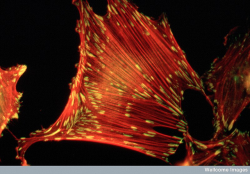
Mechanical friction during deep tissue massage, fascial manipulation or using techniques like Graston will activate the stimulation the fibroblast reproduction after soft tissue injury. These fibroblasts cells are the most common cells of connective tissue, and they synthesize the extracellular  matrix (ECM) and collagen, which is the main framework of our soft tissues. The properties of the connective tissues depends on the composition of ECM – tendons, ligaments and other connective tissues. Elastic and reticular fibers, glycoproteins, glycosaminoglycans, and collagen are all found in ECM and made by fibroblasts.  Collagen is the most important part of ECM and plays very important role in tensile loading. The stimulation of production of the above mentioned components can be achieved by frictioning tissues (in other words by providing cross-fiber massage).

Fibroblast production and degeneration is a normal process in every day mechanical loading such as walking, running, bicycling or any other form of movement. There are four basic types of loads: tension (tensile force-fibroblasts), compression (chondrocytes), fluid shear (vascular endothelial cells) and torsional shear. Collagen synthesis in patellar tendon ( which is used the most by bicyclist and runners) increases by nearly 100% as a result of just single bout of acute exercise, and the effect is till evident three days later. I guess I am doing a good job with my knees by keeping them busy with prolonged Mountain Bike Riding and avoiding soft tissue injury.

In the beginning of a training period the balance between synthesis and degradation is increased and there is a net loss of collagen. This enables a tendon to restructure and adapt to an increased loading pattern. It is not till training progress that there is a net gain in collagen synthesis. Deep friction massage can also help to repair a mild soft tissue injury to a knee tendon. Fibroblasts play an important role in wound healing. When connective tissue and blood vessels get injured, growth factors cause fibroblasts to enter the wound area, increase its numbers and begin synthesizing new collagen fibers, creating new granulation tissue and assisting in remodeling. The ECM of granulation tissue is created and modified by fibroblasts.

Recently I was exploring a new trail with another rider. During a steep rocky climb my rear wheel lost a traction and my right knee got over extended. I felt sharp pain but continued on riding. Next day I felt sharp pain around and under my right knee cap (patella tendon). Three to four sessions of deep tissue massage, cross friction massage and modalities such as electric stimulation and Erchonia Cold Laser L5000 model made my knee completely pain free. This is a real example of how Fabroblast is working.

There has also been research done that eccentric exercises may provide more benefit than concentric exercises regarding rehabilitation of muscles and tendons. Eccentric exercises provide greater stimulation of fibroblasts, increasing collagen synthesis and therefore stimulating the healing of soft tissue.
 

Filed Under: Soft Tissue Injury, Sports Tagged With: anatomy, biology, collagen, connective tissue, deep tissue massages, fascial, fibroblast, fibroblast cell, friction, granulation tissue, manipulative therapy, massage, medicine, physiology, regeneration, skeletal system, soft tissue, soft tissue injury, tendon, tissues, wound healing

New Scientific Evidence of Innate Intelligence Existence

June 8, 2011 by drburt

NEURONScientific Evidence of Innate Intelligence Existence

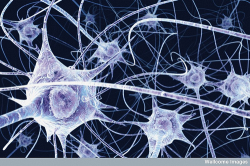
Neuroscientists of Ecole Polytechnique Federale de Lausanne have been working on a Blue Brain Project. The most recent discovery about the neurons independent connections based on a subject’s experience. The complete published work can be found in Proceedings of the National Academy of Sciences. (PNAS)

It has been known for sometime now that neuron connections are being established and reinforced in the human brain based on one experience – also known as “synaptic plasticity.” Do you remember your first bicycle ride? Once you learned it you will never forget. The team working on the Blue Brain Project at EPFL, led by Professor Henry Markman, however, is offering new evidence that this may not be the whole story.  The scientists were able to prove that small clusters of pyramidal neurons in the neocortex interconnect according to a set of immutable and relatively rules.  A complete discovery of this process was published in the last issue of the Proceedings of the National Academy of Sciences.

Each cluster contains about fifty neurons plus or minus. The scientists look at them as essential building blocks, which contain kind of in themselves a kind of fundamental, innate knowledge. For instance, certain physical experiences of this world. Mr. Markman says: “This could explain why we all share similar perceptions of physical reality, while our memories reflect our individual experiences.”

The principle determining the formation of these microcircuits is astonishingly simple. Basically, when two neurons are each connected to the same neighboring neuron, the probability that they are also interconnected is greater than average. The researchers were able to build a statistical model based on this observation.

During the experiment different rats have presented similar characteristics with neuronal circuits. If the circuits had only been formed from the experiences lived by the different animals, the values should have diverged considerably from one individual to another. That means that neuronal connectivity must in some way have been programmed in advance.

“Since John Lock, about 400 years ago, research into how the brain learns and remembers has been guided by the belief that we start from a clean slate and then print memories with each new experience. The idea that memory is like building lego with fundamental building blocks of knowledge opens up an entirely new door for research”, explains Markram.

Current technology is now allowing us to qualify the “tabula rasa” hypothesis, which argues that our brains are a “blank slate” at birth, and we only gain knowledge through experience. It’s an idea that has permeated science for centuries. There is no question that knowledge, in the sense that we typically understand it (reading and writing, recognizing our friends, learning a language), is the result of our experiences. But the EPFL team’s work demonstrates that some of our fundamental representations or basic knowledge is inscribed in our genes. This discovery redistributes the balance between innate and acquired, and represents a considerable advance in our understanding of how the brain works.

Source: Mediacom

Filed Under: Chiropractic Tagged With: anatomy, biological neural network, biology, blue brain project, Brain, computational neuroscience, evidence, existence, federales, human brain, innate, innate intelligence, innatism, intelligence, nervous system, neural networks, neurology, neurons, neurophysiology, neuroscience, polytechnique, scientific evidence

Plantar Fasciitis and Chiropractic Care

February 16, 2011 by drburt

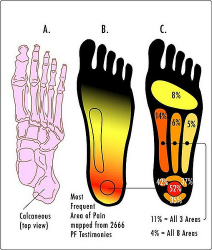
PLANTAR FASCIITISPlantar fasciitis is a condition that refers to a lingering pain on the bottom of the foot. It is a condition that normally does not respond well to traditional methods of treatment. This condition causes muscular dysfunction and pain that can cause serious drop in a patient’s movement especially with their physical activities.

There are many ways for a person to suffer from plantar fasciitis such as over pronation, walking with a flat foot, developing tight Achilles tendon, sudden increase in mileage when running and a high arched foot all adding for to a cause this condition. A patient who suffers from plantar fasciitis normally complains about experiencing pain localized at the bottom of their foot deploying to the inside of the heel. In a typical injury a pain from plantar fasciitis will make for a patient very difficult to place the weight on the foot due to the intense throbbing pain. Walking a few steps in the morning proves to be painful as well as doing other physical activities like running and jumping.

What Causes Plantar Fasciitis?

  1. Too much standing
  2. Unpadded shoes on hard ground
  3. Poor shoes
  4. Repetitive stress
  5. Diets low in vitamin C
  6. A change or increase in activities
  7. Being overweight
  8. An injury.

Affected Muscles

The plantar fascia is a band of fibers which runs from the heel bone to the base of the toes. Plantar Fascitis occurs when these tissues are irritated and inflamed. Bone spurs often form on the heel if this condition is not correctly treated.

Biomechanical or training flaws such as over-pronation, flat feet, a tight Achilles tendon, a high-arched foot, or a sudden increase in training mileage often cause plantar fascitis.

The actual plantar fascia is not the common cause of pain on the bottom of the foot. The Plantar Aponeurosis, a long tendon in the bottom of your foot, is often involved. Two muscles, the Quadratus plantae and the Flexor digitorum brevis, frequently contribute to the problem.

Long distance walking, running cycling, or just standing can overwork these muscles. As they are chronically over-worked, they start to shorten. When a muscle shortens, it is less resilient and is more easily damaged. As the Plantar aponeurosis and the muscles shorten, they produce pain in the bottom of the foot.

With the lack of success in traditional healing, chiropractic care has become one of the leading choice of treatment for patients suffering from this condition. Plantar fasciitis and chiropractic care go hand in hand with the administering of Active Release Techniques (A.R.T.), this method of chiropractic allows therapy to target the soft tissues in the feet. Its aim is to make the different parts of the foot and ankle to move through a typical full range and keep the stress located on the plantar fascia to a minimum.

Chiropractic care treatment done by a chiropractic practitioner often gets the job done in limiting the pain caused by plantar fasciitis. It helps bring the treatment into the root of the problem by getting rid of restrictions along the joints, muscles and other parts of the foot. The chiropractor will also help increase the work and movement range flexibility of the calf muscles by using special treatment protocols that help correct other functional risk factors such as tightness and weakening of the intrinsic muscles of the foot.

If a patient sees a chiropractor earlier than most, the more chances they will have in preventing further injury and the higher chances they will have at a full recovery. A successful chiropractic treatment will also avoid any further reoccurrences of plantar fasciitis.

Chiropractic helps in treating individuals with plantar fasciitis and coupled with the right kind of lifestyle that involves exercising regularly and a proper diet and nutrition it is not fat fetched that the therapy and chiropractic healing methods will do the trick. Manipulation, stretching, soft tissue work, ultrasound and home exercises are just some of the chiropractic therapies administered for patients suffering with this condition.

Do not risk your feet and your ability to gain strength and perform physical activities. Consult a doctor of chiropractic at the onset of feeling pain under your feet, as it might be the initial stage of a plantar fasciitis and let the wonders of chiropractic treatment help you achieve great health and body condition that is always in tip top shape.

If you have anything to add to this post, please feel free to Post a comment or share your thoughts through Facebook, Twitter or comment section below to join the conversation.

Filed Under: Chiropractic Tagged With: achilles tendons, anatomy, biology, causes plantar fasciitis, chiropractic, Chiropractic Care, fascia, fasciitis, flat feet, Foot, foot diseases, medicine, orthopedic surgery, plantar, plantar fascia, plantar fasciitis, plantar fascitis

Temporomandibular Joint (TMJ) Dysfunction Physiology and Causes

October 1, 2010 by drburt


What is TMJ?

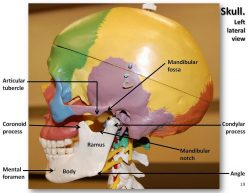
temporomandibular jointThe temporomandibular joint, or often called as TMJ, is the joint of the jaw. We have two temporomandibular joints that work in unison, one on the either side of the jaw. It got its name because of the temporal bone and the mandible that forms the joint.

It is the most used joint in our body. It has 6 main components and they are the mandibular condyles, the capsule, the articular surface to the temporal bone, the articular disc, lateral pterygoid and the ligaments.

What is TMJ Dysfunction?

This condition is common and affects over 10 million Americans today. It is affecting the  mastication muscles and the tissue components.  It can be a medical or a dental condition or a collection of conditions.

What are the causes ?

There are different factors that can influence the inflammation of the Temporomandibular joints such as teeth grinding, a direct physical trauma that causes disc derangement, stress, hypermobility of the joint, hypomobility of the joint, osteoarthritis, rheumatoid arthritis and many others.

What are the symptoms ?

Pain on the jaw and facial muscles is one of the first symptoms you would notice when you have TMJ dysfunction. It may even radiate to your neck and shoulders. You may feel this pain when you talk, yawn or chew. The pain is usually felt in front of the ear or on the jaw itself.

Ear pain, headaches, tinnitus and hearing loss may also be a symptom of  Temporomandibular joint dysfunction. This can get confusing as some might think they have an ear infection or ear problem when in fact, the pain is radiated because of TMJ dysfunction.

You may hear a popping, clicking or grating sound when you move the joint. This is caused by an abnormal position of the disc. Others may also hear the popping sound.

Swelling of the mouth or the face can also occur due to inflammation.

Lock jaw whether opened or closed is also a common symptom of TMJ dysfunction.

Teeth may not align properly and no longer touch as you bite on food. Teeth can also start to loosen or get broken or become sensitive.

Swallowing may become difficult because the muscles on the jaw area start to spasm.

You may feel nauseated or have a headache or dizziness.

How is TMJ Dysfunction diagnosed?

A health professional can properly diagnose a dysfunction by beginning with a thorough evaluation of the patient’s medical history. After which the health professional would make a physical examination on the patient to identify the disorder.

A treatment program would then be specified by the health professional according to the severity of the disorder. Treatment programs may include lifestyle modification, techniques for self relaxation, proper education regarding Temporomandibular joint dysfunction, restoration of the jaw’s range of motion, mobilization of the soft tissue, joint mobilizations, nerve stimulation, rehabilitation, etc.

The treatment program would be a per-patient basis. Thus, you may have a different treatment program compared to another patient who is also suffering from TMJ dysfunction. Part 2 is going to be about specific treaments options for this debilitating codition.

Question: Have you or anyone you know had a TMJ Dysfunction ? What kind of treatment otions have you had?

Filed Under: TMJ Tagged With: anatomy, bruxism, causes, dental anatomy, dentistry, dysfunction, hypermobility, jaw, jaws, joint, mandible, medicine, pain, temporomandibular joint, temporomandibular joint disorder, temporomandibular joint dysfunction, temporomandibular joint tmj, tinnitus, tmj, tmj dysfunction, unison

  • 1
  • 2
  • Next Page »

PLEASE FOLLOW & LIKE B.C.

RSS
Follow by Email
Facebook
Facebook
fb-share-icon
Twitter
Visit Us
Follow Me
Post on X
YouTube
YouTube
LinkedIn
LinkedIn
Share

15200 Hesperian Blvd #104

San Leandro, CA. 94578

(510) 481-2225

drburt@burtchiropractic.com


SEARCH

Categories

Recent Posts

  • Loss of Cervical Lordosis: How a Straight Neck and Pain Impact Your Health—and How a San Leandro Chiropractor Can Help Restore It
  • Hidden Injuries from Car Accidents That a San Leandro Chiropractor Can Help You Detect
  • Best San Leandro Chiropractor for Sciatica Pain Relief: Natural, Drug-Free Solutions That Work