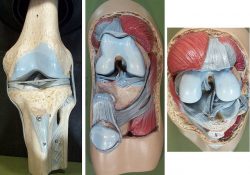
Top Chiropractor in San Leandro, CA

San Leandro Chiropractor

  • About Our Practice
  • What is Chiropractic?
  • SERVICES
    • Personal Injury
    • Cold Laser Therapy
    • Massage
    • Ultrasound
    • Electric Stimulation
    • Sports Injury
    • Workers Compensation
  • Testimonials
  • FAQs
  • Locations
  • CONTACT US
  • New Patient Forms
  • Nutrition Store
  • Tele Chiropractic Health
  • Memberships
  • Home

Powered by Genesis

Understanding Chiropractic Care

September 10, 2010 by drburt

Chiropractic profession promotes holistic care with main focus on maintaining proper physical vertebral alignment in order to maintain a good health. It is a scientific fact that structural imbalances could lead to nervous system dysfunction and lead to a variety of symptoms such as pain, aches, discomforts and other conditions. The goal of care is to restore the body to its maximum potential without drugs or surgery. Doctors of Chiropractic check the physiological function of neuromusculoskeletal system by utilizing orthopedic and neurological exams. Besides specific chiropractic adjustment, therapies such as massage, moist heat, electric stimulation, ultrasound, and Erchonia PL 5000 Laser can be utilized in order to restore a balance to the system.   Diet and exercise advise can be given to a patient by a Doctor of Chiropractic.

CHIROPRACTIC ADJUSTMENT:

Chiropractic use controlled forces, called adjustments, when there are restrictions around joints that the body is unable to overcome itself. Such barriers include scar tissue and pain, swelling (edema), and muscle spasm.

Chiropractic examination helps to discover joints with limited range of motion weather they are painful or not. Specific chiropractic adjustment applied to a subluxated (restricted) joint can restore range of motion when the body’s own musculature cannot.

Adjustments help to relieve pain, as well as, restore and maintain normal movement, biomechanics and function.

The controlled force of chiropractic adjustments safely generates the energy required to overcome such limitations or restrictions and bring the joint back to its normal and full range of motion.

                                                                                                                                                                                                                                                                         CHIROPRACTIC PROMOTES HEALTH NATURALLY:

The goal of chiropractic care is to bring back and retain the health of the whole person and not just treat separate symptoms or diseases.

Chiropractic care is not focusing on illness, instead it personalizes the care and helps to achieve maximum potential for a patient’s well being and improves the quality of human life.

 Chiropractic care is focused at restoring and maintaining normal structure, nervous system function, joint and muscle.

                                                                                                                                                                                                                                                                                                                                                        RESTORING FUNCTION AND CHIROPRACTIC CARE:

Function means the ability to perform everyday activities of daily living as well as work activities. It includes range of motion, coordination, strength and flexibility.

Improving function is the key to long term pain relief. When function is not restored completely, any pain relief is temporary and accelerates the risk factor of chronic pain return. Good functioning joints do not have any pain, perform better and are not likely to get injured or degenerate. Bottom line – Chiropractic helps to minimize the pain and maximize the function.

                                                                                                                                                                                                                                                                                                                                                                                                                                                                         BENEFITS AND GOALS OF CARE:
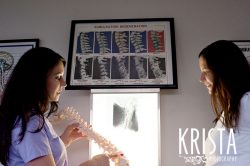
The benefits of Chiropractic care include good function, tissue healing and pain relief.

Each patient will require different frequency and different amount of time to achieve each of these goal

When pain is gone it does not mean that soft tissue  has healed completely nor that the function has been restored.

It takes much longer time for soft tissue restoration vs. pain relief. It takes much longer time to restore the function vs. for tissue to heal.

Chiropractors carefully monitor pain, tissue healing and function using specific outcome measures to know when a patient has achieved maximum benefit and it is time to end care or shift to a prevention/wellness program. 

CHIROPRACTIC, MOTION AND NUTRITION OF DISCS AND JOINTS: 
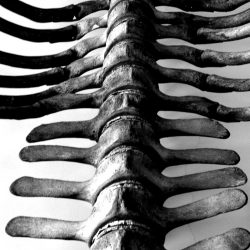
Maintaining good motion is critical to the survival of discs and joints. A vertebral joint that can not move is not able to nourish itself. A healthy exchange of nutrients and wastes only occurs by physically pumping fluids into and out of the disc via spinal motion because discs and cartilage have no blood supply – process called imbibition. Movement stirs fluid through joints, washing nutrients in and waste products  out. Lack of motion may lead to poor nutrition and disc degeneration.

The discs in the spine live because of the movement. Doctor of Chiropractic locates joints that have restricted range of motion, whether they are painful or not, and specific adjustments and exercises help restore and maintain normal motion and nutrition.

This post was based on Dr. Malik Slosbergs’s research.

Question:  Did this article help you to understand what is the goal of chiropractic care?
Filed Under: Chiropractic Tagged With: alternative medicine, care, chiropractic, chiropractic adjustment, Chiropractic Care, chiropractic in canada, chronic pain, goals, holistic care, manipulative therapy, medicine, muscle spasms, nervous system, pain, scar tissue, spinal adjustment, vertebral subluxation

10 Little Known Secrets about Healthy Knees

September 8, 2010 by drburt

healthy knees Healthy Knees and 10 Little Known Secrets

It is impossible to keep your knees healthy and in perfect shape even when you are getting older. What’s important is that you know the secrets in maintaining healthy knees. Prevention is really better than cure so if you are still not suffering from any knee problem, you must already start to follow these tips in keeping your knees healthy.

First tip is to warm up before doing any type of activity. It is very simple and it allows the synovial fluid to flow through your joints so you won’t experience more friction while working out. Remember, as you jump or run or do squats, your knee is absorbing a lot of the force and in time, it can deteriorate.

2nd, stay in shape and maintain a healthy weight. The more weight you carry around the more your knee joints get stressed.

3rd maintain good ankle mobility. Exercise your ankles to increase its mobility as the ankle’s function affects the health of the knee. Start by standing with your feet just a short distance (a few centimeters) away from the wall then keep the heels on the ground while trying to touch the wall with your knee. Repeat this several times while stepping back a little each time. Calf stretching is also necessary if you are feeling some tightness.

4th, improve hip function. Try some glut exercises to improve your hip function as this will ease the knees. Your hips can absorb more impact thus decreasing the stress on your knees.

5th, increase hip mobility. This is similar with improving the ankle mobility. If your hip moves well, you can squat in the right position without having your knees absorb the most weight and stress.

6th, diet supplements! If you’re an active athlete or perhaps you carry weights or go to the gym, most probably you are putting more stress to your knees than normal. This can deteriorate the knees but this can be prevented by taking supplements. Fish oil supplements have great benefits and also have anti inflammatory effects on your joints. Glucosamine and Chondroitin are also great diet supplements to keep your bones and joints healthy and strong.

7th, stop when it starts to hurt.  If you’re suffering from knee pain and it hurts when you do a certain action then you should stop it. Whatever is causing you pain could further add more damage and degeneration to the knee. Try to slowly integrate the action as you figure out the problem. If you are injured, doing the action won’t do you any good but this doesn’t mean you should stop it forever.

8th, stretch! Stretching is great for relaxing your muscles after an activity. Your muscles should recover after an activity to prevent fatigue.

9th, cycling for rehabilitation. If you do suffer from knee pain or injury, cycling is a great exercise to improve joint mobility. It is a knee friendly exercise with very low impact.

10th, muscle endurance is important. By increasing the endurance of your muscles, they won’t get into fatigue quickly. Low impact cardiovascular activities would do the trick. Improving muscle endurance during knee rehabilitation will also speed up the healing process.

Question: Was this information helpful? Please leave a comment. Thank you

Filed Under: Knee Tagged With: anterior cruciate ligament reconstruction, injured knees, injuries, knee, knee brace, knee injuries, knee pain, knee rehabilitation, knee treatment, knees, ligament, ligaments, massage, medicine, orthopedic surgery, osteoarthritis, pain, running, sprain, sprained knee, strain, surgery, swelling of the knee, treatment options

Injured Knee Pain, Sprained Knee Ligaments and Knee Treatment Options

September 5, 2010 by drburt

Knee pain is one of the most common orthopedic problems encountered and its rehabilitation depends on the history of its injury. The knee pain can either be chronic or caused by a sudden injury. Runners usually experience pain due to sprain after they run or jog. If it’s a sharp and sudden pain, this could be caused by a torn ligament and this needs an immediate medical response. Other times though, the injury is caused by strain and the treatment for this can start right at home. For strained knee, resting is the first step to take the strain off. Then, apply ice on the area for short intervals at a time, 15 minutes on and 45 minutes off for every waking hour. Do not apply ice for longer then 15 minutes as it could damage your skin and create a reverse effect. After icing the affected area, wrap it with a bandage for compression. Then, elevate the injured area as you rest it. These 4 steps are called the RICE or Rest, Ice, Compression & Elevation method. If following the RICE method does not work, you must see a medical professional for proper knee rehabilitation.

If the knee injury is not caused by strain, it can be caused by rheumatoid arthritis, osteoarthritis, or an injured ligament. If ever you notice stiffness after running, you may need to speak to a medical professional for a proper diagnosis. He will then perform physical examination and perhaps an x-ray or an MRI to see what’s really causing the problem.

If the pain is caused by an injured ligament, you will be prescribed to take proper rest and wearing of a brace. The knee brace is useful as it helps in preventing further injury to the knee which could definitely worsen the problem. The brace would be providing you with support that can reduce your discomfort while doing activities such as walking or while exercising for its rehabilitation. Brace is also used by professional athletes even when there’s no injury as this will prevent them from having the injury in the first place.

Osteoarthritis is unfortunately incurable. Anyone can suffer from this and it is similar to arthritis but affects the knee’s cartilage which then weakens the articulate surface. Treatment for this condition ranges from taking anti-inflammatory drugs to wearing of a knee brace and even surgery. Of course the severity of the condition is greatly considered before going to the last resort which is surgery.

Rheumatoid arthritis is not like the other forms of arthritis. This is caused by a disease in the auto immune system as the body attacks itself. Just like osteoarthritis, anyone can suffer from this, even children. It can be a hereditary disease and kids suffering from knee stiffness after running should consult a doctor. Treatments for this condition are with the use of a support and/or taking of medication.

At my clinic I use PT modalities (Electric Stimulation and Moist Heat combination, Ultrasound, Erchonia PL 5000 Cold Laser, Elastic Wrap, CMT (Certified Massage Therapy) and Manual Chiropractic Adjustment when applicable). Electric Stimulation helps to bring the pain level down in the first couple of week of the therapy and heat brings more blood to the injured area as well as allows it to be more relaxed for the next step. Next modalities are Ultrasound or Erchonia PL5000 Cold Laser. I alternate them with every other session. Next patient sees my CMT for 15 minutes only if there is mucle strain around injured knee. My massage therapist breaks the scar tissue down and moves injured knee through its natural Range of Motion. After massage I adjust knee’s patellar if tendonitis is present and wrap the knee with elastic wrap for a better support.

If you are diagnosed with any of the conditions above, your doctor would go for the most conservative treatment first. This means proper rehabilitation is the first option before they consider surgery. It is a last resort and cannot even guarantee success all the time.

Below is 3D MEDICAL ANIMATION  – It is one of the best presentatons on Youtube.

Knee joint is the most complex articulation of the human body. It supports almost the entire body’s weight, while allowing wide flexion and extension movements together with rotation when the knee is in flexion. To accomplish these functional features it has a very complex anatomical structure.

Question: What did you do when you had knee injury?  Was the treatment helpful?

Filed Under: Knee Tagged With: anterior cruciate ligament reconstruction, injured knees, injuries, knee, knee brace, knee injuries, knee pain, knee rehabilitation, knee treatment, knees, ligament, ligaments, massage, medicine, orthopedic surgery, osteoarthritis, pain, running, sprain, sprained knee, strain, surgery, swelling of the knee, treatment options

Back Packs Safety – Back to School and 14 Helpful Tips

September 2, 2010 by drburt

It is not a secret that heavy back (BP) packs for school children are the leading cause of lower back and shoulder pain. I have seen too many children in my almost ten years of my practice suffering from this problem unnecessary. About 40,000,000 students go to school every day. It is crucial that every child carries their schoolpacks properly in order to avoid neck, lower back and shoulder pain.

Make sure the backpack is the right size for your child. The proper size is equal to 75% of your child’s back, meaning the space between the waste and the shoulder blades.
* A child’s back pack weight should never exceed 15% of their body weight according to The Congress of Chiropractic State Association. So this little chart should be helpful.
50 pound child carrying copacity should be no more than 7.5 pounds
80 pound child carrying copacity should be no more than 12 pounds
100 pound child carrying copacity should be no more than 15 pounds
130 pound child carrying copacity should be no more than 19.5 pounds
150 pound child carrying copacity should be no more than 22.5 pounds
* Choose a backpack with padded shoulder straps that sit on both shoulders. BP with one strap such as messenger bags distribute all the weight on one shoulder instead of evenly on both shoulders. Also, bak pack without padded shoulder straps can cause pressure on the nerves that surround the child’s armpits.
Safety tips on how to avoid backpack injuries

  1. Wear both shoulder straps evenly to properly distribute BP weight.
  2. Get the correct size BP for your child.
  3. The BP should not extend below the lower back. Bigger is not better.
  4. Lighten the load and put the heaviest items in the BP first keeping them the closest to the body.
  5. Lift the BP with your legs and not with your back and place it on one shoulder strap at a time.
  6. Do not leave BP on the floor to avoid someone tripping on them.
  7. Choose a quality BP that has wide well-cushioned shoulder straps with a lumbar support/padding.
  8. Talk to teachers about reducing the need to bring home textbooks or if at all possible have an extra set for home use.
  9. Bend at the knees.
  10. Using both of your hands, check the weight of the BP.
  11. Never sling the BP onto one shoulder and avoid swinging the BP.
  12. Use both shoulder straps at all times. Make them snug but not too tight. Carrying on one shoulder can cause long-term neck, shoulder, back, and postural problems.
  13. Use the stabilizing waste strap if the BP has one present.
  14. Look for signs that BP is poorly fitted or overloaded on a daily basis. A couple signs that the BP is overloaded or not being worn properly is pain, red marks from the  straps, or poor posture.

Being a Safe Backpack Advocate

School’s authorities and children’s  parents must work together in resolving heavy BP issue. The following things can be done by school’s authorities:

  1. allowing students more time in between classes to use lockers
  2. purchasing paperback books
  3. implementing school education programs about safe backpack use
  4. purchasing books on CD-ROM or putting some curriculum on the school’s website, when possible

Adjustment of the backpack would be necessary if one of the following things happened:

  1. Your child struggles to get the BP on or off have back pain and  lean forward to carry the BP
  2. If your child has back pain or numbness or weakness in the arms or legs, talk to your family doctor, chiropractor or physical therapist.

Some  Facts were taken from The Founders of  Backpack Safety America International TM. Visit them at www.backpacksafe.com

The International Chiropractic Pediatric Association (ICPA) endorses the use of Air Pack brand backpacks which are available at www.airpacks.com

Please Leave some comments with your favorite back to school story!

Filed Under: Children, Posture Tagged With: back packs, back to school, backpack, backpack weight, backpacking, backpacks, child carry, children backpacks, clothing, education, fashion, helpful tip, helpful tips, hiking equipment, luggage, medicine, messenger bag, pack safety, packing, safety, safety tips, school child, shoulder pain, shoulder problems, shoulder strap

  • « Previous Page
  • 1
  • …
  • 50
  • 51
  • 52
  • 53
  • 54
  • …
  • 61
  • Next Page »

PLEASE FOLLOW & LIKE B.C.

RSS
Follow by Email
Facebook
Facebook
fb-share-icon
Twitter
Visit Us
Follow Me
Post on X
YouTube
YouTube
LinkedIn
LinkedIn
Share
Instagram

Burt Chiropractic Rehabilitation Center

15200 Hesperian Blvd #104

San Leandro, CA. 94578

(510) 481-2225

drburt@burtchiropractic.com

https://shorturl.at/nDHP2

SEARCH

Categories

Recent Posts

  • Soft Tissue Injuries in Tennis: Causes, Common Types, and Chiropractic Rehabilitation in San Leandro, CA
  • The Female Pelvis, Sacroiliac Joint Dysfunction, and Its Impact on Knee Alignment and Pain: A Chiropractic Perspective
  • Chiropractic Rehabilitation of soft tissue after a Car Accident in San Leandro, CA