
Top Chiropractor in San Leandro, CA

San Leandro Chiropractor

  • blog
  • About Our Practice
    • YELP REVIEWS
  • What is Chiropractic?
  • SERVICES
    • Personal Injury
    • Cold Laser Therapy
    • Massage
    • Ultrasound
    • Electric Stimulation
    • Sports Injury
    • Workers Compensation
    • HS Sports Physical Examination
  • FAQs
  • CONTACT US
  • New Patient Forms
  • Nutrition Store

Powered by Genesis

2026 U.S. Economic Outlook: Navigating Uncertainty, Mental Stress, and the Role of Chiropractic Care

May 8, 2026 by drburt

spine chiro scaled

As we move through 2026, the U.S. economy presents a picture of moderate resilience amid persistent challenges. Forecasters project real GDP growth in the 2.0–2.3% range for the year. This pace reflects solid business investment—particularly in AI and technology—alongside fiscal policies and steady consumer spending. However, growth is uneven. Unemployment is expected to edge up modestly to around 4.3–4.6%, with job gains slowing in many sectors while healthcare and tech continue hiring. Inflation remains a concern. Core measures are easing but face upward pressure from energy prices, tariffs, and services costs. Many households still grapple with high housing expenses, healthcare costs, and everyday affordability issues. Policy uncertainty, geopolitical tensions, and elevated national debt add layers of volatility. While a sharp recession is not the baseline forecast, consumer sentiment stays cautious. For millions of Americans, economic pressures translate directly into heightened daily stress. Financial anxiety has become a defining feature of 2026. Surveys indicate nearly half of adults report higher stress levels than the previous year, driven by day to-day expenses, debt, job security worries, and concerns about the country’s direction. This chronic stress fuels a vicious cycle: elevated cortisol, sleep disruption, muscle tension, headaches, and reduced mental clarity. Younger generations, in particular, link financial strain to anxiety and feelings of lost control. When economic uncertainty lingers, the body and mind pay the price—poor posture from desk work or stress-induced clenching, neck and back pain, and nervous system overload. Here is where chiropractic care offers meaningful support. Chiropractic is not a solution for economic problems or a replacement for mental health therapy, but it serves as a powerful complementary tool for managing the physical and neurological effects of stress. Spinal adjustments help restore proper alignment, which can reduce nerve interference and shift the nervous system from sympathetic “fight or flight” dominance toward parasympathetic “rest and digest” balance. Many patients report lower muscle tension, fewer tension headaches, and improved sleep after consistent care. Research and clinical observations link chiropractic interventions to reduced cortisol markers, decreased blood pressure in some cases, and better overall emotional regulation. By addressing posture issues exacerbated by stress, chiropractic care helps break the feedback loop where physical pain amplifies mental strain. In a year of moderate economic growth but ongoing personal pressures, proactive self-care becomes essential. Regular chiropractic visits can improve resilience, boost energy levels, and enhance quality of life when finances and the future feel uncertain. Combined with exercise, financial planning, mindfulness practices, and professional mental health support when needed, it forms part of a holistic strategy. Looking ahead, 2026 rewards adaptability. The economy will likely avoid major contraction while delivering opportunities in innovative sectors. For individuals, protecting mental and physical health is key to navigating whatever comes next. If economic stress is weighing on your body and mind, consider scheduling a chiropractic evaluation. Small, consistent steps today—financial awareness, movement, and proper spinal care—can make 2026 feel more manageable and empowering.
Filed Under: Advice, Ankle, Auto Accidents, Carpal Tunnel Syndrome - CTS, Children, Chiropractic, D.C. Consulting, Diet, Exercises, FAQs, Games, Golfer's Elbow, Headache, Health, Insomnia, Knee, Low Back Pain, Modalities, Neck Pain, Nutriton, Opinion, Personal Injury, Posture, Questions/Answers, Shoulder, Soft Tissue Injury, Spine, Sports, Tennis Elbow, TMJ, TOS, Travel, Uncategorized, Weight Loss Tagged With: back pain, chiropractic, chiropractor, neck injury, san leandro

Pelvic Tilt, Neck Pain and Low Back Pain Symptoms

January 27, 2016 by drburt

pelvic tilt

Pelvic Tilt, Neck Pain and Low Back Pain Symptoms

Balance is the key of life the Chinese called it Yin and Yang. The human body is always seeking homeostasis and when out of balance disease and pain will consume you. It is only until balance is restored the body can heal properly. Human structure needs to be balanced from all 3 planes. In static posture and also in movement. Obviously we are asymmetrical beings and perfect alignment will never exist, but we must strive to be as close as possible or problems will exist later on down the road as we age. Also spine is a gravity depending structure. When sacrum and pelvis are off the rest of the spine will be off. Fix the foundation and the rest of the symptoms will disappear.
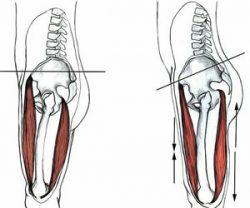
In the picture above we are looking at the balance of the pelvis from the front and back specifically the relationship between the quads and hams. In the first picture we have a neutral pelvis where the quads and hams are well balanced. In the second picture the pelvis is imbalanced due to the shortening of the quads which led to the lengthening of the hamstring. In technical terms the quads are concentrically loaded and the hams are eccentrically loaded causing an anterior pelvic tilt. Now that the pelvis is imbalanced symptoms of tight hamstring, lower back pain, upper back pain, tight traps, neck pain, headaches etc… will emerge. Until we balance the pelvis symptoms will continually plague the individual.

Our spine has three curves in it: One in the low back called the lumbar curve; one in the upper to mid-back called the thoracic curve; and a curve in our neck called the cervical curve. These curves influence one another. If something is off balance in one, the other two will also be out of balance.Since the spine rests on the pelvis, the curves of the spine are also influenced by the position of the pelvis.

Key to skeletal balance, a sense of orientation and muscular coordination, the balanced pelvis forms a rim-like base for the spinal vertebrae, rib cage, shoulder girdle and head.

Like the sprout growing up to form leaves and down to become roots; pelvic core integrity expresses itself in two directions simultaneously. The pelvic basin is responsible for not only being the base of support for the upper body but for transferring weight through the femur heads down through the knees, ankles and feet. How weight transfers through each leg and foot is dependent upon the positioning of the pelvic basin. Only when the pelvis is gravitationally centred can the feet receive and distribute weight evenly.

Pelvic instability shows itself as pelvic tilts, forward flexion, twists, dips or torques. Symptoms associated with instability include mid and low back pain, hip socket tension, leg length discrepancies, knee and ankle problems, TMJ and jaw pain, difficulty in breathing, groin pain, shoulder pain, difficulty in standing and walking, an inability to stand on both feet and excessive muscle tension throughout the body. Even headaches and dizziness may be traced to pelvic instability.

These diverse and complex symptoms reflect the innate involvement of the pelvis with three distinct bio-rhythms. Not only does the pelvic keystone provide the foundation for muscular-skeletal support but it cradles the meningeal-cranial-sacral system (the dynamic fluid relationship between sacrum and cranium) and provides the hard drive for the proprioceptive nervous system (our energetic sense of orientation).


Filed Under: Low Back Pain, Neck Pain, Posture Tagged With: chiropractic, chronic neck pain, neck pain, pelvic tilt, tmj

Chiropractic Care Can Help with Text Neck Problem

January 22, 2016 by drburt

tex neck and chiropractic careChiropractic Care Can Help with Text Neck Problem

Are you currently reading this while hunched over your phone?
📱
If so, here’s a very scary wakeboard call: Chiropractic Care Can Help with Text Neck Problem.
💻
Most people spend an average of two to four hours a day slumped over their smartphones, according to the study, and that awkward position isn’t doing any favors for your neck and back.
📱
We know you won’t be throwing out your phone, tablet, or e-reader anytime soon. That’s fine, just be sure to use it with proper posture, which means your ears are aligned with your shoulders and your shoulder blades are back in the neutral position.
💻

How is Texting Hurting Your Health?

Let’s first put the situation into perspective. Mobile device usage has increased significantly and will continue to do so into the future. According to text-neck.com, Americans spend 2.7 hours per day on average communicating and socializing on their phones, and they spend even more time looking down at their mobile devices for web searching and other uses.

They go on to say that 75% of the world’s population spends hours daily hunched over their handheld devices. Studies also show that people under the age of 30 send an average of 3,000 text messages per month. That’s approximately 100 text messages a day!

Perhaps an even more unsettling thought is the fact that young children and toddlers are now given phones and tablets as play toys. One study found that 75% of children under 8 have access to a smartphone or tablet. It’s also been reported that in the U.S. alone, nearly 1 in 5 kids under the age of 8 use a mobile device at least once a day.

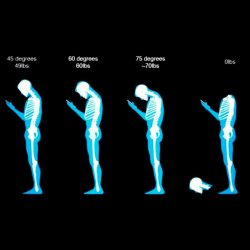
The problem with all this time spent with the head flexed forward is that it increases the risk of developing what has been termed as Text Neck.

What is a Text Neck?

Text neck is the term used to describe the neck pain and damage sustained from looking down at your cell phone, tablet, or other wireless devices too frequently and for too long. And it seems increasingly common. Recently, a patient came in to my practice complaining of severe upper back pain. He woke up and was experiencing severe, acute, upper back muscle strain. I told him I believe the pain is due to the hours he was spending hunched over his cell phone. Diagnosis: Text neck. Of course, this posture of bending your neck to look down does not occur only when texting. For years, we’ve all looked down to read. The problem with texting is that it adds one more activity that causes us to look down—and people tend to do it for much longer periods. It is especially concerning because young, growing children could possibly cause permanent damage to their cervical spines that could lead to lifelong neck pain.

Filed Under: Neck Pain, Posture Tagged With: chiropractic, chiropractor, neck pain, posture, text neck

Diet and Pain Management

June 10, 2011 by drburt

DIET AND PAIN“Changes in the modern diet are largely responsible for the increasing incidence of essential fatty acid (EFA) imbalances and deficiencies.”

“The ratio of omega-6 to omega-3 fats has changed dramatically due to the widespread use of vegetable oils (mostly n-6 fats) in cooking and to the processing of oils to alter omega-3 fats to improve shelf life and eliminate their stronger taste (just think of the distinctive tastes of cod liver or flax oil).”

“Historical estimates place the ratio of omega-6 to omega-3 oils at nearly 1:1 for prehistoric humans.”

By the turn of the century (1900), the ratio had increased to about 4:1. The current American ratio is about 25:1.

“The sharp rise is due to increased vegetable oil consumption: from 2 lb. per year in 1909 to 25 lb. per year in 1985!”

“Many of the chronic inflammatory conditions that accompany EFA imbalance are currently treated with symptom-specific pharmaceutical drugs such as steroids, prednisone, aspirin, and other nonsteroidal anti-inflammatory drugs (NSAIDs), sulfasalazine, and colchicine.”

“The problem with such drug therapies is that they prevent the formation of ‘good’ anti-inflammatory eicosanoids, or they shift the production of one type of eicosanoid to another.”

“For effective, long-term management, eicosanoid production should be modified through dietary changes (balancing dietary intake of specific fats) and controlling insulin levels in the circulation.”

“Maintaining a proper balance between the various families of dietary fats may be one of the most important preventative measures a person can take to reduce the likelihood of developing one of the chronic diseases of modern civilization, such as diabetes, heart disease, obesity, irritable bowel syndrome, and autoimmune disease.”

“And for patients who may already have one of these diseases, EFA testing and therapy has been demonstrated to reduce both morbidity and mortality associated with these diseases.”

Source: American Academy of Pain Management – Weiner’s Pain Management – A Practical Guide for Clinicians


Filed Under: Low Back Pain, Neck Pain Tagged With: carboxylic acids, chemistry, deficiency, Diet, Diets, eicosanoid, essential fatty acid, essential nutrients, fatty acids, flax oil, health, imbalance, incidence, increase, medicine, menagement, nutrition, omega 3 fatty acid, omega 6 fatty acid, pain, treatment of bipolar disorder, vegetable oil

  • « Previous Page
  • 1
  • …
  • 3
  • 4
  • 5
  • 6
  • 7
  • 8
  • Next Page »

PLEASE FOLLOW & LIKE B.C.

RSS
Follow by Email
Facebook
Facebook
fb-share-icon
Twitter
Visit Us
Follow Me
Post on X
YouTube
YouTube
LinkedIn
LinkedIn
Share

15200 Hesperian Blvd #104

San Leandro, CA. 94578

(510) 481-2225

drburt@burtchiropractic.com


SEARCH

Categories

Recent Posts

  • Nutrition and Habits That May Support Pineal Gland Health and Reduce Factors Linked to Calcification
  • Fluoride in San Leandro Drinking Water, the Pineal Gland, and Questions About Human Free Will: A Local Holistic Perspective
  • San Leandro Chiropractor: How Expert Care Helps Injured Patients Navigate SDI and EDD Benefits