Top Chiropractor in San Leandro, CA

San Leandro Chiropractor

  • blog
  • About Our Practice
  • What is Chiropractic?
  • SERVICES
    • Personal Injury
    • Cold Laser Therapy
    • Massage
    • Ultrasound
    • Electric Stimulation
    • Sports Injury
    • Workers Compensation
  • FAQs
  • Locations
  • CONTACT US
  • New Patient Forms
  • Nutrition Store
  • Home

Powered by Genesis

2026 U.S. Economic Outlook: Navigating Uncertainty, Mental Stress, and the Role of Chiropractic Care

May 8, 2026 by drburt

As we move through 2026, the U.S. economy presents a picture of moderate resilience amid persistent challenges. Forecasters project real GDP growth in the 2.0–2.3% range for the year. This pace reflects solid business investment—particularly in AI and technology—alongside fiscal policies and steady consumer spending. However, growth is uneven. Unemployment is expected to edge up modestly to around 4.3–4.6%, with job gains slowing in many sectors while healthcare and tech continue hiring. Inflation remains a concern. Core measures are easing but face upward pressure from energy prices, tariffs, and services costs. Many households still grapple with high housing expenses, healthcare costs, and everyday affordability issues. Policy uncertainty, geopolitical tensions, and elevated national debt add layers of volatility. While a sharp recession is not the baseline forecast, consumer sentiment stays cautious. For millions of Americans, economic pressures translate directly into heightened daily stress. Financial anxiety has become a defining feature of 2026. Surveys indicate nearly half of adults report higher stress levels than the previous year, driven by day to-day expenses, debt, job security worries, and concerns about the country’s direction. This chronic stress fuels a vicious cycle: elevated cortisol, sleep disruption, muscle tension, headaches, and reduced mental clarity. Younger generations, in particular, link financial strain to anxiety and feelings of lost control. When economic uncertainty lingers, the body and mind pay the price—poor posture from desk work or stress-induced clenching, neck and back pain, and nervous system overload. Here is where chiropractic care offers meaningful support. Chiropractic is not a solution for economic problems or a replacement for mental health therapy, but it serves as a powerful complementary tool for managing the physical and neurological effects of stress. Spinal adjustments help restore proper alignment, which can reduce nerve interference and shift the nervous system from sympathetic “fight or flight” dominance toward parasympathetic “rest and digest” balance. Many patients report lower muscle tension, fewer tension headaches, and improved sleep after consistent care. Research and clinical observations link chiropractic interventions to reduced cortisol markers, decreased blood pressure in some cases, and better overall emotional regulation. By addressing posture issues exacerbated by stress, chiropractic care helps break the feedback loop where physical pain amplifies mental strain. In a year of moderate economic growth but ongoing personal pressures, proactive self-care becomes essential. Regular chiropractic visits can improve resilience, boost energy levels, and enhance quality of life when finances and the future feel uncertain. Combined with exercise, financial planning, mindfulness practices, and professional mental health support when needed, it forms part of a holistic strategy. Looking ahead, 2026 rewards adaptability. The economy will likely avoid major contraction while delivering opportunities in innovative sectors. For individuals, protecting mental and physical health is key to navigating whatever comes next. If economic stress is weighing on your body and mind, consider scheduling a chiropractic evaluation. Small, consistent steps today—financial awareness, movement, and proper spinal care—can make 2026 feel more manageable and empowering.
Filed Under: Advice, Ankle, Auto Accidents, Carpal Tunnel Syndrome - CTS, Children, Chiropractic, D.C. Consulting, Diet, Exercises, FAQs, Games, Golfer's Elbow, Headache, Health, Insomnia, Knee, Low Back Pain, Modalities, Neck Pain, Nutriton, Opinion, Personal Injury, Posture, Questions/Answers, Shoulder, Soft Tissue Injury, Spine, Sports, Tennis Elbow, TMJ, TOS, Travel, Uncategorized, Weight Loss Tagged With: back pain, chiropractic, chiropractor, neck injury, san leandro

Shoulder Injury And Chiropractic Rehabilitation – Ski Crash

March 7, 2011 by drburt

Shoulder Injury And Chiropractic Rehabilitation - Ski Crash

Shoulder Injury And Chiropractic Rehabilitation – Ski Crash

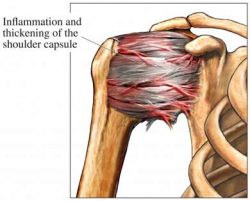
This is the most recent Shoulder Injury case after skiing accident that I have finished rehabilitating in my San Leandro Chiropractic Clinic. Patient is a twenty five year old female. She is a full time student and loves to be involved in different sport activities. She was in a great deal of pain for two months prior coming to my office for rehabilitation of her shoulder.

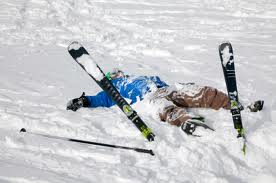
About two months ago my patient was enjoying the white powdered slopes of Lake Tahoe. Unexpectedly she lost a control on one of the turns and fell really hard on her left shoulder. The left shoulder was in a dislocated position for about one hour. That how long it took for paramedics to reach her on a slope. She was taken to a near by Hospital E.R. and was diagnosed with minor shoulder dislocation without any fracture. She got very lucky that her bones were not broken. As usual patient was discharged and prescribed a ton of pain killers with advice to get some rest and applying ice on the injured area.

After getting back to Bay Area, this patient made an appointment with a local orthopedic doctor. This doctor was “nice enough” to see her in about two months. What if patient needs to be seen ASAP, why such a long delay? After all, evaluation and examination does not take hours, and any doctor can figure out what is going within given time frame.

During these two months period my patient had been taken pain medications which would become less and less effective because the intensity of the pain would go up every week. The pain level began affecting her sleep patterns and thus her ability to concentrate on her professional studies. Sleeping on a left side was out of question at all. She stopped working out completely and had to eliminate some of her activities of daily living.

Many would wonder why so much pain, if hospital has discharged her, and orthopedist thought she could wait for two months and he could cure her shoulder in one visit. The answer is simple enough. This patient had soft tissue injury which required immediate rehabilitation post skiing accident. The best result with soft tissue injury rehabilitation, are within first 72 hour post trauma. Read this post for more scientific explanation: “4 Stages of Soft Tissue Healing.” This particular patient had to wait eight weeks and be in a miserable pain.


EXAMINATION:

During examination I have discovered that patient has lost about 70-80% of range of motion in her left shoulder with severe pain at the end range. This pain was present on active and passive range of motion (ROM) tests. Pain during active and passive ROM is a sign that her muscles, ligaments and tendons were injured – sprain and strain injury. All of the rotator cuff muscles were strained with severe pain during palpation.

I knew that I could help this patient. However, eight weeks of lack of motion in a left shoulder caused increased fibrotic tissue around injured soft tissues. That meant only one thing – longer rehabilitation process. This patient was very eager to fix her problem so the compliance was not an issue.


TREATMENT:

Each session consisted of full spine chiropractic adjustments, which helped to enhance the ability of her body to heal itself. If you want to know how this works please refer to this post: “Relationship of the nervous system and spine to organs.”  Prior chiropractic adjustment she would get 15 minutes of electric stimulation with moist hot pack on her left shoulder followed by 20 minutes deep tissue massage from my CMT. After that I would performed post isometric relaxation of her shoulder in flexion, extension, internal and external rotation, adduction and abduction.


RESULTS:

A noticeable response to a therapy was after session number three. Pain level has gone down and ROM has gone up. My original plan was two week of rehabilitation with frequency at three times a week – total six sessions. However, it took me additional 3 sessions to bring this injured shoulder to a full ROM and almost no pain level.

At the end of the session number nine patient informed me that she can have a good night sleep, she can lay down on her left shoulder and she is back to her activities of daily living. She began her exercise routine after last session. Patient was discharged with instructions on how to strengthen and stretch the injured body part.

Below is a Video Testimonial From a Happy Camper!

)


Filed Under: Shoulder

Thoracic Outlet Syndrome, Physiology and Causes – Part 1/3

October 22, 2010 by drburt

What is Thoracic Outlet Syndrome?

TOS

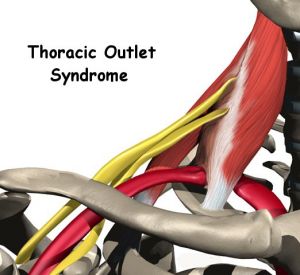
In order to know what Thoracic Outlet Syndrome is, or TOS, it’s best to know what and where you can find the Thoracic Outlet. The space between the collarbone and the first rib is known as the Thoracic Outlet.

The TOS involves a group of disorders that involves the thoracic outlet whether as caused by an injury, compression or irritation of the blood vessels, nerves and veins. The patient may experience neck pain and/or shoulder pain that reaches the arms and even causes finger numbness.

What Are the Causes of  TOS?

The causes for Thoracic Outlet Syndrome vary greatly but generally, it is caused by compression of the blood vessels and nerves in the thoracic outlet. This compression can be caused by any of the following: trauma, congenital defects, poor posture, activity, joint pressure or even pregnancy.

You can have a congenital defect that may cause you to suffer from this condition. If you have an extra rib just above your first rib (cervical rib), or if you have an abnormal fibrous band that connects the spine to your rib, then you are more likely to have TOS.

If you suffer from an accident that causes compression to your thoracic outlet and you experience pain in that area, then you may be suffering from TOS. The onset of the symptoms doesn’t occur after the trauma though as it is usually delayed.

Poor posture can compress the thoracic outlet. Drooped shoulders as well as constantly keeping a forward head position could cause TOS. Repetitive activity is also another cause as the body’s tissue can wear out over time as you do the same activity over and over again. The types of repetitive activities vary from typing to swimming.

Being overweight causes different types of problems. When you are overweight or obese, you tend to put more pressure on your joints that can also cause Thoracic Outlet Syndrome. It’s like carrying around a huge backpack wherever you go.

Pregnancy, just like with obesity, can also cause thoracic outlet syndrome. But with pregnancy, the woman’s body changes and one of these changes happen in the joints. The joints tend to loosen up during pregnancy and women become more prone to suffering from TOS.

What are the Symptoms to Watch out for?

The symptoms of the Thoracic Outlet Syndrome vary as it depends on which of the structures are suffering from compression. The nerves, veins or arteries can get compressed and symptoms such as shoulder or neck pain, pain on the hands and arms, numbness of fingers, vein thrombosis, swelling and arm pain, collarbone throbbing, and discoloration of the hand are just some of the symptoms associated with Thoracic Outlet Syndrome.

How is it detected?

The Thoracic Outlet Syndrome is difficult to diagnose as the severity and symptoms vary greatly. Doctors would suggest the patient to take medical tests to see if they are indeed suffering from TOS. Such tests include Adson’s maneuver, Wright test and Roos stress test.

If you have any additional information about TOS please feel free to ad it in a comment section.

Filed Under: Shoulder

Chiropractic Rehabilitation and 4 Stages of Soft Tissue Healing

August 20, 2010 by drburt

The healing process is divided into four broad stages which are not mutually exclusive and overlap considerably.

1. Initial vascular reaction – Active Swelling

2. Inflammatory response – Passive Congestion

3. Proliferative phase – Repair

4. Remodeling 

Wound healing refers to the body’s replacement of destroyed tissue by living tissue (Walter & Israel 1987). It comprises of two essential components whose differentiation is based on resultant tissue: Regeneration and Repair.

TISSUE INJURY CAUSES RESTRICTION OF MOTION DUE TO:

  1. Inflammation & Swelling
  2. Pain
  3. Muscle Spasm 

THE MAJOR GOALS OF CHIROPRACTIC CARE:

  1. Relieve Pain
  2. Promote Full Healing
  3. Restore & Maintain Full Function
  4. Reduce the Likelihood of Re-Injury
  5. Prevent Accelerated Degeneration 

Chiropractic Care Should Continue Throughout the Repair Stage. It Take Longer For Tissues to Heal & Normal Function to be Restored Than it Takes for Pain Relief. Pain Relief is not the Only Goal.  Chiropractic Helps:

  1. Restore Normal Motion, Function & Biomechanics
  2. Improve Alignment of New Connective Tissue
  3. Prevent Shortening of Scar Tissue & Chronic Stiffness
  4. Restore & Maintain Flexibility of Ligaments & Muscles
  5.  Restore Normal Muscle Tone
  6. Promote Quicker, More Effective Healing
  7. Restore & Maintain Normal Sensation
  8. Reduce the Risk of Re-Injury and Degeneration 

STAGES OF SOFT TISSUE HEALING


STAGE I: ACTIVE SWELLING

  1. Swelling Occurs for 12 to 72 hours
  2. Motion is lost and pain increases 

Goals of Care: Minimize pain and swelling

Care:

  1. Rest & Support of Injured Area
  2. Ice to Block Swelling, Pain, and Spasm 

STAGE II: PASSIVE CONGESTION   

Fluid trapped in tissues restricts motion, causes pain, & delays healing. Begins by second to fourth day

Goals of Care for Passive Congestion:

  1. Remove fluid
  2. Pain Relief
  3. Begin to restore range of motion 

Care:

  1. Chiropractic Adjustments Help
  • restore motion
  • block pain
  • restore normal sensation
  • relax tight muscles
  • remove swelling
  • accelerate healing
  1. Heat and Cold to Remove Fluid
  2. Controlled Motion Exercises
  3. Physical Therapy helps in Some Cases
  4. Acupuncture Can Help With Pain Control 

STAGE III: REPAIR

Beginning 5 days after injury, scar tissue is made for up to 6 weeks. 

Lack of motion causes excess scar tissue in dense patterns disrupting normal function causing:

  1. Excess Scarring
  2. Chronic Stiffness
  3. Limited Range of Motion
  4. Poor Biomechanics
  5. Chronic Pain
  6. Weak Muscles & Ligaments
  7. Loss of Normal Sensation
  8. Poor Nutrition
  9. Increased risk of Re-Injury
  10. Accelerated Degeneration 

If Motion is Restored & Maintained, Tissues Heal in a Much More Functional Way.

Coals of Repair Stage:

  1. Restore Normal Range of Motion
  2. Restore Sensation
  3. Promote Full Healing
  4. Relieve Pain 

STAGE IV: REMODELING 

Connective tissue remodels for better strength & flexibility. This often takes 3 to 14 week but may take up to 1 year with severe injury. 

Chiropractic Helps Achieve these Goals:

  1. Improve & Maintain Motion & Flexibility
  2. Restore & Maintain Function
  3. Reduce Chronic Pain
  4. Reduce Risk of Re-Injury & Degeneration

This Post was based on Dr. Malik Slosberg’s Research.

Filed Under: Auto Accidents, Carpal Tunnel Syndrome - CTS, Chiropractic, Low Back Pain, Neck Pain, Personal Injury, Shoulder, Soft Tissue Injury, Spine Tagged With: alternative medicine, biology, chiropractic, Chiropractic Care, chiropractic rehabilitation, connective tissue, healing, manipulative therapy, medicine, pain, pain relief, physiology, rehabilitation, relieve pain, scar tissue, soft tissue, spinal adjustment, stages, stages of soft tissue healing, tissues, traumatology, wound healing

  • 1
  • 2
  • Next Page »

PLEASE FOLLOW & LIKE B.C.

RSS
Follow by Email
Facebook
Facebook
fb-share-icon
Twitter
Visit Us
Follow Me
Post on X
YouTube
YouTube
LinkedIn
LinkedIn
Share

15200 Hesperian Blvd #104

San Leandro, CA. 94578

(510) 481-2225

drburt@burtchiropractic.com


SEARCH

Categories

Recent Posts

  • Loss of Cervical Lordosis: How a Straight Neck and Pain Impact Your Health—and How a San Leandro Chiropractor Can Help Restore It
  • Hidden Injuries from Car Accidents That a San Leandro Chiropractor Can Help You Detect
  • Best San Leandro Chiropractor for Sciatica Pain Relief: Natural, Drug-Free Solutions That Work