Top Chiropractor in San Leandro, CA

San Leandro Chiropractor

  • blog
  • About Our Practice
  • What is Chiropractic?
  • SERVICES
    • Personal Injury
    • Cold Laser Therapy
    • Massage
    • Ultrasound
    • Electric Stimulation
    • Sports Injury
    • Workers Compensation
  • FAQs
  • Locations
  • CONTACT US
  • New Patient Forms
  • Nutrition Store
  • Home

Powered by Genesis

Soft Tissue Injuries in Tennis: Causes, Common Types, and Chiropractic Rehabilitation in San Leandro, CA

June 5, 2026 by drburt

Tennis is a high intensity sport that demands explosive movements, rapid changes in direction, repetitive swinging, and powerful serves. While it offers excellent cardiovascular and mental benefits, these demands place significant stress on the body’s soft tissues, muscles, tendons, and ligaments. Soft tissue injuries are among the most common issues plaguing tennis players, from weekend warriors to professionals. Understanding these injuries and the role of chiropractic care in rehabilitation can help players recover faster and return to the court stronger.

What Are Soft Tissue Injuries?

Soft tissues include muscles, tendons (which connect muscle to bone), ligaments (which connect bone to bone), and other structures like bursae. Injuries occur when these tissues are overstretched, torn, or inflamed. They fall into two main categories: acute (sudden trauma, such as a twist or awkward landing) and overuse (repetitive stress leading to micro-tears and inflammation).

In tennis, overuse injuries dominate because of the sport’s repetitive nature. Players perform thousands of similar motions in a match—forehands, backhands, serves, and quick lateral shuffles. Without adequate recovery, these actions lead to inflammation, reduced blood flow, and eventual breakdown of tissue. Factors like poor technique, inadequate warm-up, muscle imbalances, improper equipment, and insufficient conditioning increase risk.

Common Soft Tissue Injuries in Tennis

1. Tennis Elbow (Lateral Epicondylitis)
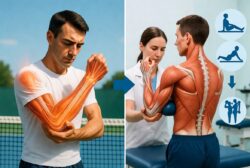
This is perhaps the most notorious tennis injury. It involves inflammation or degeneration of the tendons attaching to the outer elbow, primarily from repetitive wrist extension and gripping. Symptoms include pain on the outside of the elbow that worsens with gripping or lifting. While named after tennis, it affects anyone with repetitive forearm use.

2. Rotator Cuff Tendinopathy and Shoulder Injuries
The shoulder endures immense stress during overhead serves and smashes. Repetitive motion can inflame or damage the rotator cuff tendons, leading to tendinitis, impingement, or partial tears. Bursitis (inflammation of fluid-filled sacs cushioning the joint) often accompanies this. Players notice pain with overhead movements, weakness, and stiffness.

3. Wrist and Forearm Strains/Tendonitis
Quick wrist snaps and gripping the racket strain forearm muscles and wrist tendons. Overuse leads to pain, swelling, and reduced grip strength.

4. Lower Body Injuries: Ankle Sprains, Calf Strains, and Knee Issues
Sudden stops, starts, and lateral movements frequently cause ankle sprains (stretched or torn ligaments). Calf strains (often called “tennis leg”) occur from explosive pushes. Knee problems, including patellar tendonitis or iliotibial band issues, arise from repetitive impact and twisting.

5. Back and Hip Strains
The core and hips generate power for rotation. Poor core stability or tight hips can lead to lumbar strains or hip flexor issues.

These injuries often start subtly with mild soreness but progress to chronic pain if ignored, potentially sidelining players for weeks or months

The Chiropractic Approach to Rehabilitation

Chiropractic care in San Leandro, CA. excels in treating soft tissue injuries through a holistic, non-invasive focus on the musculoskeletal and nervous systems. Unlike treatments relying solely on rest or medication, chiropractic addresses root causes like joint misalignments, muscle imbalances, and nerve irritation that exacerbate injuries.

Initial Assessment and Acute Phase Management


A thorough evaluation includes history, physical exams, range-of-motion testing, and possibly imaging referrals. In the acute phase (first 48-72 hours), the goal is reducing pain and inflammation using the RICE protocol (Rest, Ice, Compression, Elevation), sometimes supplemented with gentle modalities.

Chiropractors may apply:

  • Soft tissue therapies like Active Release Technique (ART), myofascial release, or instrument-assisted soft tissue mobilization (IASTM, similar to Graston). These break down scar tissue, improve blood flow, and restore tissue glide.
  • Low-level laser therapy or ultrasound to reduce inflammation and promote healing.
  • Gentle spinal and extremity adjustments to restore proper joint mechanics and reduce nerve pressure, which can speed recovery even in peripheral injuries.

Rehabilitation and Strengthening Phase
Once acute symptoms subside, rehab shifts to restoring function:

  • Targeted adjustments: Correcting spinal or joint dysfunctions (e.g., in the neck or mid-back) improves overall biomechanics, reducing compensatory stress on the elbow or shoulder.
  • Progressive exercises: Eccentric strengthening (lengthening under load) is key for tendons, like controlled wrist extensions for tennis elbow. Core stabilization, rotator cuff exercises, and balance training address tennis-specific demands.
  • Stretching and mobility work: Improving flexibility in tight areas (e.g., forearms, hips, thoracic spine) prevents recurrence.
  • Functional training: Sport specific drills simulate court movements with proper form.

Chiropractors often collaborate with physical therapists or coaches for comprehensive care. Treatment frequency starts higher (2-3 times per week) and tapers as healing progresses. Many players report significant pain relief within a few sessions and full return to play in 4-12 weeks, depending on injury severity.

Prevention:

Staying Injury Free on the Court Prevention is the best rehabilitation. Incorporate these strategies:

  • Dynamic warm-up: 10-15 minutes of light cardio, arm circles, lunges, and swing simulations.
  • Strength and conditioning: Focus on balanced training rotator cuff, core, glutes, and eccentric forearm work. Include flexibility routines.
  • Proper technique and equipment: Work with a coach. Use a racket with suitable grip size and tension.
  • Recovery practices: Adequate rest between sessions, hydration, nutrition, and foam rolling or massage.
  • Gradual progression: Avoid sudden spikes in training volume.

Listen to your body persistent soreness is a warning sign. Real World Success and Long Term Benefits Consider a recreational player with chronic tennis elbow. After weeks of rest and anti-inflammatories with minimal improvement, chiropractic care involving ART, elbow/wrist adjustments, and a progressive strengthening program resolved symptoms in under a month. The player returned with better serve mechanics and no recurrence after addressing underlying thoracic mobility issues. Chiropractic rehabilitation not only heals the injury but optimizes performance by improving posture, balance, and kinetic chain efficiency from feet to racket.

Conclusion

Soft tissue injuries are an inherent risk in tennis, but they don’t have to end your love for the game. With prompt attention and a comprehensive chiropractic approach focusing on manual therapies, adjustments, and tailored rehab, most players can recover fully and often play at a higher level than before. If you’re dealing with nagging pain or want to prevent injuries, consult San Leandro Chiropractor experienced with racket sports. Invest in your body now so you can enjoy many more matches ahead.

Filed Under: Chiropractic, Exercises, Tennis Elbow Tagged With: chiropractic, medicine, pain, spinal adjustment

2026 U.S. Economic Outlook: Navigating Uncertainty, Mental Stress, and the Role of Chiropractic Care

May 8, 2026 by drburt

As we move through 2026, the U.S. economy presents a picture of moderate resilience amid persistent challenges. Forecasters project real GDP growth in the 2.0–2.3% range for the year. This pace reflects solid business investment—particularly in AI and technology—alongside fiscal policies and steady consumer spending. However, growth is uneven. Unemployment is expected to edge up modestly to around 4.3–4.6%, with job gains slowing in many sectors while healthcare and tech continue hiring. Inflation remains a concern. Core measures are easing but face upward pressure from energy prices, tariffs, and services costs. Many households still grapple with high housing expenses, healthcare costs, and everyday affordability issues. Policy uncertainty, geopolitical tensions, and elevated national debt add layers of volatility. While a sharp recession is not the baseline forecast, consumer sentiment stays cautious. For millions of Americans, economic pressures translate directly into heightened daily stress. Financial anxiety has become a defining feature of 2026. Surveys indicate nearly half of adults report higher stress levels than the previous year, driven by day to-day expenses, debt, job security worries, and concerns about the country’s direction. This chronic stress fuels a vicious cycle: elevated cortisol, sleep disruption, muscle tension, headaches, and reduced mental clarity. Younger generations, in particular, link financial strain to anxiety and feelings of lost control. When economic uncertainty lingers, the body and mind pay the price—poor posture from desk work or stress-induced clenching, neck and back pain, and nervous system overload. Here is where chiropractic care offers meaningful support. Chiropractic is not a solution for economic problems or a replacement for mental health therapy, but it serves as a powerful complementary tool for managing the physical and neurological effects of stress. Spinal adjustments help restore proper alignment, which can reduce nerve interference and shift the nervous system from sympathetic “fight or flight” dominance toward parasympathetic “rest and digest” balance. Many patients report lower muscle tension, fewer tension headaches, and improved sleep after consistent care. Research and clinical observations link chiropractic interventions to reduced cortisol markers, decreased blood pressure in some cases, and better overall emotional regulation. By addressing posture issues exacerbated by stress, chiropractic care helps break the feedback loop where physical pain amplifies mental strain. In a year of moderate economic growth but ongoing personal pressures, proactive self-care becomes essential. Regular chiropractic visits can improve resilience, boost energy levels, and enhance quality of life when finances and the future feel uncertain. Combined with exercise, financial planning, mindfulness practices, and professional mental health support when needed, it forms part of a holistic strategy. Looking ahead, 2026 rewards adaptability. The economy will likely avoid major contraction while delivering opportunities in innovative sectors. For individuals, protecting mental and physical health is key to navigating whatever comes next. If economic stress is weighing on your body and mind, consider scheduling a chiropractic evaluation. Small, consistent steps today—financial awareness, movement, and proper spinal care—can make 2026 feel more manageable and empowering.

Filed Under: Advice, Ankle, Auto Accidents, Carpal Tunnel Syndrome - CTS, Children, Chiropractic, D.C. Consulting, Diet, Exercises, FAQs, Games, Golfer's Elbow, Headache, Health, Insomnia, Knee, Low Back Pain, Modalities, Neck Pain, Nutriton, Opinion, Personal Injury, Posture, Questions/Answers, Shoulder, Soft Tissue Injury, Spine, Sports, Tennis Elbow, TMJ, TOS, Travel, Uncategorized, Weight Loss Tagged With: back pain, chiropractic, chiropractor, neck injury, san leandro

What kinds of exercise equipment are suitable for novices?

November 11, 2015 by drburt

san leandro chiropractorWhat kinds of exercise equipment are suitable for novices?

In today’s hectic life, where taking out time for oneself has become almost unimaginable, youngsters are trying to take out time by exercising their way out. In this context, the youngsters should be guided to exercise in the right way. Any untoward pull of muscle can lead to serious consequences and care should be taken to ensure that no injury takes place. Initially an exercise regimen can be an intimidating experience. A trip to your neighbouring gym can seem very daunting and young people are most likely to get stunned by the assortment of apparatus’ and exercise equipment.

Not all exercise equipment are suitable for all body types and beginners should understand what is required and appropriate for them and their bodies. Whether the exercise routine is for strength, weight loss, lean muscle gain, or overall fitness, routine workout can help one figure things out and start off with the right note toward his or her health and fitness goals. There are chiefly two types of equipment that are important and apt for beginners and they are free weights and machines. Free weights are the most fundamental type of bodybuilding equipment. Free weights are called so because there are no affixed pulleys, cables, pins, or weight stacks and they consist of barbells, dumbbells, and weight plates only. Unlike free weights, machines allow one to perform a diverse range of exercises and are normally easier to rely on and safe than free weights. A number of machines intend to work on individual muscles, whereas some other machines incorporate a number of tools and gears that works on the whole body. With each new day and a new machine, a new muscle gets trained, which is good for the overall fitness in young people.

The exercise equipment most suitable for novices are the leg press machine for overall leg exercise, the hack squat machine for developing the outer seep of the thighs. A Leg Extension machine helps in warming up their quadriceps and the knee joints before proceeding on to squats or leg presses. The Leg Curl machine is used for hamstring exercises and calf machines are of two types – Standing Calf Raise machine which works on the upper calf muscles and the Seated Calf Raise machine which tones the lower calf muscles. The Leg Abduction machine which works on the inner thighs and Adduction machine which works on the outer thighs. Then there is the Lat Pull down machine for the back where the movement is similar to a chin-up but this a better alternative. Coming to the isolation of the pectoral muscles (chest) the Pec Deck Machine is the best. And last but not the least Cables and Pulleys for exercising the entire body using the small attached handle.
For a beginner, using proper equipment can be the best method for developing each body part. Special strength building workouts will make the regimen more productive and the muscle stimulation will be at its maximum. Machine based workouts provide better support for the weaker areas and allows the intended muscle to be isolated and strengthened before progressing to free weight. The best situation is to take in both the free weight and machine exercises in your workout regimens and this way you can get the best of both.


Filed Under: Exercises

Does Gender Impact Exercise Attitude and Functioning?

March 6, 2015 by drburt

Does Gender Impact Exercise Attitude and Functioning?

Does Gender Impact Exercise Attitude and Functioning?

On a scientific level, an average woman has less lean muscle mass (LMM), which is approximately two-thirds lesser, as compared to a man. This is why an average man typically performs far better than a woman in activities that require strength and power due to the greater quantity of LMM in him, in addition to his bigger size and more prominent levels of strength.

Another interesting fact is the hyperextended elbow joint that is only seen among women. Due to the hyperextended joint system, the arms of a woman extend in a turned position thus making the elbows of a woman much closer to each other than in a man. Simply put, the arms of a woman tend to form an ‘X’, whereas the arms of a man are drawn up as parallel lines to each other stretching from the shoulders. It is believed that the angular, supinated position of the woman’s forearm to her upper arm can impede functioning in both flinging actions and movements needing maximum strength.

Statistics also prove that a greater number of men are relatively happy with the way they look and their weight as compared to women. This difference is seen to place a massive impact on why an individual works out and what exercise treatment is eventually attempted.

Another physical difference is that the heart and lungs of a man are far larger than those of a woman. The bigger heart capacity and lungs in a man result in higher stroke volumes and essential capabilities than those of women. More oxygen is pumped in the arterial blood of a man. This component is significant because of the changes of compensatory modifications in cardiac output. Since highest cardiac output is restrained, a woman cannot (relatively) compensate for the lower content of oxygen in the arterial blood. Due to this, the highest amount of oxygen that can be used up while exercising is lower in women than in men.

During strenuous physical workout, women have to raise their heart rate since the stroke volume and functioning are restrained by total blood volume. Hence for a given workload, the average woman is mainly functioning at a level nearer to her utmost capability than the average man, and is likely to get exhausted faster.

Since women have a comparatively lengthier torso and shorter legs, the weight is staggered in the lower parts of the body, than among men and hence women tend to amass fat on the waist, arms and thighs whereas men tend to collect fat mainly on the abdomen, chest and back. Hence it is seen that the female centre of gravitational force is lower than that of men. Some of the chief benefits of having a lower sense of gravitational force are that women have a better sense of balance, a feature that can affect functioning in a number of physical actions.

Temperature can become a restrictive factor in physical functioning, which is why it is important that both men and women develop their own methods of dealing with rising temperature. Research indicates that women have a higher body temperature at rest, lesser number of sweat glands, lower sweat yield and a tendency to begin sweating at higher temperatures than men. In addition, the larger amount of adipose tissue in women works as an insulating material and suppresses heat dissipation. The significance of these fluctuations is that women have less endurance to heat than men. Therefore, women are more subject to heat-stress than men and have to exercise comparatively much more than men to accomplish similar workloads under more soaring levels of heat circumstances.

All elements taken into account, some of the features can hinder a woman’s ability to perform physical activities such as running and jumping, at par with men.

This article is published by Karishma, a guest blogger, passionate towards echo friendly lifestyle. She wrote this article on behalf of www.greencoffeeextractz.com , an online store that offers green coffee bean extract for weight loss seekers.


Filed Under: Exercises

  • 1
  • 2
  • 3
  • Next Page »

PLEASE FOLLOW & LIKE B.C.

RSS
Follow by Email
Facebook
Facebook
fb-share-icon
Twitter
Visit Us
Follow Me
Post on X
YouTube
YouTube
LinkedIn
LinkedIn
Share

15200 Hesperian Blvd #104

San Leandro, CA. 94578

(510) 481-2225

drburt@burtchiropractic.com


SEARCH

Categories

Recent Posts

  • Loss of Cervical Lordosis: How a Straight Neck and Pain Impact Your Health—and How a San Leandro Chiropractor Can Help Restore It
  • Hidden Injuries from Car Accidents That a San Leandro Chiropractor Can Help You Detect
  • Best San Leandro Chiropractor for Sciatica Pain Relief: Natural, Drug-Free Solutions That Work