Top Chiropractor in San Leandro, CA

San Leandro Chiropractor

  • blog
  • About Our Practice
  • What is Chiropractic?
  • SERVICES
    • Personal Injury
    • Cold Laser Therapy
    • Massage
    • Ultrasound
    • Electric Stimulation
    • Sports Injury
    • Workers Compensation
  • FAQs
  • Locations
  • CONTACT US
  • New Patient Forms
  • Nutrition Store
  • Home

Powered by Genesis

2026 U.S. Economic Outlook: Navigating Uncertainty, Mental Stress, and the Role of Chiropractic Care

May 8, 2026 by drburt

As we move through 2026, the U.S. economy presents a picture of moderate resilience amid persistent challenges. Forecasters project real GDP growth in the 2.0–2.3% range for the year. This pace reflects solid business investment—particularly in AI and technology—alongside fiscal policies and steady consumer spending. However, growth is uneven. Unemployment is expected to edge up modestly to around 4.3–4.6%, with job gains slowing in many sectors while healthcare and tech continue hiring. Inflation remains a concern. Core measures are easing but face upward pressure from energy prices, tariffs, and services costs. Many households still grapple with high housing expenses, healthcare costs, and everyday affordability issues. Policy uncertainty, geopolitical tensions, and elevated national debt add layers of volatility. While a sharp recession is not the baseline forecast, consumer sentiment stays cautious. For millions of Americans, economic pressures translate directly into heightened daily stress. Financial anxiety has become a defining feature of 2026. Surveys indicate nearly half of adults report higher stress levels than the previous year, driven by day to-day expenses, debt, job security worries, and concerns about the country’s direction. This chronic stress fuels a vicious cycle: elevated cortisol, sleep disruption, muscle tension, headaches, and reduced mental clarity. Younger generations, in particular, link financial strain to anxiety and feelings of lost control. When economic uncertainty lingers, the body and mind pay the price—poor posture from desk work or stress-induced clenching, neck and back pain, and nervous system overload. Here is where chiropractic care offers meaningful support. Chiropractic is not a solution for economic problems or a replacement for mental health therapy, but it serves as a powerful complementary tool for managing the physical and neurological effects of stress. Spinal adjustments help restore proper alignment, which can reduce nerve interference and shift the nervous system from sympathetic “fight or flight” dominance toward parasympathetic “rest and digest” balance. Many patients report lower muscle tension, fewer tension headaches, and improved sleep after consistent care. Research and clinical observations link chiropractic interventions to reduced cortisol markers, decreased blood pressure in some cases, and better overall emotional regulation. By addressing posture issues exacerbated by stress, chiropractic care helps break the feedback loop where physical pain amplifies mental strain. In a year of moderate economic growth but ongoing personal pressures, proactive self-care becomes essential. Regular chiropractic visits can improve resilience, boost energy levels, and enhance quality of life when finances and the future feel uncertain. Combined with exercise, financial planning, mindfulness practices, and professional mental health support when needed, it forms part of a holistic strategy. Looking ahead, 2026 rewards adaptability. The economy will likely avoid major contraction while delivering opportunities in innovative sectors. For individuals, protecting mental and physical health is key to navigating whatever comes next. If economic stress is weighing on your body and mind, consider scheduling a chiropractic evaluation. Small, consistent steps today—financial awareness, movement, and proper spinal care—can make 2026 feel more manageable and empowering.
Filed Under: Advice, Ankle, Auto Accidents, Carpal Tunnel Syndrome - CTS, Children, Chiropractic, D.C. Consulting, Diet, Exercises, FAQs, Games, Golfer's Elbow, Headache, Health, Insomnia, Knee, Low Back Pain, Modalities, Neck Pain, Nutriton, Opinion, Personal Injury, Posture, Questions/Answers, Shoulder, Soft Tissue Injury, Spine, Sports, Tennis Elbow, TMJ, TOS, Travel, Uncategorized, Weight Loss Tagged With: back pain, chiropractic, chiropractor, neck injury, san leandro

Ultrasound Therapy and Chiropractic Rehabilitation

September 17, 2010 by drburt

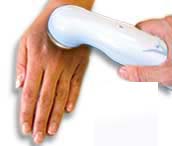
When people hear the word “ultrasound” the first thing that comes to mind is the ultrasound from the OB-GYN where you can view a 2-dimensional or 3-dimensional image of what’s inside your tummy. But, this therapy is not this type of ultrasound as it is a therapeutic procedure that uses sound waves in treating injuries such as with soft tissues, muscles or joints.

The sound waves would vibrate at a frequency that is higher than the range that human ears could hear and it provides a mechanical vibration that provides a micro-massage.  I can either be a thermal or non thermal application at frequencies ranging from 0.72 MHz to 3 MHz.

Ultrasound therapy had been used as a treatment for years for musculoskeletal injuries as it helps in rapidly healing the injured tissue as well as decreasing the pain. However, it is underutilized despite its great potential and this is because of a few factors including the lack of education for therapists to use this treatment. The technique in using this treatment is very specific and some therapists are reluctant as they have been disappointed with previous outcomes which may have been a result of their insufficient training regarding ultrasound therapy.

Therapists must understand how this treatment works in order to get the desired outcome. The potential for success is increased as you combine the knowledge, correct technique and pathology of injury. Things that should be considered by the therapists to ensure a maximum effect for patients are the factors that would affect the absorption of the muscles, hemoglobin and fat, the physiology as well as the delivery process and contraindications for this treatment.

The basic benefits of the ultrasound therapy includes an increased in the elasticity of the collagen found in joint capsules, tendons and scar tissues; an increase in the motor as well as the sensory nerve conduction that helps in reducing the pain; the increase in blood flow; the reduction of muscle spasm from an altered contractile activity of the skeletal muscle; and the muscle spasm reduction through the reduction of the activity of the muscle spindle.

US therapy is just one of the treatments that must be considered in treating musculoskeletal injuries. Other treatments to be considered are electromagnetic radiation, hot packs, electrical stimulation, massage, cryotherapy, heat therapy, Erchonia Cold Laser PL 5000 and exercise. The choice really depends on the therapist and with the type of injury and the location of the injury as well as the condition of the patient.

There certain contraindications. If the patient has these medical conditions then this treatment must be avoided. Medical conditions include malignancy, pregnancy, myositis ossificans, circulatory insufficiency, acute infection, sepsis (severe) infection. Also, if the injury is situated over the heart, spine, eyes, testes, growing bones, carotid sinuses, epiphyseal plates, cervical stellate ganglion, pacemaker or vagus nerve then ultrasound therapy must also be avoided.

Precautions must also be observed for hypersensitivity to the treatment, area of the tendon repair, cemented prosthesis, or of reduced in circulation and with the diminished sense of pain and change in temperature or the lack of it. This type of therapy is available in our office for rehabilitation of our injured patients.

Question: Have you ever experienced ultrasound therapy while rehabilitating your injury?

Filed Under: Ankle, Modalities Tagged With: 3d ultrasound, cryotherapy, frequencies, frequency range, heat therapy, human ears, manipulative therapy, massage, mechanical vibration, medicine, orthopedic surgery, physical therapy, sounds waves, therapy, trigger point, ultrasound, ultrasound therapy, vibrates, wave

Electric Stimulation and Chiropractic Rehabilitation

September 15, 2010 by drburt

Electric stimulation rehabilitation or electrotherapy had been discovered way back in 400 BC with the help of a torpedo fish that produces an electric shock reaching up to 150 volts. People used to take these fish from streams and they place them on the body’s painful area and the electricity produced from the fish controlled the pain.

It was when the gate control theory of pain in 1965 that reintroduced electric stimulation rehabilitation after it had lost the interest of many skeptics in the nineteenth century. The theory suggests that when the large nerve fibers activity increases, it tends to close the gate blocking information or signals of pain to the brain.

Electric stimulation rehabilitation is a form of therapy that introduces electricity to stimulate the muscles and treat the pain & spasms. This type of therapy can be administered to the patient by a professional or you can purchase a home kit and use it at home.

There are three types of the electrical stimulation rehabilitation and they are the general electric therapy, muscular electric therapy and the transcutanous electrical nerve stimulation otherwise known as TENS. The general electric therapy relieves the pain and also heals wounds while the muscular electrical therapy helps in strengthening the muscles by reducing the spasms, while the TENS is used for treating chronic types of pain.

Electric stimulation rehabilitation has several applications. It is used to manage pain either acute or chronic. TENS is most successful in the control of the postoperative incision pain especially if it’s on a small area and self limiting with regards to time, severity and course.

IFC or interference current is another form of the electric stimulation rehabilitation treatment used for pain control. Some clinicians believe that this is more effective in treating muscle pain compared to TENS.

Electrotherapy is also applied to reduce edema of various types. Edema can be a result of trauma that disrupts the blood vessels and the electrical stimulation with voluntary muscle pump activity is effective. Other than this approach, sensory level stimulation is also used but this does not contract the muscles.

Electric stimulation also improves circulation through the neuromuscular electrical stimulation or NMES. It is most effective at a frequency of just 20 to 30 pps with a 10 to 30% contraction at a maximum of 30 minutes of treatment at a time.

Electric stimulation is also applied for a speedier wound healing.

This type of treatment has contraindications. It should not be placed peripherally to the heart or when the patient has a pacemaker. It shouldn’t be placed near the phrenic nerve and must not be used in the presence of malignancy.

If a recently sutured tendon or nerve is present, a superficial metallic implant, pregnancy during the first trimester and active bleeding are experienced by the patient then this type of treatment must also be avoided.

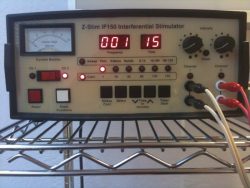
There are several electric stimulators available such as the Z-Stim IF 150 and the H-Wave electric stimulator. The Z-Stim IF 150 produces TRUE interferential therapy by its two channels with 4 pad output. It is used to stimulate the nerves and muscles for edema, acute pain and for rehabilitation of muscles. The H-Wave is an ultra low frequency electric stimulator that helps in pain control and functional restoration. It has a 3-channel and 2-channel models. The 3-channel model is used in clinics while the 2-channel is a home therapy model. Both of these models are available for rehabilitation of our patients.

Question: Have you ever experienced electrical stimulation therapy while rehabilitating your injury?

Filed Under: Ankle, Modalities Tagged With: bc, electric shock, electric stimulation, electric therapy, electrical muscle stimulation, electrical stimulation, electroanalgesia, electrotherapy, fishing, functional electrical stimulation, medicine, neuroprosthetics, neurotechnology, nociception, pain, produce, rehabilitation, sacral nerve stimulation, torpedo fish, transcutaneous electrical nerve stimulation

Ankle Injury and Rehabilitation Options

August 30, 2010 by drburt

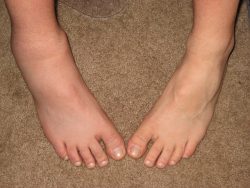
 People tend to injure their ankles at least at one point in their lives. Adults who play sports and children alike can sustain an injury. For instance, kids can play outside with their friends and come home complaining about their ankle. They could also hurt themselves by jumping around the bed or playing by themselves at home. Games like basketball, football, soccer or running could cause some serious injury to ones ankle. It’s important to spot the difference on the type of injury suffered by the kids or adults as the injured ankle could have a sprain, strain or have a torn ligament. By knowing the signs, you could treat the injury appropriately.

So, what’s the difference between a sprain, strain or torn ligament? A strained injury happens when you twist the ankle and is usually quite common as the tendon is only stretched but not torn. If it’s a sprained injury, the ligament is partially torn while the torn ligament injury has a completely torn ligament in the ankle.

Ankle injury usually heals by resting and protecting the injured part. Swelling usually occurs and an ice pack would help reduce the swelling. Typical advice by a majority of health care practitioners is to follow a typical advice: R.I.C.E. (Rest, Ice, Compression and Elevation). Though rest alone can heal the injured ankle eventually, as our body naturally can heal itself, this can take a lot of time without proper rehabilitation. Proper rehabilitation process will help to expedite the healing process of the surrounding injured soft tissues around the ankle.  By rehabilitating the injured ankle, you allow the blood to flow into the area and scar tissue build up is prevented. It also gives you a lower risk of future injury as the ankle becomes much stronger and flexible.

Rehabilitation – The process of restoring a person to goo: health, condition, operation, capacity, and life – through the use of therapy and education.

Rehabilitation Therapy – acts as a medical treatment that restores, improves and maintains strength, fitness, movements, and function of areas of the body that have been injured or impaired.

Other treatments for ankle injury are also being offered or studied. One treatment is by thermal therapy for sprained ankles. What it does is it relieves the symptoms of the sprain through heat therapy. But, there’s a different effect for heat therapy as compared to cold therapy. If the sprain is more severe and there’s a lot of swelling, using heat therapy will only worsen it. For milder sprains, you can use the heat therapy treatment. For severe sprains, it has to be avoided.

In heat therapy, timing is important. Heat allows the blood vessels to relax and this means, it can swell. Make sure you time the treatment when the sprain already had a chance to heal enough and the swelling is down. Usually this is 3 days after the injury occurred. By using this therapy, you are allowing your ankle to improve its mobility but it doesn’t help in relieving pain. This is particularly helpful when you start feeling your ankle is stiffening.

Another treatment that is still being studied right now is the “cross-over” effect where you train your uninjured ankle and gain improvement on your injured and immobilized ankle. Clinical studies have shown a small percentage of improvement by training a non-dominant leg with the dominant leg and it’s believed to be the case for the ankles as well. This is because of how our nervous system works. It learns to coordinate movements from one part of the body to the other similar body part by improving it even if the other similar body part is immobilized.

At my clinic I use PT modalities (Electric Stimulation and Moist Heat combination, Ultrasound, Erchonia PL 5000 Cold Laser, Elastic Wrap, CMT (Certified Massage Therapy) and Manual Chiropractic Adjustment). Electric Stimulation helps to bring the pain level down in the first couple of week of the therapy and heat brings more blood to the injured area as well as allows it to be more relaxed for the next step. Next modalities are Ultrasound or Erchonia PL5000 Cold Laser. I alternate them with every other session. Next patient sees my CMT for 15 minutes, My massage therapist breaks the scar tissue down and moves injured ankle through its natural Range of Motion. After massage I adjust an ankle and wrap it witt an elastic wrap for a better support.

Question: Did You Ever Have Ankle Injury? What Kind of Rehabilitation process did you have?

Filed Under: Ankle

PLEASE FOLLOW & LIKE B.C.

RSS
Follow by Email
Facebook
Facebook
fb-share-icon
Twitter
Visit Us
Follow Me
Post on X
YouTube
YouTube
LinkedIn
LinkedIn
Share

15200 Hesperian Blvd #104

San Leandro, CA. 94578

(510) 481-2225

drburt@burtchiropractic.com


SEARCH

Categories

Recent Posts

  • Loss of Cervical Lordosis: How a Straight Neck and Pain Impact Your Health—and How a San Leandro Chiropractor Can Help Restore It
  • Hidden Injuries from Car Accidents That a San Leandro Chiropractor Can Help You Detect
  • Best San Leandro Chiropractor for Sciatica Pain Relief: Natural, Drug-Free Solutions That Work