Top Chiropractor in San Leandro, CA

San Leandro Chiropractor

  • blog
  • About Our Practice
  • What is Chiropractic?
  • SERVICES
    • Personal Injury
    • Cold Laser Therapy
    • Massage
    • Ultrasound
    • Electric Stimulation
    • Sports Injury
    • Workers Compensation
  • FAQs
  • Locations
  • CONTACT US
  • New Patient Forms
  • Nutrition Store
  • Home

Powered by Genesis

Natural Relief for Chondromalacia Patella: San Leandro Chiropractic Care, Amrex Ultrasound, and Chondroitin Sulfate

June 17, 2026 by drburt

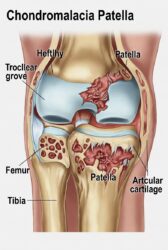
Chondromalacia patella, often called “runner’s knee,” involves the softening and breakdown of the cartilage on the underside of the kneecap (patella). This condition causes anterior knee pain, especially during activities like climbing stairs, squatting, or prolonged sitting. It commonly affects athletes, active young adults, and those with biomechanical imbalances such as poor hip or knee alignment. While cartilage damage is challenging to reverse fully, conservative treatments can significantly reduce pain, improve function, and slow progression.

Chiropractic Care:

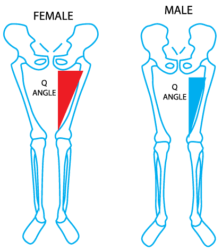
Addressing the Root Causes. Chiropractic care offers a non invasive, holistic approach ideal for chondromalacia patella. Chiropractors focus on correcting misalignments in the pelvis, hips, spine, and knee that contribute to uneven pressure on the patella. Adjustments improve joint biomechanics, reduce muscle imbalances (particularly in the quadriceps and vastus medialis obliquus), and enhance overall lower extremity alignment. Patients often experience reduced pain and better knee tracking after regular sessions. Chiropractic also incorporates soft tissue work, stretching, and rehabilitative exercises to strengthen supporting muscles and prevent recurrence. Many clinics combine this with postural corrections and gait analysis for long term relief. Studies and clinical reports support chiropractic management for patellofemoral pain syndrome, showing improvements in pain and function without surgery. Also misaligned Sacroilliac Joint in females can increase Valgus or (Q- angle) and can cause biomechanical problems with long term stress during physical exercises and just normal ADL ( activities of daily living)

A normal structural knee angle (known as the Q-angle) in females ranges from roughly 10° to 15°. Angles exceeding 15° to 20° often indicate structural genu valgum (“knock-knees”). During dynamic movements like landing or pivoting, females frequently demonstrate greater inward knee collapse than males, heavily elevating ACL injury risks

Amrex Ultrasound Therapy:

Deep Healing Power.

At San Leandro Chiropractor office settings, therapeutic ultrasound is a popular modality for knee conditions. Amrex ultrasound units (such as the Synchro Sonic U/50 or combo models) are reliable, portable devices widely used in clinics. They deliver high-frequency sound waves that penetrate deep into tissues, promoting:

  • Increased blood circulation
  • Reduced inflammation and swelling
  • Enhanced tissue repair and flexibility
  • Pain relief through thermal and non-thermal effects

For chondromalacia patella, ultrasound helps soothe irritated tissues around the patellofemoral joint and supports cartilage health indirectly by improving the environment for healing. Treatments are comfortable, often combined with electrical stimulation for better results, and sessions typically last 10–15 minutes. Many patients report noticeable pain reduction and improved mobility after a course of therapy.

Chondroitin Sulfate: Nutritional Support for Cartilage

Chondroitin sulfate, a natural component of cartilage, is a popular supplement for joint health. Taken orally (often 800–1200 mg daily, sometimes paired with glucosamine), it may help by:

  • Slowing cartilage breakdown
  • Reducing inflammation
  • Supporting the synthesis of new cartilage matrix
  • Improving joint lubrication and shock absorption

Research, including MRI studies on knee osteoarthritis (closely related to chondromalacia), shows chondroitin can reduce cartilage volume loss and bone marrow lesions over months. While results vary, many individuals with knee pain experience less stiffness and better function. It’s generally safe with few side effects, making it a valuable addition to conservative care. Always consult a healthcare provider before starting supplements.

Integrating These Approaches for Best Results

A comprehensive plan might include chiropractic adjustments 1–2 times weekly, Amrex ultrasound sessions, targeted physical therapy exercises (like closed-chain quad strengthening and hip abductor work), activity modification, and daily chondroitin supplementation. Ice, rest from aggravating activities, and weight management further support recovery. Most people see improvement within weeks to months with consistent conservative care. If you’re struggling with kneecap pain, consult a qualified chiropractor or sports medicine specialist for personalized evaluation. Early intervention can help you return to pain-free movement and avoid long term issues like arthritis.
Filed Under: Chiropractic, Knee, Nutriton, Opinion Tagged With: chiropractic, health, nutrition, pain, san leandro chiropractor, spinal adjustment

The Female Pelvis, Sacroiliac Joint Dysfunction, and Its Impact on Knee Alignment and Pain: A Chiropractic Perspective

June 3, 2026 by drburt

The sacroiliac (SI) joints are critical yet often overlooked structures that connect the sacrum at the base of the spine to the ilia of the pelvis. In women, these joints bear unique biomechanical demands due to a wider pelvic structure, greater inherent mobility, and hormonal influences. When the SI joint becomes misaligned or dysfunctional whether through hypermobility, hypomobility, or inflammation it can trigger a cascade of compensatory changes down the open kinematic chain, frequently manifesting as altered knee angles also knows as Q-angle and persistent knee pain.

This scientific blog post explores the anatomy and biomechanics specific to females, the mechanisms linking SI joint issues to knee problems, and the evidence supporting chiropractic intervention. Anatomy and Sex Specific Biomechanics of the SI Joint. The SI joints are synovial joints with irregular, auricular-shaped surfaces designed primarily for stability and load transfer rather than large ranges of motion. Normal motion is minimal: typically less than 4° of rotation and about 1.6 mm of translation. They function as shock absorbers, transmitting forces from the upper body to the lower extremities while resisting shear.

Women exhibit greater SI joint mobility than men maximum range of motion around 2.8° versus 1.2° in males. This increased laxity stems from a broader pelvis (adapted for childbirth), more pronounced ligamentous flexibility, and hormonal factors like relaxin, which softens ligaments during pregnancy. These adaptations, while essential for reproduction, predispose women to higher stresses, loads, and ligament strains at the SI joint. SI joint dysfunction (SIJD) involves aberrant motion or position either excessive movement (instability/hypermobility) or restricted movement (fixation/hypomobility). Common contributors in women include pregnancy and postpartum changes, leg length discrepancies, poor posture, repetitive stress, trauma, and muscle imbalances. Prevalence data suggest SIJD accounts for 15–30% of low back pain cases, with higher rates in females, particularly during reproductive years.

How SI Joint Misalignment Affects Pelvic Position and Knee Biomechanics.

A misaligned or dysfunctional SI joint disrupts pelvic symmetry and orientation. Common patterns include unilateral anterior or posterior pelvic tilt (torsion), iliac rotation, or sacral shear. These changes alter the position of the acetabulum (hip socket), affecting femoral alignment and tracking.

Down the kinematic chain:

  • Altered hip mechanics: Pelvic torsion can cause relative hip internal or external rotation, changing the Q-angle (quadriceps angle) at the knee. Increased dynamic knee valgus, where the knee collapses inward is a frequent compensation. Studies link anterior pelvic tilt and pelvic asymmetries to greater knee valgus stress.
  • Gait and loading changes: Research on female runners with SI joint pain shows reduced knee flexion, greater tibial overstride, and increased ankle dorsiflexion compared to controls. These adaptations increase ground reaction forces and uneven loading across the knee joint.
  • Muscle inhibition and imbalances: SIJD often inhibits gluteal and core muscles, leading to over-reliance on quadriceps or altered patellar tracking. One study demonstrated that SI joint manipulation increased knee-extensor moment and reduced muscle inhibition.

These biomechanical shifts contribute to conditions like patellofemoral pain syndrome (PFPS), iliotibial band syndrome, and accelerated joint wear. Knee pain from SIJD may be referred (radiating to the posterior thigh or knee without true sciatica) or mechanical, often felt as aching, sharpness with stairs or transitions, or a sense of instability/buckling.

Pelvic misalignment can functionally create a leg length discrepancy, forcing compensatory pronation or supination at the foot and valgus/varus stress at the knee. In women, the combination of wider Q-angles and pelvic laxity amplifies these effects.

Clinical Presentation in Women.

Symptoms often include one-sided low back or buttock pain radiating to the groin, thigh, or knee. Pain worsens with prolonged standing, walking, single-leg activities, or rising from sitting. Pregnancy-related SIJD is especially common due to relaxin-induced laxity plus increased load, with many women experiencing persistent postpartum issues if not addressed.

Diagnosis relies on clinical tests (e.g., FABER, Gaenslen’s, Fortin’s finger test, sacral thrust) rather than imaging alone, as X-rays or MRI may miss subtle dysfunction. Differential diagnosis must rule out lumbar radiculopathy, hip pathology, or inflammatory conditions. How Chiropractic Care Addresses SIJD and Associated Knee Pain. Chiropractic care targets the root biomechanical dysfunction through precise adjustments, soft tissue techniques, and rehabilitation offering a conservative, evidence-informed approach.

High-velocity, low-amplitude (HVLA) manipulations: Side-posture or prone adjustments to the SI joint and lumbar spine restore motion in hypomobile segments, reduce pain, and improve load distribution. A study of 32 women with SIJD found greater improvements in pain and mobility (immediate, 2 days, and 30 days post-treatment) with HVLA to the SI and lumbar regions versus other therapies.

  • Mobilizations and muscle energy techniques (MET): Gentler options suit hypermobile or acute cases, helping normalize joint play.
  • Full kinetic chain assessment and correction: Addressing lumbar, hip, foot, or leg length issues prevents recurrence. Adjustments can quickly reduce quadriceps inhibition, improving knee function.
  • Rehabilitative exercises: Core stabilization (e.g., planks, bird-dogs), glute strengthening, pelvic tilts, and proprioceptive training enhance force closure of the SI joint. Pelvic belts provide temporary stability, especially postpartum.

Randomized trials support chiropractic manipulation for SIJD, showing reductions in pain and disability comparable to or faster than exercise alone. One trial comparing manipulation, MET, and home exercise found manipulation provided the quickest relief.

Outcomes for knee pain: By restoring pelvic symmetry and hip mechanics, chiropractic reduces abnormal knee stresses. Patients often report decreased referred knee pain and improved gait stability. Multimodal care (adjustments + exercise) yields the best long-term results.

Limitations and Integrated Care.

While highly effective for many, results vary. Hypermobile patients may need more emphasis on stabilization than manipulation. Severe cases or those with neurological deficits warrant medical co-management, possibly including injections or, rarely, fusion. Chiropractic is not a standalone cure but excels in conservative management.

Prevention and Long-Term Management

Maintain strong core and glute muscles, practice good posture, use proper lifting mechanics, and consider supportive footwear. Postpartum screening for pelvic stability is crucial. Regular chiropractic check ups can catch subtle dysfunctions early.

Conclusion

In women, SI joint misalignment is a common but under-recognized driver of knee angle alterations and pain via disrupted pelvic and lower limb biomechanics. Chiropractic care, grounded in restoring alignment, mobility, and neuromuscular control, offers significant relief and functional improvement. Early intervention can break the pain cycle and prevent chronic issues.

If you experience pelvic, low back, or knee pain that hasn’t responded to isolated knee treatments, consult a qualified chiropractor for a comprehensive biomechanical evaluation.

Filed Under: Chiropractic, Knee, Posture Tagged With: chiropractic, kneepain, pain, pelvis, sanleandro

2026 U.S. Economic Outlook: Navigating Uncertainty, Mental Stress, and the Role of Chiropractic Care

May 8, 2026 by drburt

As we move through 2026, the U.S. economy presents a picture of moderate resilience amid persistent challenges. Forecasters project real GDP growth in the 2.0–2.3% range for the year. This pace reflects solid business investment—particularly in AI and technology—alongside fiscal policies and steady consumer spending. However, growth is uneven. Unemployment is expected to edge up modestly to around 4.3–4.6%, with job gains slowing in many sectors while healthcare and tech continue hiring. Inflation remains a concern. Core measures are easing but face upward pressure from energy prices, tariffs, and services costs. Many households still grapple with high housing expenses, healthcare costs, and everyday affordability issues. Policy uncertainty, geopolitical tensions, and elevated national debt add layers of volatility. While a sharp recession is not the baseline forecast, consumer sentiment stays cautious. For millions of Americans, economic pressures translate directly into heightened daily stress. Financial anxiety has become a defining feature of 2026. Surveys indicate nearly half of adults report higher stress levels than the previous year, driven by day to-day expenses, debt, job security worries, and concerns about the country’s direction. This chronic stress fuels a vicious cycle: elevated cortisol, sleep disruption, muscle tension, headaches, and reduced mental clarity. Younger generations, in particular, link financial strain to anxiety and feelings of lost control. When economic uncertainty lingers, the body and mind pay the price—poor posture from desk work or stress-induced clenching, neck and back pain, and nervous system overload. Here is where chiropractic care offers meaningful support. Chiropractic is not a solution for economic problems or a replacement for mental health therapy, but it serves as a powerful complementary tool for managing the physical and neurological effects of stress. Spinal adjustments help restore proper alignment, which can reduce nerve interference and shift the nervous system from sympathetic “fight or flight” dominance toward parasympathetic “rest and digest” balance. Many patients report lower muscle tension, fewer tension headaches, and improved sleep after consistent care. Research and clinical observations link chiropractic interventions to reduced cortisol markers, decreased blood pressure in some cases, and better overall emotional regulation. By addressing posture issues exacerbated by stress, chiropractic care helps break the feedback loop where physical pain amplifies mental strain. In a year of moderate economic growth but ongoing personal pressures, proactive self-care becomes essential. Regular chiropractic visits can improve resilience, boost energy levels, and enhance quality of life when finances and the future feel uncertain. Combined with exercise, financial planning, mindfulness practices, and professional mental health support when needed, it forms part of a holistic strategy. Looking ahead, 2026 rewards adaptability. The economy will likely avoid major contraction while delivering opportunities in innovative sectors. For individuals, protecting mental and physical health is key to navigating whatever comes next. If economic stress is weighing on your body and mind, consider scheduling a chiropractic evaluation. Small, consistent steps today—financial awareness, movement, and proper spinal care—can make 2026 feel more manageable and empowering.

Filed Under: Advice, Ankle, Auto Accidents, Carpal Tunnel Syndrome - CTS, Children, Chiropractic, D.C. Consulting, Diet, Exercises, FAQs, Games, Golfer's Elbow, Headache, Health, Insomnia, Knee, Low Back Pain, Modalities, Neck Pain, Nutriton, Opinion, Personal Injury, Posture, Questions/Answers, Shoulder, Soft Tissue Injury, Spine, Sports, Tennis Elbow, TMJ, TOS, Travel, Uncategorized, Weight Loss Tagged With: back pain, chiropractic, chiropractor, neck injury, san leandro

10 Little Known Secrets about Healthy Knees

September 8, 2010 by drburt

healthy knees Healthy Knees and 10 Little Known Secrets

It is impossible to keep your knees healthy and in perfect shape even when you are getting older. What’s important is that you know the secrets in maintaining healthy knees. Prevention is really better than cure so if you are still not suffering from any knee problem, you must already start to follow these tips in keeping your knees healthy.

First tip is to warm up before doing any type of activity. It is very simple and it allows the synovial fluid to flow through your joints so you won’t experience more friction while working out. Remember, as you jump or run or do squats, your knee is absorbing a lot of the force and in time, it can deteriorate.

2nd, stay in shape and maintain a healthy weight. The more weight you carry around the more your knee joints get stressed.

3rd maintain good ankle mobility. Exercise your ankles to increase its mobility as the ankle’s function affects the health of the knee. Start by standing with your feet just a short distance (a few centimeters) away from the wall then keep the heels on the ground while trying to touch the wall with your knee. Repeat this several times while stepping back a little each time. Calf stretching is also necessary if you are feeling some tightness.

4th, improve hip function. Try some glut exercises to improve your hip function as this will ease the knees. Your hips can absorb more impact thus decreasing the stress on your knees.

5th, increase hip mobility. This is similar with improving the ankle mobility. If your hip moves well, you can squat in the right position without having your knees absorb the most weight and stress.

6th, diet supplements! If you’re an active athlete or perhaps you carry weights or go to the gym, most probably you are putting more stress to your knees than normal. This can deteriorate the knees but this can be prevented by taking supplements. Fish oil supplements have great benefits and also have anti inflammatory effects on your joints. Glucosamine and Chondroitin are also great diet supplements to keep your bones and joints healthy and strong.

7th, stop when it starts to hurt.  If you’re suffering from knee pain and it hurts when you do a certain action then you should stop it. Whatever is causing you pain could further add more damage and degeneration to the knee. Try to slowly integrate the action as you figure out the problem. If you are injured, doing the action won’t do you any good but this doesn’t mean you should stop it forever.

8th, stretch! Stretching is great for relaxing your muscles after an activity. Your muscles should recover after an activity to prevent fatigue.

9th, cycling for rehabilitation. If you do suffer from knee pain or injury, cycling is a great exercise to improve joint mobility. It is a knee friendly exercise with very low impact.

10th, muscle endurance is important. By increasing the endurance of your muscles, they won’t get into fatigue quickly. Low impact cardiovascular activities would do the trick. Improving muscle endurance during knee rehabilitation will also speed up the healing process.

Question: Was this information helpful? Please leave a comment. Thank you

Filed Under: Knee Tagged With: anterior cruciate ligament reconstruction, injured knees, injuries, knee, knee brace, knee injuries, knee pain, knee rehabilitation, knee treatment, knees, ligament, ligaments, massage, medicine, orthopedic surgery, osteoarthritis, pain, running, sprain, sprained knee, strain, surgery, swelling of the knee, treatment options

  • 1
  • 2
  • Next Page »

PLEASE FOLLOW & LIKE B.C.

RSS
Follow by Email
Facebook
Facebook
fb-share-icon
Twitter
Visit Us
Follow Me
Post on X
YouTube
YouTube
LinkedIn
LinkedIn
Share

15200 Hesperian Blvd #104

San Leandro, CA. 94578

(510) 481-2225

drburt@burtchiropractic.com


SEARCH

Categories

Recent Posts

  • Loss of Cervical Lordosis: How a Straight Neck and Pain Impact Your Health—and How a San Leandro Chiropractor Can Help Restore It
  • Hidden Injuries from Car Accidents That a San Leandro Chiropractor Can Help You Detect
  • Best San Leandro Chiropractor for Sciatica Pain Relief: Natural, Drug-Free Solutions That Work