Top Chiropractor in San Leandro, CA

San Leandro Chiropractor

  • blog
  • About Our Practice
    • YELP REVIEWS
  • What is Chiropractic?
  • SERVICES
    • Personal Injury
    • Cold Laser Therapy
    • Massage
    • Ultrasound
    • Electric Stimulation
    • Sports Injury
    • Workers Compensation
    • HS Sports Physical Examination
  • FAQs
  • CONTACT US
  • New Patient Forms
  • Nutrition Store

Powered by Genesis

Patients Questions and Dr. Burt’s Answers #14-#18

October 8, 2010 by drburt

QUESTIONS ANSWERSDo you think I have a concussion?

I was at cheer practice yesterday, and we were staging, and I guess I got hit in the face somehow. I don’t remember any of it. I barely remember anything that happened yesterday afternoon. I don’t remember the incident, or any of the rest of practice. It hurts a lot. I was knocked to the ground, I was told, and the next thing I remember is sitting on the ground holding my head.

It is still swollen a little, I’ve been dizzy since it happened, and it has been about 29 hours later, I still have a bad headache, even though I am on numerous ibuprofen, and I keep saying bazaar things. I am mixing up words, and saying things that don’t make any sense. I feel really dizzy still, and it is hard to concentrate, and I have a lack of motivation to do my work (when normally I used to do everything to the dot and on time. all a -student.) but now, I am irritable, and I feel confused. But I don’t know about what.
My mom won’t take me to the doctor, even though my coach thinks I have a concussion. She thinks “ill be fine”.

What should I do?

Answer:

In my professional opinion I think you most likely had a concussion. The only way to find out how serious is to go to a Hospital and get CT Scan done of your brain. Your mother must take your complaints seriously. If she does not listen, you must go to your school’s nurse and have her evaluate you. If necessary she will refer you out to a specialist. Dizziness, difficulty concentrating, confusion are all signs of a concussion. Please do not delay seeing a specialist ASAP.

I have a migraine, how do I get rid of it ?

Hello , I have a painful migraine . I got it today around 5:30 pm , it is now 7:52 pm where I live its not as painful anymore , now it feels like a regular headache but it still hurts and I want it to go away. We have no Advil or Tylenol in my house & my mom cant get any because she is sick as well .
Do you have any home remedies? or what ?
My birthday is Friday & I would hate for me to still have one .
I remember I had one migraine that lasted a whole week when I was little 🙁 & I hope it doesn’t happen it again .

So any home remedies ? Or what should I do?
Thanks.

Answer:

Since your mother is sick I assume she will not take you to a local Chiropractor to have your neck checked. At this point and time I would recommend you to educate yourself about migraine headaches – taking into consideration that it is migraine  and you can use some stretches that will help to reduce the stress in the musculature of your cervical spine.  Please read the following

1. Exercises For Cervical Strain

2.  Headache Secrets Revealed and Chiropractic Care  

3.  C1 Vertebral Level and Chiropractic http://bit.ly/aIqkiQ

4.C2 Vertebral Level and Chiropractic http://bit.ly/cVFc8r

How To Get Better Sleep?

Every time I wake up, I always have a stiff neck. I have tried to lessen the amount of pillows…same result, even if I sleep with 10 pillows it is still stiff in the morning. I have also tried icing it down while I sleep. Please help. Thanks a lot!

Answer:

This is an advice that I usually give to my patients who have similar problem. Your pillow width must match the width of your shoulder base. In plain English –  junction of your neck and shoulder and junction of your upper extremity and a shoulder. The width of your of a shoulder base must match the width of the pillow width after you place your head on it. This will insure that your cervical spine is in neutral position all night long. Neutral position of the cervical spine will insure that you don’t have a sore neck in the morning or during a sleep. It would be a great idea if you could go see a local CMT for your strained muscles

How to get rid of constipation?

I am always constipated and its really annoying because I always feel like I need to go but can’t 🙁 I’m fed up of it now…I spoke to my doctor about it recently and she said that it is because of the pills I have taken but basically she didn’t care & just told me take a laxative. but I don’t really want to take them anymore because I was constipated for about a month not long ago and I took them everyday for about 1-2 weeks and they didn’t even work as well as they should have. It’s really embarrassing as well because every time I go my belly makes these really loud rumbling sounds *sighs. I eat so healthy I could never squeeze in anymore salad & veg but I also eat a lot of take always help?
Oh and I heard that drinking water helps is that true because barley drink more than a can of diet coke a day.

Answer:

First of all you need to stop drinking diet coke. Diet coke contains Aspartate (Artificial Sugar) which is known as damaging neurotransmitters in your central and peripheral nervous system. Plain water is the best way to go.

You must go see you local chiropractor and have your L1 Vertebral Level Checked. When the peripheral nerve at this vertebral level is not functioning properly one of the symptoms is constipation. Just remember there is a cause to every problem. Laxative is not a solution. Please read this post for better understanding of your problem –

Relationship of The Nervous System And Spine To Organs  … read more

What is wrong with my ankle?

Ever since Saturday (it is now Wednesday) my ankle has been really swollen. I’m a runner and run anywhere from 3-5 miles daily. It also feels creaky when I try to roll it around, what is wrong? I’ve had lactic acid build up in the past, but it wasn’t like this, could it be the lactic acid again? Should I stop running on it? Because I was told that you should keep exercising when you have lactic acid build up…

Answer:

Swollen ankle usually indicates that there is sprain or strain of the soft tissue in your ankle. It usually happens to runners. I would suggest that you go see a local Chiropractor who has Physical Therapy modalities and Certified Massage Therapist as a staff member.

Please read this post – Ankle Injury and Rehabilitation Options …read more

Filed Under: Questions/Answers Tagged With: alternative medicine, answering, burt, cervical spine, cheer practice, chiropractic, concussions, guess, health, human interest, manipulative therapy, medicine, migraine, migraine headaches, patient, patient questions, questions and answers, somehow, yesterday

Cycling – Lower Back and Neck Pain

October 6, 2010 by drburt


Cycling
My Race @ Folsom Cyclebration 2010

Your body contacts the bicycle in three areas; your hands, your seat, and your feet. The relative positions of feet, seat and hands determine your comfort and efficiency on the bike. There are several variables that determine these positions; crank length, distance from crank center or bottom bracket to saddle, saddle angle, seat tube angle and saddle offset, distance from saddle to handlebar, relative height of saddle and handlebar width, and handlebar drop on road style handlebars. When these measurements are not taken seriously into consideration, pain and fatigue is inevitable during the ride.

Lumbar and Cervical spine pain is experienced very frequently by cyclists, and it can have  numerous different causes. The most common cause of any type of biking ache is owing to an improper bike fit. After having your bike professionally fit which can be completed at professional bike shops and some chiropractic offices, use the following guidelines to create any essential adjustments:

1.Moving your saddle backwards could aid to reduce lumbar spine and knee pain but might increase neck and shoulder tension.

2.Handlebar height reduction could improve lower back and hamstring muscle stress nevertheless may trigger increased neck and shoulder stress, and hand numbness.

3.When the saddle is set too high, cyclist becomes unstable and the hips might rock slightly from side to side, placing a strain on the muscles that stabilize rider’s lower back. A leg length difference could produce a comparable kind of dilemma, which can be detected during a chiropractic exam.

Another cause of  lower back pain is the tension placed on your spinal discs, joints, and muscles because of the continuous forward Position of cyclist. To neutralize these postural stressors, appropriate stretching prior, throughout, and following riding is very important. Standing up during prolonged riding, as well as alternately bending forward and arching backwards, will help to relieve lower back stress. Tilting your head from side to side will aid to stretch out your neck muscles while riding, but keep your eyes on the road at all times!

The 3rd major cause of neck and lower back pain in cycling is due to the “Multiple Micro Whiplash” syndrome  trigerred by the ROAD SHOCK of the constant jarring forces experienced during riding. The following recommendations will assist to reduce these potentially injurious forces:

•Increase your cycling work out slowly to appropriately condition your body.

•Use a wider tire with less of inflation to decrease road shock.

•Change your hand positions regularly and unlock your elbows.

•Use padded gloves and a light helmet.

Question: Was this review helpful?

Filed Under: Sports Tagged With: back, bicycle, bicycle frame, cervical spine pain, cycling, cyclist, health, horse anatomy, horse tack, knee pain, low back pain, lower back, lows, lumbar, medicine, neck pain, necked, pain, saddle, spine pain, sustainability

Temporomandibular Joint (TMJ) Dysfunction Physiology and Causes

October 1, 2010 by drburt


What is TMJ?

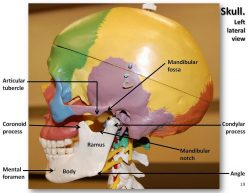
temporomandibular jointThe temporomandibular joint, or often called as TMJ, is the joint of the jaw. We have two temporomandibular joints that work in unison, one on the either side of the jaw. It got its name because of the temporal bone and the mandible that forms the joint.

It is the most used joint in our body. It has 6 main components and they are the mandibular condyles, the capsule, the articular surface to the temporal bone, the articular disc, lateral pterygoid and the ligaments.

What is TMJ Dysfunction?

This condition is common and affects over 10 million Americans today. It is affecting the  mastication muscles and the tissue components.  It can be a medical or a dental condition or a collection of conditions.

What are the causes ?

There are different factors that can influence the inflammation of the Temporomandibular joints such as teeth grinding, a direct physical trauma that causes disc derangement, stress, hypermobility of the joint, hypomobility of the joint, osteoarthritis, rheumatoid arthritis and many others.

What are the symptoms ?

Pain on the jaw and facial muscles is one of the first symptoms you would notice when you have TMJ dysfunction. It may even radiate to your neck and shoulders. You may feel this pain when you talk, yawn or chew. The pain is usually felt in front of the ear or on the jaw itself.

Ear pain, headaches, tinnitus and hearing loss may also be a symptom of  Temporomandibular joint dysfunction. This can get confusing as some might think they have an ear infection or ear problem when in fact, the pain is radiated because of TMJ dysfunction.

You may hear a popping, clicking or grating sound when you move the joint. This is caused by an abnormal position of the disc. Others may also hear the popping sound.

Swelling of the mouth or the face can also occur due to inflammation.

Lock jaw whether opened or closed is also a common symptom of TMJ dysfunction.

Teeth may not align properly and no longer touch as you bite on food. Teeth can also start to loosen or get broken or become sensitive.

Swallowing may become difficult because the muscles on the jaw area start to spasm.

You may feel nauseated or have a headache or dizziness.

How is TMJ Dysfunction diagnosed?

A health professional can properly diagnose a dysfunction by beginning with a thorough evaluation of the patient’s medical history. After which the health professional would make a physical examination on the patient to identify the disorder.

A treatment program would then be specified by the health professional according to the severity of the disorder. Treatment programs may include lifestyle modification, techniques for self relaxation, proper education regarding Temporomandibular joint dysfunction, restoration of the jaw’s range of motion, mobilization of the soft tissue, joint mobilizations, nerve stimulation, rehabilitation, etc.

The treatment program would be a per-patient basis. Thus, you may have a different treatment program compared to another patient who is also suffering from TMJ dysfunction. Part 2 is going to be about specific treaments options for this debilitating codition.

Question: Have you or anyone you know had a TMJ Dysfunction ? What kind of treatment otions have you had?

Filed Under: TMJ Tagged With: anatomy, bruxism, causes, dental anatomy, dentistry, dysfunction, hypermobility, jaw, jaws, joint, mandible, medicine, pain, temporomandibular joint, temporomandibular joint disorder, temporomandibular joint dysfunction, temporomandibular joint tmj, tinnitus, tmj, tmj dysfunction, unison

Ultrasound Therapy and Chiropractic Rehabilitation

September 17, 2010 by drburt

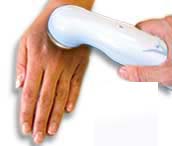
ULTRASOUND When people hear the word “ultrasound” the first thing that comes to mind is the ultrasound from the OB-GYN where you can view a 2-dimensional or 3-dimensional image of what’s inside your tummy. But, this therapy is not this type of ultrasound as it is a therapeutic procedure that uses sound waves in treating injuries such as with soft tissues, muscles or joints.

The sound waves would vibrate at a frequency that is higher than the range that human ears could hear and it provides a mechanical vibration that provides a micro-massage.  I can either be a thermal or non thermal application at frequencies ranging from 0.72 MHz to 3 MHz.

Ultrasound therapy had been used as a treatment for years for musculoskeletal injuries as it helps in rapidly healing the injured tissue as well as decreasing the pain. However, it is underutilized despite its great potential and this is because of a few factors including the lack of education for therapists to use this treatment. The technique in using this treatment is very specific and some therapists are reluctant as they have been disappointed with previous outcomes which may have been a result of their insufficient training regarding ultrasound therapy.

Therapists must understand how this treatment works in order to get the desired outcome. The potential for success is increased as you combine the knowledge, correct technique and pathology of injury. Things that should be considered by the therapists to ensure a maximum effect for patients are the factors that would affect the absorption of the muscles, hemoglobin and fat, the physiology as well as the delivery process and contraindications for this treatment.

The basic benefits of the ultrasound therapy includes an increased in the elasticity of the collagen found in joint capsules, tendons and scar tissues; an increase in the motor as well as the sensory nerve conduction that helps in reducing the pain; the increase in blood flow; the reduction of muscle spasm from an altered contractile activity of the skeletal muscle; and the muscle spasm reduction through the reduction of the activity of the muscle spindle.

US therapy is just one of the treatments that must be considered in treating musculoskeletal injuries. Other treatments to be considered are electromagnetic radiation, hot packs, electrical stimulation, massage, cryotherapy, heat therapy, Erchonia Cold Laser PL 5000 and exercise. The choice really depends on the therapist and with the type of injury and the location of the injury as well as the condition of the patient.

There certain contraindications. If the patient has these medical conditions then this treatment must be avoided. Medical conditions include malignancy, pregnancy, myositis ossificans, circulatory insufficiency, acute infection, sepsis (severe) infection. Also, if the injury is situated over the heart, spine, eyes, testes, growing bones, carotid sinuses, epiphyseal plates, cervical stellate ganglion, pacemaker or vagus nerve then ultrasound therapy must also be avoided.

Precautions must also be observed for hypersensitivity to the treatment, area of the tendon repair, cemented prosthesis, or of reduced in circulation and with the diminished sense of pain and change in temperature or the lack of it. This type of therapy is available in our office for rehabilitation of our injured patients.

Question: Have you ever experienced ultrasound therapy while rehabilitating your injury?

Filed Under: Ankle, Modalities Tagged With: 3d ultrasound, cryotherapy, frequencies, frequency range, heat therapy, human ears, manipulative therapy, massage, mechanical vibration, medicine, orthopedic surgery, physical therapy, sounds waves, therapy, trigger point, ultrasound, ultrasound therapy, vibrates, wave

  • « Previous Page
  • 1
  • …
  • 14
  • 15
  • 16
  • 17
  • 18
  • …
  • 20
  • Next Page »

PLEASE FOLLOW & LIKE B.C.

RSS
Follow by Email
Facebook
Facebook
fb-share-icon
Twitter
Visit Us
Follow Me
Post on X
YouTube
YouTube
LinkedIn
LinkedIn
Share

15200 Hesperian Blvd #104

San Leandro, CA. 94578

(510) 481-2225

drburt@burtchiropractic.com


SEARCH

Categories

Recent Posts

  • San Leandro Chiropractor for Auto Accident & T-Bone Collision Rehabilitation
  • The Hidden Danger of Whiplash: Why Minor San Leandro Intersections Lead to Major Pain
  • How to Sleep with Lower Back or Neck Pain: Practical Advice from a San Leandro Chiropractic Office