Top Chiropractor in San Leandro, CA

San Leandro Chiropractor

  • blog
  • About Our Practice
    • YELP REVIEWS
  • What is Chiropractic?
  • SERVICES
    • Personal Injury
    • Cold Laser Therapy
    • Massage
    • Ultrasound
    • Electric Stimulation
    • Sports Injury
    • Workers Compensation
    • HS Sports Physical Examination
  • FAQs
  • CONTACT US
  • New Patient Forms
  • Nutrition Store

Powered by Genesis

The First Scoliosis Coil in the Country – East Bay Upright MRI

November 8, 2010 by drburt

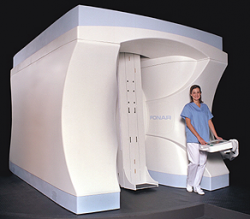
The First Scolisos Coil  - East Bay MRI
East Bay MRI - Hayward, CA

East Bay Upright MRI has acquired a coil that take a full image of the entire upright spine – it takes only eight minutes to complete this process. This radiation free evaluation can also monitor the success of treatment provided by a Doctor. The only way that evaluation of scoliosis can be accurate is when the patient is in upright position. Conventional, recumbent MRI machines can not deliver necessary results. This radiation-free application can be performed in the same amount of time and at the same cost as diagnosis and monitoring by X-RAY. Coil MRI sees curvature of  the vertebrae and the soft tissue as well. There are sagital and axial views of the entire spine – with no radiation exposure whatsoever. The 3 plane visualizations are achieved by 3D acquisition with curved multi planar reconstruction. Both Cobb angles and angular rotation of the vertebrae are measured, including the spinal cord, intervertebral discs, nerve roots and spinal ligaments. The National Cancer Institute reported a study in 2000 of 5466 women that demonstrated with scoliosis experienced a 70% greater risk of developing breast cancer that resulted from their protracted exposure to diagnostic X-RAY.

This is what a practicing neurosurgeon, Dr. Joseph Afertzon, M.D. has to say about this technology: “This technology offers unique advantages in scoliosis imaging. It can show dynamic properties of the scoliotic curve in lateral bending. It is also becoming a unique tool in screening and following pediatric patients with scoliosis. It offers precise three dimensional data preferable to regular x-ray and saves our young patients from significant radiation exposure caused by numerous follow-up X-RAYS.”

Multi positional Technology MRI benefits

  1. Patients are scanned upright in weight-bearing positions, in positions of pain or other symptom, and positions of flexion, extension, lateral bending and rotation. This is made possible by the upright MRU’s unique configuration that includes a spacious vertical gap.
  2. A seat can be attached to the bed so patients can be scanned in an upright seated position.
  3. The bed rotates from upright to horizontal so patients can also be scanned recumbent.
  4. Recumbent-only MRI can underestimate the maximum degree of the pathology and miss its dynamics nature
  5. Large patients can be scanned. The is rated for up to 500 pounds
  6. Patients that can not lie down can be scanned, such a patient wit severe kyphosis.
  7. There is unparallel patient comfort because there is nothing in front of the patient’s face except for a 42-inch flat-screen television

Question: What is your opinion about Upright MRI? Please leave your feedback in a comment section.
Filed Under: Posture, Spine Tagged With: bay, coil, coils, east bay, east bay upright mri, kyphosis, magnetic resonance imaging, medical imaging, medicine, mri, mri machine, radiology, scoliosis, spine, the first, the usa, upright, upright mri, usa east, vertebra, vertebral column

Sciatica Pain Relief and Chiropractic Treatment

November 5, 2010 by drburt

What is Sciatica?

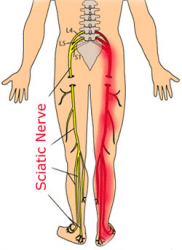
SCIATIC NERVE AND CHIROPRACTICSciatica is not a medical condition in itself but rather a symptom of other medical problems. It refers to the pain, numbness, tingling or weakness felt in the legs as an effect of compression or injury of the sciatic nerve.

The pain is usually felt in the buttocks, lower back or at various parts of the patient’s leg including the foot. The pain is usually severe combined with weakness of the muscles as well as numbness and tingling sensation. This condition is usually felt only on one side of the patient’s body.

Treatment Options

The treatment for the symptoms depends on the problems that cause the symptoms. Sciatica can be caused by spinal disc hernia, spinal stenosis, pregnancy, piriformis syndrome and many other conditions. What’s important is that the patient gets a proper diagnosis of his or her problem in order to get the right treatment.

Treatments for this condition vary from taking pain medications to surgery. Anti-inflammatory medications and paracetamol are taken to relieve the pain experienced by the patient. If this isn’t enough, narcotics can also be used especially if the pain is already severe.  Steroid injections provide short-term relief and benefits as well. Acupuncture, physical therapy, massage therapy and chiropractic care are also great treatment for sciatica. Some also benefit from yoga sessions and weight loss to reduce the pressure on the nerve roots of the spine.

Chiropractic treatment

Sciatica is treatable by chiropractic care and most of the time, it responds positively after spinal adjustments on the patient’s lower lumbar vertebrae as well as on the sacroillac joints. Some types of nerve irritation respond much faster while some takes a little while depending on the severity of the case and especially if the symptoms are already chronic.

A type of sciatica that is very difficult to deal with even for a chiropractor is when there is an actual herniation of the patient’s intervebral disc. This causes extreme pain that even taking narcotics and analgesics won’t give enough relief for the patient.

Before considering a chiropractic treatment to aid in your symptoms, you must know that most spinal adjustments done can only provide you with short-term relief to pain. It really depends on what causes the symptoms of nerve irritation and you must consult with your health professional regarding the matter. Your local chiropractor would tell you if your problem that results to sciatica symptoms can be improved through chiropractic care.

The best way to get real pain relief the pain in this condition is to relieve the sciatic nerve of the pressure. Correcting the root of the problem is the best solution in order to completely recover from the injury. If you only want pain relief then it will only be a temporary solution. Finding the real source and correcting it would get rid of the symptoms for a long time. By permanently relieving pressure off the sciatic nerve is the best solution to the problem.

Question: Have you or anyone you know experienced Sciatica?  What kind of treatment have you had?

Filed Under: Low Back Pain Tagged With: acupuncture, chiropractic, chiropractic treatment, general practice, intervertebral disc, manipulative therapy, medical conditions, medicine, neurology, orthopedic surgery, pain, pain medication, pain relief, piriformis syndrome, sciatic nerve, sciatica, sciatica pain relief, sciatica symptoms, spinal adjustment, treatment

Who is Your Chiropractor Doctor Burt?

November 1, 2010 by drburt

Chiropractic OfficeMany of my patients ask me the same question during the course of the care in my clinic. Who is your chiropractor Dr. Burt and how often do you get adjusted? I love to get my spine adjusted and I am certainly the type of Chiropractor who is utilizing the service that he is preaching about. As many already know I am an avid Mountain Biker and my body needs frequent maintenance after prolonged and fast pace rides.

I am fortunate enough to have two chiropractors who adjust my spine on regular bases and both of these Docs get the same in exchange. One of my Chiropractors is Dr. Rick Ciderstrome who is practicing in Castro Valley and the other One is Dr. Robert Faggiano who is practicing in  Fremont. Dr. Rick is coming to my clinic every Friday after 3.00 pm

where we exchange Chiropractic adjustments with each other. Dr. Rob comes in twice a month, usually on Monday and we do the same.  Chiropractic adjustment from a different Doctor is like a handwriting, it does not feel or look the same. Both of these Docs have different adjusting styles and virtually achieving the same result.

Here is a list of  topics that can help you to understand how chiropractic care can benefit anyone:

What Can a Doctor of Chiropractic Do to Help? Read More …

Common Musculoskeletal Complaints. Read More …

Why is Posture so Important? Read More …

How to Manage Pain? Read More …

What is a Pinched Nerve? Read More …

What is a Subluxation? Read More …

What is a Spinal Dysfunction and How Doctor of Chiropractic Can Help? Read More …

Below are two videos where you can witness how I get my Chiropractic adjustment.

Filed Under: Chiropractic, Questions/Answers Tagged With: alternative medicine, burt, burt many, care, chiropractic, chiropractic controversy and criticism, chiropractic history, chiropractic office, chiropractor, chiropractor doctor, clinics, courses, doctor, doctors, manipulative therapy, medicine, patient, questions, spinal adjustment, who is

Thoracic Outlet Syndrome Treatment Techniques – Part 2/3

October 25, 2010 by drburt

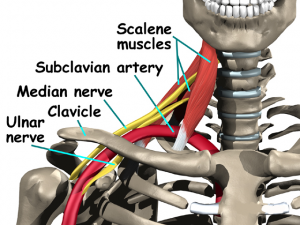
Thoracic Outlet Syndrome treatment techniques

TOS

There are different treatment methods available for thoracic outlet syndrome such as exercises, treatment therapy and even surgery.  There are other non-conventional treatments available too, such as the Chinese acupuncture.

Chinese acupuncture needles

The Chinese acupuncture technique uses microcurrent device that are polarized at 50 to 75 microamperes, and zimmer pads. It uses point combination in treatment of TOS. PC6, SI3, ST41 and Liv4 are point combinations used.

The treatment takes 4 weeks with 2 to 3 sessions each week. The acupuncturist would insert the acupuncture needles subcutaneously and place stimulation pads (microcurrent) on top of each of the needles.

The polarized acutron mentor pads are applied on top of the needles directly. It has a positive and negative pad; the positive pad’s applied on the scalene muscle insertion (anterior) and the negative pad on the PC6 or the SI3. The electric stimulation usually cannot be felt by the patient as the microcurrent is sub-sensational. Some patients are more sensitive though and they can feel a tingling or vibrating sensation on the area but it’s quite subtle.

After 8 treatments, patients notice some improvement. The pain and burning or tingling sensation is minimized and the patient’s requirement for pain medication is also decreased or even stopped. Daily activities that require strength on the upper extremities are easily performed compared before the patient had the treatment.

With acupuncture therapy, the patient is still required to do some stretching exercises at home. These exercises are targeted on improving and recovery of the scalene muscles and tendons. It should be performed 3 times a day with at least 5 repetitions each time. Posture should also be improved to gain the proper biomechanics of the body.

Home exercises

A treatment plan for thoracic outlet syndrome or TOS requires a home exercise program to increase the speed of recovery. These exercises must be performed carefully and slowly. Each stretch position must be done to a point that you stretch without experiencing pain. Once you feel pain that means it’s too much and the patient must decrease the length of the stretch to a point that it is still painless. As you progress, you can extend the length of the stretch with pain as an indicator of your limit.

Corner stretch, neck stretch, shoulder rolls, thoracic extension, and overhead raise are just some of the home exercises prescribed by the medical professional to be exercised by the patient suffering from TOS.

Chiropractic Approach

Proper treatment of thoracic outlet requires an accurate understanding of the postural factors involved. Most recent treatment programs consider evaluation of joint mobility and muscular imbalance.

Once diagnosis of thoracic outlet syndrome is made by a Doctor of Chiropractic, a specific treatment program is designed for the patient.

More specifically, chiropractic management will focus on joint mobility in the cervical (neck) and thoracic (upper back) regions of the spine. Frequently, patients with thoracic outlet will have joint tightness in these areas which is treated with spinal manipulative therapy, stretching and rehabilitation in the office.

Keep in mind; there are other conditions that may cause similar symptoms. In either case, if you are currently suffering from similar symptoms, be sure to consult your chiropractor.

A chiropractic doctor might also advice you exercise routines and they may even prescribe you with their own exercise programs. Make sure you consult with the doctor before doing any of the home exercises to make sure that what you’re doing is actually going to improve and not worsen your condition.

The home exercises treatment technique combined with a proper treatment therapy from a medical professional is the best way to increase the speed of recovery and to diminish the pain suffered by TOS patients.

If you have any additional information, please write about it in our comment section.

Filed Under: TOS Tagged With: acupuncture, alternative medicine, back, chinese acupuncture, chiropractic, exercise, exercise program, home exercise, manipulative therapy, medicine, neurology, stretching exercises, syndromes, techniques, thoracic, thoracic outlet, thoracic outlet syndrome, thoracic outlet syndrome treatment, treatment

  • « Previous Page
  • 1
  • …
  • 12
  • 13
  • 14
  • 15
  • 16
  • …
  • 20
  • Next Page »

PLEASE FOLLOW & LIKE B.C.

RSS
Follow by Email
Facebook
Facebook
fb-share-icon
Twitter
Visit Us
Follow Me
Post on X
YouTube
YouTube
LinkedIn
LinkedIn
Share

15200 Hesperian Blvd #104

San Leandro, CA. 94578

(510) 481-2225

drburt@burtchiropractic.com


SEARCH

Categories

Recent Posts

  • San Leandro Chiropractor for Auto Accident & T-Bone Collision Rehabilitation
  • The Hidden Danger of Whiplash: Why Minor San Leandro Intersections Lead to Major Pain
  • How to Sleep with Lower Back or Neck Pain: Practical Advice from a San Leandro Chiropractic Office