Top Chiropractor in San Leandro, CA

San Leandro Chiropractor

  • blog
  • About Our Practice
  • What is Chiropractic?
  • SERVICES
    • Personal Injury
    • Cold Laser Therapy
    • Massage
    • Ultrasound
    • Electric Stimulation
    • Sports Injury
    • Workers Compensation
  • FAQs
  • Locations
  • CONTACT US
  • New Patient Forms
  • Nutrition Store
  • Home

Powered by Genesis

Papaya and Health Benefits

March 11, 2011 by drburt


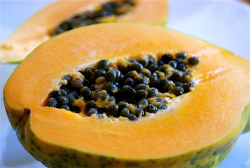
PAPAYA AND YOUR HEALTHCalled as  a “fruit of the angels” Papaya with its appealing appearance of musky undertones and light colored texture is tastefully sweet was once considered as an exotic fruit but is now found everywhere in the world throughout the year. Though, the season of fall and summer produces the most papaya.
Pear-shaped and spherical, a this fruit can grow as long as 20 inches with the normal size on the market measuring an average of 7 inches and weighs 1-2 pounds. The inner flesh an orange color with pink and yellow hues. The inner cavity of the fruit is color black with round shaped seeds rooted in a gelatin-like form. Its seeds are edible but tastes a bit bitter on the mouth. The papaya also contains papain, a type of enzyme that helps greatly in digesting proteins. The papain is heavily concentrated inside the fruit when it is still on the unripe stages. The Papain is also extracted to create digestive enzyme dietary supplements and is one of the main ingredients in making bubble gums.
Papayas are not only delicious fruits that present a luscious site to the eyes by way of its tropical colors. It is also a good source of rich antioxidants and other nutrients such as Vitamin C, Vitamin B, carotenes, flavanoids, pantothenic acid, folate, fiber, magnesium and potassium. These nutrients and minerals help improve the over-all health of the cardiovascular system and also help combat and prevent against colon cancer.
Papaya has a lot of health benefits. It protects against heart disease because it is rich in vitamin C, A and E. These three powerful antioxidants help prevent the oxidation and buildup of cholesterol.  The association of both the Vitamin E and C produces the compound ‘paraoxonase’ a type of enzyme that lowers HDL cholesterol and LDL cholesterol buildup therefore lessening the chances of suffering from strokes and heart attacks. Another factor why this fruit lessens the risk of heart attack is its richness in fiber. The folic acid and fiber creates the homocysteine substance and converts it into benign amino acids such as methionine and cysteine, a conversion of nutrients that reduces the damage to the blood vessel wall thereby significantly reducing the risk for a heart attack.
Papaya also helps prevents colon cancer by having its fiber bind together cancer-causing toxins and rids of them separately away from the completely healthy colon cells. With the help of beta-carotene, vitamin C and E, found in this tasty fruit,  these nutrients serves as the wall that protects against the risk of colon cancer.
Immune support and anti-inflammatory treatment is another benefit. Other health benefits include; protection against macular degeneration or vision loss. In a medical study published in the Archives of Ophthalmology, it states that consuming 3 or more servings of fruits that includes papayas per day causes a significant reduce of vision loss compared to individuals who only consumes an average of 1.5 fruits per day.
People suffering from Rheumatoid arthritis are also advised to eat a lot of papayas as the rich vitamin C content of a papaya provides individuals with protection against other forms of inflammatory polyarthritis. Here are just some of the reasons why a Papaya should be a part of everybody’s diet, it is not only tasteful but healthy as well.

If you have anything to add to this post, please feel free to Post a comment or share your thoughts through Facebook, Twitter or comment section below to join the conversation.


Filed Under: Health Tagged With: antioxidant, biology, chemistry, dietary fiber, dietary supplements, digestive enzymes, exotic fruit, flora, flora of belize, Fruit, fruits, health, health benefits, light color, musky, nutrition, papaya, pear shaped, tropical agriculture, undertone, vitamin c

MSG or Monosodium Glutamate and Your Health

January 19, 2011 by drburt

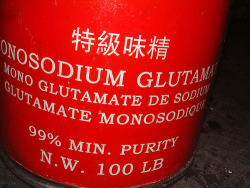
MONOSODIUM GLUTAMATEPrevious post was about Aspartame and how dangerous it is for your health. Today I would like to talk about other food additive that is extremely dangerous for your health. This additive is found in every fast food chain restaurants and food stores – MSG or Monosodium Glutamate. This is not the first time you hear about this brain cells excitatory and then killing compound. MSG adds a great flavor to your taste buds but takes away years of your life, just like smoking, drinking alcohol, consumption of High Fructose Corn Syrup, and Aspartame containing products. Many manufacturers are adding Monosodium Glutamate for a better taste of food. Your brain is being fooled by the excitatory effect of this chemical compound. For a very short period of time your brain speeds up and reacts sharply. People usually become addictive to the foods that have high concentration of MSG.

MSG and Your Brain

MSG has been found to be the cause of a great variety of human brain diseases – Alzheimer’s disease, Huntington’s disease, Parkinson’s disease, high blood pressure, stroke and even brain cancer. This product has also been linked to be the cause of an allergic reaction in patients who have asthma. Research proved that large quantity of MSG has caused the death of brain cells. The cause of death of these brain cells was the free radical production during chemical process that is taking inside of the cell. When this research was published, public forced baby-food companies to discontinue mixing MSG with the products that they produce.

There have been many reports from individuals concerning how eating foods with MSG affect their health in a negative way. In 1995, the FDA reaffirmed the safety of monosodium glutamate and found no evidence that it causes long-term health problems. The FDA did admit that some people could have short-term reactions to MSG. The negative symptoms of eating foods with this additive might include: headaches, the feeling of swelling in the face, flushing and or sweating, rapid fluttering of heartbeats or heart palpitations, nausea, chest pain, shortness of breath, numbness, burning or tingling around the mouth area, weakness, and fibromyalgia. Here is a guide to  “The Connection Between Fibromyalgia & Monosodium Glutamate.” (affiliate link) Fibromyalgia and Chronic Pain are complex conditions and difficult to diagnose. Severe or mild, let me show you how to eliminate the pain forever.

If you ate enough foods all day that contained MSG, it could build up in your body. This could lead to some of the symptoms mentioned above later at night including the heart palpitations. As people are now growing up eating more monosodium glutame containing foods, we could be getting more sensitive to it, which makes its reactions in our body worse when we eat it.

Processed Food Labeling – Read It Carefully

Every manufacturer hides MSG in their products by naming them differently. Please read the label carefully and look for the following names: hydrolyzed plant protein, yeast extract, sodium caseinate, malt extract, bouillon broth and protein concentrate. This chemical can also be found in the following products: milk products, soft drinks, candy, chewing gum, health drink powders, some medications and in binders for nutrients, supplements and both prescription and over-the-counter medicines.

Free and Bound Glutamate

Glutamate is a natural neurotransmitter in the brain. Its function is to control the nervous system and proper brain and organ function. When a person consumes food with high levels of MSG the brain cells and glutamate receptors get over stimulated. Many food producing companies state that monosodium glutamate exposed to the same metabolic process as glutamate from natural occurring food and therefore they claim it harmless to a human health. MSG glutamates are unbound and are able to quickly spike blood levels with glutamate.

High levels of glutamate will over stimulate brain neurons and as a result could be the cause of psychological and physical problems. Age, disease and stress level will be the factor of how sensitive the organism is to monosodium glutamate. There were reports of permanent brain damage with an overdose of this chemical compound. Glutamate receptors are found in the following parts of the body: brain, heart, lungs and the pancreas, where glutamate is a neurotransmitter.

Please read labels carefully before you purchase food product for a store. Remember – HEALTH IS THE MOST VALUABLE ASSET !!!

Please Post a comment or share your thoughts through Facebook, Twitter or comment section below to join the conversation.

Filed Under: Health Tagged With: alzheimer's disease, biology, Brain, brain cancer, brain cells, chemistry, food additives, food and drink, food stores, glutamate, glutamate receptor, glutamic acid, human brain, monosodium, monosodium glutamate, msg, neurotransmitters, sodium compounds, taste, yeast extract, your health

Coenzyme Q10 Supplementation is Critical For Your Health

January 14, 2011 by drburt

CoenzymeQ10Coenzyme Q10 (CoQ10) is an essential element in the creation of energy that cells need for their life support. CoQ10 also know as Ubiquinone because it is ubiquitous, meaning that it is part of every living cell in our body. When the level of Coenzyme is reduced to 25 percent many health problems may appear. High Blood Pressure, Heart Attacks, Immune Deficiencies and cancer are a few of the diseases. It is a scientific fact, that when the level of Coenzyme drops below 75 percent the life can no longer exist.

CoenzymeQ10 support cellular energy production by helping create adenosine triphosphate (ATP), which is the body’s primary source of stored energy. Muscle cells, produce ATP with fuel released from foods – glucose, fatty acids, amino acids, various enzymes, oxygen and CoQ10.

Coenzyme Q10 is also functions as an important antioxidant, which provides protection from oxidative damaging process that is taking place in fat-soluble media such as cell membranes, which are composed of fatty acids. This Coenzyme, also works together with Vitamin E to prevent the damage to lipid membranes and plasma lipids. Like other antioxidants, CoQ10 also provides protection against the accumulation and deposits of oxidized fats in blood vessels, which eventually can cause atherosclerosis. (This information was taken from Molecular Medicine, 1994, vol. 15)

Coenzyme is sold in tablets or soft gel capsules. For best absorption, take the tablets with a little fat or in the soft gel capsule form. Therapeutic doses range from 30 to 100 mg per day or more – this amount exceeds 10 to 40 times the amount found in organ meet, the most concentrated dietary source of CoQ10. Most studies use dosages of 100 mg or more per day, but patients with heart problems can take up to 300mg per day. Coenzyme Q10 stays in the blood for along time, so doses don’t need to be divided over the day.  The effects of CoQ10 usually takes several weeks to notice, and long term use may be required for those patients who have serious heart conditions.

Please Post a comment or share your thoughts through Facebook, Twitter or comment section below to join the conversation.

Filed Under: Health Tagged With: adenosine triphosphate, amino acids, antioxidants, biochemistry, biology, cell membranes, cellular energy production, cellular respiration, chemistry, coenzyme q10, coenzymes, coq10, dietary source, fatty acid, fatty acids, heart attacks, heart problems, high blood pressure, immune deficiencies, important antioxidant, lipid, lipid membranes, molecular medicine, muscle cells, nucleotides, physiology, plasma lipids, soft gel capsule, soft gel capsules, therapeutic doses, ubiquinone

High Fructose Corn Syrup and Your Health

December 29, 2010 by drburt

HIGH FRUCTOSE CORN SYRUPHigh Fructose Corn Syrup (HFCS) has been around only for a little bit over 50 years. Before that everyone used a regular sugar for household consumption and food production. What has happened in the last fifty years? Why the consumption of HFCS is growing despite the health risk such a nationwide obesity factor? I will try to cover as much as I can in one post.

HFCS got its name from isomerization of glucose, which is the process when natural glucose in corn syrup is converted to fructose. The percentage of fructose in this new product is much higher and therefore it is sweeter, thus is the name High-Fructose Corn Syrup. This scientific discovery coincides with 1997 new tariffs and sugar quotas and increased consumption by companies like Coca-Cola and Pepsi. The production of HFCS jumped from 3 million tons in 1980 to 8 million tons to 1995.

High Fructose Corn Syrup is genetically altered product. Our body does not react to this product as a natural food item. Our pancreas produces insulin during carbohydrate consumption. However, when a person consumes HFCS our pancreas does not produce insulin. Natural carbohydrate is digested by normal pathways but HFCS goes directly to the liver, where it is treated like a chemical and turned into a fat. Another concern with HFCS is a level of mercury in this product – which is a known neurotoxin.

Recent study from Princeton University provides evidence that HCFS causes more weight gain in experiment on laboratory animals. However, it does not mean that we have to substitute High Fructose Corn Syrup with cane sugar. Too much of both evil will cause the weight gain. The key is the moderation. Consider substituting HFCS with honey and natural gems which can be prepared from any fruit. This will provide necessary nutrients for your body and a healthy dose of sweet carbohydrates. Make sure to read the labels each and every time you go to the store.

Post a comment below or share your thoughts through Facebook, Twitter or comment section below to join the conversation.

Filed Under: Advice, Health Tagged With: chemistry, coca cola, consumption, corn syrup, food and drink, fructose, fructose corn syrup, health, health risks, hfcs, high fructose corn syrup, little bit, monosaccharides, nutrition, starch, sugar, sweeteners, syrup, your health

  • « Previous Page
  • 1
  • 2
  • 3
  • 4
  • Next Page »

PLEASE FOLLOW & LIKE B.C.

RSS
Follow by Email
Facebook
Facebook
fb-share-icon
Twitter
Visit Us
Follow Me
Post on X
YouTube
YouTube
LinkedIn
LinkedIn
Share

15200 Hesperian Blvd #104

San Leandro, CA. 94578

(510) 481-2225

drburt@burtchiropractic.com


SEARCH

Categories

Recent Posts

  • Loss of Cervical Lordosis: How a Straight Neck and Pain Impact Your Health—and How a San Leandro Chiropractor Can Help Restore It
  • Hidden Injuries from Car Accidents That a San Leandro Chiropractor Can Help You Detect
  • Best San Leandro Chiropractor for Sciatica Pain Relief: Natural, Drug-Free Solutions That Work