Top Chiropractor in San Leandro, CA

San Leandro Chiropractor

  • blog
  • About Our Practice
  • What is Chiropractic?
  • SERVICES
    • Personal Injury
    • Cold Laser Therapy
    • Massage
    • Ultrasound
    • Electric Stimulation
    • Sports Injury
    • Workers Compensation
  • FAQs
  • Locations
  • CONTACT US
  • New Patient Forms
  • Nutrition Store
  • Home

Powered by Genesis

New Scientific Evidence of Innate Intelligence Existence

June 8, 2011 by drburt

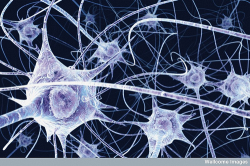
NEURONScientific Evidence of Innate Intelligence Existence

Neuroscientists of Ecole Polytechnique Federale de Lausanne have been working on a Blue Brain Project. The most recent discovery about the neurons independent connections based on a subject’s experience. The complete published work can be found in Proceedings of the National Academy of Sciences. (PNAS)

It has been known for sometime now that neuron connections are being established and reinforced in the human brain based on one experience – also known as “synaptic plasticity.” Do you remember your first bicycle ride? Once you learned it you will never forget. The team working on the Blue Brain Project at EPFL, led by Professor Henry Markman, however, is offering new evidence that this may not be the whole story.  The scientists were able to prove that small clusters of pyramidal neurons in the neocortex interconnect according to a set of immutable and relatively rules.  A complete discovery of this process was published in the last issue of the Proceedings of the National Academy of Sciences.

Each cluster contains about fifty neurons plus or minus. The scientists look at them as essential building blocks, which contain kind of in themselves a kind of fundamental, innate knowledge. For instance, certain physical experiences of this world. Mr. Markman says: “This could explain why we all share similar perceptions of physical reality, while our memories reflect our individual experiences.”

The principle determining the formation of these microcircuits is astonishingly simple. Basically, when two neurons are each connected to the same neighboring neuron, the probability that they are also interconnected is greater than average. The researchers were able to build a statistical model based on this observation.

During the experiment different rats have presented similar characteristics with neuronal circuits. If the circuits had only been formed from the experiences lived by the different animals, the values should have diverged considerably from one individual to another. That means that neuronal connectivity must in some way have been programmed in advance.

“Since John Lock, about 400 years ago, research into how the brain learns and remembers has been guided by the belief that we start from a clean slate and then print memories with each new experience. The idea that memory is like building lego with fundamental building blocks of knowledge opens up an entirely new door for research”, explains Markram.

Current technology is now allowing us to qualify the “tabula rasa” hypothesis, which argues that our brains are a “blank slate” at birth, and we only gain knowledge through experience. It’s an idea that has permeated science for centuries. There is no question that knowledge, in the sense that we typically understand it (reading and writing, recognizing our friends, learning a language), is the result of our experiences. But the EPFL team’s work demonstrates that some of our fundamental representations or basic knowledge is inscribed in our genes. This discovery redistributes the balance between innate and acquired, and represents a considerable advance in our understanding of how the brain works.

Source: Mediacom

Filed Under: Chiropractic Tagged With: anatomy, biological neural network, biology, blue brain project, Brain, computational neuroscience, evidence, existence, federales, human brain, innate, innate intelligence, innatism, intelligence, nervous system, neural networks, neurology, neurons, neurophysiology, neuroscience, polytechnique, scientific evidence

MSG or Monosodium Glutamate and Your Health

January 19, 2011 by drburt

MONOSODIUM GLUTAMATEPrevious post was about Aspartame and how dangerous it is for your health. Today I would like to talk about other food additive that is extremely dangerous for your health. This additive is found in every fast food chain restaurants and food stores – MSG or Monosodium Glutamate. This is not the first time you hear about this brain cells excitatory and then killing compound. MSG adds a great flavor to your taste buds but takes away years of your life, just like smoking, drinking alcohol, consumption of High Fructose Corn Syrup, and Aspartame containing products. Many manufacturers are adding Monosodium Glutamate for a better taste of food. Your brain is being fooled by the excitatory effect of this chemical compound. For a very short period of time your brain speeds up and reacts sharply. People usually become addictive to the foods that have high concentration of MSG.

MSG and Your Brain

MSG has been found to be the cause of a great variety of human brain diseases – Alzheimer’s disease, Huntington’s disease, Parkinson’s disease, high blood pressure, stroke and even brain cancer. This product has also been linked to be the cause of an allergic reaction in patients who have asthma. Research proved that large quantity of MSG has caused the death of brain cells. The cause of death of these brain cells was the free radical production during chemical process that is taking inside of the cell. When this research was published, public forced baby-food companies to discontinue mixing MSG with the products that they produce.

There have been many reports from individuals concerning how eating foods with MSG affect their health in a negative way. In 1995, the FDA reaffirmed the safety of monosodium glutamate and found no evidence that it causes long-term health problems. The FDA did admit that some people could have short-term reactions to MSG. The negative symptoms of eating foods with this additive might include: headaches, the feeling of swelling in the face, flushing and or sweating, rapid fluttering of heartbeats or heart palpitations, nausea, chest pain, shortness of breath, numbness, burning or tingling around the mouth area, weakness, and fibromyalgia. Here is a guide to  “The Connection Between Fibromyalgia & Monosodium Glutamate.” (affiliate link) Fibromyalgia and Chronic Pain are complex conditions and difficult to diagnose. Severe or mild, let me show you how to eliminate the pain forever.

If you ate enough foods all day that contained MSG, it could build up in your body. This could lead to some of the symptoms mentioned above later at night including the heart palpitations. As people are now growing up eating more monosodium glutame containing foods, we could be getting more sensitive to it, which makes its reactions in our body worse when we eat it.

Processed Food Labeling – Read It Carefully

Every manufacturer hides MSG in their products by naming them differently. Please read the label carefully and look for the following names: hydrolyzed plant protein, yeast extract, sodium caseinate, malt extract, bouillon broth and protein concentrate. This chemical can also be found in the following products: milk products, soft drinks, candy, chewing gum, health drink powders, some medications and in binders for nutrients, supplements and both prescription and over-the-counter medicines.

Free and Bound Glutamate

Glutamate is a natural neurotransmitter in the brain. Its function is to control the nervous system and proper brain and organ function. When a person consumes food with high levels of MSG the brain cells and glutamate receptors get over stimulated. Many food producing companies state that monosodium glutamate exposed to the same metabolic process as glutamate from natural occurring food and therefore they claim it harmless to a human health. MSG glutamates are unbound and are able to quickly spike blood levels with glutamate.

High levels of glutamate will over stimulate brain neurons and as a result could be the cause of psychological and physical problems. Age, disease and stress level will be the factor of how sensitive the organism is to monosodium glutamate. There were reports of permanent brain damage with an overdose of this chemical compound. Glutamate receptors are found in the following parts of the body: brain, heart, lungs and the pancreas, where glutamate is a neurotransmitter.

Please read labels carefully before you purchase food product for a store. Remember – HEALTH IS THE MOST VALUABLE ASSET !!!

Please Post a comment or share your thoughts through Facebook, Twitter or comment section below to join the conversation.

Filed Under: Health Tagged With: alzheimer's disease, biology, Brain, brain cancer, brain cells, chemistry, food additives, food and drink, food stores, glutamate, glutamate receptor, glutamic acid, human brain, monosodium, monosodium glutamate, msg, neurotransmitters, sodium compounds, taste, yeast extract, your health

PLEASE FOLLOW & LIKE B.C.

RSS
Follow by Email
Facebook
Facebook
fb-share-icon
Twitter
Visit Us
Follow Me
Post on X
YouTube
YouTube
LinkedIn
LinkedIn
Share

15200 Hesperian Blvd #104

San Leandro, CA. 94578

(510) 481-2225

drburt@burtchiropractic.com


SEARCH

Categories

Recent Posts

  • Loss of Cervical Lordosis: How a Straight Neck and Pain Impact Your Health—and How a San Leandro Chiropractor Can Help Restore It
  • Hidden Injuries from Car Accidents That a San Leandro Chiropractor Can Help You Detect
  • Best San Leandro Chiropractor for Sciatica Pain Relief: Natural, Drug-Free Solutions That Work