
Top Chiropractor in San Leandro, CA

San Leandro Chiropractor

  • blog
  • About Our Practice
  • What is Chiropractic?
  • SERVICES
    • Personal Injury
    • Cold Laser Therapy
    • Massage
    • Ultrasound
    • Electric Stimulation
    • Sports Injury
    • Workers Compensation
  • FAQs
  • Locations
  • CONTACT US
  • New Patient Forms
  • Nutrition Store
  • Home

Powered by Genesis

Six Very Essential Minerals and Women’s Health

June 3, 2011 by drburt

WOMANMinerals are playing a very important role in a human body. The main goal of these essential elements is to make sure that the body functions properly. If deficiency is ignored for a prolonged period of time a serious health problem can be developed. For instance: women who are menstruating need an extra supplementation of iron till the reach menopause stage. A good source of minerals concentration is in certain types of whole foods. However, it is hard to follow a diet that contains all the necessary nutrients that a woman needs. Taking multivitamin and food-based natural mineral supplements are few ways that can be very beneficial.

Supplements can help improve the body’s absorption of certain other minerals and nutrients – for instance, magnesium is necessary for calcium absorption, selenium is necessary for Vitamin E absorption, Zinc is necessary for Vitamin A absorption. Majority of the females are deficient in minerals such as magnesium, calcium, iron, zinc, iodine and selenium. These minerals are very important fro proper metabolic function, hormone balance and bone strength and many other important health benefits.

Below is the list of six essential minerals and their function:


MAGNESIUM:

Key Functions: Energy Metabolism, protein synthesis, bone health, muscle and nerve function

Food Sources: Leafy green vegetables, sea weed or green algae, avocados, raw chocolate, beans, nuts, and grains such as brown rice and millet

Daily Dosage Recommendation: Age 19-30: 310mg    Age 31+: 320mg


CALCIUM:

Key Functions: Muscle function, nerve transmission, intracellular signaling, hormonal secretion, support and structure of bones and teeth

Food Sources: Dairy products, nondairy sources (preferable)  include sea vegetables, Chinese cabbage, kale and broccoli, foods: juices, dinks and cereal fortified with calcium.

Daily Dosage Recommendation: Age 19-50: 1000 mg  Age 50+ 1200 mg


IRON:

Key Functions: Part of the protein hemoglobin, which carries oxygen in the body; also found in the protein myoglobin, which makes oxygen available for muscle contraction

Food Sources: Red meats, fish and poultry, lentils, beans, black-strap mo;ases, dried apricots, raisins.

Daily Dosage Recommendation: Age 19-50: 18mg Age 50+ 8mg


ZINC:

Key Functions: Strengthens immune system, increases white blood cells count, helps regulate hormones; supports absorption of calcium.

Food Sources: Oysters, pumpkin and many other seeds, most meat products, beans, nuts, whole grain.

Daily Dosage Recommendation: Age 19+ 8mg  Pregnant: 11mg Lactating 12mg


IODINE:

Key Functions: Strongly influences nutrient metabolism, detoxification, nerve and muscle function, nail, hair, skin and tooth condition and mental development.

Food Sources: Seafood, seaweeds such as kelp, clams, lobsters, oysters and sardines

Daily Dosage Recommendation: Age 19+:150mcg  Pregnant: 220mcg  Lactating: 290mcg


SELENIUM:

Key Functions: Stimulates glucose uptake and regulates metabolic processes including fatty acid synthesis; acts as an antioxidant against free radicals

Food Sources: Cereals, legumes, Brazil nuts, beef, chicken, eggs and cheese

Daily Dosage Recommendation: Age 19+:55µg  Pregnant: 60µg  Lactating: 70µg


If you have anything to add to this post, please feel free to Post a comment or share your thoughts through Facebook, Twitter or comment section below to join the conversation.


Filed Under: Health Tagged With: alkaline earth metals, antioxidant, body, body functions, calcium, calcium absorption, chemical elements, chemistry, dietary minerals, dietary supplements, essential elements, essential minerals, functions, health, human body, minerals, multivitamin, nature, nutrition, six, vitamin, zinc

Pomegranate And Health Benefits

March 14, 2011 by drburt

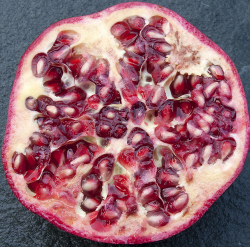
pomegranateGrowing between five to eight meters in height, a pomegranate is a fruit bearing and tiny tree with deciduous like shrub features. This delicious fruit is native and found mostly in Iran and the Himalayas highlands between North India and Northern Pakistan. Today, it is popularly cultivated in India, Iran, Iraq, China, Azerbaijan, Burma, Afghanistan, Israel, Egypt, Saudi Arabia, Vietnam, Thailand, Laos and Cambodia with lesser cultivation in tropical Africa, the Mediterranean and Southern Europe.

The Pomegranate becomes ripe when you start noticing its distinctive color and when tapped it makes a metallic clinging sound. The fruits should be picked days before maturity when they start showing signs of cracking open. It almost has the same shelf and storage life as the apple and is best maintained at a room temperature of 41 degree Fahrenheit to 32 degree Fahrenheit for a period of 6 to 7 months. It improves its taste and becomes more flavorful and juicier as time goes by.
This fruit produces 16% of vitamin C requirements of adults per 100ml serving of daily nutrients allowance making it one of the healthiest fruits in the world. Pomegranate is also rich in polyphenols and potassium, Vitamin B5, flavonoids, tannins and fiber.
The high fiber content of Pomegranates however, is found in the edible seeds which can also supply unsaturated oils. People who neglect the seeds end up forfeiting its additional nutritional value through its oils, seed fiber and other micronutrients.
Health benefits of this sweet fruit include reducing the risk of heart diseases, heart attacks and strokes. According to a study published in the American Journal of Clinical Nutrition, medical researchers stated an example of an experiment conducted for two weeks on a group of healthy grown up men and dozens of unhealthy mice. Both groups drank Pomegranate juice everyday for two weeks. The result found out that the adult men experienced a large increase in their antioxidant levels, which translates to a drop of ninety percent in their LDL cholesterol oxidation. The mice also turned up a result of 90% drop in their LDL oxidation of peritoneal macrophages.
The juice that the Pomegranates produced also helps alleviate viral infection and produces antibacterial compounds to battle against dental bacteria and plaque. It was also proven, that this fruit helps reduce the systolic blood pressure by injecting its serum angiotensin converting enzyme.
Another study by medical experts has shown the huge possibility of Pomegranates by way of its extracts help battle the proliferation of human breast cancer cells. The juice of this fruit is very popular among old people as it also helps in the cleansing of the body system by its antioxidants contents and produces a healthy body system thus lessening the chances of a recurring illness.
The Pomegranate has since become widely commercialized due to its health benefits. There are wine, juice, jellies and salad dressing found in the supermarket shelves nowadays. The popularity of Pomegranate is due to the fact many studies have shown that its high level of antioxidants is beneficial to one’s health in a lot of way.

If you have anything to add to this post, please feel free to Post a comment or share your thoughts through Facebook, Twitter or comment section below to join the conversation.
Filed Under: Health Tagged With: 100ml, allowances, antioxidant, beverages, chemistry, daily nutrients, food and drink, Fruit, fruit produce, fruits, health, health benefits, iranian cuisine, juice, nutrition, pomegranate, pomegranate juice, saudi arabia, tannin

Papaya and Health Benefits

March 11, 2011 by drburt


PAPAYA AND YOUR HEALTHCalled as  a “fruit of the angels” Papaya with its appealing appearance of musky undertones and light colored texture is tastefully sweet was once considered as an exotic fruit but is now found everywhere in the world throughout the year. Though, the season of fall and summer produces the most papaya.
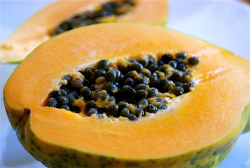
Pear-shaped and spherical, a this fruit can grow as long as 20 inches with the normal size on the market measuring an average of 7 inches and weighs 1-2 pounds. The inner flesh an orange color with pink and yellow hues. The inner cavity of the fruit is color black with round shaped seeds rooted in a gelatin-like form. Its seeds are edible but tastes a bit bitter on the mouth. The papaya also contains papain, a type of enzyme that helps greatly in digesting proteins. The papain is heavily concentrated inside the fruit when it is still on the unripe stages. The Papain is also extracted to create digestive enzyme dietary supplements and is one of the main ingredients in making bubble gums.
Papayas are not only delicious fruits that present a luscious site to the eyes by way of its tropical colors. It is also a good source of rich antioxidants and other nutrients such as Vitamin C, Vitamin B, carotenes, flavanoids, pantothenic acid, folate, fiber, magnesium and potassium. These nutrients and minerals help improve the over-all health of the cardiovascular system and also help combat and prevent against colon cancer.
Papaya has a lot of health benefits. It protects against heart disease because it is rich in vitamin C, A and E. These three powerful antioxidants help prevent the oxidation and buildup of cholesterol.  The association of both the Vitamin E and C produces the compound ‘paraoxonase’ a type of enzyme that lowers HDL cholesterol and LDL cholesterol buildup therefore lessening the chances of suffering from strokes and heart attacks. Another factor why this fruit lessens the risk of heart attack is its richness in fiber. The folic acid and fiber creates the homocysteine substance and converts it into benign amino acids such as methionine and cysteine, a conversion of nutrients that reduces the damage to the blood vessel wall thereby significantly reducing the risk for a heart attack.
Papaya also helps prevents colon cancer by having its fiber bind together cancer-causing toxins and rids of them separately away from the completely healthy colon cells. With the help of beta-carotene, vitamin C and E, found in this tasty fruit,  these nutrients serves as the wall that protects against the risk of colon cancer.
Immune support and anti-inflammatory treatment is another benefit. Other health benefits include; protection against macular degeneration or vision loss. In a medical study published in the Archives of Ophthalmology, it states that consuming 3 or more servings of fruits that includes papayas per day causes a significant reduce of vision loss compared to individuals who only consumes an average of 1.5 fruits per day.
People suffering from Rheumatoid arthritis are also advised to eat a lot of papayas as the rich vitamin C content of a papaya provides individuals with protection against other forms of inflammatory polyarthritis. Here are just some of the reasons why a Papaya should be a part of everybody’s diet, it is not only tasteful but healthy as well.

If you have anything to add to this post, please feel free to Post a comment or share your thoughts through Facebook, Twitter or comment section below to join the conversation.


Filed Under: Health Tagged With: antioxidant, biology, chemistry, dietary fiber, dietary supplements, digestive enzymes, exotic fruit, flora, flora of belize, Fruit, fruits, health, health benefits, light color, musky, nutrition, papaya, pear shaped, tropical agriculture, undertone, vitamin c

PLEASE FOLLOW & LIKE B.C.

RSS
Follow by Email
Facebook
Facebook
fb-share-icon
Twitter
Visit Us
Follow Me
Post on X
YouTube
YouTube
LinkedIn
LinkedIn
Share

15200 Hesperian Blvd #104

San Leandro, CA. 94578

(510) 481-2225

drburt@burtchiropractic.com


SEARCH

Categories

Recent Posts

  • Loss of Cervical Lordosis: How a Straight Neck and Pain Impact Your Health—and How a San Leandro Chiropractor Can Help Restore It
  • Hidden Injuries from Car Accidents That a San Leandro Chiropractor Can Help You Detect
  • Best San Leandro Chiropractor for Sciatica Pain Relief: Natural, Drug-Free Solutions That Work