Top Chiropractor in San Leandro, CA

San Leandro Chiropractor

  • blog
  • About Our Practice
  • What is Chiropractic?
  • SERVICES
    • Personal Injury
    • Cold Laser Therapy
    • Massage
    • Ultrasound
    • Electric Stimulation
    • Sports Injury
    • Workers Compensation
  • FAQs
  • Locations
  • CONTACT US
  • New Patient Forms
  • Nutrition Store
  • Home

Powered by Genesis

Soft Tissue Injury and Fibroblast Regeneration

September 9, 2011 by drburt

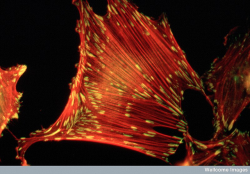
FIBROBLAST AND SOFT TISSUE REPAIR

Soft Tissue Injury and Fibroblast Regeneration

Mechanical friction during deep tissue massage, fascial manipulation or using techniques like Graston will activate the stimulation the fibroblast reproduction after soft tissue injury. These fibroblasts cells are the most common cells of connective tissue, and they synthesize the extracellular  matrix (ECM) and collagen, which is the main framework of our soft tissues. The properties of the connective tissues depends on the composition of ECM – tendons, ligaments and other connective tissues. Elastic and reticular fibers, glycoproteins, glycosaminoglycans, and collagen are all found in ECM and made by fibroblasts.  Collagen is the most important part of ECM and plays very important role in tensile loading. The stimulation of production of the above mentioned components can be achieved by frictioning tissues (in other words by providing cross-fiber massage).

Fibroblast production and degeneration is a normal process in every day mechanical loading such as walking, running, bicycling or any other form of movement. There are four basic types of loads: tension (tensile force-fibroblasts), compression (chondrocytes), fluid shear (vascular endothelial cells) and torsional shear. Collagen synthesis in patellar tendon ( which is used the most by bicyclist and runners) increases by nearly 100% as a result of just single bout of acute exercise, and the effect is till evident three days later. I guess I am doing a good job with my knees by keeping them busy with prolonged Mountain Bike Riding and avoiding soft tissue injury.

In the beginning of a training period the balance between synthesis and degradation is increased and there is a net loss of collagen. This enables a tendon to restructure and adapt to an increased loading pattern. It is not till training progress that there is a net gain in collagen synthesis. Deep friction massage can also help to repair a mild soft tissue injury to a knee tendon. Fibroblasts play an important role in wound healing. When connective tissue and blood vessels get injured, growth factors cause fibroblasts to enter the wound area, increase its numbers and begin synthesizing new collagen fibers, creating new granulation tissue and assisting in remodeling. The ECM of granulation tissue is created and modified by fibroblasts.

Recently I was exploring a new trail with another rider. During a steep rocky climb my rear wheel lost a traction and my right knee got over extended. I felt sharp pain but continued on riding. Next day I felt sharp pain around and under my right knee cap (patella tendon). Three to four sessions of deep tissue massage, cross friction massage and modalities such as electric stimulation and Erchonia Cold Laser L5000 model made my knee completely pain free. This is a real example of how Fabroblast is working.

There has also been research done that eccentric exercises may provide more benefit than concentric exercises regarding rehabilitation of muscles and tendons. Eccentric exercises provide greater stimulation of fibroblasts, increasing collagen synthesis and therefore stimulating the healing of soft tissue.

 

Filed Under: Soft Tissue Injury, Sports Tagged With: anatomy, biology, collagen, connective tissue, deep tissue massages, fascial, fibroblast, fibroblast cell, friction, granulation tissue, manipulative therapy, massage, medicine, physiology, regeneration, skeletal system, soft tissue, soft tissue injury, tendon, tissues, wound healing

Chiropractic Rehabilitation and 4 Stages of Soft Tissue Healing

August 20, 2010 by drburt

The healing process is divided into four broad stages which are not mutually exclusive and overlap considerably.

1. Initial vascular reaction – Active Swelling

2. Inflammatory response – Passive Congestion

3. Proliferative phase – Repair

4. Remodeling 

Wound healing refers to the body’s replacement of destroyed tissue by living tissue (Walter & Israel 1987). It comprises of two essential components whose differentiation is based on resultant tissue: Regeneration and Repair.

TISSUE INJURY CAUSES RESTRICTION OF MOTION DUE TO:

  1. Inflammation & Swelling
  2. Pain
  3. Muscle Spasm 

THE MAJOR GOALS OF CHIROPRACTIC CARE:

  1. Relieve Pain
  2. Promote Full Healing
  3. Restore & Maintain Full Function
  4. Reduce the Likelihood of Re-Injury
  5. Prevent Accelerated Degeneration 

Chiropractic Care Should Continue Throughout the Repair Stage. It Take Longer For Tissues to Heal & Normal Function to be Restored Than it Takes for Pain Relief. Pain Relief is not the Only Goal.  Chiropractic Helps:

  1. Restore Normal Motion, Function & Biomechanics
  2. Improve Alignment of New Connective Tissue
  3. Prevent Shortening of Scar Tissue & Chronic Stiffness
  4. Restore & Maintain Flexibility of Ligaments & Muscles
  5.  Restore Normal Muscle Tone
  6. Promote Quicker, More Effective Healing
  7. Restore & Maintain Normal Sensation
  8. Reduce the Risk of Re-Injury and Degeneration 

STAGES OF SOFT TISSUE HEALING


STAGE I: ACTIVE SWELLING

  1. Swelling Occurs for 12 to 72 hours
  2. Motion is lost and pain increases 

Goals of Care: Minimize pain and swelling

Care:

  1. Rest & Support of Injured Area
  2. Ice to Block Swelling, Pain, and Spasm 

STAGE II: PASSIVE CONGESTION   

Fluid trapped in tissues restricts motion, causes pain, & delays healing. Begins by second to fourth day

Goals of Care for Passive Congestion:

  1. Remove fluid
  2. Pain Relief
  3. Begin to restore range of motion 

Care:

  1. Chiropractic Adjustments Help
  • restore motion
  • block pain
  • restore normal sensation
  • relax tight muscles
  • remove swelling
  • accelerate healing
  1. Heat and Cold to Remove Fluid
  2. Controlled Motion Exercises
  3. Physical Therapy helps in Some Cases
  4. Acupuncture Can Help With Pain Control 

STAGE III: REPAIR

Beginning 5 days after injury, scar tissue is made for up to 6 weeks. 

Lack of motion causes excess scar tissue in dense patterns disrupting normal function causing:

  1. Excess Scarring
  2. Chronic Stiffness
  3. Limited Range of Motion
  4. Poor Biomechanics
  5. Chronic Pain
  6. Weak Muscles & Ligaments
  7. Loss of Normal Sensation
  8. Poor Nutrition
  9. Increased risk of Re-Injury
  10. Accelerated Degeneration 

If Motion is Restored & Maintained, Tissues Heal in a Much More Functional Way.

Coals of Repair Stage:

  1. Restore Normal Range of Motion
  2. Restore Sensation
  3. Promote Full Healing
  4. Relieve Pain 

STAGE IV: REMODELING 

Connective tissue remodels for better strength & flexibility. This often takes 3 to 14 week but may take up to 1 year with severe injury. 

Chiropractic Helps Achieve these Goals:

  1. Improve & Maintain Motion & Flexibility
  2. Restore & Maintain Function
  3. Reduce Chronic Pain
  4. Reduce Risk of Re-Injury & Degeneration

This Post was based on Dr. Malik Slosberg’s Research.

Filed Under: Auto Accidents, Carpal Tunnel Syndrome - CTS, Chiropractic, Low Back Pain, Neck Pain, Personal Injury, Shoulder, Soft Tissue Injury, Spine Tagged With: alternative medicine, biology, chiropractic, Chiropractic Care, chiropractic rehabilitation, connective tissue, healing, manipulative therapy, medicine, pain, pain relief, physiology, rehabilitation, relieve pain, scar tissue, soft tissue, spinal adjustment, stages, stages of soft tissue healing, tissues, traumatology, wound healing

Frozen Shoulder Syndrome and Chiropractic Rehabilitation in San Leandro, CA

June 7, 2010 by drburt

frozen shoulder

Frozen Shoulder Syndrome and Chiropractic Rehabilitation

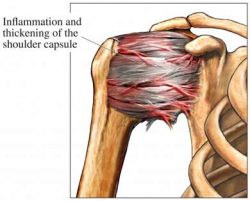
Frozen shoulder (FS),medically referred to as adhesive capsulitis, is a disorder in which the the connective tissue surrounding the glenohumeral joint, becomes inflamed and stiff, and grows together with abnormal bands of tissue, called adhesions, greatly restricting motion and causing chronic pain. Some people experiencing this kind of problem don’t go for any forms of treatment in order to gain back the motion of their joints. The condition will get better eventually without treatment but it will take a very long time to do so. The pain and the reduced Range of Motion without any form of treatment means only one thing, you won’t be able to function to a full capacity. The more you try to move your joint, the more pain you will experience. Therefore, it is best to seek treatment for pain control. There several options for patients who have frozen shoulder pain:

1. Oral and Injectible Steroids

2.Hydrodilation and Hydroplasty

3. Chriopractic rehabilitation with Physical Therapy

4. Manipulation Under Anesthesia

Frozen shoulder(FS) is more common for people between the ages of 40 and 60. If you have diabetes, you are more prone to experiencing frozen shoulders as around 20% of diabetic patients also suffer from this condition at one point. Though, the actual causes of FS are still inconclusive but there are risk factors that may increase your chances of suffering from this condition. The conditon is twice more common in women than men. If you are between the ages of 40 and 60 and female who has diabetes, you have a higher risk of acquiring a frozen shoulder. Endocrine problems also increase your chance of experiencing a frozen shoulder. If you have Parkinson’s disease, you are also at a higher risk of suffering from a FS. Lastly, if you suffered from a shoulder injury or trauma and you immobilized your shoulder joints for a long period of time, you have the highest risk of developing a frozen shoulder.

According to health professionals who treat FS, the condition generally follows a course of three stages:

  • Stage one: a slow onset of pain, and the shoulder gradually loses the range of motion. This stage can last from six weeks to nine months.
  • Stage two: a slow improvement in pain relief, with stiffness remaining. This stage can last from four to nine months.
  • Stage three: a “thawing” as shoulder slowly regains motion and pain is relieved. This stage can last from five to 26 months.

There are two options for a treatment of FS: nonsurgical and surgical treatment. As a rule of thumb, the health care professional would advise the least invasive treatment first before they ask for a surgical intervention. For nonsurgical treatment there are chiropractic care and physical therapy, manipulation under anesthesia, as well as pain control using steroid medication.

Chiropractic care is a successful method in easing the frozen shoulder pain. Doctors of Chiropractic use TENS units, Ultraound, Erchonia Cold Laser PL 5000, stretching, educating patients about lifestyle change and diet.  The length of time spent on the chiropractic treatment depends on the severity of the condition. If the pain is more advance it can take months to rehabilitate the shoulder. Chiropractic can limit the devastating effects of all forms of physical disability such as FS. At this point research into its cause remains inconclusive.

As a general rule, prevention is better than cure. With chiropractic care, you can prevent FS even before it sets in. When you start feeling a slight pain in your shoulder area, you can try chiropractic care to avoid the stiffening of the joint that causes extreme pain and immobilization. If prevention is unsuccessful, treating the frozen shoulder with chiropractic care requires the use of modalities, chiropractic adjustmnts and deep tissue massage. This treatment is used to manage the pain, inflammation and increase range of Motion.

In the majority of cases, chiropractic involves few risks and has been proven beneficial in treating a FS syndrome. Reputable chiropractic professionals will assure their patients of the best program to follow in maintaining optimum physical movement and a quality life.

Filed Under: Shoulder Tagged With: adhesion, chiropractic, connective tissue, froze shoulder, frozen shoulder pain, frozen shoulder syndrome, musculoskeletal disorders, pain, physical therapy, shoulder, shoulder injuries, shoulder joints, shoulder problems

PLEASE FOLLOW & LIKE B.C.

RSS
Follow by Email
Facebook
Facebook
fb-share-icon
Twitter
Visit Us
Follow Me
Post on X
YouTube
YouTube
LinkedIn
LinkedIn
Share

15200 Hesperian Blvd #104

San Leandro, CA. 94578

(510) 481-2225

drburt@burtchiropractic.com


SEARCH

Categories

Recent Posts

  • Loss of Cervical Lordosis: How a Straight Neck and Pain Impact Your Health—and How a San Leandro Chiropractor Can Help Restore It
  • Hidden Injuries from Car Accidents That a San Leandro Chiropractor Can Help You Detect
  • Best San Leandro Chiropractor for Sciatica Pain Relief: Natural, Drug-Free Solutions That Work