
 The spine, same as our feet, gets the hardest job in our body as it is used in practically every movement we make and it takes pressure from other body parts such as from the neck, shoulders, head and our arms. As we walk, stand, sit, carry a heavy object or dance, our spine takes the pressure to keep our body erect but at the same time it also has to have the flexibility to make other kinds of movements while keeping our balance.
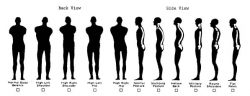
One of the following can be noticed when one has a bad posture: high shoulder, a forward stooping head, a rotated trunk (torso), a hunch back, a high hip, and a side-bent neck and one of the feet will be externally or internally rotated. Abnormal posture can result from trauma (like a car accident or fall), repetitive movements (turning your neck towards the monitor), and certain bad postural habits (sleeping on your stomach).
The human body is often in a state of strain which causes a loss of proper balance between parts of the body and gravity. Such imbalance of posture distortion usually indicates internal body changes before any body functions appear disturbed.
All parts of the body are situated so this so this that they can interact efficiently with one another as well as with gravity. The body is able to repair itself and adjust to the many forces to which it is subjected, both internally and externally. This relationship produces a feeling of youth, energy and vitality.
By having correct posture, we are keeping our spinal vertebrae from being misaligned or subluxated. Our spine is not only reliant on the strength of our back muscles but it also relies on its two arches (lumbar and cervical lordosis) which is why correct posture is vital. If we have poor posture, these natural arches would disappear and there’s going to be nothing left that can absorb shock in our back. Once this happens, a person will experience pain in the neck and lower back. This paves the way for vertebral osteoarthritis, herniated disc and excessive pressure on the peripheral nerve. Osteoarthritis and herniated disc caused by uneven weight distribution on the vertebral bodies of the spine. Poor posture can lead to difficulty breathing by interfering with proper ribcage expansion, muscle soreness along the back of your neck, shoulders and upper back, as well as lower back pain.
When you already have poor posture, you can start practicing the correct posture by keeping yourself aware of the correct positions to maintain a good posture. There is a correct sitting position where you sit while keeping your back straight and your buttocks should be touching the back of the chair. When you want to lift a heavy object, you have to maintain your back straight and bend your knees & hips to lift the object up. You can start doing your research as to the correct positions to maintain a healthy spine. Also, muscle strengthening exercise is a must for a spine, for a better support of the spine. Improper posture weakens muscles of the spine because they are not being used. By providing musculature the strength it needs, one can achieve a better maintenance of a good posture.
Also remember that this is not going to be a quick solution as it will take time especially with muscle strengthening. You may want to correct your posture now but won’t take it to heart and practice it daily then you won’t see real results. There should be a lifestyle change so that your body will get used to the correct posture that eventually you don’t even have to think about it.
You are probably wondering by now where is the part about 96 tips for a perfect Posture. Below are the 5 links that brings up total to 96 tips. Without further ado:
- 10 Tips for improving Posture and Ergonomics, by Dr. Kelly Andrews, D.C.
- 13 Tips on Getting a Good Posture, by Celestine Chua
- 20 Tips from Yoga to Go, by Nancy Wile, Ed. D
- 32 Tips on how to Improve your Posture, by Savialeigh, Ben Rubenstein, Krystle C and many others
- 21 Tips on How to Maintain Good Posture, by ACA
To help you out, try finding ways to get yourself reminded of keeping a good posture. Perhaps you can put post-it notes on places that you would see on a regular basis. Like on your computer, put a small post-it note that says “stop slouching” or other reminders. You can also use an alarm that is set every 30 minutes or so to keep yourself aware and maintain a good posture. I phone or any other smart phone has a build in calendar that can be set up as whatever time frequency you desire. I think it is one of the best ways to remind yourself about good posture habits. No one ever leaves a house without a cell phone in our days. These are simple solutions that really work as you exert an effort to inculcate the correct posture into your lifestyle.
Question: Have You Checked Your Posture Lately? Do You Have Any Tips on How to Keep a Good Posture?
 Carpal tunnel syndrome happens when there is a compression of the