Top Chiropractor in San Leandro, CA

San Leandro Chiropractor

  • blog
  • About Our Practice
  • What is Chiropractic?
  • SERVICES
    • Personal Injury
    • Cold Laser Therapy
    • Massage
    • Ultrasound
    • Electric Stimulation
    • Sports Injury
    • Workers Compensation
  • FAQs
  • Locations
  • CONTACT US
  • New Patient Forms
  • Nutrition Store
  • Home

Powered by Genesis

Sciatica Pain Relief and Chiropractic Treatment

November 5, 2010 by drburt

What is Sciatica?

SCIATIC NERVE AND CHIROPRACTICSciatica is not a medical condition in itself but rather a symptom of other medical problems. It refers to the pain, numbness, tingling or weakness felt in the legs as an effect of compression or injury of the sciatic nerve.

The pain is usually felt in the buttocks, lower back or at various parts of the patient’s leg including the foot. The pain is usually severe combined with weakness of the muscles as well as numbness and tingling sensation. This condition is usually felt only on one side of the patient’s body.

Treatment Options

The treatment for the symptoms depends on the problems that cause the symptoms. Sciatica can be caused by spinal disc hernia, spinal stenosis, pregnancy, piriformis syndrome and many other conditions. What’s important is that the patient gets a proper diagnosis of his or her problem in order to get the right treatment.

Treatments for this condition vary from taking pain medications to surgery. Anti-inflammatory medications and paracetamol are taken to relieve the pain experienced by the patient. If this isn’t enough, narcotics can also be used especially if the pain is already severe.  Steroid injections provide short-term relief and benefits as well. Acupuncture, physical therapy, massage therapy and chiropractic care are also great treatment for sciatica. Some also benefit from yoga sessions and weight loss to reduce the pressure on the nerve roots of the spine.

Chiropractic treatment

Sciatica is treatable by chiropractic care and most of the time, it responds positively after spinal adjustments on the patient’s lower lumbar vertebrae as well as on the sacroillac joints. Some types of nerve irritation respond much faster while some takes a little while depending on the severity of the case and especially if the symptoms are already chronic.

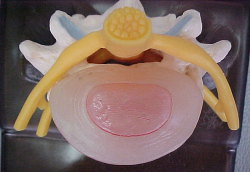
A type of sciatica that is very difficult to deal with even for a chiropractor is when there is an actual herniation of the patient’s intervebral disc. This causes extreme pain that even taking narcotics and analgesics won’t give enough relief for the patient.

Before considering a chiropractic treatment to aid in your symptoms, you must know that most spinal adjustments done can only provide you with short-term relief to pain. It really depends on what causes the symptoms of nerve irritation and you must consult with your health professional regarding the matter. Your local chiropractor would tell you if your problem that results to sciatica symptoms can be improved through chiropractic care.

The best way to get real pain relief the pain in this condition is to relieve the sciatic nerve of the pressure. Correcting the root of the problem is the best solution in order to completely recover from the injury. If you only want pain relief then it will only be a temporary solution. Finding the real source and correcting it would get rid of the symptoms for a long time. By permanently relieving pressure off the sciatic nerve is the best solution to the problem.

Question: Have you or anyone you know experienced Sciatica?  What kind of treatment have you had?

Filed Under: Low Back Pain Tagged With: acupuncture, chiropractic, chiropractic treatment, general practice, intervertebral disc, manipulative therapy, medical conditions, medicine, neurology, orthopedic surgery, pain, pain medication, pain relief, piriformis syndrome, sciatic nerve, sciatica, sciatica pain relief, sciatica symptoms, spinal adjustment, treatment

Cycling – Lower Back and Neck Pain

October 6, 2010 by drburt


Cycling
My Race @ Folsom Cyclebration 2010

Your body contacts the bicycle in three areas; your hands, your seat, and your feet. The relative positions of feet, seat and hands determine your comfort and efficiency on the bike. There are several variables that determine these positions; crank length, distance from crank center or bottom bracket to saddle, saddle angle, seat tube angle and saddle offset, distance from saddle to handlebar, relative height of saddle and handlebar width, and handlebar drop on road style handlebars. When these measurements are not taken seriously into consideration, pain and fatigue is inevitable during the ride.

Lumbar and Cervical spine pain is experienced very frequently by cyclists, and it can have  numerous different causes. The most common cause of any type of biking ache is owing to an improper bike fit. After having your bike professionally fit which can be completed at professional bike shops and some chiropractic offices, use the following guidelines to create any essential adjustments:

1.Moving your saddle backwards could aid to reduce lumbar spine and knee pain but might increase neck and shoulder tension.

2.Handlebar height reduction could improve lower back and hamstring muscle stress nevertheless may trigger increased neck and shoulder stress, and hand numbness.

3.When the saddle is set too high, cyclist becomes unstable and the hips might rock slightly from side to side, placing a strain on the muscles that stabilize rider’s lower back. A leg length difference could produce a comparable kind of dilemma, which can be detected during a chiropractic exam.

Another cause of  lower back pain is the tension placed on your spinal discs, joints, and muscles because of the continuous forward Position of cyclist. To neutralize these postural stressors, appropriate stretching prior, throughout, and following riding is very important. Standing up during prolonged riding, as well as alternately bending forward and arching backwards, will help to relieve lower back stress. Tilting your head from side to side will aid to stretch out your neck muscles while riding, but keep your eyes on the road at all times!

The 3rd major cause of neck and lower back pain in cycling is due to the “Multiple Micro Whiplash” syndrome  trigerred by the ROAD SHOCK of the constant jarring forces experienced during riding. The following recommendations will assist to reduce these potentially injurious forces:

•Increase your cycling work out slowly to appropriately condition your body.

•Use a wider tire with less of inflation to decrease road shock.

•Change your hand positions regularly and unlock your elbows.

•Use padded gloves and a light helmet.

Question: Was this review helpful?

Filed Under: Sports Tagged With: back, bicycle, bicycle frame, cervical spine pain, cycling, cyclist, health, horse anatomy, horse tack, knee pain, low back pain, lower back, lows, lumbar, medicine, neck pain, necked, pain, saddle, spine pain, sustainability

Temporomandibular Joint (TMJ) Dysfunction Physiology and Causes

October 1, 2010 by drburt


What is TMJ?

temporomandibular jointThe temporomandibular joint, or often called as TMJ, is the joint of the jaw. We have two temporomandibular joints that work in unison, one on the either side of the jaw. It got its name because of the temporal bone and the mandible that forms the joint.

It is the most used joint in our body. It has 6 main components and they are the mandibular condyles, the capsule, the articular surface to the temporal bone, the articular disc, lateral pterygoid and the ligaments.

What is TMJ Dysfunction?

This condition is common and affects over 10 million Americans today. It is affecting the  mastication muscles and the tissue components.  It can be a medical or a dental condition or a collection of conditions.

What are the causes ?

There are different factors that can influence the inflammation of the Temporomandibular joints such as teeth grinding, a direct physical trauma that causes disc derangement, stress, hypermobility of the joint, hypomobility of the joint, osteoarthritis, rheumatoid arthritis and many others.

What are the symptoms ?

Pain on the jaw and facial muscles is one of the first symptoms you would notice when you have TMJ dysfunction. It may even radiate to your neck and shoulders. You may feel this pain when you talk, yawn or chew. The pain is usually felt in front of the ear or on the jaw itself.

Ear pain, headaches, tinnitus and hearing loss may also be a symptom of  Temporomandibular joint dysfunction. This can get confusing as some might think they have an ear infection or ear problem when in fact, the pain is radiated because of TMJ dysfunction.

You may hear a popping, clicking or grating sound when you move the joint. This is caused by an abnormal position of the disc. Others may also hear the popping sound.

Swelling of the mouth or the face can also occur due to inflammation.

Lock jaw whether opened or closed is also a common symptom of TMJ dysfunction.

Teeth may not align properly and no longer touch as you bite on food. Teeth can also start to loosen or get broken or become sensitive.

Swallowing may become difficult because the muscles on the jaw area start to spasm.

You may feel nauseated or have a headache or dizziness.

How is TMJ Dysfunction diagnosed?

A health professional can properly diagnose a dysfunction by beginning with a thorough evaluation of the patient’s medical history. After which the health professional would make a physical examination on the patient to identify the disorder.

A treatment program would then be specified by the health professional according to the severity of the disorder. Treatment programs may include lifestyle modification, techniques for self relaxation, proper education regarding Temporomandibular joint dysfunction, restoration of the jaw’s range of motion, mobilization of the soft tissue, joint mobilizations, nerve stimulation, rehabilitation, etc.

The treatment program would be a per-patient basis. Thus, you may have a different treatment program compared to another patient who is also suffering from TMJ dysfunction. Part 2 is going to be about specific treaments options for this debilitating codition.

Question: Have you or anyone you know had a TMJ Dysfunction ? What kind of treatment otions have you had?

Filed Under: TMJ Tagged With: anatomy, bruxism, causes, dental anatomy, dentistry, dysfunction, hypermobility, jaw, jaws, joint, mandible, medicine, pain, temporomandibular joint, temporomandibular joint disorder, temporomandibular joint dysfunction, temporomandibular joint tmj, tinnitus, tmj, tmj dysfunction, unison

Electric Stimulation and Chiropractic Rehabilitation

September 15, 2010 by drburt

Electric stimulation rehabilitation or electrotherapy had been discovered way back in 400 BC with the help of a torpedo fish that produces an electric shock reaching up to 150 volts. People used to take these fish from streams and they place them on the body’s painful area and the electricity produced from the fish controlled the pain.

It was when the gate control theory of pain in 1965 that reintroduced electric stimulation rehabilitation after it had lost the interest of many skeptics in the nineteenth century. The theory suggests that when the large nerve fibers activity increases, it tends to close the gate blocking information or signals of pain to the brain.

Electric stimulation rehabilitation is a form of therapy that introduces electricity to stimulate the muscles and treat the pain & spasms. This type of therapy can be administered to the patient by a professional or you can purchase a home kit and use it at home.

There are three types of the electrical stimulation rehabilitation and they are the general electric therapy, muscular electric therapy and the transcutanous electrical nerve stimulation otherwise known as TENS. The general electric therapy relieves the pain and also heals wounds while the muscular electrical therapy helps in strengthening the muscles by reducing the spasms, while the TENS is used for treating chronic types of pain.

Electric stimulation rehabilitation has several applications. It is used to manage pain either acute or chronic. TENS is most successful in the control of the postoperative incision pain especially if it’s on a small area and self limiting with regards to time, severity and course.

IFC or interference current is another form of the electric stimulation rehabilitation treatment used for pain control. Some clinicians believe that this is more effective in treating muscle pain compared to TENS.

Electrotherapy is also applied to reduce edema of various types. Edema can be a result of trauma that disrupts the blood vessels and the electrical stimulation with voluntary muscle pump activity is effective. Other than this approach, sensory level stimulation is also used but this does not contract the muscles.

Electric stimulation also improves circulation through the neuromuscular electrical stimulation or NMES. It is most effective at a frequency of just 20 to 30 pps with a 10 to 30% contraction at a maximum of 30 minutes of treatment at a time.

Electric stimulation is also applied for a speedier wound healing.

This type of treatment has contraindications. It should not be placed peripherally to the heart or when the patient has a pacemaker. It shouldn’t be placed near the phrenic nerve and must not be used in the presence of malignancy.

If a recently sutured tendon or nerve is present, a superficial metallic implant, pregnancy during the first trimester and active bleeding are experienced by the patient then this type of treatment must also be avoided.

There are several electric stimulators available such as the Z-Stim IF 150 and the H-Wave electric stimulator. The Z-Stim IF 150 produces TRUE interferential therapy by its two channels with 4 pad output. It is used to stimulate the nerves and muscles for edema, acute pain and for rehabilitation of muscles. The H-Wave is an ultra low frequency electric stimulator that helps in pain control and functional restoration. It has a 3-channel and 2-channel models. The 3-channel model is used in clinics while the 2-channel is a home therapy model. Both of these models are available for rehabilitation of our patients.

Question: Have you ever experienced electrical stimulation therapy while rehabilitating your injury?

Filed Under: Ankle, Modalities Tagged With: bc, electric shock, electric stimulation, electric therapy, electrical muscle stimulation, electrical stimulation, electroanalgesia, electrotherapy, fishing, functional electrical stimulation, medicine, neuroprosthetics, neurotechnology, nociception, pain, produce, rehabilitation, sacral nerve stimulation, torpedo fish, transcutaneous electrical nerve stimulation

  • « Previous Page
  • 1
  • …
  • 9
  • 10
  • 11
  • 12
  • 13
  • 14
  • Next Page »

PLEASE FOLLOW & LIKE B.C.

RSS
Follow by Email
Facebook
Facebook
fb-share-icon
Twitter
Visit Us
Follow Me
Post on X
YouTube
YouTube
LinkedIn
LinkedIn
Share

15200 Hesperian Blvd #104

San Leandro, CA. 94578

(510) 481-2225

drburt@burtchiropractic.com


SEARCH

Categories

Recent Posts

  • Loss of Cervical Lordosis: How a Straight Neck and Pain Impact Your Health—and How a San Leandro Chiropractor Can Help Restore It
  • Hidden Injuries from Car Accidents That a San Leandro Chiropractor Can Help You Detect
  • Best San Leandro Chiropractor for Sciatica Pain Relief: Natural, Drug-Free Solutions That Work