Top Chiropractor in San Leandro, CA

San Leandro Chiropractor

  • blog
  • About Our Practice
  • What is Chiropractic?
  • SERVICES
    • Personal Injury
    • Cold Laser Therapy
    • Massage
    • Ultrasound
    • Electric Stimulation
    • Sports Injury
    • Workers Compensation
  • FAQs
  • Locations
  • CONTACT US
  • New Patient Forms
  • Nutrition Store
  • Home

Powered by Genesis

Manipulation Under Anesthesia in San Francisco Bay Area

March 18, 2011 by drburt

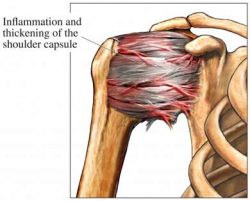
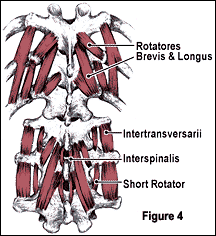
Manipulation Under Anesthesia in San Francisco Bay AreaThere are thousands of people in the United States and Abroad who suffer from a chronic pain daily. They are tired of taking pain medications and yet they are not surgical candidates, or still have pain after the surgery that have already had. The good news for all those patients who suffer from pain and lack of mobility is that there is a non surgical solution to this problem. It is a simple and painless procedure that is offering a pain relief and restores range of motion. Manipulation Under Anesthesia also known as MUA is the solution to the problems to many neck, low back and shoulder chronic pain sufferers.

MUA is the procedure where manipulation of the spine or shoulder is performed in a surgical center under sedation. This procedure is one of the most effective methods of altering chronic pain conditions where chiropractors work together with medical doctors in order to achieve the best results possible. The techniques used in manipulation under anesthesia (MUA) have been described as low-velocity/high-amplitude in contrast to the usual chiropractic adjustment which is most commonly described as a high-velocity/low-amplitude thrust or “impulse.” The purpose of high-velocity technique is to overcome the conscious patient’s protective reflex mechanism which would prevent the separation and movement of the joints. In a joint manipulation, the articulation is moved through its entire passive range of motion and past the elastic barrier and into the paraphysiological space where joint cavitation occurs. Cavitation of the joint is an audible “report” signifying that the articulation has been distracted sufficiently to affect the physiology and function of that synovial joint.

Manipulation Under Anesthesia has been recognized and used in the manual therapy arena for over sixty years. It is a great procedure for those who do not respond to a traditional care or invasive surgical procedure.The MUA procedure continues to gain widespread support and recognition in the medical community and is helping to bring much-needed relief to a grater patient base than ever before.

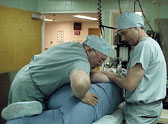
A Doctor of Chiropractic with post graduate degree – Manipulation Under Anesthesia Certified with Hospital privileges would be a chiropractor who would perform this procedure. It is a rule that two chiropractors perform MUA procedure. First one is a primary doctor and the second one is an assistant. The reason why you need an assistant is because patient is unconscious and the assistant is supporting the body on one side while the other chiropractor is performing a manipulation and stretches. Then they switch sides. Manipulation Under Anesthesia is not only safe, but also highly successful in treating acute and chronic musculoskeletal conditions.

Who Is The Best Candidate for MUA?

Patients who have received conservative care for 6-8 weeks for their neck, mid-back, lower back and shoulder with very limited improvement in symptoms or findings. Also patients who still have pain after the surgery would also be the candidates for this procedure. Common indications for Manipulation Under Anesthesia include neck, middle and lower back pain, chronic muscle pain and inflammation, acute and chronic muscle pain and inflammation, acute and chronic muscle spasm, chronic fibrositis, nerve entrapment, disk pathology including herniated disks, torticollis and failed back surgery.

What is Manipulation Under Anesthesia Procedure Like?

MUA procedure is an ongoing process for three consecutive days. During these three days the patient is being treated in a surgery center under supervision on Board Certified Anesthesiologist and two Board Certified Chiropractors where spinal manipulative therapy and stretches are performed. After the procedure, treatment continues as strengthening and stabilization programs are initiated over the next few weeks in a chiropractic office. Post-Procedure care is a vital part of the MUA procedure. Follow-up visits with a Chiropractic Physicians are important at this time as the stretches accomplished during the MUA procedure are built upon, helping the patient to regain strength and prevent future pain and discomfort.

What Are The Effects of Manipulation Under Anesthesia Procedure?

The proposed effects of therapy include the following:

  1. Breaking up scar tissue (adhesions) both in and around the spinal joints, commonly caused by multiple injuries or failed back surgery.
  2. A decreasing chronic muscle spasm
  3. Overcoming super-sensitivity of injured areas, making the patient unable to cooperate for effective treatment
  4. Stretching persistent shortened muscles, ligaments and tendons
  5. Relief from pain and radiating symptoms caused by damaged invertebral discs.
  6. Most importantly however, Manipulation Under Anesthesia affords patients immediate relief and noticeable difference in their daily lives post-procedure. These positive results only continue to improve with time and post-MUA therapy.

Am I a Candidate for MUA?

Medical screening is an absolute necessity for each patient who is planning to get an MUA. Medical history and physical examination and where indicated, CBC blood studies, chest X-Rays, EKG’s and other diagnostic tests such as MRI or CT’s. Feel free to CONTACT us at our primary San Leandro Chiropractic Clinic at (510) 481-BACK (2225) and we will be more than happy to answer any of your questions.

Sincerely, Dr. Eduard Burt, D.C., MUAC  a.k.a Doctor of Chiropractic, Manipulation Under Anesthesia Certified.
Filed Under: Chiropractic Tagged With: Chronic, chronic pain, manipulation, manipulation under anesthesia, medical doctors, mua, pain, pain medication, pain relief, san francisco bay area

Sciatica Pain Relief and Chiropractic Treatment

November 5, 2010 by drburt

What is Sciatica?

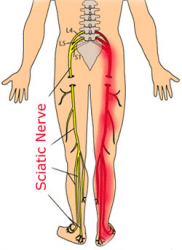
SCIATIC NERVE AND CHIROPRACTICSciatica is not a medical condition in itself but rather a symptom of other medical problems. It refers to the pain, numbness, tingling or weakness felt in the legs as an effect of compression or injury of the sciatic nerve.

The pain is usually felt in the buttocks, lower back or at various parts of the patient’s leg including the foot. The pain is usually severe combined with weakness of the muscles as well as numbness and tingling sensation. This condition is usually felt only on one side of the patient’s body.

Treatment Options

The treatment for the symptoms depends on the problems that cause the symptoms. Sciatica can be caused by spinal disc hernia, spinal stenosis, pregnancy, piriformis syndrome and many other conditions. What’s important is that the patient gets a proper diagnosis of his or her problem in order to get the right treatment.

Treatments for this condition vary from taking pain medications to surgery. Anti-inflammatory medications and paracetamol are taken to relieve the pain experienced by the patient. If this isn’t enough, narcotics can also be used especially if the pain is already severe.  Steroid injections provide short-term relief and benefits as well. Acupuncture, physical therapy, massage therapy and chiropractic care are also great treatment for sciatica. Some also benefit from yoga sessions and weight loss to reduce the pressure on the nerve roots of the spine.

Chiropractic treatment

Sciatica is treatable by chiropractic care and most of the time, it responds positively after spinal adjustments on the patient’s lower lumbar vertebrae as well as on the sacroillac joints. Some types of nerve irritation respond much faster while some takes a little while depending on the severity of the case and especially if the symptoms are already chronic.

A type of sciatica that is very difficult to deal with even for a chiropractor is when there is an actual herniation of the patient’s intervebral disc. This causes extreme pain that even taking narcotics and analgesics won’t give enough relief for the patient.

Before considering a chiropractic treatment to aid in your symptoms, you must know that most spinal adjustments done can only provide you with short-term relief to pain. It really depends on what causes the symptoms of nerve irritation and you must consult with your health professional regarding the matter. Your local chiropractor would tell you if your problem that results to sciatica symptoms can be improved through chiropractic care.

The best way to get real pain relief the pain in this condition is to relieve the sciatic nerve of the pressure. Correcting the root of the problem is the best solution in order to completely recover from the injury. If you only want pain relief then it will only be a temporary solution. Finding the real source and correcting it would get rid of the symptoms for a long time. By permanently relieving pressure off the sciatic nerve is the best solution to the problem.

Question: Have you or anyone you know experienced Sciatica?  What kind of treatment have you had?

Filed Under: Low Back Pain Tagged With: acupuncture, chiropractic, chiropractic treatment, general practice, intervertebral disc, manipulative therapy, medical conditions, medicine, neurology, orthopedic surgery, pain, pain medication, pain relief, piriformis syndrome, sciatic nerve, sciatica, sciatica pain relief, sciatica symptoms, spinal adjustment, treatment

Hospital Emergency Room vs. Chiropractic Office Experience

October 20, 2010 by drburt

Hospital EmergencyOften times when you call your doctor and no one answers the phone the message will usually say: ” In case of emergency call 911.”  The only reason why our patients call us first is because they want to avoid prolonged and painful hours at E.R. waiting room. Some of my patients had to wait for eight hours before they were seen by a doctor or a nurse.  These patients arrived to a Hospital E. R. in order to get an immediate pain relief. However, the E.R. works differently than the way I operate my clinic, or many other private practice doctors, when someone wants to get an immediate pain relief.

Last Friday my wife called me at 6.45pm. I was finishing up with my files for the day. She informed me that our three and a half year old boy got inside of the bag which was hidden in a kitchen cabinet. Inside of the bag was a bottle of Resveratrol that my wife is taking as a daily nutrition supplement. We were not sure either he ate or he threw the pills in a toilet, like he has a tendency to do with everything else. Regardless of what happened my wife took him to a local Hospital E.R.

Hospital

I have arrived to a Hospital E.R. at 7.00 pm. When I walked into the ER the nurse was checking the vitals of our son. She has informed us that we are on a fast track and will be seen by a specialist in 20-30 minutes. She also informed us that while we are waiting she is going to check with Poison Control about how toxic the supplements are to a Child.

Two hours later she informed us that the supplements are not toxic at all and the child will be fine. However, she insisted for us to stay and have blood and urine analysis done. We agreed.

BabyThey called us in at 9.30 pm,  that was already two hours behind the promised schedule. Taking blood from a child was a nightmare. They had to do it two times. It was a traumatizing experience for me watching it and holding him.

Nurse informed us that the lab work will take about 20 minutes and they will know what is going on. That was around 10.00 pm. While we were waiting a nurse suggested that we provide a urine sample as well.  We stayed at the hospital till 11.30 pm and waited for the lab results.

EmergencyA simple procedure took four and a half hours. If I had to take this amount of time in my office to treat patients with the pain I would be out of business by now. I don’t understand how cone these Hospitals prosper and at the same time run so inefficient. My only assumption is that Hospital Administration knows that they are they only game in town and patients have no place to go but to stay and wait. This is not the case with

Chiropractic care in my clinic. If I don’t provide the best possible care to my patients in a timely manner these patients will go to another Chiropractor. I want to assure you that there are more Chiropractic offices in five miles radius of my practice than there coffee shops.

Does this story sound familiar to you or am I the only one who spent many hours in a Hospital E.R? Please tell me about your Hospital E.R. Experience in a comment Section. Thank you.

Filed Under: Chiropractic Tagged With: alternative medicine, chiropractic, chiropractic office, doctors, emergency, emergency call, emergency department, emergency medicine, experience, health, hospital emergency, hospital emergency room, hospitals, local hospital, manipulative therapy, medicine, pain relief, vs

Chiropractic Rehabilitation and 4 Stages of Soft Tissue Healing

August 20, 2010 by drburt

The healing process is divided into four broad stages which are not mutually exclusive and overlap considerably.

1. Initial vascular reaction – Active Swelling

2. Inflammatory response – Passive Congestion

3. Proliferative phase – Repair

4. Remodeling 

Wound healing refers to the body’s replacement of destroyed tissue by living tissue (Walter & Israel 1987). It comprises of two essential components whose differentiation is based on resultant tissue: Regeneration and Repair.

TISSUE INJURY CAUSES RESTRICTION OF MOTION DUE TO:

  1. Inflammation & Swelling
  2. Pain
  3. Muscle Spasm 

THE MAJOR GOALS OF CHIROPRACTIC CARE:

  1. Relieve Pain
  2. Promote Full Healing
  3. Restore & Maintain Full Function
  4. Reduce the Likelihood of Re-Injury
  5. Prevent Accelerated Degeneration 

Chiropractic Care Should Continue Throughout the Repair Stage. It Take Longer For Tissues to Heal & Normal Function to be Restored Than it Takes for Pain Relief. Pain Relief is not the Only Goal.  Chiropractic Helps:

  1. Restore Normal Motion, Function & Biomechanics
  2. Improve Alignment of New Connective Tissue
  3. Prevent Shortening of Scar Tissue & Chronic Stiffness
  4. Restore & Maintain Flexibility of Ligaments & Muscles
  5.  Restore Normal Muscle Tone
  6. Promote Quicker, More Effective Healing
  7. Restore & Maintain Normal Sensation
  8. Reduce the Risk of Re-Injury and Degeneration 

STAGES OF SOFT TISSUE HEALING


STAGE I: ACTIVE SWELLING

  1. Swelling Occurs for 12 to 72 hours
  2. Motion is lost and pain increases 

Goals of Care: Minimize pain and swelling

Care:

  1. Rest & Support of Injured Area
  2. Ice to Block Swelling, Pain, and Spasm 

STAGE II: PASSIVE CONGESTION   

Fluid trapped in tissues restricts motion, causes pain, & delays healing. Begins by second to fourth day

Goals of Care for Passive Congestion:

  1. Remove fluid
  2. Pain Relief
  3. Begin to restore range of motion 

Care:

  1. Chiropractic Adjustments Help
  • restore motion
  • block pain
  • restore normal sensation
  • relax tight muscles
  • remove swelling
  • accelerate healing
  1. Heat and Cold to Remove Fluid
  2. Controlled Motion Exercises
  3. Physical Therapy helps in Some Cases
  4. Acupuncture Can Help With Pain Control 

STAGE III: REPAIR

Beginning 5 days after injury, scar tissue is made for up to 6 weeks. 

Lack of motion causes excess scar tissue in dense patterns disrupting normal function causing:

  1. Excess Scarring
  2. Chronic Stiffness
  3. Limited Range of Motion
  4. Poor Biomechanics
  5. Chronic Pain
  6. Weak Muscles & Ligaments
  7. Loss of Normal Sensation
  8. Poor Nutrition
  9. Increased risk of Re-Injury
  10. Accelerated Degeneration 

If Motion is Restored & Maintained, Tissues Heal in a Much More Functional Way.

Coals of Repair Stage:

  1. Restore Normal Range of Motion
  2. Restore Sensation
  3. Promote Full Healing
  4. Relieve Pain 

STAGE IV: REMODELING 

Connective tissue remodels for better strength & flexibility. This often takes 3 to 14 week but may take up to 1 year with severe injury. 

Chiropractic Helps Achieve these Goals:

  1. Improve & Maintain Motion & Flexibility
  2. Restore & Maintain Function
  3. Reduce Chronic Pain
  4. Reduce Risk of Re-Injury & Degeneration

This Post was based on Dr. Malik Slosberg’s Research.

Filed Under: Auto Accidents, Carpal Tunnel Syndrome - CTS, Chiropractic, Low Back Pain, Neck Pain, Personal Injury, Shoulder, Soft Tissue Injury, Spine Tagged With: alternative medicine, biology, chiropractic, Chiropractic Care, chiropractic rehabilitation, connective tissue, healing, manipulative therapy, medicine, pain, pain relief, physiology, rehabilitation, relieve pain, scar tissue, soft tissue, spinal adjustment, stages, stages of soft tissue healing, tissues, traumatology, wound healing

PLEASE FOLLOW & LIKE B.C.

RSS
Follow by Email
Facebook
Facebook
fb-share-icon
Twitter
Visit Us
Follow Me
Post on X
YouTube
YouTube
LinkedIn
LinkedIn
Share

15200 Hesperian Blvd #104

San Leandro, CA. 94578

(510) 481-2225

drburt@burtchiropractic.com


SEARCH

Categories

Recent Posts

  • Loss of Cervical Lordosis: How a Straight Neck and Pain Impact Your Health—and How a San Leandro Chiropractor Can Help Restore It
  • Hidden Injuries from Car Accidents That a San Leandro Chiropractor Can Help You Detect
  • Best San Leandro Chiropractor for Sciatica Pain Relief: Natural, Drug-Free Solutions That Work