Top Chiropractor in San Leandro, CA

San Leandro Chiropractor

  • blog
  • About Our Practice
  • What is Chiropractic?
  • SERVICES
    • Personal Injury
    • Cold Laser Therapy
    • Massage
    • Ultrasound
    • Electric Stimulation
    • Sports Injury
    • Workers Compensation
  • FAQs
  • Locations
  • CONTACT US
  • New Patient Forms
  • Nutrition Store
  • Home

Powered by Genesis

The First Scoliosis Coil in the Country – East Bay Upright MRI

November 8, 2010 by drburt

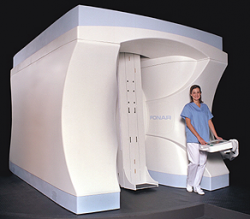
The First Scolisos Coil  - East Bay MRI
East Bay MRI - Hayward, CA

East Bay Upright MRI has acquired a coil that take a full image of the entire upright spine – it takes only eight minutes to complete this process. This radiation free evaluation can also monitor the success of treatment provided by a Doctor. The only way that evaluation of scoliosis can be accurate is when the patient is in upright position. Conventional, recumbent MRI machines can not deliver necessary results. This radiation-free application can be performed in the same amount of time and at the same cost as diagnosis and monitoring by X-RAY. Coil MRI sees curvature of  the vertebrae and the soft tissue as well. There are sagital and axial views of the entire spine – with no radiation exposure whatsoever. The 3 plane visualizations are achieved by 3D acquisition with curved multi planar reconstruction. Both Cobb angles and angular rotation of the vertebrae are measured, including the spinal cord, intervertebral discs, nerve roots and spinal ligaments. The National Cancer Institute reported a study in 2000 of 5466 women that demonstrated with scoliosis experienced a 70% greater risk of developing breast cancer that resulted from their protracted exposure to diagnostic X-RAY.

This is what a practicing neurosurgeon, Dr. Joseph Afertzon, M.D. has to say about this technology: “This technology offers unique advantages in scoliosis imaging. It can show dynamic properties of the scoliotic curve in lateral bending. It is also becoming a unique tool in screening and following pediatric patients with scoliosis. It offers precise three dimensional data preferable to regular x-ray and saves our young patients from significant radiation exposure caused by numerous follow-up X-RAYS.”

Multi positional Technology MRI benefits

  1. Patients are scanned upright in weight-bearing positions, in positions of pain or other symptom, and positions of flexion, extension, lateral bending and rotation. This is made possible by the upright MRU’s unique configuration that includes a spacious vertical gap.
  2. A seat can be attached to the bed so patients can be scanned in an upright seated position.
  3. The bed rotates from upright to horizontal so patients can also be scanned recumbent.
  4. Recumbent-only MRI can underestimate the maximum degree of the pathology and miss its dynamics nature
  5. Large patients can be scanned. The is rated for up to 500 pounds
  6. Patients that can not lie down can be scanned, such a patient wit severe kyphosis.
  7. There is unparallel patient comfort because there is nothing in front of the patient’s face except for a 42-inch flat-screen television

Question: What is your opinion about Upright MRI? Please leave your feedback in a comment section.

Filed Under: Posture, Spine Tagged With: bay, coil, coils, east bay, east bay upright mri, kyphosis, magnetic resonance imaging, medical imaging, medicine, mri, mri machine, radiology, scoliosis, spine, the first, the usa, upright, upright mri, usa east, vertebra, vertebral column

Chiropractic Rehabilitation and 4 Stages of Soft Tissue Healing

August 20, 2010 by drburt

The healing process is divided into four broad stages which are not mutually exclusive and overlap considerably.

1. Initial vascular reaction – Active Swelling

2. Inflammatory response – Passive Congestion

3. Proliferative phase – Repair

4. Remodeling 

Wound healing refers to the body’s replacement of destroyed tissue by living tissue (Walter & Israel 1987). It comprises of two essential components whose differentiation is based on resultant tissue: Regeneration and Repair.

TISSUE INJURY CAUSES RESTRICTION OF MOTION DUE TO:

  1. Inflammation & Swelling
  2. Pain
  3. Muscle Spasm 

THE MAJOR GOALS OF CHIROPRACTIC CARE:

  1. Relieve Pain
  2. Promote Full Healing
  3. Restore & Maintain Full Function
  4. Reduce the Likelihood of Re-Injury
  5. Prevent Accelerated Degeneration 

Chiropractic Care Should Continue Throughout the Repair Stage. It Take Longer For Tissues to Heal & Normal Function to be Restored Than it Takes for Pain Relief. Pain Relief is not the Only Goal.  Chiropractic Helps:

  1. Restore Normal Motion, Function & Biomechanics
  2. Improve Alignment of New Connective Tissue
  3. Prevent Shortening of Scar Tissue & Chronic Stiffness
  4. Restore & Maintain Flexibility of Ligaments & Muscles
  5.  Restore Normal Muscle Tone
  6. Promote Quicker, More Effective Healing
  7. Restore & Maintain Normal Sensation
  8. Reduce the Risk of Re-Injury and Degeneration 

STAGES OF SOFT TISSUE HEALING


STAGE I: ACTIVE SWELLING

  1. Swelling Occurs for 12 to 72 hours
  2. Motion is lost and pain increases 

Goals of Care: Minimize pain and swelling

Care:

  1. Rest & Support of Injured Area
  2. Ice to Block Swelling, Pain, and Spasm 

STAGE II: PASSIVE CONGESTION   

Fluid trapped in tissues restricts motion, causes pain, & delays healing. Begins by second to fourth day

Goals of Care for Passive Congestion:

  1. Remove fluid
  2. Pain Relief
  3. Begin to restore range of motion 

Care:

  1. Chiropractic Adjustments Help
  • restore motion
  • block pain
  • restore normal sensation
  • relax tight muscles
  • remove swelling
  • accelerate healing
  1. Heat and Cold to Remove Fluid
  2. Controlled Motion Exercises
  3. Physical Therapy helps in Some Cases
  4. Acupuncture Can Help With Pain Control 

STAGE III: REPAIR

Beginning 5 days after injury, scar tissue is made for up to 6 weeks. 

Lack of motion causes excess scar tissue in dense patterns disrupting normal function causing:

  1. Excess Scarring
  2. Chronic Stiffness
  3. Limited Range of Motion
  4. Poor Biomechanics
  5. Chronic Pain
  6. Weak Muscles & Ligaments
  7. Loss of Normal Sensation
  8. Poor Nutrition
  9. Increased risk of Re-Injury
  10. Accelerated Degeneration 

If Motion is Restored & Maintained, Tissues Heal in a Much More Functional Way.

Coals of Repair Stage:

  1. Restore Normal Range of Motion
  2. Restore Sensation
  3. Promote Full Healing
  4. Relieve Pain 

STAGE IV: REMODELING 

Connective tissue remodels for better strength & flexibility. This often takes 3 to 14 week but may take up to 1 year with severe injury. 

Chiropractic Helps Achieve these Goals:

  1. Improve & Maintain Motion & Flexibility
  2. Restore & Maintain Function
  3. Reduce Chronic Pain
  4. Reduce Risk of Re-Injury & Degeneration

This Post was based on Dr. Malik Slosberg’s Research.

Filed Under: Auto Accidents, Carpal Tunnel Syndrome - CTS, Chiropractic, Low Back Pain, Neck Pain, Personal Injury, Shoulder, Soft Tissue Injury, Spine Tagged With: alternative medicine, biology, chiropractic, Chiropractic Care, chiropractic rehabilitation, connective tissue, healing, manipulative therapy, medicine, pain, pain relief, physiology, rehabilitation, relieve pain, scar tissue, soft tissue, spinal adjustment, stages, stages of soft tissue healing, tissues, traumatology, wound healing

Questions/Answers #1-#5

August 17, 2010 by drburt

#1 Falling asleep on arm numbness?

Lately I have been waking up just about every night with a tingling, numb arm because I have been falling asleep on it. I figure it becomes like this because the circulation is cut off. Can this be potentially dangerous or hint toward something of greater significance and severity?

Answer:

Thank you for visiting and asking a question. Sleeping for a prolonged period of time on your arm will cut-off a blood circulation to your upper extremity. As a result you will experience symptoms such as: tingling, numbness and loss of sensation. Central Nervous System (CNS – Brain) has a unique defense mechanism. When it senses that your body is in danger it will alarm you automatically. In your particular case your CNS sent you a wake up message. This is not dangerous if it happens only because of the sleeping position. You have to try to change sleeping positions and patterns and the problem should go away on its own. However, if you have something like TOS (Thoracic Outlet Syndrome) misaligned Clavicle and even Subluxated Vertebrae in the early stage, the symptoms you experience could be because of these conditions. Please have yourself checked by a local chiropractor when you get chance. Hope you feel better.

#2 My ankle is the size of a softball. Help?

Today at camp I rolled my ankle pretty bad in one of my games. It hurts so bad when I stand on it for even a second :/ What are some tips and pointers you can give me to ensure a speedy recovery? And have you ever sprained an ankle really bad before??? Your help will be greatly appreciated thank you!! 🙂

Answer:

Hello,                                                                                                                                                                                                                                                                                                                                                                                                                                                                The severity of your injury depends on how badly you have hurt the soft tissue that supports your ankle. From you description it sounds like it is pretty severe due to the size of the swelling you have described. At this point and time I would use ice – 15 minutes on and 45 minutes off every waking hour. This will help to keep inflammation under control. Pick up your phone and make an appointment with your orthopedist or local chiropractor. Most likely your doctor of choice will have XRAYS done on your ankle and order MRI. XRAY will help to rull out a potential fracture and MRI will help to see how sever is the sprain/strain of your ankle. When diagnosis is established you should start rehabilitation process. Assuming you did not rapture your ligaments or tendons I would recommend the following – PT modalities such as Erchonia Cold Laser PL 5000, Ultrasound, and Electric Muscle Stimulation followed by deep tissue massage from CMT.

If your tendon or ligament has severe tear arthroscopic surgery is inevitable.

#3 I thought I pulled a muscle but….?

A couple of weeks ago I was at the gym as usual running on the treadmill, towards the end of my session, I started to feel a pain which is centered on my left buttock. Since then I have not been able to run at all as it is too painful & sometimes I can feel a discomfort just walking around normal or sitting.
At first I thought i pulled a muscle but since it’s now been two weeks… I think it is probably something else.
Thanks

Answer:

From your description it sounds that you have Sacroilliac Joint (SI) misalignment. When SI joint is subluxated symptoms will get worse upon walking. The reason why pain level goes up is because SI joint plays a very important and active biomechanical role in a walking process.

You can self diagnose if your SI joint is misaligned. Stay in front of the mirror with your eyes closed and march in one place for 5 seconds. When you are done marching open your eyes and look at your – 1) ear level, 2) shoulder level, 3) hip level. If one side of your hip is higher than the other your SI joint is misaligned. An even better way is to have someone else take a digital photo of yourself with your eyes closed. You will be able to see it for yourself how the shoulders and neck compensate for your SI joint problem. I would suggest to see your local D.C. and fix the problem in a couple of sessions.

#4 A Fourth Sprained Ankle?

I sprained my ankle twice in the past year. One time I slid on ice and sprained on side in late February and then in March sprained the other side as well as the first side. During June I wore an ankle stabilizer so I would not injure it again in PE but in July the pain came back and went away in a few days. Now I can’t really walk that great on it. I told my Mom but she says it’s fine. After injuring it in Feb and March I was prescribed physical therapy but it isn’t covered by insurance unless it follows a surgery. Does anyone think I may have injured it for a fourth time??
~~~Sorry for the long description.~~~

Answer:

Most likely you have a flare up of an old injury that has never been properly rehabilitated. Weak ligaments and tendons are very easy to injure again. Post traumatic soft tissue fibrosis makes your soft tissue less elastic. Since you do not have insurance I would suggest to find local CMT get some deep tissue done on your ankle. MRI of your ankle would tell the entire story, but it is very expensive. Also Cold Laser therapy by Erchonia PL 5000 and Ultrasound will be able to get some good results. Those modalities should be available in your local D.C. office.

#5 Should I still work if I have a herniated Disc in my back?

I just had an MRI done and found out not only do i have a disc protrusion in the lumbar section of my lower back, I also have chronic arthritis in my spine and degenerative disc disease. Is it good for me to continue at a job that I have to lift heavy objects repeatedly?

Answer:

Repetitive heavy lifting will accelerate the degeneration of your lumbar disc and osteoarthritis. As a result it will cause more pain and your ability to perform Activities of Daily Living. It would be great if you could find a different place of employment that does not require repetitive lifting. You can also ask your employer to provide a modified duty for you if such is available.

Filed Under: Low Back Pain, Modalities, Neck Pain, Questions/Answers, Soft Tissue Injury, Spine Tagged With: ankle, answer question, answering, answers, arms numbness, arthroscopy, back, blood circulation, burt, defense mechanism, fall asleep, injuries, massage, medicine, orthopedic surgery, questions, sacroiliac joint, sleeping positions, spinal disc herniation, sprain, sprained ankle, surgery, thoracic outlet syndrome

13 Facts for Chiropractic and Wellness Care

August 16, 2010 by drburt

In medicine, there are different ways to treat a patient. Some go for a surgery and this is usually the case when the patient’s problem cannot be resolved by other means. Surgery is the last resort with any injury or chronic pain. Some go for physical therapy while others prefer the chiropractic treatment. Many people utilize chiropractic services on a daily bases. However, how many people understand the theory scientific explanation behind chiropractic treatments. The philosophy in chiropractic care is that our body has the ability to heal itself without any medications. Our body naturally has the capacity to heal. It is also said that every few years, we get a completely new body. Our skin shed to make way for new skin and so do our organs but it does take awhile and with this knowledge we know that our body can really heal itself. It is the human spine that forms the foundation of our body and when it’s in the right position and there are no hindrances to it, we are at our best shape both in mind and body. The goal of chiropractic treatment is to achieve healing by regulating and maintaining a stable condition for our body.

1. Chiropractic Care Focuses on Health and Optimal Function

  1. Chiropractic offers a holistic approach
  2. The patient is the center of care, not a disease or symptoms
  3. The goal of care is to achieve a more effective life, to restore & maintain full function & well being

The Continuum of Health:

       ↑      Optimal Health                                                                                    

↑      Fitness           

↑      Good Function      

●      No Symptoms  

↓      Minor Symptoms/Dysfunction

↓      Moderate Symptoms/Dysfunction/Pathology

↓      Sever Symptoms/Pathology/Disease

↓      Death

2. Health  is More Than the Absence of Symptoms, Health is Viewed in Positive Terms of

  1. Human Potential
  2. Quality of life
  3. Optimal Function
  4. Resistance to disease
  5. Vitality
  6. Strenght
  7. Endurance
  8. Balance
  9. Coordination 

3. Patients and Chiropractors Work Actively Together to Maintain Health

  1. Health care is a dynamic process & a cooperative effort
  2. Patient education & self-care are important goals
  3. Patients are empowered to take responsibility & control of their own health

4. Symptoms Don’t Tell the Whole Story:

  1. Many problems arise gradually & symptoms appear only when problems are advanced
  2. Wellness care helps detect & correct problems at an early stage by restoring & maintaining normal function & biomechanics
  3. Good functioning muscles & joints are healthier & more resistant to injury, illness or degeneration. 

5. Chiropractic Care Focuses on a Natural Approach

  1. Chiropractic uses natural & conservative methods to promote the body’s own healing capacity
  2. It encourages healthful living: good nutrition, exercise, stress management & posture. 

6. Regular Chiropractic Care Helps

  1. Restore & Maintain full range of motion
  2. Promote full function
  3. Improve biomechanics
  4. Optimize performance & coordination
  5. Maintain joint stability
  6. Induce a sense of well-being & relaxation
  7. Improve nutrition to discs & other joints
  8. Reduce the risk of injury & degeneration 

7. Motion and Nutrition of Discs and Joints

  1. Chiropractors check the spine regularly to evaluate the motion of joints
  2. Good motion is essential for the health & nutrition of discs & joints because it permits the exchange of nutrients, fluid & waste
  3. Without movements, discs & joints may degenerate quickly
  4. Motion also reduces the formation of fibrosis (scar tissue)
  5. Fibrosis occurs in motionless joints & can lead to stiffness & degeneration 

8. Loss of Motion Can Occur Without Pain or Symptoms

  1. A chiropractic exam can detect disturbed motion & mechanics whether there are symptoms or not
  2. Through adjustments & exercises, motion and nutrition can be restored & maintained 

9. Coordination and Control of Muscle Tone, Balance and Joint Stability

  1. Restricted, painful injured or degenerated joints transmit information to the nervous system which is not harmonious with input from other muscles & joints
  2. This disturbs coordination, fine motor control & joint stability
  3. Chiropractors identify such joints and use adjustments & exercises to help normalize sensory input, function & motion
  4. This improves agility, balance, coordination, stability & fine motor control 

10. Joints Can Have Disturbed Biomechanics Without Pain or Other Symptoms

  1. Disturbed biomechanics can:   a) Alter load distribution, Increase risk of injury, b) Accelerate degeneration, c) Reduce optimal performance
  2. Chiropractors identify such joints & by adjustments, help restore normal biomechanics and load distribution
  3. This helps optimize function & may reduce the risk of future problems or injuries 

11. Well-Being and Relaxation

  1. In daily life we are exposed to many stresses that can make us tense
  2. This tension can be stored in our bodies
  3. Chiropractors check for signs of tension & by adjustments, help relax muscles, restore motion, & reduce stress
  4. Relaxation & a sense of well- being are very common results of chiropractic care 

12. As a partner with Exercise and Sports

  1. Chiropractic care isn’t a substitute for exercise but a valuable partner that can help enhance its benefits
  2. Joints with good biomechanics, relaxed muscle tone & stability will benefit the most from exercise & be the least likely to be injured 

13. Chiropractic and Athletic Performance

  1. Many athletes seek regular chiropractic care because  they find it improves their performance & reduces the risk of injury
  2. Some studies suggest chiropractic can improve athletic  ability, agility, balance, kinesthetic awareness, power & speed reaction time.

 This post was based on Dr. Malik Slosberg’s research.

Question: What is Your Opinion About Wellness?  What is Your Definition of  Wellness?


Filed Under: Chiropractic, Spine Tagged With: alternative medicine, care, chiropractic, Chiropractic Care, chiropractic in canada, chiropractic services, chiropractic treatment, chronic pain, facts, health care, manipulative therapy, medicine, optimal health, scientific explanation, spinal adjustment, wellness

  • « Previous Page
  • 1
  • 2
  • 3
  • 4
  • 5
  • Next Page »

PLEASE FOLLOW & LIKE B.C.

RSS
Follow by Email
Facebook
Facebook
fb-share-icon
Twitter
Visit Us
Follow Me
Post on X
YouTube
YouTube
LinkedIn
LinkedIn
Share

15200 Hesperian Blvd #104

San Leandro, CA. 94578

(510) 481-2225

drburt@burtchiropractic.com


SEARCH

Categories

Recent Posts

  • Loss of Cervical Lordosis: How a Straight Neck and Pain Impact Your Health—and How a San Leandro Chiropractor Can Help Restore It
  • Hidden Injuries from Car Accidents That a San Leandro Chiropractor Can Help You Detect
  • Best San Leandro Chiropractor for Sciatica Pain Relief: Natural, Drug-Free Solutions That Work