Top Chiropractor in San Leandro, CA

San Leandro Chiropractor

  • blog
  • About Our Practice
  • What is Chiropractic?
  • SERVICES
    • Personal Injury
    • Cold Laser Therapy
    • Massage
    • Ultrasound
    • Electric Stimulation
    • Sports Injury
    • Workers Compensation
  • FAQs
  • Locations
  • CONTACT US
  • New Patient Forms
  • Nutrition Store
  • Home

Powered by Genesis

Back Packs Safety – Back to School and 14 Helpful Tips

September 2, 2010 by drburt

It is not a secret that heavy back (BP) packs for school children are the leading cause of lower back and shoulder pain. I have seen too many children in my almost ten years of my practice suffering from this problem unnecessary. About 40,000,000 students go to school every day. It is crucial that every child carries their schoolpacks properly in order to avoid neck, lower back and shoulder pain.

Make sure the backpack is the right size for your child. The proper size is equal to 75% of your child’s back, meaning the space between the waste and the shoulder blades.
* A child’s back pack weight should never exceed 15% of their body weight according to The Congress of Chiropractic State Association. So this little chart should be helpful.
50 pound child carrying copacity should be no more than 7.5 pounds
80 pound child carrying copacity should be no more than 12 pounds
100 pound child carrying copacity should be no more than 15 pounds
130 pound child carrying copacity should be no more than 19.5 pounds
150 pound child carrying copacity should be no more than 22.5 pounds
* Choose a backpack with padded shoulder straps that sit on both shoulders. BP with one strap such as messenger bags distribute all the weight on one shoulder instead of evenly on both shoulders. Also, bak pack without padded shoulder straps can cause pressure on the nerves that surround the child’s armpits.
Safety tips on how to avoid backpack injuries

  1. Wear both shoulder straps evenly to properly distribute BP weight.
  2. Get the correct size BP for your child.
  3. The BP should not extend below the lower back. Bigger is not better.
  4. Lighten the load and put the heaviest items in the BP first keeping them the closest to the body.
  5. Lift the BP with your legs and not with your back and place it on one shoulder strap at a time.
  6. Do not leave BP on the floor to avoid someone tripping on them.
  7. Choose a quality BP that has wide well-cushioned shoulder straps with a lumbar support/padding.
  8. Talk to teachers about reducing the need to bring home textbooks or if at all possible have an extra set for home use.
  9. Bend at the knees.
  10. Using both of your hands, check the weight of the BP.
  11. Never sling the BP onto one shoulder and avoid swinging the BP.
  12. Use both shoulder straps at all times. Make them snug but not too tight. Carrying on one shoulder can cause long-term neck, shoulder, back, and postural problems.
  13. Use the stabilizing waste strap if the BP has one present.
  14. Look for signs that BP is poorly fitted or overloaded on a daily basis. A couple signs that the BP is overloaded or not being worn properly is pain, red marks from the  straps, or poor posture.

Being a Safe Backpack Advocate

School’s authorities and children’s  parents must work together in resolving heavy BP issue. The following things can be done by school’s authorities:

  1. allowing students more time in between classes to use lockers
  2. purchasing paperback books
  3. implementing school education programs about safe backpack use
  4. purchasing books on CD-ROM or putting some curriculum on the school’s website, when possible

Adjustment of the backpack would be necessary if one of the following things happened:

  1. Your child struggles to get the BP on or off have back pain and  lean forward to carry the BP
  2. If your child has back pain or numbness or weakness in the arms or legs, talk to your family doctor, chiropractor or physical therapist.

Some  Facts were taken from The Founders of  Backpack Safety America International TM. Visit them at www.backpacksafe.com

The International Chiropractic Pediatric Association (ICPA) endorses the use of Air Pack brand backpacks which are available at www.airpacks.com

Please Leave some comments with your favorite back to school story!

Filed Under: Children, Chiropractic, Posture Tagged With: back packs, back to school, backpack, backpack weight, backpacking, backpacks, child carry, children backpacks, chiropractic, clothing, education, fashion, helpful tip, helpful tips, hiking equipment, luggage, medicine, messenger bag, pack safety, packing, safety, safety tips, school child, shoulder pain, shoulder problems, shoulder strap

96 Tips For a Perfect Posture

August 5, 2010 by drburt

The spine, same as our feet, gets the hardest job in our body as it is used in practically every movement we make and it takes pressure from other body parts such as from the neck, shoulders, head and our arms. As we walk, stand, sit, carry a heavy object or dance, our spine takes the pressure to keep our body erect but at the same time it also has to have the flexibility to make other kinds of movements while keeping our balance.

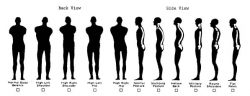
One of the following can be noticed when one has a bad posture: high shoulder, a forward stooping head, a rotated trunk (torso), a hunch back, a high hip, and a side-bent neck and one of the feet will be externally or internally rotated.  Abnormal  posture can result from trauma (like a car accident or fall), repetitive movements (turning your neck towards the monitor), and certain bad postural habits  (sleeping on your stomach).

The human body is often in a state of strain which causes a loss of proper balance between parts of the body and gravity. Such imbalance of posture distortion usually indicates internal body changes before  any  body functions appear disturbed.

All parts of the body are situated so this so this that they can interact efficiently with one another as well as with gravity. The body is able to repair itself and adjust to the many forces to which it is subjected, both internally and externally. This relationship produces a feeling of youth, energy and vitality.

By having correct posture, we are keeping our spinal vertebrae from being misaligned or subluxated.  Our spine is not only reliant on the strength of our back muscles but it also relies on its two arches (lumbar and cervical lordosis) which is why correct posture is vital. If we have poor posture, these natural arches would disappear and there’s going to be nothing left  that can absorb shock in our back. Once this happens, a person will experience pain in the neck and lower back. This paves the way for vertebral osteoarthritis, herniated disc and excessive pressure on the peripheral nerve. Osteoarthritis and herniated disc caused by uneven weight distribution on the vertebral bodies of the spine. Poor posture can lead to difficulty breathing by interfering with proper ribcage expansion, muscle soreness along the back of your neck, shoulders and upper back, as well as lower back pain.

When you already have poor posture, you can start practicing the correct posture by keeping yourself aware of the correct positions to maintain a good posture. There is a correct sitting position where you sit while keeping your back straight and your buttocks should be touching the back of the chair. When you want to lift a heavy object, you have to maintain your back straight and bend your knees & hips to lift the object up. You can start doing your research as to the correct positions to maintain a healthy spine. Also, muscle strengthening exercise is a must for a spine, for a better support of the spine.  Improper posture weakens muscles of the spine because they are not being used. By providing musculature the strength it needs, one can achieve a better maintenance of a good posture.

Also remember that this is not going to be a quick solution as it will take time especially with muscle strengthening. You may want to correct your posture now but won’t take it to heart and practice it daily then you won’t see real results. There should be a lifestyle change so that your body will get used to the correct posture that eventually you don’t even have to think about it.

You are probably wondering by now where  is the part about 96 tips for a perfect Posture. Below are the 5 links that  brings up total to 96 tips. Without further ado:

  1. 10 Tips for improving Posture and Ergonomics, by Dr. Kelly Andrews, D.C.
  2. 13 Tips on Getting a Good Posture, by  Celestine Chua
  3. 20 Tips from Yoga to Go, by Nancy Wile, Ed. D
  4. 32 Tips on how to Improve your Posture, by Savialeigh, Ben Rubenstein, Krystle C and many others
  5. 21 Tips on How to Maintain Good Posture, by ACA

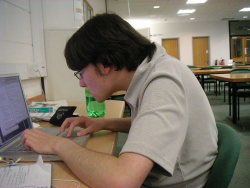
To help you out, try finding ways to get yourself reminded of keeping a good posture. Perhaps you can put post-it notes on places that you would see on a regular basis. Like on your computer, put a small post-it note that says “stop slouching” or other reminders. You can also use an alarm that is set every 30 minutes or so to keep yourself aware and maintain a good posture.  I phone or any other smart phone has a build in calendar that can be set up as whatever time frequency you desire. I think it is one of the best ways to remind yourself about good posture habits. No one ever leaves a house without a cell phone in our days. These are simple solutions that really work as you exert an effort to inculcate the correct posture into your lifestyle.

Question: Have You Checked Your Posture Lately?  Do You Have Any Tips on How to Keep a Good Posture?

Filed Under: Posture, Spine Tagged With: anatomy, back posture, bad posture, body, correct posture, exercise, for a, health, human behavior, human body, improve posture, neck pain, necked, neutral spine, pain, perfect posture, poor posture, posture, posture and occupational health, posture brace, prevention, shoulder, sitting, spinal cord, spine, tips

Why is posture so important?

July 31, 2010 by drburt

Good posture depends upon several factors. While exercise, attitude, and practice can positively affect posture, some postural problems need more aggressive attention due to complications which can jeopardize good health and well-being.

The foundation for normal spinal posture is laid out early in life. Improper development of the spine’s normal curvature will set the stage for eventual distortions. If the base of a child’s spine is tilted incorrectly, it can wreak havoc with the structure that builds upon it.

Normally the human body attempts to maintain erect posture by balancing “back and forth” over the lower spine. If the lower vertebrae are wedged to one side it can cause the spine to compensate by bending into an abnormal curve. This condition is commonly referred to as scoliosis. The medical approach to scoliosis has been to administer braces and electrical stimuli; neither of which have proven very successful. Upon termination of such practices the abnormal curve usually returns to its initial state within five years.

Why are abnormal spinal curves unhealthy?

When vertebrae move out of their normal alignment, neurological disturbances known as subluxations can result. This condition impedes the normal transmission of mental impulses through the nerves from the brain to the body, thus inhibiting body function. Besides interfering with the innate ability of the body to heal, subluxations disturb the “righting reflex” which allows the body to adapt to abnormal equilibrium permitting the body to stand upright.

How can parents help?

As the parent of a child with poor posture and/or scoliosis, there are several things you can do to help.

First, it is crucial to keep all of your child’s corrective chiropractic appointments so that proper spinal balance may improve. Specific adjustments work not only to restore normal posture, but also to improve overall health by facilitating nerve function.

Second, avoid placing infants in a walker, jumper, or other restraining device that allows him/her to stand. An infant’s spine is not completely developed and these devices can cause permanent damage. Instead, one of the best positions for your baby is on his/her stomach. In addition to developing the muscles of the neck, this position lays ground for the proper development of the lower back’s secondary curve. Crawling also helps to develop this important curve of the spine. Exercises such as these allow for better physical growth and encourage strong spinal musculature.

Lastly, be a good role model for your child. Seek chiropractic care yourself, exhibit good posture, and exercise daily. Encourage your child to ride a bike or run and play outside instead of watching TV.

Any child suffering from poor posture and/ or scoliosis should be thoroughly analyzed for vertebral subluxations that may be causing the problem. Although this condition is difficult for both the parents and the child, continued patience seems to pay off with visible improvements in overall posture and health.

STRESS

In today’s fast paced, ever-changing society, many factors or stressors are believed to contribute significantly to our most serious health problems. Individual perception of stress varies from person to person, but most often stress is related to situations in which you are forced to adapt to in a way that is difficult or unpleasant.

Many life events and the ability to cope with them are closely related to stress-related health problems. Some stressful events are the death of a loved one, alienation of affection, geographical moves, decline in self-esteem, or change in job status. Threats to marital, family or social status, to health or security may also be particularly stressful. Patterns of change, both for better or worse, can also cause stress.

Particular kinds of work seem to cause special stresses related to the nature of the work or imposed irregularities, For example, rotating shift work which disturbs the normal sleep cycle, produces chronic stress by repeatedly upsetting daily rhythms that control specific hormones and other responses. Jobs that entail little variation but close attention, such as assembly line work involving dangerous machinery, also seem particularly stressful. People in high-stress jobs often view their situation as controlling: too much to do, too little time, unstimulating and no way to escape.

Much has also been written about the role of personality and stress-related conditions, particularly heart disease. Individuals who are very tense, impatient, highly competitive and seem to be driven by time and the need to succeed (Type A persons) seem to be at a higher risk for stress-related diseases than others who are more relaxed and less competitive.

Filed Under: FAQs, Posture

Soft Tissue Injury and San Leandro Chiropractic Rehabilitation Process

June 2, 2010 by drburt


SOFT TISSUE HEALING
A Soft Tissue Injury (STI)happens when your muscles, tendons and ligaments get damaged because of a sprain or strain. It happens when one overuses or put too much stress on a particular joint. As a result the pain accompanied by bruising or swelling. STI is a very common problem and it can easily be remedied as long as the pain that accompanies it is not severe.

When STI occurrs, an immediate response applying the principle of “PRICE” would make a big difference. PRICE means Protection, Rest, Ice, Compression and Elevation. After an injury, the patient should be prevented from making any movements as it allows to prevent further damage.  If the patient feels the pain, when he/she bends or walks then he/she should avoid these movements. If absolutely necessary, crutches may be used. Icing minimizes the pain and the swelling especially during the first 3 days after the injury has occurred. Ice is placed on the affected area for 15-20 minutes at a time every waking hour. Take a note that if you have diabetes or poor blood circulation, you must consult your doctor first before applying a cold pack.  Pressure is applied to compress the injured area to control bleeding and swelling. Elevation of the affected area also minimizes the bleeding and swelling. Raise the affected area above the heart level for the first 72 hours or until the swelling would subside.

The “PRICE” management is effective but other treatments may be necessary if the patient experiences extreme pain that lasts for more than 24 hours. A health care professional would be able to make a diagnosis and recommend treatments. Treatments include chiropractic, physical therapy and massage therapy. If a patient suffers from severe pain, prescription medications might be necessary along with a rehabilitation program.

Chiropractic rehabilitation helps to rapidly solve the problem of injuried muscles, tendons and ligaments. One of the chiropractic specialties for such treatments is called ART or Active Release Techniques. Patient would be amazed at how fast your recovery would be if you go for a chiropractic adjustment, ART and Physical Therapy Modalities. It is a hands-on approach that locates then eliminates the scar tissues. The Graston Technique is a treatment using different stainless steel tools and it can be even more effective than ART. The Graston Technique uses instruments to treat the affected areas suffering from chronic inflammation or fibrosis of the soft tissues. SASTM is another chiropractic tool used that is made of acrylic instead of stainless steel as used on the Graston Technique. But, in some cases, in order to get the best result in treatment, both set of tools may be used on the patient as well as different modalities.

Question: What Kind of Therapy Have You Had For Your Soft Tissiue Injury?  What was an outcome like?

Filed Under: Chiropractic, Posture, Soft Tissue Injury, Spine Tagged With: chiropractic, Chiropractic Care, health, manipulative therapy, san leandro chiropractor, spinal adjustment

  • « Previous Page
  • 1
  • …
  • 3
  • 4
  • 5

PLEASE FOLLOW & LIKE B.C.

RSS
Follow by Email
Facebook
Facebook
fb-share-icon
Twitter
Visit Us
Follow Me
Post on X
YouTube
YouTube
LinkedIn
LinkedIn
Share

15200 Hesperian Blvd #104

San Leandro, CA. 94578

(510) 481-2225

drburt@burtchiropractic.com


SEARCH

Categories

Recent Posts

  • Loss of Cervical Lordosis: How a Straight Neck and Pain Impact Your Health—and How a San Leandro Chiropractor Can Help Restore It
  • Hidden Injuries from Car Accidents That a San Leandro Chiropractor Can Help You Detect
  • Best San Leandro Chiropractor for Sciatica Pain Relief: Natural, Drug-Free Solutions That Work