Top Chiropractor in San Leandro, CA

San Leandro Chiropractor

  • blog
  • About Our Practice
    • YELP REVIEWS
  • What is Chiropractic?
  • SERVICES
    • Personal Injury
    • Cold Laser Therapy
    • Massage
    • Ultrasound
    • Electric Stimulation
    • Sports Injury
    • Workers Compensation
    • HS Sports Physical Examination
  • FAQs
  • CONTACT US
  • New Patient Forms
  • Nutrition Store

Powered by Genesis

Facts About Hospital Errors

May 4, 2011 by drburt

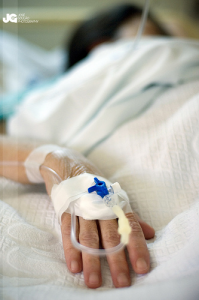
HOSPITAL ERRORS

Studies show that medical errors can occur in about one-third of hospital admissions. It is really scary to admit but the facts point out that medical errors are about 10 times more common than what was previously estimated. One study is authored by David C. Classen, MD who is an associate professor of the Salt Lake City’s University of Utah in medicine. Dr. Classen used a new tracking tool to be able to accurately determine where and what areas the common medical errors happen and for them to focus on improving these areas. He doesn’t want to ruin his profession by exposing these medical errors but his main goal is to promote awareness with his fellow physicians with what they need to improve in these areas. Through voluntary reporting and other methods, Dr. Classen was able to develop a new tracking method for determining medical errors.

Protecting Patients From Common Hospital Errors
To name a few most common hospital errors include some medication related issues, hospital acquired infection and procedure mistakes. These are the most common ones which Dr. Classen’s procedure was able to determine. But according to him, proper knowledge by asking question and talking with the physician could reduce the risk of medical errors.It is very important for a patients to know why they are taking certain medication and what effects does it bring to their body when they start taking it. And talking to the physician that would be responsible for the patient’s surgery is also very important. Talking with the physician about all the steps involved and asking questions that might be difficult for a patient to understand are just some of the important procedures that are sometimes taken for granted. A patient should also make sure that when they will undergo certain surgery they should bring an advocate, either a family or a friend that could watch over things and can also help them get a clearer view of things.There are times when a surgery needs to use certain devices like urinary catheter. A patient should ask their physician daily of when they will remove it. Because sometimes infection might develop through this and it should be removed as soon as it is no longer necessary.
Looking For A Second Opinion
It is very important that a patient should seek for a second opinion if they are not satisfied with the findings of their first physician. Some conditions has numerous ways of treatment and there are also several conditions which have the same symptoms and different physicians might have different findings.Another patient safety expert Peter Pronovost, MD believes that the new tracking tool is way too far from fail-safe. He is a professor at Baltimore’s Johns Hopkins University School of Medicine on anesthesiology and critical care medicine. According to him this tool is not really a good measure of the hospital errors problem.Though patients should be very careful in choosing where they will have their surgeries, like researching about the hospital’s bloodstream infection rate and such. And they should make sure that the physician that would handle the operation has a lot of experience in that area. Even in the medical field practice really makes it perfect says Dr. Pronovost. Though he doesn’t deny the fact that this new tracking tool shows the need for patient awareness and system improvement on the medical field, it is just another call to action to raise awareness on hospital errors.

If you have anything to add to this post, please feel free to Post a comment or share your thoughts through Facebook, Twitter or comment section below to join the conversation.



Filed Under: Advice, Opinion Tagged With: admit, commons medical, david c. classen, error, errors, evidence based medicine, facts about, hospital, hospital acquired infection, hospital admission, hospitals, medical error, medical errors, medical school, medical terms, medicine, occur, patient safety, patient safety and nursing, peter pronovost, preventable medical error, safety, salt lake, Study, surgery

Foods That Are Good For Your Bones

April 25, 2011 by drburt

BONESThe secret foods to having Strong bones

As we age, our bones become stronger. But as we grow older or reach middle age they begin to thin out and become fragile than they used to be. Women often feel it or would suddenly feel the change in their bones after reaching the menopausal stage. And we can prevent this from happening or we can prepare our body for it by eating right. Proper diet could help you prevent a lot of conditions that may develop as a person age. Knowing the right foodsto eat will definitely give a positive result. Here are some of the good foods you should include in your diet every day.

Sardines

Sardines are good source of calcium, a mineral that is important in developing your bones and making it stronger. Just by eating 3 ounces of sardines has more than enough source of calcium you need a day.

Drink your Milk

Milk is the most common source of calcium and everybody should at least drink an 8 ounce glass of milk every day. Not only kids need their milk as adults should also drink a single glass of it for their bones.

Other dairy products are good

If you can’t stand drinking milk every day then why not try out other dairy products which are also a good source of calcium? A cup of yogurt or an ounce of swiss cheese is as good as a cup of milk. There are a lot of dairy products that are lactose free for those people who are lactose intolerant.

Fortified Foods

When you do your groceries try to check the nutritional level of the food that you are buying. That way you can still enjoy the food you love to eat but you are also helping your bones get the minerals they need to stay strong. There are a lot of fortified foods in the market which contains a good amount of calcium per serving.

Going Vegetarian

Eating green vegetables have a lot of benefits and having strong bones is one of them. There are a lot of vegetables which naturally contains calcium like Chinese cabbage and kale. Turnip and collard also has a lot of calcium.

Supplements

Calcium supplements are probably one of the easiest ways to increase your calcium intake. But remember taking too much can also bring harm to your body so never exceed the 1,000 milligrams of calcium per day. If you can already eat foods that are rich in calcium then there’s no need for you to take supplements.

Salmon

Aside from sardines, salmon is also a good source of calcium. It also has a lot of vitamin D which helps in calcium absorption.

Soy Foods

Eating a little amount of tofu a day will make your bones stronger. Just about half a cup of tofu contains 258 milligrams of calcium.

Just a little salt

Salt and calcium don’t go too well inside your body. The more salt you take the less calcium gets absorbed by your system. Calcium tends to be washed away by urine when you take too much salty foods.

Nuts and Seeds

Having nuts and seeds like almonds and sunflowers seeds for snacks are a healthy way of eating. This food can help in strengthening your bones with their high calcium content.

Things you can do for your bones

Performing weight-bearing exercises

Doing fun activities such as brisk walking, tennis, dancing and yoga can help make your bones and muscles stronger. Studies show that the more stress you put in your bones and muscles the more material your body would supply to your bones to develop.

Sunshine

It’s free and abundant. Though sunshine is not food but you need it for your body to be able to absorb all the calcium you have taken. Vitamin D that your body will be produced in response to exposure to sunlight will help make your bones stronger.

If you have anything to add to this post, please feel free to Post a comment or share your thoughts through Facebook, Twitter or comment section below to join the conversation.

Filed Under: Advice Tagged With: aging, best foods, bones, calcium, calcium supplements, cheese, Diets, eating food, food, food and drink, for your, fortified food, lactose intolerance, middle ages, milk, nature, nutrition, sardine, soy foods, Strong, stronger bones, tofu, vegetarianism

How Much Sleep Does Your Body Need?

April 20, 2011 by drburt

SLEEPING BUEATYYou may have this idea that you’re not getting enough sleep. Chances are, you’re not. There’s  a big difference on our performance when we have adequate sleep every night versus when we don’t have enough. So, how much sleep do we actually need? About some 15 years ago there was this theory that if you get about 4 to 5 hours of sleep a night then your body will just adapt and the brain can still be able to perform well. But that was because the studies conducted then were on participants who were only monitored during sleeping time at night. They were able  to go home by morning. They could  also have taken a nap during daytime or they could have been drinking coffee.

David Dinges who is the head of the Sleep & Chronobiology Lab in the University of Pennsylvania knows more about this than anyone else in the world. He and Hans Van Dongen who is his lead author had assigned several dozens of people into 3 groups. In 2003 these 3 groups were given the strict rule that one group sleeps for 4 hours, the other for 6 hours while the other for 8 hours for 2 weeks. Then every couple of hours at daytime they were being tested to monitor their ability for sustaining attention with PVT or psychomotor vigilance task. They were tested to see how much time their body requires to respond after they see a number flashed on the computer screen. Even just a half a second delay is already a good indication that they lack sleep and this short delay is called as microsleep.
Based on the PVT test that lasted for 2 weeks the result show that those who had 8 hours of sleep barely suffer from any attention lapse and there was no decline on their results. Those who had 6 hours of sleep a night showed signs of delay and this declined steadily and those that had 4 hours of sleep a night had the worst result from the 3 groups. Also, this test showed no difference on the result from people sleeping 8 hours a night to those sleeping for 9 hours. While those who had 7 hours of sleep show a slower response time than the 8 hour group though the trend was not decreasing but steady at slower speed.
Coffee and other countermeasures can help but these can only help temporarily. Lack of sleep won’t show signs right away but it will after about 5 days where performance level is decreasing. But Dinges also found out that a small percentage of population, about 5%, can actually handle less hours of sleep and still maintain good performance and this could be associated to their genes.
So, with this study it is safe to conclude that our body needs 8 hours of sleep a night. You may think your body already adjusted to lack of sleep because you don’t feel sleepy. But sleepiness is not the only factor to consider as your performance and memory sharpness and time of response may prove otherwise.
If you have anything to add to this post, please feel free to Post a comment or share your thoughts through Facebook, Twitter or comment section below to join the conversation.

Filed Under: Advice, Health, Insomnia

Backpacks, Children, Nook, Kindle and Bad Posture

March 30, 2011 by drburt

BACKPACKI wrote a post in September of 2010 – “Backpack Safety – Back To School and 14 Helpful Tips.” Millions of kids wear heavy backpacks that affect their posture, which results in interfering with a proper functioning of nervous system and thus leads to sick days and unnecessary pain. A post about “Relationship of Nervous System and Spine to Organs”, will provide you a better understanding of what I am talking about. A developing young organism must be free of any obstacles for proper development. It is even more true for young girls. These individuals are the future of this society. With advancing technology our future generation can save their posture by carrying all of their heavy load of books on an electronic book reader. I am talking about iPad, Kindle, Nook and probably some other electronic gadgets that are available on the market today.

These devices are not as expensive as they used to be. It is a very minor investment in the future of your kids. My boy is turning four next month and pretty soon he is going to go to school. Currently he is practicing on my iPhone to play with different apps.  Some of my patients are principles at schools and I have talked to them  about this issue. With budget cuts in every State in the United States and over 26 billion dollars deficit for 2011 in a State of California alone it is not an easy task to accomplish. Education budget cuts are growing every year and with bureaucratic system that the State make the transfer to electronic book reader is a distant possibility.

What is the solution to this problem? I think parents must take action in their own hands and provide their kids with these light readers that weight less than a pound versus full back pack of books which can weight up to 15 pounds and sometimes even more. The solution is easy the implementation is not. Below are comparison videos of the Nook from Barnes & Nobles and Kindle from Amazon that your child can use in school.

Getting the books you buy onto as many readers as possible is a matter of great interest to educators. Right now, there are basically three ways to leverage e-books to increase distribution of titles in schools.

When Amazon came out with the Kindle, the company realized that book-buyers would want to be able to load their purchases onto more than one reading device. So the company made it possible for customers to load their purchases onto as many as six devices, in most case, if the devices were registered to the same account. As schools began to implement ereader programs, educators saw the benefit of this policy: if a school purchases six or more Kindle, every book they buy can be distributed to six devices, effectively cutting the cost of an already lower-priced e-book by a factor of six. It is like buying six copies for the price of one. And with a little extra management, this “sharing” of books among devices registered to the same account has worked well. Here is how it works for two major booksellers:

Amazon Kindle: You can download up to six copies of each book to different platforms.

Nook/Nook Color: You can download each book within devices on an account, limit six.

I think parents should take advantage of this program and send their kids to school with Kindle or Nook, pen and notepad. Make a change now before it is too late. Currently there several models available on the market: Kindle 3, Kindle DX,  Nook Black & White, and Nook Color.

Filed Under: Advice, Children, Posture Tagged With: amazon kindle, amazon.com, backpack safety, backpacks, bad posture, children, e book, electronic publishing, heavy backpack, kindle, kindles, low back pain, mass media, media technology, nervous system, nooks, posture, printing, ur

  • « Previous Page
  • 1
  • …
  • 10
  • 11
  • 12
  • 13
  • 14
  • …
  • 18
  • Next Page »

PLEASE FOLLOW & LIKE B.C.

RSS
Follow by Email
Facebook
Facebook
fb-share-icon
Twitter
Visit Us
Follow Me
Post on X
YouTube
YouTube
LinkedIn
LinkedIn
Share

15200 Hesperian Blvd #104

San Leandro, CA. 94578

(510) 481-2225

drburt@burtchiropractic.com


SEARCH

Categories

Recent Posts

  • Nutrition and Habits That May Support Pineal Gland Health and Reduce Factors Linked to Calcification
  • Fluoride in San Leandro Drinking Water, the Pineal Gland, and Questions About Human Free Will: A Local Holistic Perspective
  • San Leandro Chiropractor: How Expert Care Helps Injured Patients Navigate SDI and EDD Benefits