
Top Chiropractor in San Leandro, CA

San Leandro Chiropractor

  • About Our Practice
  • What is Chiropractic?
  • SERVICES
    • Personal Injury
    • Cold Laser Therapy
    • Massage
    • Ultrasound
    • Electric Stimulation
    • Sports Injury
    • Workers Compensation
  • Testimonials
  • FAQs
  • Locations
  • CONTACT US
  • New Patient Forms
  • Nutrition Store
  • Tele Chiropractic Health
  • Memberships
  • Home

Powered by Genesis

Chernobyl, Fukushima Daiichi, Radiation Exposure and Health

March 21, 2011 by drburt

RADIATION AND YOUR HEALTH

I have personally experienced world’s first nuclear plant explosion in 1986 in Chernobyl. My family and myself only lived about 350 miles away from the explosion. It was not far enough in order to escape the deadly invisible rays.  Our town, Mogilev-Podolsky, got its share of radiation. The wind was blowing the toxic material towards Eastern Europe That happened 25 years ago and people continue die of cancer to this day. This was a man made catastrophe.

Last week Earthquake and Tsunami in Japan damaged Fukushima Daiichi nuclear plant. Japan just like Ukraine is a very densely populated country. It appears that Japanese firefighter, engineers, and military personal have it under control and I do pray and hope that they will be able to stabilize all of the reactors and fix the situation before things get out of control.

The information below is from Reuters Health Information

Radiation is measured using the unit sievert, which quantifies the amount of radiation absorbed by human tissues.

Below are some facts about the health dangers posed by higher radiation levels:

– Japan’s Chief Cabinet Secretary Yukio Edano had at one point said radiation levels near the stricken plant on the northeast coast reached as high as 400 millisieverts (mSv) an hour. That figure would be would be 20 times the annual exposure for some nuclear-industry employees and uranium miners.

– People are exposed to natural radiation of 2-3 mSv a year.

– In a CT scan, the organ being studied typically receives a radiation dose of 15 mSv in an adult to 30 mSv in a newborn infant.

– A typical chest X-ray involves exposure of about 0.02 mSv, while a dental one can be 0.01 mSv.

– Exposure to 100 mSv a year is the lowest level at which any increase in cancer risk is clearly evident. A cumulative 1,000 mSv (1 sievert) would probably cause a fatal cancer many years later in five out of every 100 persons exposed to it.

– There is evidence linking an accumulated dose of 90 mSv from two or three CT scans with an increased risk of cancer. The evidence is reasonably convincing for adults and very convincing for children.

– Large doses of radiation or acute radiation exposure destroy the central nervous system and the red and white blood cells, leaving the victim unable to fight off infections. For example, a one sievert dose (1,000 mSv) causes radiation sickness such as nausea, vomiting, hemorrhaging, but not death. A single dose of 5 sieverts would kill about half of those exposed to it within a month.

– Exposure to 350 mSv was the criterion for relocating people after the Chernobyl accident, according to the World Nuclear Association.

“Very acute radiation, like that which happened in Chernobyl and to the Japanese workers at the nuclear power station, is unlikely for the population,” said Lam Ching-wan, a chemical pathologist at the University of Hong Kong.

Sources: the New England Journal of Medicine, World Nuclear Association and Taiwan’s Atomic Energy Council

This information about radioactive materials came from GE Power & Water

1. Every operating reactor in the world has some amount of transuranics (i.e., elements with more protons than Uranium), including Plutonium, just due to the fissioning process.  2. Plutonium is NOT that much more dangerous than the other fuels and fission products from a radioactive perspective.  And in fact, the half-lives of the Uranium isotopes are much longer [U-235: 704,000,000 years; U-238: 4,470,000,000 years; Pu-239: 24,100 years].  Plutonium is a bad actor for two reasons: 1. It’s toxic from a chemical perspective; and 2. It has a better “yield” from a neutronics perspective, so it makes a better bomb (but the amount of fissionable material U-235 and Pu-239 is less than 6% in a nuke plant, whereas a bomb needs >70% (? I’m not a bomb maker, but I know it’s way up there), so no “nuclear boom” is possible in a nuclear power plant, only a hydrogen boom – that’s another story).  Also, like many radioactive materials, you don’t want to inhale it because it’s an alpha emitter.  (An Alpha particle can be stopped by a piece of paper, but can damage lung tissue over time leading to lung cancer in 10-15 years.)  From a human health perspective, there are much worse elements/isotopes, I-131 being one, because of where they go in the body (Iodine collects in the thyroid) and how intense their radioactive decay is.  (An isotope with a long half-life doesn’t emit radiation as fast as an isotope with a short half-life – right?)

To your real question…  The fuel used in some reactors (I’m not sure which ones) is known as MOX (mixed oxide) fuel because it contains the fissionable materials U-235 and Pu-239 in the form of UO2 and PuO2 (maybe others – not my area of expertise).  I believe, but have to find out the real answer, that the reason MOX fuel is used is because 1. It’s more efficient from a fissioning standpoint, which makes it 2. Actually safer because the percentage of fissionable material can be less! And 3. There’s no real hazard because the Plutonium is contained in the fuel matrix which is a ceramic (like your coffee cup).  The radiation being detected in Japan and in extremely trace amounts elsewhere is from the fission by-products, like I-131, Cs-137, and Xe-133, to name a few.  Uranium and Plutonium don’t emit much radiation because of their extremely long half-lives.

Now to blow your mind!  GE Hitachi is developing a reactor that would be fueled by spent fuel rods (which of course is a misnomer) and would more effectively “burn” the transuranics, i.e., reduce their concentration, during the fissioning process.  So rather than storing or reprocessing spent nuclear fuel, we’d be recycling it…  Cool, eh?

Nuclear Plants in California – Should we be worried?


Operating nuclear power plants in California are Diablo Canyon, near San Luis Obispo, and San Onofre, about midway between Los Angeles and San Diego. Nuclear units at both plants use ocean water for cooling.

Pacific Gas and Electric Company (PG&E) owns the Diablo Canyon Nuclear Power Plant, which consists of two units. Unit 1 is a 1,073 megawatt (MW) PWR which began commercial operation in May 1985, while Unit 2 is a 1,087 MW PWR which began commercial operation in March 1986.

Southern California Edison Co. and San Diego Gas & Electric own the two operating units at the San Onofre Nuclear Generating Station. Unit 2 is a 1,070 MW PWR that began commercial operation in August 1983, while Unit 3 is a 1,080 MW PWR that began commercial operation in April 1984.

California also has four commercial nuclear power plants and an experimental plant that are no longer in operation. These include:

The Santa Susana Sodium Reactor Experimental (SRE) was a small sodium-cooled experimental reactor built by Southern California Edison and Atomics International at the Santa Susana Field Laboratory, near Moorpark in Ventura County. It came on line in April 1957, began feeding electricity to the grid on July 12, 1957, and closed February 1964. This reactor used sodium rather than water as a coolant and produced a maximum of about 7.5 to 20 megawatts (electric). It was considered as the country’s first civilian nuclear plant and the first “commmercial” nuclear power plant to provide electricity to the public by powering the near-by city of Moorpark in 1957. On July 26, 1959, the SRE suffered a partial core meltdown. Ten of 43 fuel assemblies were damaged due to lack of heat transfer and radioactive contamination was released. The plant has subsequently been dismantled. For more, please visit the U.S. Dept. of Energy’s website.

The Vallecitos Nuclear Power Plant near Pleasanton, Calif., was jointly built by PG&E and General Electric Company and operated from 1957 to 1967. This was a small, 30 megawatt power plant. On October 19, 1957, Vallecitos connected to the electrical grid and became the first privately funded plant to supply power in megawatt amounts to the electric utility grid. The plant was shut down in December 1967. The plant is in SAFSTOR and there are no plans for any significant dismantlement in the foreseeable future. All nuclear fuel has been removed from the site.

The 63 MW Boiling Water Reactor at the Humboldt Bay Nuclear Power Plant in Eureka was in operation by PG&E from August 1963 to July 1976. It was the seventh licensed nuclear plant in the United States. It was closed because the economics of a required seismic retrofit could not be justified following a moderate earthquake from a previously unknown fault just off the coast. It was permanently shut down July 2, 1976, and retired in 1985. The plant was then placed in SAFSTOR (with spent nuclear fuel rods stored in water pools on site) until anticipated full decommissioning in 2015. See more on SAFSTOR below.

The 913 MW Pressurized Water Reactor at the Rancho Seco Nuclear Power Plant, located about 25 miles south of Sacramento, is owned by the Sacramento Municipal Utility District in and was operation from April 1975 to June 7, 1989. It was closed by public referendum.

The 436 MW San Onofre Unit 1 Pressurized Water Reactor was in operation from January 1968 to November 30, 1992. It was closed by its owners rather than incur $125 million in required modifications.


What is your opinion about safety of Nuclear Plants in California and all over the World?
Filed Under: Health Tagged With: actinides, background radiation, chernobyl, chernobyl disaster, daiichi, energy, environment, exposures, fukushima, health, ionizing radiation, nuclear, nuclear chemistry, nuclear plant, nuclear power, nuclear power plants, nuclear technology, physics, plants, plutonium, power plants, radiation, radiation exposure, radiation sickness, radioactivity, radiobiology

Manipulation Under Anesthesia in San Francisco Bay Area

March 18, 2011 by drburt

Manipulation Under Anesthesia in San Francisco Bay AreaThere are thousands of people in the United States and Abroad who suffer from a chronic pain daily. They are tired of taking pain medications and yet they are not surgical candidates, or still have pain after the surgery that have already had. The good news for all those patients who suffer from pain and lack of mobility is that there is a non surgical solution to this problem. It is a simple and painless procedure that is offering a pain relief and restores range of motion. Manipulation Under Anesthesia also known as MUA is the solution to the problems to many neck, low back and shoulder chronic pain sufferers.

MUA is the procedure where manipulation of the spine or shoulder is performed in a surgical center under sedation. This procedure is one of the most effective methods of altering chronic pain conditions where chiropractors work together with medical doctors in order to achieve the best results possible. The techniques used in manipulation under anesthesia (MUA) have been described as low-velocity/high-amplitude in contrast to the usual chiropractic adjustment which is most commonly described as a high-velocity/low-amplitude thrust or “impulse.” The purpose of high-velocity technique is to overcome the conscious patient’s protective reflex mechanism which would prevent the separation and movement of the joints. In a joint manipulation, the articulation is moved through its entire passive range of motion and past the elastic barrier and into the paraphysiological space where joint cavitation occurs. Cavitation of the joint is an audible “report” signifying that the articulation has been distracted sufficiently to affect the physiology and function of that synovial joint.

Manipulation Under Anesthesia has been recognized and used in the manual therapy arena for over sixty years. It is a great procedure for those who do not respond to a traditional care or invasive surgical procedure.The MUA procedure continues to gain widespread support and recognition in the medical community and is helping to bring much-needed relief to a grater patient base than ever before.

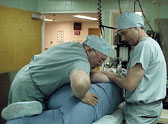
A Doctor of Chiropractic with post graduate degree – Manipulation Under Anesthesia Certified with Hospital privileges would be a chiropractor who would perform this procedure. It is a rule that two chiropractors perform MUA procedure. First one is a primary doctor and the second one is an assistant. The reason why you need an assistant is because patient is unconscious and the assistant is supporting the body on one side while the other chiropractor is performing a manipulation and stretches. Then they switch sides. Manipulation Under Anesthesia is not only safe, but also highly successful in treating acute and chronic musculoskeletal conditions.

Who Is The Best Candidate for MUA?

Patients who have received conservative care for 6-8 weeks for their neck, mid-back, lower back and shoulder with very limited improvement in symptoms or findings. Also patients who still have pain after the surgery would also be the candidates for this procedure. Common indications for Manipulation Under Anesthesia include neck, middle and lower back pain, chronic muscle pain and inflammation, acute and chronic muscle pain and inflammation, acute and chronic muscle spasm, chronic fibrositis, nerve entrapment, disk pathology including herniated disks, torticollis and failed back surgery.

What is Manipulation Under Anesthesia Procedure Like?

MUA procedure is an ongoing process for three consecutive days. During these three days the patient is being treated in a surgery center under supervision on Board Certified Anesthesiologist and two Board Certified Chiropractors where spinal manipulative therapy and stretches are performed. After the procedure, treatment continues as strengthening and stabilization programs are initiated over the next few weeks in a chiropractic office. Post-Procedure care is a vital part of the MUA procedure. Follow-up visits with a Chiropractic Physicians are important at this time as the stretches accomplished during the MUA procedure are built upon, helping the patient to regain strength and prevent future pain and discomfort.

What Are The Effects of Manipulation Under Anesthesia Procedure?

The proposed effects of therapy include the following:

  1. Breaking up scar tissue (adhesions) both in and around the spinal joints, commonly caused by multiple injuries or failed back surgery.
  2. A decreasing chronic muscle spasm
  3. Overcoming super-sensitivity of injured areas, making the patient unable to cooperate for effective treatment
  4. Stretching persistent shortened muscles, ligaments and tendons
  5. Relief from pain and radiating symptoms caused by damaged invertebral discs.
  6. Most importantly however, Manipulation Under Anesthesia affords patients immediate relief and noticeable difference in their daily lives post-procedure. These positive results only continue to improve with time and post-MUA therapy.

Am I a Candidate for MUA?

Medical screening is an absolute necessity for each patient who is planning to get an MUA. Medical history and physical examination and where indicated, CBC blood studies, chest X-Rays, EKG’s and other diagnostic tests such as MRI or CT’s. Feel free to CONTACT us at our primary San Leandro Chiropractic Clinic at (510) 481-BACK (2225) and we will be more than happy to answer any of your questions.

Sincerely, Dr. Eduard Burt, D.C., MUAC  a.k.a Doctor of Chiropractic, Manipulation Under Anesthesia Certified.

Filed Under: Chiropractic Tagged With: Chronic, chronic pain, manipulation, manipulation under anesthesia, medical doctors, mua, pain, pain medication, pain relief, san francisco bay area

Diabetes, Diet, Chiropractic and Your Health

March 16, 2011 by drburt

DIEABETESThe current global prevalence of diagnosed with diabetes is 165 million and is estimated to increase to 250 million by 2010 and to 330 million by 2025. These alarming figures do not include undiagnosed diabetes or pre-diabetic states.

When a physician diagnosed a patient with diabetes that individual must adjust to a healthier lifestyle. One of the most important factors is making changes in a diet. There is no necessity to skip meals or your favorite foods that you have always loved. It is a scientific fact that skipping meals will increase glucose level in your blood stream, and that is not a good thing, especially for some who has diabetes. Moderation is the key.

It is important to stay away from deep fried foods or oily items, these foods always increase sugar blood level. A great healthy substitute to these foods would be low fat dairy, green vegetables and fruits. It is very difficult to cure diabetes, however, it is possible to bring it under control and live a normal life. Besides keeping a healthy diet it is important that individual with diabetes exercises on regular bases. The best form of exercise would be a cardiovascular training – swimming, jogging, cycling. This will keep your weight in control and will help to control your diabetes.

Foods that contain a lot of fiber is another great way to prevent an individual gaining extra pounds, thus keeping the sugar level low in your blood stream. A great example of foods with great fiber content would be: oat bran, beans, rice bran, cereals, fruits, and vegetables. Garlic can help you with your cold and it can also help you with your diabetes. It is rich in potassium, zinc and sulphur, those are essential elements that can keep your sugar blood level low.

If possible avoid foods that have high Sodium content (salt). You can simply get your sodium dose from many vegetable or other natural foods. This way you will shoot two rabbits at the same time – eating healthy and tasty foods.

It is essential that a person with diabetes keeps in touch with his/her doctor who can check the overall health condition of the person. A regular chiropractic adjustment will help to keep your system running at the higher potential. It is not a secret that nervous system controls everything in our bodies. Thus, if there is no interference from a subluxation the individual will feel even better. Chiropractic care along with massage therapy will also help to enhance joint mobility, decrease muscle soreness and keep your energy level up. Below is the list of symptoms that an individual might experience with diabetes. Chiropractic care can be of tremendous benefit for these conditions.

Musculoskeletal Disorders Associated With Diabetes Mellitus (DM)

Intrinsic Complications of DM

Limited joint mobility

Stiff hand syndrome

Diabetic muscular infarction

Increased Incidence With DM

Dupuytren’s disease

Shoulder capsulitis

Neuropathic arthroplasty

Osteopenia (in type I)

Flexor tenosynovitis

Acute proximal neuropathy

Proximal motor neuropathy

Pyomyositis

Diffuse idiopathic skeletal hyperostosis

Possible Association With DM

Osteoarthritis

Carpal Tunnel Syndrome

My personal advice, please treasure your health from the very young age. That is the most important asset that an individual can have. Many times we go to a doctor when things went wrong long time ago and it is way too late to do something about it.

If you have anything to add to this post, please feel free to Post a comment or share your thoughts through Facebook, Twitter or comment section below to join the conversation.

Filed Under: Chiropractic, Health Tagged With: alternative medicine, chiropractic, chiropractic adjustment, cures diabetes, diabetes, diabetes exercise, diabetes management, diabetes mellitus, dietary fiber, Diets, health, healthy diets, healthy lifestyle, medicine, nutrition, prediabetes, regular, your health

Pomegranate And Health Benefits

March 14, 2011 by drburt

pomegranateGrowing between five to eight meters in height, a pomegranate is a fruit bearing and tiny tree with deciduous like shrub features. This delicious fruit is native and found mostly in Iran and the Himalayas highlands between North India and Northern Pakistan. Today, it is popularly cultivated in India, Iran, Iraq, China, Azerbaijan, Burma, Afghanistan, Israel, Egypt, Saudi Arabia, Vietnam, Thailand, Laos and Cambodia with lesser cultivation in tropical Africa, the Mediterranean and Southern Europe.

The Pomegranate becomes ripe when you start noticing its distinctive color and when tapped it makes a metallic clinging sound. The fruits should be picked days before maturity when they start showing signs of cracking open. It almost has the same shelf and storage life as the apple and is best maintained at a room temperature of 41 degree Fahrenheit to 32 degree Fahrenheit for a period of 6 to 7 months. It improves its taste and becomes more flavorful and juicier as time goes by.
This fruit produces 16% of vitamin C requirements of adults per 100ml serving of daily nutrients allowance making it one of the healthiest fruits in the world. Pomegranate is also rich in polyphenols and potassium, Vitamin B5, flavonoids, tannins and fiber.
The high fiber content of Pomegranates however, is found in the edible seeds which can also supply unsaturated oils. People who neglect the seeds end up forfeiting its additional nutritional value through its oils, seed fiber and other micronutrients.
Health benefits of this sweet fruit include reducing the risk of heart diseases, heart attacks and strokes. According to a study published in the American Journal of Clinical Nutrition, medical researchers stated an example of an experiment conducted for two weeks on a group of healthy grown up men and dozens of unhealthy mice. Both groups drank Pomegranate juice everyday for two weeks. The result found out that the adult men experienced a large increase in their antioxidant levels, which translates to a drop of ninety percent in their LDL cholesterol oxidation. The mice also turned up a result of 90% drop in their LDL oxidation of peritoneal macrophages.
The juice that the Pomegranates produced also helps alleviate viral infection and produces antibacterial compounds to battle against dental bacteria and plaque. It was also proven, that this fruit helps reduce the systolic blood pressure by injecting its serum angiotensin converting enzyme.
Another study by medical experts has shown the huge possibility of Pomegranates by way of its extracts help battle the proliferation of human breast cancer cells. The juice of this fruit is very popular among old people as it also helps in the cleansing of the body system by its antioxidants contents and produces a healthy body system thus lessening the chances of a recurring illness.
The Pomegranate has since become widely commercialized due to its health benefits. There are wine, juice, jellies and salad dressing found in the supermarket shelves nowadays. The popularity of Pomegranate is due to the fact many studies have shown that its high level of antioxidants is beneficial to one’s health in a lot of way.

If you have anything to add to this post, please feel free to Post a comment or share your thoughts through Facebook, Twitter or comment section below to join the conversation.

Filed Under: Health Tagged With: 100ml, allowances, antioxidant, beverages, chemistry, daily nutrients, food and drink, Fruit, fruit produce, fruits, health, health benefits, iranian cuisine, juice, nutrition, pomegranate, pomegranate juice, saudi arabia, tannin

  • « Previous Page
  • 1
  • …
  • 28
  • 29
  • 30
  • 31
  • 32
  • …
  • 59
  • Next Page »

PLEASE FOLLOW & LIKE B.C.

RSS
Follow by Email
Facebook
Facebook
fb-share-icon
Twitter
Visit Us
Follow Me
Post on X
YouTube
YouTube
LinkedIn
LinkedIn
Share
Instagram

Burt Chiropractic Rehabilitation Center

15200 Hesperian Blvd #104

San Leandro, CA. 94578

(510) 481-2225

drburt@burtchiropractic.com

https://shorturl.at/nDHP2

SEARCH

Categories

Recent Posts

  • “Understanding Headaches: Exploring the Role of Chiropractic Care in Relief”
  • Decoding Soft Tissue Injuries: A Comprehensive Exploration of Motor Vehicle Accidents (MVAs) and Their Impact on Health
  • The Role of Chiropractic Care in Whiplash Injury Recovery
Get Microsoft Windows OS or Microsoft Office suite activated free.
Activated kms activator