
Top Chiropractor in San Leandro, CA

San Leandro Chiropractor

  • blog
  • About Our Practice
  • What is Chiropractic?
  • SERVICES
    • Personal Injury
    • Cold Laser Therapy
    • Massage
    • Ultrasound
    • Electric Stimulation
    • Sports Injury
    • Workers Compensation
  • FAQs
  • Locations
  • CONTACT US
  • New Patient Forms
  • Nutrition Store
  • Home

Powered by Genesis

Chernobyl, Fukushima Daiichi, Radiation Exposure and Health

March 21, 2011 by drburt

RADIATION AND YOUR HEALTH

I have personally experienced world’s first nuclear plant explosion in 1986 in Chernobyl. My family and myself only lived about 350 miles away from the explosion. It was not far enough in order to escape the deadly invisible rays.  Our town, Mogilev-Podolsky, got its share of radiation. The wind was blowing the toxic material towards Eastern Europe That happened 25 years ago and people continue die of cancer to this day. This was a man made catastrophe.

Last week Earthquake and Tsunami in Japan damaged Fukushima Daiichi nuclear plant. Japan just like Ukraine is a very densely populated country. It appears that Japanese firefighter, engineers, and military personal have it under control and I do pray and hope that they will be able to stabilize all of the reactors and fix the situation before things get out of control.

The information below is from Reuters Health Information

Radiation is measured using the unit sievert, which quantifies the amount of radiation absorbed by human tissues.

Below are some facts about the health dangers posed by higher radiation levels:

– Japan’s Chief Cabinet Secretary Yukio Edano had at one point said radiation levels near the stricken plant on the northeast coast reached as high as 400 millisieverts (mSv) an hour. That figure would be would be 20 times the annual exposure for some nuclear-industry employees and uranium miners.

– People are exposed to natural radiation of 2-3 mSv a year.

– In a CT scan, the organ being studied typically receives a radiation dose of 15 mSv in an adult to 30 mSv in a newborn infant.

– A typical chest X-ray involves exposure of about 0.02 mSv, while a dental one can be 0.01 mSv.

– Exposure to 100 mSv a year is the lowest level at which any increase in cancer risk is clearly evident. A cumulative 1,000 mSv (1 sievert) would probably cause a fatal cancer many years later in five out of every 100 persons exposed to it.

– There is evidence linking an accumulated dose of 90 mSv from two or three CT scans with an increased risk of cancer. The evidence is reasonably convincing for adults and very convincing for children.

– Large doses of radiation or acute radiation exposure destroy the central nervous system and the red and white blood cells, leaving the victim unable to fight off infections. For example, a one sievert dose (1,000 mSv) causes radiation sickness such as nausea, vomiting, hemorrhaging, but not death. A single dose of 5 sieverts would kill about half of those exposed to it within a month.

– Exposure to 350 mSv was the criterion for relocating people after the Chernobyl accident, according to the World Nuclear Association.

“Very acute radiation, like that which happened in Chernobyl and to the Japanese workers at the nuclear power station, is unlikely for the population,” said Lam Ching-wan, a chemical pathologist at the University of Hong Kong.

Sources: the New England Journal of Medicine, World Nuclear Association and Taiwan’s Atomic Energy Council

This information about radioactive materials came from GE Power & Water

1. Every operating reactor in the world has some amount of transuranics (i.e., elements with more protons than Uranium), including Plutonium, just due to the fissioning process.  2. Plutonium is NOT that much more dangerous than the other fuels and fission products from a radioactive perspective.  And in fact, the half-lives of the Uranium isotopes are much longer [U-235: 704,000,000 years; U-238: 4,470,000,000 years; Pu-239: 24,100 years].  Plutonium is a bad actor for two reasons: 1. It’s toxic from a chemical perspective; and 2. It has a better “yield” from a neutronics perspective, so it makes a better bomb (but the amount of fissionable material U-235 and Pu-239 is less than 6% in a nuke plant, whereas a bomb needs >70% (? I’m not a bomb maker, but I know it’s way up there), so no “nuclear boom” is possible in a nuclear power plant, only a hydrogen boom – that’s another story).  Also, like many radioactive materials, you don’t want to inhale it because it’s an alpha emitter.  (An Alpha particle can be stopped by a piece of paper, but can damage lung tissue over time leading to lung cancer in 10-15 years.)  From a human health perspective, there are much worse elements/isotopes, I-131 being one, because of where they go in the body (Iodine collects in the thyroid) and how intense their radioactive decay is.  (An isotope with a long half-life doesn’t emit radiation as fast as an isotope with a short half-life – right?)

To your real question…  The fuel used in some reactors (I’m not sure which ones) is known as MOX (mixed oxide) fuel because it contains the fissionable materials U-235 and Pu-239 in the form of UO2 and PuO2 (maybe others – not my area of expertise).  I believe, but have to find out the real answer, that the reason MOX fuel is used is because 1. It’s more efficient from a fissioning standpoint, which makes it 2. Actually safer because the percentage of fissionable material can be less! And 3. There’s no real hazard because the Plutonium is contained in the fuel matrix which is a ceramic (like your coffee cup).  The radiation being detected in Japan and in extremely trace amounts elsewhere is from the fission by-products, like I-131, Cs-137, and Xe-133, to name a few.  Uranium and Plutonium don’t emit much radiation because of their extremely long half-lives.

Now to blow your mind!  GE Hitachi is developing a reactor that would be fueled by spent fuel rods (which of course is a misnomer) and would more effectively “burn” the transuranics, i.e., reduce their concentration, during the fissioning process.  So rather than storing or reprocessing spent nuclear fuel, we’d be recycling it…  Cool, eh?

Nuclear Plants in California – Should we be worried?


Operating nuclear power plants in California are Diablo Canyon, near San Luis Obispo, and San Onofre, about midway between Los Angeles and San Diego. Nuclear units at both plants use ocean water for cooling.

Pacific Gas and Electric Company (PG&E) owns the Diablo Canyon Nuclear Power Plant, which consists of two units. Unit 1 is a 1,073 megawatt (MW) PWR which began commercial operation in May 1985, while Unit 2 is a 1,087 MW PWR which began commercial operation in March 1986.

Southern California Edison Co. and San Diego Gas & Electric own the two operating units at the San Onofre Nuclear Generating Station. Unit 2 is a 1,070 MW PWR that began commercial operation in August 1983, while Unit 3 is a 1,080 MW PWR that began commercial operation in April 1984.

California also has four commercial nuclear power plants and an experimental plant that are no longer in operation. These include:

The Santa Susana Sodium Reactor Experimental (SRE) was a small sodium-cooled experimental reactor built by Southern California Edison and Atomics International at the Santa Susana Field Laboratory, near Moorpark in Ventura County. It came on line in April 1957, began feeding electricity to the grid on July 12, 1957, and closed February 1964. This reactor used sodium rather than water as a coolant and produced a maximum of about 7.5 to 20 megawatts (electric). It was considered as the country’s first civilian nuclear plant and the first “commmercial” nuclear power plant to provide electricity to the public by powering the near-by city of Moorpark in 1957. On July 26, 1959, the SRE suffered a partial core meltdown. Ten of 43 fuel assemblies were damaged due to lack of heat transfer and radioactive contamination was released. The plant has subsequently been dismantled. For more, please visit the U.S. Dept. of Energy’s website.

The Vallecitos Nuclear Power Plant near Pleasanton, Calif., was jointly built by PG&E and General Electric Company and operated from 1957 to 1967. This was a small, 30 megawatt power plant. On October 19, 1957, Vallecitos connected to the electrical grid and became the first privately funded plant to supply power in megawatt amounts to the electric utility grid. The plant was shut down in December 1967. The plant is in SAFSTOR and there are no plans for any significant dismantlement in the foreseeable future. All nuclear fuel has been removed from the site.

The 63 MW Boiling Water Reactor at the Humboldt Bay Nuclear Power Plant in Eureka was in operation by PG&E from August 1963 to July 1976. It was the seventh licensed nuclear plant in the United States. It was closed because the economics of a required seismic retrofit could not be justified following a moderate earthquake from a previously unknown fault just off the coast. It was permanently shut down July 2, 1976, and retired in 1985. The plant was then placed in SAFSTOR (with spent nuclear fuel rods stored in water pools on site) until anticipated full decommissioning in 2015. See more on SAFSTOR below.

The 913 MW Pressurized Water Reactor at the Rancho Seco Nuclear Power Plant, located about 25 miles south of Sacramento, is owned by the Sacramento Municipal Utility District in and was operation from April 1975 to June 7, 1989. It was closed by public referendum.

The 436 MW San Onofre Unit 1 Pressurized Water Reactor was in operation from January 1968 to November 30, 1992. It was closed by its owners rather than incur $125 million in required modifications.


What is your opinion about safety of Nuclear Plants in California and all over the World?
Filed Under: Health Tagged With: actinides, background radiation, chernobyl, chernobyl disaster, daiichi, energy, environment, exposures, fukushima, health, ionizing radiation, nuclear, nuclear chemistry, nuclear plant, nuclear power, nuclear power plants, nuclear technology, physics, plants, plutonium, power plants, radiation, radiation exposure, radiation sickness, radioactivity, radiobiology

8 Tips For Stress Management

December 31, 2010 by drburt

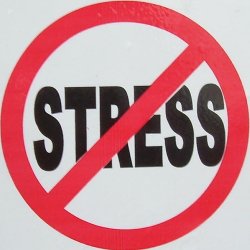
STRESSThere are different types of stress that an individual is exposed to on a regular bases. It could be a relationship stress, poor health, school stress, financial stress or work stress. Stress can also be a combination of several causes described above. Many people find it almost impossible to deal with everyday’s stress and expectations. Many scream for help.

It is extremely important to deal with stress the right way, otherwise it might cause anxiety and even depression. Everyone must learn stress relief techniques which help to deal with stress and anxiety positively.

How Can One Deal With Stress Effectively?

Here are 7 stress relief techniques that you can use now. Hope you find this information useful and apply these techniques when necessary.

1. One must be positive and must be thinking positive. Do not let certain things to eat you up from inside out – you know what I mean. Keep your mind clear, it is one of the most important tools that anyone can have when it comes to dealing with stress on a day to day bases. The key is focusing your mind on positive and optimistic part of your life all the time, with positive words and affirmations. This practice will improve your morale and confidence, and improve the overall state of mind.

2. Laugh Out Loud. Laughing is the best medicine when life seems to weigh you down with unexpected life events and toils. Just remembering something funny at work or at home will relieve your mind. Go to a comedy club or see a funny movie. Perhaps it is a time to visit your old friend who was always a comedian back in days. Just find something that will help you to stretch the facial muscles.

3. Try to Prioritize and Organize things in your life. Priorities in Activities of Daily Living will help to reduce the daily stress. Do not leave things to the last minute, this will only cause unnecessary stress and frustration.

4. Communicate. Inform your friends and family about the problems that you have. When you are expressing your thoughts and emotions, you are helping to cope with the stress in a healthier way.

5. Learn to relax. There are so many things that you can do to relax and unwind when you are stressed like take a bath, listen to the music, dance, practice yoga, meditation or go out with your friends.

6. Do not postpone a solution to your problem. Delaying the solution to the issues will only make things worse in the long term. Learning how to deal with problems when they arise will help you to cope better.

7. Exercise. 30 minutes of intense cardiovascular training will clear your mind. Try exercising in the morning if you can.  If aerobic training is not your cup of tea, a good stretch and lifting light weights will do the job as well.  Physical activities will keep your body in tone and your  mind fresh and stress free.

8. Chiropractors work primarily with the spine, the root of the nervous system through which nerve impulses travel from the brain to the rest of the body. One effect of chronic stress is prolonged muscle tension and contraction. This muscle tension creates uneven pressures on the bony structures of the body, often leading the misalignment of the spinal column, known as subluxations. Chronic stress also leads to nerve irritation. The adjustments of a chiropractor release muscle tension, and that helps the body return to a more balanced, relaxed state. Adjustments also reduce spinal nerve irritation, and improve blood circulation. These changes may be enough, in many cases, to convince the brain to turn off the fight or flight response, beginning the process of healing. A healthy and balanced spine is one key to effectively managing stress.

Apply these techniques to life and it will help you live a happier stress free lifestyle.


Post a comment below or share your thoughts through Facebook, Twitter or comment section below to join the conversation. Feel free to add any additional tips.

Filed Under: Advice Tagged With: anxiety, causes, causes anxiety, coping, depression, financial stress, human behavior, human interest, Mechanics, Meditation, physics, relationship stress, stress, stress management, stress relief techniques, tips, workplace stress

Your Health, Sponge, Vacuum, Pillow, Meat, Windows and TV

December 17, 2010 by drburt

houseThere is a saying: “Nothing is Like a Home.”  This home could also be a collector of colds and food born illnesses that people contract. Short and long term health outcome depends on the things we do around the house. Below is the list of six activities that might be making you and your children sick.

1. Your Sponge is a Jungle of Microorganisms which are Bad for Your Health

The only place in the house that never gets 100% cleaned up is the kitchen. Cleaning fish, preparing raw meet on our countertops and throwing waste in a sink will cause a breading backyard for all sorts of microorganisms. To name a few: E. Coli, salmonella and variety of viruses and bacteria.

Sponge is the most frequently used tool for cleaning kitchen’s countertop. Sponge can contain E. Coli and Fecal Bacteria and many other microbes. The second dirtiest item in your kitchen is dishrag.

The more frequently one uses the sponge the more one spreads the germs all over the countertop’s surface. One will also contaminate other appliances in the kitchen if the same sponge is applied for cleaning purposes.

How to Solve This Problem: Mixture of a bleach and water is a great solution for sterilizing a sponge. Air-drying will kill most of the germs in a sponge. Using microwave every week or even couple of times a week will keep your sponge germ free as well.

2. Vacuum Cleaning

Many vacuum cleaners do not do a good job at picking up small particles of dust. Most of these tiny dust particles escape through porous vacuum bags. They are the cause of the allergies that people get. A good alternative to a conventional vacuum cleaner would be a Rainbow vacuum cleaner. This unit has water reservoir instead of paper or plastic bag.

Small dust particles contain the highest amount  of heavy metals, lead, pesticides, and other chemicals. The everyday habit of cleaning with a conventional vacuum cleaner results in a burst of particles in the air and then they settle back down over the course of hours.

3. Sleeping With Pillows and a Mattress

Human body sheds about 1.5 million skin cells per hour and perspires one quart every day. These skin cells accumulate in our mattresses and pillows and provide and breeding farm for dust mites to grow and settle. Every ten years the mass of the mattress doubles due to the accumulation of insect parts, dust mites, fibers, lint, dust, chemicals, bacteria, spores, fungal mold, dander, animal hair, bodily secretions, human hair, and dust mites feces. After five years, ten percent of the pillow’s weight is dust mites. This is what we inhaling while sleeping.

Solution: Cover your mattress, box springs, and pillows with impervious outer covers.

Allergy-proof coverings seal the mattress and pillow, preventing anything from getting in or out, which protects you. Wash your sheets weekly in hot water. Make sure the temperature range of the water is between 130 to 150 degrees Fahrenheit

4. Grilling Meat

Reduce barbecuing frequency during nice summer days. BBQ meat creates cancer-causing compunds polycyclic hydrocarbon (PAHs) and heterocyclic amines (HCAs).

Solution: Try to use tin foil when BBQ your meat. This will prevent fat to drip off, and will help to reduce the amount of fat that hits the flames and sticks on your BBQ meat. Microwaving your meat first will help to reduce the amount of fat.

5. Opening Your House Windows

The amount of seasonal allergies and poor air quality in metropolitan areas of the USA will not do you any good. More than 50% of the US population breathes unhealthy air. Also the pollution inside of our home is much worse than outside. Poor indoor air quality is the fourth largest environmental threat in our country.

Solution: Use Air-conditioning system in your house. The filters will eliminate the exposure to bacteria, molds, mildew, tobacco smoke, viruses, animals dander, house dust mites and pollen.

home6. Prolonged Sitting in Front of the TV

Millions turn into couch potatoes in the USA. Watching TV is one of the leading causes of obesity in this country. Obesity and overweight is the leading cause for heart disease, arthritis, and many other health related problems.

Solution: Go for a walk or a bike ride. Hide the remote control so it won’t be tempting to turn the TV on.

Post a comment below or share your thoughts through Facebook, Twitter or comment section below to join the conversation.

Filed Under: Advice, Health Tagged With: acari, bedding, building biology, cleaning fish, cleanliness, dust, dust mites, health, Home, house dust mite, meat, microorganism, particulates, physics, pillows, sponges, technology, tv, vacuum bags, vacuum cleaner, vacuum cleaners, vacuums, windows

PLEASE FOLLOW & LIKE B.C.

RSS
Follow by Email
Facebook
Facebook
fb-share-icon
Twitter
Visit Us
Follow Me
Post on X
YouTube
YouTube
LinkedIn
LinkedIn
Share

15200 Hesperian Blvd #104

San Leandro, CA. 94578

(510) 481-2225

drburt@burtchiropractic.com


SEARCH

Categories

Recent Posts

  • Loss of Cervical Lordosis: How a Straight Neck and Pain Impact Your Health—and How a San Leandro Chiropractor Can Help Restore It
  • Hidden Injuries from Car Accidents That a San Leandro Chiropractor Can Help You Detect
  • Best San Leandro Chiropractor for Sciatica Pain Relief: Natural, Drug-Free Solutions That Work