Top Chiropractor in San Leandro, CA

San Leandro Chiropractor

  • blog
  • About Our Practice
  • What is Chiropractic?
  • SERVICES
    • Personal Injury
    • Cold Laser Therapy
    • Massage
    • Ultrasound
    • Electric Stimulation
    • Sports Injury
    • Workers Compensation
  • FAQs
  • Locations
  • CONTACT US
  • New Patient Forms
  • Nutrition Store
  • Home

Powered by Genesis

Human Body Energy Clock and Qi Building and Balancing
March 2, 2016 by drburt

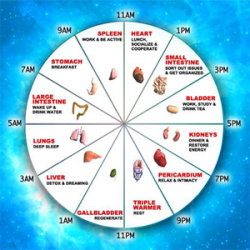
human body energy and qi balancingHuman Body Energy Clock and Qi Building and Balancing

Human body energy clock works on Qi (energy) according to the traditional Chinese medicine (TCM). Our 12 main meridians have a maximum and minimum energy flow. Each meridian is linked to specific organs in our body. Issues with organs generally appear either during the maximum or minimum energy flow. Knowing this can help treating the correct area that needs the most.

The nearest Western equivalent to qi human body energy is an inspiration. But there is a decisive difference between Eastern and Western attitudes. Westerners tend to regard this sweet spiritual inebriation as something that either fills us or deserts us, completely out of our control. In the Eastern mind, though, this is something that you can control. You can awaken, stimulate, increase and utilize the qi energy, according to your will.

Therefore, this post is focused on the strictly practical aspects of qi energy: how to get it started and make it grow, and how to use it. Inspiration is yours to call upon at your own wish.

It is not even difficult.  Anyone can do exercises without much effort. Nor do they take much time. There is just one snag: You have to repeat them, preferably every day, and you should do that long enough to establish new habits. It is the only method to make your body act in a way that stimulates your qi, without your mind having to think about it constantly.

You will soon find that life gets another luster. So give it a chance.

 Building Qi in the Body

Human body energy can be increased. Consequently, the development of Qi can make an ill person robust or a weak person vibrant. More Qi can enhance mental capacity too.

The concept of Qi also extends beyond the physical body, to the subtle energies that activate all human functions, including emotions and thought. Unbalanced Qi causes your emotions to become agitated and distressed. Balanced Qi causes your emotions to become smooth and more satisfying.

From the perspective of thought, when your mental Qi becomes more refined it enhances your creativity at all levels–art, business, relationships, child bearing, etc.

Spiritual Qi makes it more possible for us to personally enter into higher states of consciousness, which lie at the heart of religious experience.

Qigong, tai chi and other form of Taoist martial and healing arts, help you to develop subtle chi-energy, not as an idea but rather lead you to directly feel and experience what this is in your body.

Qi Circulation

To maintain pain-free, optimal health, Qi or energy should circulate throughout your entire body, without disruption, in a smooth, powerful fashion.

The classic Chinese medical phrase is teng jr bu tong. If the circulation of your chi is blocked (bu tong), you have pain and disease (teng). Conversely, if your Qi or life force energy in your acupuncture meridian lines if fully connected and circulating without blockages (tong), you have neither pain nor disease (bu tong) – tong jr bu teng.

Making your Qi tong i is the most basic goal of Chinese medicine and most apparent with tai chi, qigong and acupuncture. Balancing out and connecting your chi so that it has no blockages will both get rid of the pain of disease and make you feel a whole lot better.
Filed Under: Advice, Health Tagged With: energy, health, human body energy, qi, tcm, traditional chinese medicine

eGel – Electrolyte Energy Gel Cranks Sports Product Review

April 6, 2011 by drburt

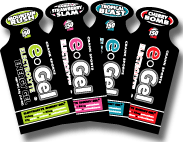
eGel crank sportsReaders who followed my posts from the early days know that I am an avid mountain biker. I am very fortunate to live in San Francisco Bay Area where climate allows us to ride pretty much all year long. We never ever have a snow in a winter and it never rains from mid spring to mid autumn. Love it :). My house is about five minutes away from East Bay Regional Park – Lake Chabot. The trail can take a mountain biker all the way to Oakland and this trail connects all the way to Berkeley. I have never personally ridden to Berkeley due to the time limitations. A ride from a Ranger Station at Lake Chabot to Oakland is about 31 miles long with quite a bit of elevation gain. It takes about three and a half hours to complete with few small brakes on a way.

These long rides require proper fuel for your musculature. One of the products that I have been using since 2009 is eGel which is short for Electrolyte Energy Gel from Crank Sports.

Energy gels should be consumed with water and NOT a sports drink. The result is energy and hydration, but insufficient electrolyte replacement. This particular product has sufficient amount of energy, hydration and electrolyte replacement. With 4 to 5 times the electrolyte levels of traditional energy gels, e-Gel’s Electrolyte Energy formulation is designed to provide complete and balanced electrolyte replacement in addition to sustained energy and hydration when taken with water as recommended. And with 150 carbohydrate calories, e-Gel packs 50% more energy than most energy gels.

In the last couple of years that I have been racing Cross Country and I have never cramped or bonked during those rides. This product is one of the best on a market. I have tried many other products in a past but nothing would come even close to eGel. The following are the links that compare eGel to other products that are available on a market.

>> e-Gel vs. GU

>> e-Gel vs. Powerbar Gel

>> e-Gel vs. Hammer Gel

>> e-Gel vs. GU Roctane

>> e-Gel vs. Clif SHOT Bloks (must read!)

These are the reviews from other riders that I was able to find on www.MTBR.com

Best gel for me. I have used them training and racing, for mountain biking, triathlons, and running marathons. I keep them well stocked and have had a lot of my buddies get hooked on them as well. Crank Sports also has a good, free, on-line workout log that is set-up for multi-sports and is customizable. No, I don’t work for Crank Sports.

This product works and has never upset my stomach. The pre-mix drink packets are also great. If you use the gel and drink there is no Bonk.

Awesome product. Try their sports drink mix as well. The combination of the two cannot be beat. Reasonable pricing and seems to be an item that is wel stocked at many cycling stores – nice for a change to be able to find the product you like!

I highly recommend trying it. I always dreaded eating those Gu and Cliff shots because they made me choke. Great for long road and mtb rides. has more electrolytes so it keeps you from cramping.

Filed Under: Sports Tagged With: chemistry, color gel, dietary supplements, dosage forms, egel, electrolyte, electrolyte energy, endurance sports, energy, energy gel, energy gels, gel, gu, hammer gel, health, human interest, medicine, personal products, physical chemistry, powerbar, Product, product review, sport drink

Chernobyl, Fukushima Daiichi, Radiation Exposure and Health

March 21, 2011 by drburt

RADIATION AND YOUR HEALTH

I have personally experienced world’s first nuclear plant explosion in 1986 in Chernobyl. My family and myself only lived about 350 miles away from the explosion. It was not far enough in order to escape the deadly invisible rays.  Our town, Mogilev-Podolsky, got its share of radiation. The wind was blowing the toxic material towards Eastern Europe That happened 25 years ago and people continue die of cancer to this day. This was a man made catastrophe.

Last week Earthquake and Tsunami in Japan damaged Fukushima Daiichi nuclear plant. Japan just like Ukraine is a very densely populated country. It appears that Japanese firefighter, engineers, and military personal have it under control and I do pray and hope that they will be able to stabilize all of the reactors and fix the situation before things get out of control.

The information below is from Reuters Health Information

Radiation is measured using the unit sievert, which quantifies the amount of radiation absorbed by human tissues.

Below are some facts about the health dangers posed by higher radiation levels:

– Japan’s Chief Cabinet Secretary Yukio Edano had at one point said radiation levels near the stricken plant on the northeast coast reached as high as 400 millisieverts (mSv) an hour. That figure would be would be 20 times the annual exposure for some nuclear-industry employees and uranium miners.

– People are exposed to natural radiation of 2-3 mSv a year.

– In a CT scan, the organ being studied typically receives a radiation dose of 15 mSv in an adult to 30 mSv in a newborn infant.

– A typical chest X-ray involves exposure of about 0.02 mSv, while a dental one can be 0.01 mSv.

– Exposure to 100 mSv a year is the lowest level at which any increase in cancer risk is clearly evident. A cumulative 1,000 mSv (1 sievert) would probably cause a fatal cancer many years later in five out of every 100 persons exposed to it.

– There is evidence linking an accumulated dose of 90 mSv from two or three CT scans with an increased risk of cancer. The evidence is reasonably convincing for adults and very convincing for children.

– Large doses of radiation or acute radiation exposure destroy the central nervous system and the red and white blood cells, leaving the victim unable to fight off infections. For example, a one sievert dose (1,000 mSv) causes radiation sickness such as nausea, vomiting, hemorrhaging, but not death. A single dose of 5 sieverts would kill about half of those exposed to it within a month.

– Exposure to 350 mSv was the criterion for relocating people after the Chernobyl accident, according to the World Nuclear Association.

“Very acute radiation, like that which happened in Chernobyl and to the Japanese workers at the nuclear power station, is unlikely for the population,” said Lam Ching-wan, a chemical pathologist at the University of Hong Kong.

Sources: the New England Journal of Medicine, World Nuclear Association and Taiwan’s Atomic Energy Council

This information about radioactive materials came from GE Power & Water

1. Every operating reactor in the world has some amount of transuranics (i.e., elements with more protons than Uranium), including Plutonium, just due to the fissioning process.  2. Plutonium is NOT that much more dangerous than the other fuels and fission products from a radioactive perspective.  And in fact, the half-lives of the Uranium isotopes are much longer [U-235: 704,000,000 years; U-238: 4,470,000,000 years; Pu-239: 24,100 years].  Plutonium is a bad actor for two reasons: 1. It’s toxic from a chemical perspective; and 2. It has a better “yield” from a neutronics perspective, so it makes a better bomb (but the amount of fissionable material U-235 and Pu-239 is less than 6% in a nuke plant, whereas a bomb needs >70% (? I’m not a bomb maker, but I know it’s way up there), so no “nuclear boom” is possible in a nuclear power plant, only a hydrogen boom – that’s another story).  Also, like many radioactive materials, you don’t want to inhale it because it’s an alpha emitter.  (An Alpha particle can be stopped by a piece of paper, but can damage lung tissue over time leading to lung cancer in 10-15 years.)  From a human health perspective, there are much worse elements/isotopes, I-131 being one, because of where they go in the body (Iodine collects in the thyroid) and how intense their radioactive decay is.  (An isotope with a long half-life doesn’t emit radiation as fast as an isotope with a short half-life – right?)

To your real question…  The fuel used in some reactors (I’m not sure which ones) is known as MOX (mixed oxide) fuel because it contains the fissionable materials U-235 and Pu-239 in the form of UO2 and PuO2 (maybe others – not my area of expertise).  I believe, but have to find out the real answer, that the reason MOX fuel is used is because 1. It’s more efficient from a fissioning standpoint, which makes it 2. Actually safer because the percentage of fissionable material can be less! And 3. There’s no real hazard because the Plutonium is contained in the fuel matrix which is a ceramic (like your coffee cup).  The radiation being detected in Japan and in extremely trace amounts elsewhere is from the fission by-products, like I-131, Cs-137, and Xe-133, to name a few.  Uranium and Plutonium don’t emit much radiation because of their extremely long half-lives.

Now to blow your mind!  GE Hitachi is developing a reactor that would be fueled by spent fuel rods (which of course is a misnomer) and would more effectively “burn” the transuranics, i.e., reduce their concentration, during the fissioning process.  So rather than storing or reprocessing spent nuclear fuel, we’d be recycling it…  Cool, eh?

Nuclear Plants in California – Should we be worried?


Operating nuclear power plants in California are Diablo Canyon, near San Luis Obispo, and San Onofre, about midway between Los Angeles and San Diego. Nuclear units at both plants use ocean water for cooling.

Pacific Gas and Electric Company (PG&E) owns the Diablo Canyon Nuclear Power Plant, which consists of two units. Unit 1 is a 1,073 megawatt (MW) PWR which began commercial operation in May 1985, while Unit 2 is a 1,087 MW PWR which began commercial operation in March 1986.

Southern California Edison Co. and San Diego Gas & Electric own the two operating units at the San Onofre Nuclear Generating Station. Unit 2 is a 1,070 MW PWR that began commercial operation in August 1983, while Unit 3 is a 1,080 MW PWR that began commercial operation in April 1984.

California also has four commercial nuclear power plants and an experimental plant that are no longer in operation. These include:

The Santa Susana Sodium Reactor Experimental (SRE) was a small sodium-cooled experimental reactor built by Southern California Edison and Atomics International at the Santa Susana Field Laboratory, near Moorpark in Ventura County. It came on line in April 1957, began feeding electricity to the grid on July 12, 1957, and closed February 1964. This reactor used sodium rather than water as a coolant and produced a maximum of about 7.5 to 20 megawatts (electric). It was considered as the country’s first civilian nuclear plant and the first “commmercial” nuclear power plant to provide electricity to the public by powering the near-by city of Moorpark in 1957. On July 26, 1959, the SRE suffered a partial core meltdown. Ten of 43 fuel assemblies were damaged due to lack of heat transfer and radioactive contamination was released. The plant has subsequently been dismantled. For more, please visit the U.S. Dept. of Energy’s website.

The Vallecitos Nuclear Power Plant near Pleasanton, Calif., was jointly built by PG&E and General Electric Company and operated from 1957 to 1967. This was a small, 30 megawatt power plant. On October 19, 1957, Vallecitos connected to the electrical grid and became the first privately funded plant to supply power in megawatt amounts to the electric utility grid. The plant was shut down in December 1967. The plant is in SAFSTOR and there are no plans for any significant dismantlement in the foreseeable future. All nuclear fuel has been removed from the site.

The 63 MW Boiling Water Reactor at the Humboldt Bay Nuclear Power Plant in Eureka was in operation by PG&E from August 1963 to July 1976. It was the seventh licensed nuclear plant in the United States. It was closed because the economics of a required seismic retrofit could not be justified following a moderate earthquake from a previously unknown fault just off the coast. It was permanently shut down July 2, 1976, and retired in 1985. The plant was then placed in SAFSTOR (with spent nuclear fuel rods stored in water pools on site) until anticipated full decommissioning in 2015. See more on SAFSTOR below.

The 913 MW Pressurized Water Reactor at the Rancho Seco Nuclear Power Plant, located about 25 miles south of Sacramento, is owned by the Sacramento Municipal Utility District in and was operation from April 1975 to June 7, 1989. It was closed by public referendum.

The 436 MW San Onofre Unit 1 Pressurized Water Reactor was in operation from January 1968 to November 30, 1992. It was closed by its owners rather than incur $125 million in required modifications.


What is your opinion about safety of Nuclear Plants in California and all over the World?

Filed Under: Health Tagged With: actinides, background radiation, chernobyl, chernobyl disaster, daiichi, energy, environment, exposures, fukushima, health, ionizing radiation, nuclear, nuclear chemistry, nuclear plant, nuclear power, nuclear power plants, nuclear technology, physics, plants, plutonium, power plants, radiation, radiation exposure, radiation sickness, radioactivity, radiobiology

PLEASE FOLLOW & LIKE B.C.

RSS
Follow by Email
Facebook
Facebook
fb-share-icon
Twitter
Visit Us
Follow Me
Post on X
YouTube
YouTube
LinkedIn
LinkedIn
Share

15200 Hesperian Blvd #104

San Leandro, CA. 94578

(510) 481-2225

drburt@burtchiropractic.com


SEARCH

Categories

Recent Posts

  • Loss of Cervical Lordosis: How a Straight Neck and Pain Impact Your Health—and How a San Leandro Chiropractor Can Help Restore It
  • Hidden Injuries from Car Accidents That a San Leandro Chiropractor Can Help You Detect
  • Best San Leandro Chiropractor for Sciatica Pain Relief: Natural, Drug-Free Solutions That Work