Top Chiropractor in San Leandro, CA

San Leandro Chiropractor

  • blog
  • About Our Practice
  • What is Chiropractic?
  • SERVICES
    • Personal Injury
    • Cold Laser Therapy
    • Massage
    • Ultrasound
    • Electric Stimulation
    • Sports Injury
    • Workers Compensation
  • FAQs
  • Locations
  • CONTACT US
  • New Patient Forms
  • Nutrition Store
  • Home

Powered by Genesis

Healthy Eating Habit Tips

July 7, 2012 by drburt

Healthy Eating Habit Tips

Healthy Eating Habit Tips

This is a guest post By Beth Ellyn Rosenthal about Healthy Eating Habit Tips

“The doctor of the future will give no medicine but will interest his patients in the care of the human frame, in diet, and in the cause and prevention of disease.”

Thomas Edison    

Want to eat yourself healthy? You can, thanks to the immutable laws of endocrinology.

Science has proven how smoking can cause lung cancer and excess drinking can hurt your liver.  And just one touch of a leaf of a poison ivy plant can lead to irrational itching.

The same principle applies to becoming healthy. You can literally eat yourself back into bio balance if  you know what to eat. The theory is: if you understand how your body functions, you can use that knowledge to heal naturally. In fact, you have to return to biochemical equilibrium before you can fix any health problem without the intervention of drugs.

However, you do have to be patient. Natural cures take months, sometimes a year. But then  you fix the problem forever, as long as you control what you put into your mouth.

Here are some examples:

Weight loss

 If you need to lose weight, you must recalibrate your metabolism. The only way to do this is get your body back into biobalance.

You have to get six trace elements that need to be balanced in order for your body to behave appropriately. Otherwise, they will create a biochemical road block that will keep you heavier than you’d like forever.

These six elements are:

  • Calcium
  • Chromium
  • Copper
  • Iron
  • Magnesium
  • Potassium

People having trouble losing weight are typically toxic with calcium and copper and deficient in the other four elements. So, eat cherries (to increase iron), stop eating chocolate (it’s high in copper, and that will be the hardest one), shake black pepper on everything (increases chromium), eat more bananas (potassium) and seafood (magnesium), and keep the salmon to a minimum (calcium).

PMS, Hot Flashes, Night Sweats and Menopause Symptoms:

 All are caused by a copper/zinc imbalance, which leads to too much estrogen and not enough progesterone in the body.

Most Western women are toxic with copper and don’t have enough zinc. The fix is easy: cut out the foods high in copper, especially during PMS week, and eat more of the foods loaded with zinc.

Female infertility

(If all the parts are working) is caused by a copper/zinc imbalance, too.

Female hair loss

Caused  by a copper/zinc, sodium/potassium and/or a calcium/magnesium imbalance. Sorry, educated eating won’t stop male hair loss but it will slow the process!

Osteoporosis

Is caused by over 30 difficult biochemical imbalances. Not enough calcium is one. So is too much calcium. But the big cause is too much copper. (Swim in the ocean because most pools use copper algaecide. And grapes are for the birds, literally. They are loaded with copper.)

It only takes 21 days to change a habit. Changing what you put in your mouth can change your life.

If you have anything to add to this post, please feel free to Post a comment or share your thoughts through Facebook, Twitter, Google+ or comment section below to join the conversation.


Filed Under: Diet, Health Tagged With: calcium, cause lung cancer, chemical elements, chemistry, copper, dietary minerals, dietary supplements, eating, eating chocolate, eating habits, excesses, habit, healthy, healthy diet, healthy eating habits, lung cancers, matter, nutrition, potassium, stop eating chocolate, transition metals, zinc

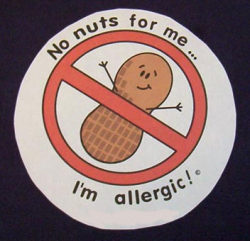
Food Allergy vs. Food Intolerance In a Human Body

May 21, 2012 by drburt

food allergy

Food Allergy vs. Food Intolerance In a Human Body

With awareness of food allergies becoming more common, many people may be confusing the food-induced symptoms they have for allergies when in fact they have an intolerance. What is the difference between a food allergy and a food intolerance?

Allergies are triggered by the immune system mistaking food proteins as an infection threatening the body. The immune system produces chemicals to combat the supposed infection, and these chemicals cause the allergic reaction. Symptoms commonly include itchiness of the mouth, throat, or ears, hives, and facial swelling around the eyes, lips, tongue, or roof of the mouth. Severe reactions can cause life-threatening breathing problems with anaphylactic shock. The severity of a reaction can vary with each exposure.

Common childhood allergies include dairy, nuts, and eggs. Adults are often allergic to various fruits, nuts, and vegetables. The majority of children with food allergies also have eczema. The earlier the onset of eczema and the worse it is, the more likely the child has a food allergy. Asthma and hay fever are also commonly associated with food allergies. If a child’s parent or sibling has asthma, dermatitis, or a food allergy, then the child is more likely to have a food allergy, though not necessarily to the same foods as the relative.

There are two basic versions of food allergies. The most common version is triggered by the antibody known as immunoglobulin E. The symptoms occur rapidly after exposure, often within minutes or even seconds, and there is a greater likelihood of anaphylactic shock. The other version is called non-immunoglobulin E, with symptoms exhibiting hours or even days after exposure.

There is no cure for food allergies, but milder symptoms can be treated with antihistamines. Adrenaline pens are prescribed to patients at risk for anaphylactic shock. There are home tests available, but it is critical to properly identify the allergic foods in order to control reactions, so you should be properly tested and diagnosed by a specialist. Many children outgrow their allergies by the age of five, particularly allergies to milk, eggs, soy, and wheat. Allergies to peanuts, tree nuts, seafood, and those that began in adulthood are generally lifelong allergies.

Food intolerance, on the other hand, is not an immune system issue but a digestive issue and is never life-threatening. Symptoms commonly include diarrhoea, bloating, and cramps. It is caused by the body’s inability to digest certain substances. One of the most common intolerances is to lactose. This is caused by the body’s lack of the lactase enzyme which breaks lactose down, so the lactose remains in the system long enough to be fermented by bacteria; the fermentation creates the symptoms.

Intolerance symptoms usually start several hours after the food was consumed. While a trace amount of an allergic food can cause a reaction, intolerance usually happens after larger amounts. Elimination of triggers may not be necessary; sometimes small amounts digest fine. It is up to you to determine what you can handle, but be aware the amount may change with age.

Dr. Gillian Hart is a Scientific Director for YorkTest Laboratories who specialise in food intolerance testing and allergy testing to help people who suffer with irritable bowel syndrome symptoms and wheat intolerance symptoms.


Filed Under: Health

Alzheimer’s Disease and its Warning Signs

May 12, 2012 by drburt

alzheimer's disease

 Alzheimer’s Disease and  its Warning Signs

This is a guest post by Josh Anderson.  According to the Alzheimers’ Association, someone in the world is diagnosed with Alzheimer’s Disease every 70 seconds. Little is known about this debilitating disease and although it is genetically linked, there is no specific race, nationality or sex that it is directly linked to. Everyone is just as susceptible as the next person.

However, scientists have discovered that Alzheimer’s Disease is caused by a chemical change to the neurotransmitters in the brain, which leads to the “loss” of brain cells. Once this change occurs, the disease interferes with how the brain brain functions. Mental abilities then begin to deteriorate. Cognitive functions such as memory, reasoning and perception are usually severely affected, but physical functions, such as muscle or organ control can also be affected. Here are some of the most prominent warning signs of those afflicted with this terrible condition.


Short-term Memory Loss

It’s not uncommon that while someone can seem to remember something that happened in their childhood, they easily forget just what they did the day before.

Problem Solving Impairment

It can often become hard to understand sequences of numbers, including days and months. A simple cooking recipe or instruction sheet can become a challenge too.

Daily Task Obstruction

An average task, such as grocery shopping or remembering to take medication, can become very confusing and hard to follow for someone with Alzheimer’s.

Misperception of Time

Besides losing track of important dates, time spans become altered in many patients. Often, one will live in the past and mistake people for relatives that have departed. They also, at times, cannot remember where they are or who they are with.

Visual Perception

Not only does eyesight deteriorate, perception is altered. For instance, someone with Alzheimer’s might perceive people on television or a reflection in a mirror to actually be in the room.

(Mis)Communication Skills

Conversations may become repetitive, and it can be hard to follow what others are saying. As the illness progresses, often times one will just “ramble” on, lose track of what they are saying or “babble” without making any sense at all.

Misplaced Objects

Many forget where they have placed items and cannot retrace their steps, while others “hide” objects in unusual places and then forget where they placed them.

Strange Decisions

Priorities, such as daily hygiene, often become forgotten, while something frivolous like watching television or feeding the birds over and over again becomes priority.

Shuffling Feet

Strange but true, many suffering from Alzheimer’s constantly shuffle when they walk, without picking up their feet, and not just when they are tired.

Emotional Outbursts

Quite often, someone will state that “you just don’t understand them” and outbursts of anger will erupt even in the gentlest of people, and physical confrontation is possible.

Swearing

Even the most mild-mannered among may cuss like a sailor, especially during emotional outbursts. Don’t be surprised to hear things you never imagined.

Insomnia

Even though as the body ages, it requires less sleep, a person with Alzheimer’s may just take frequent naps, avoiding sleeping overnight all together.

Paranoia

People with Alzheimer’s become paranoid believing that others want to do them harm, are stealing from them or strangers are “after” them.

Wandering

Many will wander from their home to look for the home they “remember” from the past and can get lost even routes all the time.


Alzheimer’s occurs differently with everyone. In some, the progression is very sudden, while in others, warnings can plateau years down the road. Unfortunately, death usually occurs within 7-10 years of the onset. Professionals use a 7-stage scale to determine the severity of the case, with #1 having no cognitive decline (otherwise normal), while #7 will be marked by severe cognitive decline. If diagnosed at an early stage, there is some medication available to slow down the progression, but no cure.

If you have anything to add to this post, please feel free to Post a comment or share your thoughts through Facebook, Twitter, Google+ or comment section below to join the conversation.

Filed Under: Health Tagged With: aging associated diseases, alzheimer's disease, associations, brain cells, brain function, chemical change, cognitive function, cognitive reserve, debilitating disease, depression of alzheimer disease, Diagnose, disease, josh anderson, neurological disorders, psychiatry, warning signs

Could Your Building Be Making You Sick?

January 22, 2012 by drburt

ARCHITECT, LEED, GREEN BUILDING

Could Your Building Be Making You Sick?

According to the EPA there are roughly 80,000 chemicals rampant in our society and the biggest culprit is architectural products. Architectural, industrial maintenance coatings and household cleaning products are responsible for 38 tons of emissions a day. Since the oil embargo of the 1970swe have chosen to create buildings that act as a well sealed cocoon, which if not designed correctly could become very toxic for the occupants.

Indoor pollutants can be roughly divided into 6 categories:

  1.  Volatile Organic Compounds
  2. Toxic by products of Combustion
  3. Mold
  4. Pesticides
  5. Naturally Occurring Pollutants
  6. Electromagnetic field pollutions

Volatile Organic Compounds:

In simple terms VOCs are chemicals containing carbon, except for a few exceptions, these are volatile because they don’t need extraordinary conditioned to go from solid/liquid to gaseous. It could happen under very normal temperatures and conditions like any typical indoor or outdoor environment. These chemicals are used in everything from paint, carpeting, and upholstery to our food products like decaffeinated tea or coffee.

I know, you see a lot of labels with Zero-Voc plastered on them, you might want to look further if these products are really devoid of all glycol or petrochemicals ingredients. Health impacts of VOCs range from headaches, nausea, all the way to liver and respiratory problems.

Toxic by products of Combustion:

These are byproducts of processes such as furnace burning or water heating and could be carbon dioxide, carbon monoxide or particles etc. Exposure doesn’t necessary mean death it could cause headaches, nausea, fatigue, sleepiness etc.

Mold

All you need for mold to develop is presence of oxygen, a good combination of humidity and temperature and any nutrition source which could also be cellulose based insulation and of course wood is an obvious one. Some of the fungi that cause mold also produce VOCs as a byproduct when they’re decaying a material for nutrition.

Pesticides

Are usually included in products to give them shelf life or to give them antimicrobial products. Formaldehyde is commonly used for that, but you never see it mentioned on label.

Naturally Occurring Pollutants

Range from dust, dust particles, pollen to radon which is decaying of radium in the earth’s crust and seeps through poor foundation or construction details. Health impacts range from respiratory problems, allergies all the way to cancer. 

Electromagnetic field pollutions

Electromagnetic field pollution occurs every time electricity is generated. We are surrounded by it  with wireless networks, power lines, computer screens, microwave ovens, TVs, lighting, electrical outlets, cordless phones, wiring, appliances, etc. Exposure to EMFs of specific equencies/intensities has been linked to depression, loss of energy, irritability, inability to concentrate, chronic fatigue, headaches, weakened immune system, cancer, brain tumors, Alzheimer’s, autism, childhood leukemia, birth defects, accelerated aging and miscarriages.


You can subscribe to Hafsa Burt’s BLOG   HBAARCHITECTS   to continue the discussion.

Mrs. Burt is the principal owner and architect of a bay area base Architecture, Interior Design and Planning firm. An environmentalist, she actively advocates the 2030 challenge and is a huge proponent of holistic high performance buildings. She specializes in Indoor air quality and targets “healthy buildings” in her practice and design philosophy. As a principal of a small size firm, she is actively involved in all projects with a commitment to the practice of architecture as a collaborative, innovative enterprise.


Filed Under: Advice, Health Tagged With: air pollution, architectural, architectural product, building, building biology, chemicals, culprit, electromagnetic field, environment, green building, health, indoor air quality, industrial hygiene, making, occupational safety and health, organic food, pesticide, pollutants, pollution, rampant, roughly, sick, volatile organic compound

  • « Previous Page
  • 1
  • 2
  • 3
  • 4
  • 5
  • …
  • 12
  • Next Page »

PLEASE FOLLOW & LIKE B.C.

RSS
Follow by Email
Facebook
Facebook
fb-share-icon
Twitter
Visit Us
Follow Me
Post on X
YouTube
YouTube
LinkedIn
LinkedIn
Share

15200 Hesperian Blvd #104

San Leandro, CA. 94578

(510) 481-2225

drburt@burtchiropractic.com


SEARCH

Categories

Recent Posts

  • Loss of Cervical Lordosis: How a Straight Neck and Pain Impact Your Health—and How a San Leandro Chiropractor Can Help Restore It
  • Hidden Injuries from Car Accidents That a San Leandro Chiropractor Can Help You Detect
  • Best San Leandro Chiropractor for Sciatica Pain Relief: Natural, Drug-Free Solutions That Work