Top Chiropractor in San Leandro, CA

San Leandro Chiropractor

  • blog
  • About Our Practice
  • What is Chiropractic?
  • SERVICES
    • Personal Injury
    • Cold Laser Therapy
    • Massage
    • Ultrasound
    • Electric Stimulation
    • Sports Injury
    • Workers Compensation
  • FAQs
  • Locations
  • CONTACT US
  • New Patient Forms
  • Nutrition Store
  • Home

Powered by Genesis

Teenager, High Blood Pressure and Lack of Sleep

July 11, 2011 by drburt

LACK OF SLEEPCase Western Reserve University in Cleveland, Ohio, has conducted a research which concluded that sleep depravation could be the cause of high blood pressure in healthy adolescents. These associations couldn’t be explained by being overweight, socioeconomic status, sleep apnea, or known co morbidities. About 238 teenagers ages 13 to 16 were participating in this study which provided an important data about relationship between lack of sleep and high blood pressure. All of the participants of this study were without any known health issues.

This study was published in a Journal of the American Heart Organization. Young adults were observed 3 to 7 nights about the sleep duration at their homes. Special digital wrist recorder was designed in order to record a motion, sleep and wake up patterns. Special laboratory was used for one night and the blood pressure was measured nine times during that night over two days period. In the research facility, an overnight polysomnography was also made; according to Wikipedia, a polysomnography “is a multi-parametric test used in the study of sleep”, and the test outcome is termed a polysomnogram.

Those young adults who had less than 6.5 hours of sleep a night were 2.8 times to have elevated blood pressure levels, compared to those teenagers who had more hours of sleep. Those with low sleep efficiency, on the other hand, were 4.5 times more likely to have prehypertension. Sleep efficiency might be broadly defined as sleep quality. It took into account factors such as having difficulty dropping off to sleep or staying asleep.

Scientific data was adjusted for gender, body mass index and socioeconomic status. Pre hypertension risks were 2.5 times higher for lack of sleep and 3.5 times higher for low sleep efficiency. Youngster with sleep deficiency had 4mm Hg higher systolic blood pressure than those who had good night sleep.

According to the NHLBI’s Your Guide to Healthy Sleep, children of school-going age and adolescents need at least 9 hours of sleep every night. According to the guide, hormonal influences during puberty tend to affect the biological clocks of adolescents. They are thus more likely to go to bed later at night, and want to sleep in longer in the morning.

 The Implications 

If the young ones are often having problems falling asleep, getting up several times or for long periods during the night, having sleepy spells during the day, or having difficulty concentrating, then it is possible that they are not having enough sleep, or are having poor sleep.

And, compared with twenty or even ten years ago, teenagers today have even more reasons to stay awake late into the night. Decades ago, there were no computers, no internet, and very small, if any, late night television. Add to that the stress and pressures of increased workloads in school, as well as the nutritional fiasco which is our modern diet of refined foods, and the issue gets a lot bigger.

If you have anything to add to this post, please feel free to Post a comment or share your thoughts through Facebook, Twitter, Google+ or comment section below to join the conversation.
Filed Under: Children, Health Tagged With: biology, blood pressure, case western reserve university, circadian rhythm, concluding, delayed sleep phase syndrome, elevated blood pressure, high blood pressure, hypertension, lack of sleep, lacks, medicine, physiology, polysomnography, sleep, sleep apnea, sleep depravation, sleep disorder, sleeping, social issues, teenager

New Scientific Evidence of Innate Intelligence Existence

June 8, 2011 by drburt

NEURONScientific Evidence of Innate Intelligence Existence

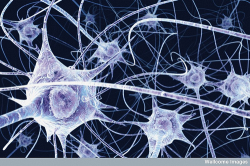
Neuroscientists of Ecole Polytechnique Federale de Lausanne have been working on a Blue Brain Project. The most recent discovery about the neurons independent connections based on a subject’s experience. The complete published work can be found in Proceedings of the National Academy of Sciences. (PNAS)

It has been known for sometime now that neuron connections are being established and reinforced in the human brain based on one experience – also known as “synaptic plasticity.” Do you remember your first bicycle ride? Once you learned it you will never forget. The team working on the Blue Brain Project at EPFL, led by Professor Henry Markman, however, is offering new evidence that this may not be the whole story.  The scientists were able to prove that small clusters of pyramidal neurons in the neocortex interconnect according to a set of immutable and relatively rules.  A complete discovery of this process was published in the last issue of the Proceedings of the National Academy of Sciences.

Each cluster contains about fifty neurons plus or minus. The scientists look at them as essential building blocks, which contain kind of in themselves a kind of fundamental, innate knowledge. For instance, certain physical experiences of this world. Mr. Markman says: “This could explain why we all share similar perceptions of physical reality, while our memories reflect our individual experiences.”

The principle determining the formation of these microcircuits is astonishingly simple. Basically, when two neurons are each connected to the same neighboring neuron, the probability that they are also interconnected is greater than average. The researchers were able to build a statistical model based on this observation.

During the experiment different rats have presented similar characteristics with neuronal circuits. If the circuits had only been formed from the experiences lived by the different animals, the values should have diverged considerably from one individual to another. That means that neuronal connectivity must in some way have been programmed in advance.

“Since John Lock, about 400 years ago, research into how the brain learns and remembers has been guided by the belief that we start from a clean slate and then print memories with each new experience. The idea that memory is like building lego with fundamental building blocks of knowledge opens up an entirely new door for research”, explains Markram.

Current technology is now allowing us to qualify the “tabula rasa” hypothesis, which argues that our brains are a “blank slate” at birth, and we only gain knowledge through experience. It’s an idea that has permeated science for centuries. There is no question that knowledge, in the sense that we typically understand it (reading and writing, recognizing our friends, learning a language), is the result of our experiences. But the EPFL team’s work demonstrates that some of our fundamental representations or basic knowledge is inscribed in our genes. This discovery redistributes the balance between innate and acquired, and represents a considerable advance in our understanding of how the brain works.

Source: Mediacom

Filed Under: Chiropractic Tagged With: anatomy, biological neural network, biology, blue brain project, Brain, computational neuroscience, evidence, existence, federales, human brain, innate, innate intelligence, innatism, intelligence, nervous system, neural networks, neurology, neurons, neurophysiology, neuroscience, polytechnique, scientific evidence

Antibiotic Resisting Bacteria The Rise Of Superbugs

April 29, 2011 by drburt

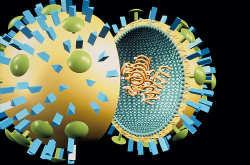
VIRUSThe dangers of having a new breed of antibiotic resistant bacteria

Alexander Fleming’s great discovery of the mould Penicillium led the way to the discovery of the antibiotic known as penicillin.  Even then, Fleming was well aware of the danger of misusing the drugs especially when a person would under dose his prescription. During his lecture on December 11th 1945 he included a warning at the end of his Nobel lecture about his very important discovery. Under dosing would expose the disease causing bacteria into a non-lethal amount of antibiotic that would eventually make them resistant to the drug they have been exposed to.

The penicillin is a very important discovery in the field of medical science alongside with the other antibiotics and vaccination drugs. But Fleming’s warning of the side effects of the under dosed drugs has never left their mind. The danger of starting a new strain of a resistant bacterium that would eventually cause the start of an epidemic which has no known treatment available is really scary.

Irresistible

The most common causes of antibiotic resistance are through convenience and laziness. People who often misuse these antibiotics do not realize the impact of their action. Bacterias are not similar to viruses and antibiotics only work against bacteria. Most patients would insist on taking antibiotics for a viral infection. And there are also some doctors who write unnecessary prescriptions. But this would eventually lead to a breeding ground for resistant bacteria that would infect other individuals. Wrong intake or under taking the prescribed drug would also cause bacterial resistance.

Creating a new strain of bacteria could cause a new form of dangerous illness that has no known cure. This will result to the long stay of infected people at the hospital and might also result in complicating their treatment. The worst case scenario, patients would die due to limited treatment methods. There was once a research done at Chicago’s Cook County Hospital. Samples were taken from the 1,400 patients where they found a resistant strain that infected 188 people and 12 died from it because of the limited treatment done to the patients. The new bacteria usually infects children and the old ones. People with cancer and already suffering from other illnesses are also more likely to be infected with the new strain of bacteria.

Developing a new drug would cost a lot and it will not be ready in an instant. A series of research and experiments are needed to prove that the drug is safe and that it really can fight the new disease-causing bacteria. In America alone about 1% or $17- $26 billion a year from their health care goes to spending on studying for cure on the resistance antibiotics. Other countries would only result to buying certain alternative but doesn’t promise the same effectiveness as the actual drug and might cause another new strain of bacteria in the process.

Action and not panic

Doing nothing is one option or probably the easiest way of dealing with the new strain of bacteria. Since it will cost a lot and there is no certainty of being able to discover a cure. One best example is during the mid-1940s when penicillin was not invented, dying from bacterial infection was just normal. But when the antibiotics and vaccines have been discovered, a large number of patients were saved because of the available treatment. And this inspires our medical physician and researchers to study and discover drugs and cure for certain diseases caused by the antibiotic resistant bacteria.

Thinking that resistance might be self-limiting is one of the most basic biological reasons that people often believes in. There are several studies which show that it would be hard or impossible for a certain bacteria to change or adjust its characteristic or physiological traits to become resistant to a certain drug. It often requires a lot of energy that most of the microorganism cannot do.

Several experiments and studies show that most of the antibiotic resistance resulted from inappropriate or unnecessary use of the drugs. Misuse, overuse or improper dosing and even using substandard or much diluted medicines are major causes of the increasing cases of antibiotic resistance. If there won’t be any strict policy against the misuse of antibiotics and a certain system that would monitor the proper usage of antibiotics, this practice would never be corrected.

All involved sectors like the government, drug companies and health-care providers should work hand in hand to educate and help the people learn the proper way to treat themselves. Poor countries should ask and be able to avail of the right drugs freely from charitable agencies.

Agencies that regulate the distribution of these drugs should also strictly be monitored so that substandard and counterfeit drugs will not be given to clueless patients. And certain methods should be taken so that antibiotics are only administered properly to patients who badly need it.

Patient should also follow the prescription from their doctor. They should drink the exact amount of antibiotic given by their doctor and not stop when they started to feel better. Doctors should make sure that their patients followed their prescribed drug dosage.

Smart microbes against ignorant humans

Making new antibiotics is another approach in dealing the resistance problem. Making a new drug that the resistant bacteria are not familiar of, will probably be able to fight and get rid of it.

Each year the World Health Organization celebrates a World Health Day on the 7th day of April.  Each year they create a slogan that would summarize the goal of the organization for the whole year. They are able to use the slogan “No action today, no cure tomorrow” this completely mirrors their efforts in discovering new drugs that would fight the new strain of bacteria that are developing.

Researchers now faced with the challenge unlike what those researchers have to do before penicillin was created. And most drug makers today are not being successful in creating new line of medicine that would fight the resistant bacteria. They mostly give funds to the study of how proteins behave but did not really help in solving the continuing problems they face. And there are other signs that show large drug companies such as Pfizer are running low with their funding which have resulted to budget cutting in their research area.

Bad luck might also be the reason why there is lack of new antibiotics in the market. Most companies and medical experts would agree that there is a need for discovering new medicine for the developing new resistant strain of bacteria but most of their research and funding is not enough to be able to successfully create a new drug.

But experts are not giving up in researching and experimenting for the new cure. Though most are just done under a private funding that would mean that they sometimes lack all the necessary tools to make their work faster and more efficient.

The side effect of common antibiotic usage

All of the problems which is caused by the resistant strain of bacteria are because of the over usage of the antibiotic drugs. Ramanan Laxminarayan of the Princeton University is considered one of the major professional that still continues researching about the presence of the resistance bacteria is trying to answer all the common questions relating to it. And he believes that with a mixture of incentives and scourges they will be able to produce a perfect solution to the resistant strain. They must insure that there are enough prize funds or even just a guaranteed-purchase arrangement for the new antibiotic or drugs that would help speed up the process into creating certain cure. Companies will only develop drugs where they can get a large profit. And developing a system that would help in properly deploying the new drugs would mean that more patients would be able to afford taking the necessary prescription their doctor advised. He also believes the positive effect of having stricter dispensing guidelines for medical physicians and also pharmacists of antibiotics that would help in lessening the hazard of overtreatment on patients though this perfect system would take a lot of effort and financial aid to fulfill this into reality.

A little realistic solution is also better according to Derrick Crook, an Oxford microbiologist consultant, who thinks this is the right solution. He believes that it is very difficult to massively restrict or prohibit the use of antibiotic or antimicrobials if the patient feels or thinks that it is doing well. Ignorance with the proper use and effects of the drugs is also a big factor in the difficulty of restricting the use of antibiotics.

Tim Peto one of Dr. Crook’s colleagues at Oxford is very skeptical of the idea that the resistance might cause certain catastrophic effect to humans. He even points out that in modern surgery the risk of infection is really low and it is close to zero at this moment. And if a certain resistant strain would raise most of the orthopedic, discretionary but life-enhancing procedures and cataract replacement would simply stop. Not necessarily the end of the world but just a step backward for the medical field.


Filed Under: Opinion Tagged With: alexander fleming, antibiotic, antibiotic drugs, antibiotic resistance, antibiotic resistant bacteria, antibiotics, antimicrobial, bacteria, biology, clinical pathology, discovery, disease caused bacterium, drugs, medicine, microbiology, penicillin, phage therapy, resistant, rise, staphylococcus aureus, superbug

Iron and Why Human Body Needs It.

April 22, 2011 by drburt

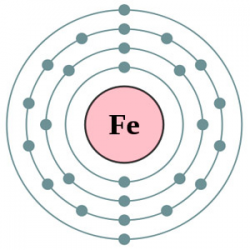
IRONIron (Fe) is the most abundant element on the planet Earth. It can be found in outer and inner core. This element is playing very crucial role the human’s health. Our bodies require around 100 milligrams per day of Fe. This important element regulates DNA synthesis, growth, healing, immune function, reproduction and even metabolism. Without Iron our red blood cells would not be able to carry Oxygen. Hemoglobin and Myoglobin are the two proteins in red blood cells that are responsible for delivering oxygen via blood and muscles. This function makes Fe a very important element for athletic performance. Every time I ride my bike at a  fast pace or climbing a long hill, especially on my single speed bike, I wish I had more oxygen delivered to my muscles for better performance.

The body does amazing things by adopting to external environment. One of the attorneys that I work with on personal injury cases spent two weeks with his son in Mountainous region of India. He is in his mid 50s and is an avid surfer. When he has returned from his trip he informed me that he feels like he is 25 years of age. His energy level was over the roof and he was able to surf and play tennis much longer than before. What has happened here?  Body is trying to compensate for low levels of O2 in blood stream thus stimulating the production of more red blood cells and increasing the O2 carrying capacity. When an individual returns back to normal altitude and he or she has more then normal oxygen in blood stream thus is the reason for better sport performance and increase energy level.  This effect is not long lasting as the body will adopt to normal altitude very fast and will decrease the amount of red blood cells.

People who have Iron deficiency can have pale skin, brittle or grooved nails, hair loss, irritability and general weakness. Frequent blood donors, vegetarians, long-distance runners, pregnant women or women who just gave birth, and women who have heavy periods are usually at risk of having iron deficiency. Approximately 50 percent of pregnant women, 20 percent of women, and 3 percent of men have Fe deficiency.

Many foods in our diet have this very important element. The best food sources would be dried beans, dried fruits, eggs (especially yolks), red meat, oysters, tuna, salmon, whole grains, apples. Animal source of this element is absorbed better than plant source. Perhaps combination of both animal and plant diet will provide the sufficient amount of Iron for ones health. One can also get a supplement from a health store but I would advice to consult your primary care physician first.

If you have anything to add to this post, please feel free to Post a comment or share your thoughts through Facebook, Twitter or comment section below to join the conversation.
Filed Under: Health Tagged With: abundant, anemia, biology, blood, body, chemistry, element, fe, hematology, hemoglobin, human body, human iron metabolism, inner core, iron, iron fe, medicine, oxygen, planet earth, red blood cell, red blood cells, why

  • « Previous Page
  • 1
  • 2
  • 3
  • 4
  • 5
  • Next Page »

PLEASE FOLLOW & LIKE B.C.

RSS
Follow by Email
Facebook
Facebook
fb-share-icon
Twitter
Visit Us
Follow Me
Post on X
YouTube
YouTube
LinkedIn
LinkedIn
Share

15200 Hesperian Blvd #104

San Leandro, CA. 94578

(510) 481-2225

drburt@burtchiropractic.com


SEARCH

Categories

Recent Posts

  • Loss of Cervical Lordosis: How a Straight Neck and Pain Impact Your Health—and How a San Leandro Chiropractor Can Help Restore It
  • Hidden Injuries from Car Accidents That a San Leandro Chiropractor Can Help You Detect
  • Best San Leandro Chiropractor for Sciatica Pain Relief: Natural, Drug-Free Solutions That Work