Top Chiropractor in San Leandro, CA

San Leandro Chiropractor

  • About Our Practice
  • What is Chiropractic?
  • SERVICES
    • Personal Injury
    • Cold Laser Therapy
    • Massage
    • Ultrasound
    • Electric Stimulation
    • Sports Injury
    • Workers Compensation
  • Testimonials
  • FAQs
  • Locations
  • CONTACT US
  • New Patient Forms
  • Nutrition Store
  • Tele Chiropractic Health
  • Memberships
  • Home

Powered by Genesis

TMJ Dysfunction Treatments Options

October 4, 2010 by drburt

Home Treatments for TMJ Dysfunction
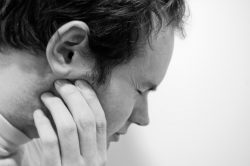
You can perform self-care treatments at home for TMJ dysfunction. Most often, the Temporomandibular joint dysfunction does not develop into a full disorder and the symptoms would disappear after it is able to recover and have enough rest.

Pain medications such as aspirin, ibuprofen or acetaminophen can ease the pain suffered due to TMJ dysfunction. Since chewing can be quite painful for sufferers of TMJ dysfunction, it is advised to eat soft foods during this time.  Apply ice packs on the injured area when the injury is still present. Rest your jaw as this could help in healing your TMJ.

Warm compress application is also advised to be put on the area where you feel pain.  20 minutes after applying the warm compress, you can try home therapy exercises such as opening and closing of the jaw moving from side to side. Repeat this up to 5 times a day at five minutes per session for 2 to 4 weeks. Make sure you don’t open your mouth wide while doing this exercise.

Medical Treatments for TMJ Dysfunction

Conservative medical treatments may also be necessary. The doctor may ask you to perform gentle stretching for the muscles on your jaw. He or She may also require you to perform relaxation exercises.  Stress can be a factor that will affect TMJ treatment thus stress-reduction techniques that manages the stress will help the patient relax his or her jaw alongside with the rest of his or her body.

A bite plate or splint may also be used. This is like a mouth guard that will help in reducing the teeth grinding or clenching especially when the patient sleeps at night. This will also ease the muscle tension on the jaw. However, if using the splint will increase the pain, the patient must stop using it.

If conservative treatments won’t work, a doctor may require you to go a step further and consider some of the invasive techniques to treat TMJ dysfunction.

Cortisone injection can be quite helpful in relieving the pain and inflammation of the jaw. Another procedure that would help in relieving the pain quickly is done at the doctor’s office and under local anesthetics.  The doctor would insert 2 needles in your TMJ for washing. One of the needles would be connected to a syringe that has a cleansing solution and it exits through the other syringe. Sometimes, aside from cleansing agents, the doctor may also inject pain medication this way as well.

If these still won’t work for the patient, surgery may be necessary though this is already considered as the final option. Artificial implants may be used as a replacement to the jaw joints. This is an irreversible method and must be avoided if other options are still available.

Chiropractic treatment for TMJ Dysfunction

This is a protocol that we use in our office: Electrical stimulation is used for 15 minutes on effected side. Deep tissue massage of the masseter muscle bilaterally.  Using rubber gloves on one hand perform a deep tissue massage of internal lateral pterigoid muscle (very painful but very useful and effective procedure). 5 minutes of Erchonia Cold Laser PL 5000 in the painful side of a TMJ.  Upper cervical chiropractic adjustment.

Do take note that most of the cases of TMJ dysfunction cannot be cured as it is most often a cyclic disorder. Modifications in lifestyle and proper treatment could improve the patient’s life without any limitation in function or pain.

Questiom: Was this information helpful? What kind of therapy have you had for your TMJ Dysfunction?
Filed Under: TMJ Tagged With: dysfunction, home treatments, jaws, options, pain medication, self care, tmj, tmj dysfunction, tmj treatments, treatment, treatment options, treatments

Temporomandibular Joint (TMJ) Dysfunction Physiology and Causes

October 1, 2010 by drburt


What is TMJ?

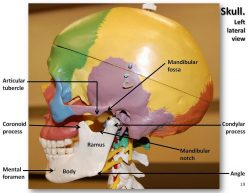
temporomandibular jointThe temporomandibular joint, or often called as TMJ, is the joint of the jaw. We have two temporomandibular joints that work in unison, one on the either side of the jaw. It got its name because of the temporal bone and the mandible that forms the joint.

It is the most used joint in our body. It has 6 main components and they are the mandibular condyles, the capsule, the articular surface to the temporal bone, the articular disc, lateral pterygoid and the ligaments.

What is TMJ Dysfunction?

This condition is common and affects over 10 million Americans today. It is affecting the  mastication muscles and the tissue components.  It can be a medical or a dental condition or a collection of conditions.

What are the causes ?

There are different factors that can influence the inflammation of the Temporomandibular joints such as teeth grinding, a direct physical trauma that causes disc derangement, stress, hypermobility of the joint, hypomobility of the joint, osteoarthritis, rheumatoid arthritis and many others.

What are the symptoms ?

Pain on the jaw and facial muscles is one of the first symptoms you would notice when you have TMJ dysfunction. It may even radiate to your neck and shoulders. You may feel this pain when you talk, yawn or chew. The pain is usually felt in front of the ear or on the jaw itself.

Ear pain, headaches, tinnitus and hearing loss may also be a symptom of  Temporomandibular joint dysfunction. This can get confusing as some might think they have an ear infection or ear problem when in fact, the pain is radiated because of TMJ dysfunction.

You may hear a popping, clicking or grating sound when you move the joint. This is caused by an abnormal position of the disc. Others may also hear the popping sound.

Swelling of the mouth or the face can also occur due to inflammation.

Lock jaw whether opened or closed is also a common symptom of TMJ dysfunction.

Teeth may not align properly and no longer touch as you bite on food. Teeth can also start to loosen or get broken or become sensitive.

Swallowing may become difficult because the muscles on the jaw area start to spasm.

You may feel nauseated or have a headache or dizziness.

How is TMJ Dysfunction diagnosed?

A health professional can properly diagnose a dysfunction by beginning with a thorough evaluation of the patient’s medical history. After which the health professional would make a physical examination on the patient to identify the disorder.

A treatment program would then be specified by the health professional according to the severity of the disorder. Treatment programs may include lifestyle modification, techniques for self relaxation, proper education regarding Temporomandibular joint dysfunction, restoration of the jaw’s range of motion, mobilization of the soft tissue, joint mobilizations, nerve stimulation, rehabilitation, etc.

The treatment program would be a per-patient basis. Thus, you may have a different treatment program compared to another patient who is also suffering from TMJ dysfunction. Part 2 is going to be about specific treaments options for this debilitating codition.

Question: Have you or anyone you know had a TMJ Dysfunction ? What kind of treatment otions have you had?

Filed Under: TMJ Tagged With: anatomy, bruxism, causes, dental anatomy, dentistry, dysfunction, hypermobility, jaw, jaws, joint, mandible, medicine, pain, temporomandibular joint, temporomandibular joint disorder, temporomandibular joint dysfunction, temporomandibular joint tmj, tinnitus, tmj, tmj dysfunction, unison

Tennis Elbow and Chiropractic Rehabilitation Phase 2 & 3

September 29, 2010 by drburt

Tennis ElbowAfter reaching the goal in phase 1, it’s time for phase 2. The goal for phase 2 of tennis elbow rehabilitation is to improve the flexibility and to increase the strength and endurance at the same time increasing the functional activities until you can return the elbow’s normal function completely.

Phase 2 is divided into 2 parts; stretching and strengthening. In stretching, you need to be gentle and perform only gentle stretching exercises. You wouldn’t want to reinjure your elbow by trying to stretch it to the point that it starts to get painful. Stretching exercises includes wrist flexion, wrist extension and wrist rotation as you gradually increase your wrist’s range of motion.

While doing the stretching exercises make sure that you extend your elbow with your arm straight. This way you can maximize the range of motion as you stretch the wrist. Each stretching exercise must be held for about 20 to 30 seconds at a time and repeat this from 5 to 10 times per set at two sets a day. Just make sure that you don’t overdo this. If you start to feel pain with the range of your stretch, reduce the range a bit until it starts to feel more comfortable for you.

The second part of phase 2 is the strengthening exercises. Your elbow must be bent and your wrist must have a support while performing these exercises. Start with wrist extension exercises. Use a 1-lb weight and hold it with your hand facing downward. The forearm must be supported with your knee or at the edge of a table. Raise your hand up and down slowly make sure that your arm stays in its position and only your wrist is moving. Wrist flexion is similar to wrist extension but this time the hand must be facing upward. The forearm would still be supported by your knee or at the edge of a table. Slowly bend the hand up and down slowly making sure that only the wrist is moving. Forearm pronation and supination is an exercise where you hold the weights with your hand, forearm supported, and you rotate the hand in a palm up and palm down position but returning to the perpendicular to floor position each time. Finger extension requires rubber bands. Place the rubber bands around your five fingers and spread them while feeling the resistance from the band. Do this 25 times each set with 3 sets a day. Add more rubber band if the resistance is not enough. Ball squeeze requires a ball or a sponge, depending on the resistance you can handle. Squeeze the ball 25 times per set at 3 sets a day.

Phase 3 is the phase where you gradually return to your activity. Phase 2 exercises must be maintained. Only proceed to phase 3 if you have gained back the full range of motion of your elbow and the pain had subsided. Make sure to gradually return to your activity and don’t be excited as you may reinjure yourself again. Here is a link to a great Instructional Videos For Tennis Beginners (affiliate link). This 49 step-by-step tennis instruction videos covering all 6 basic strokes in tennis and will help you to avoid injuries and become a better tennis player.

Question: What kind of rehabilitation have you or anyone you know had for a Tennis Elbow?

Filed Under: Tennis Elbow

Tennis Elbow Chiropractic Treatment and Other Rehabilitation Options Phase 1

September 27, 2010 by drburt

Tennis ElbowTreatment for tennis elbow aims to relieve the swelling and pain. There are several treatments that can be used to relieve the swelling and pain such as Chiropractic Rehabilitation, Physical Therapy,  Electrical Stimulation, Moist Heat, Ultrasound, Erchonia Pl 5000 Cold Laser, medications for pain relief that is non-steroidal such as naproxen or ibuprofen, local injection and using a splint to keep the forearm still. You can also try a guide, “Cure Tennis Elbow eBook and Step-by-Step System” (affiliate link) for self help if you don’t have the time to go to a doctor or resources to see one. Activities must be limited during treatment or rehabilitation until you are ready to start performing the activity again. If the pain persists after non-surgical treatments then it may require surgery.

About 95% of people who suffered from tennis elbow recover with the conservative treatments listed above but 5% won’t get better with any of the conservative treatment listed and would require surgery. 90% of people who have surgery gets their strength back and are relieved of pain.

In tennis elbow rehabilitation, there are 3 phases that are being followed. Every phase has a goal that must be reached in order to get to the next phase until you reach full recovery. Every phase is important and should not be skipped.

Phase 1 is done during the acute stage of the injury or the onset of pain. The goal in this phase is to decrease the pain and swelling, promoting healing of tissues and to retard the muscle atrophy. The RICE principle is followed during this phase.

Rest to avoid any further overuse of the elbow. You should maintain your activity level but avoiding any activity that would aggravate your injury. Complete rest won’t be good as this could lead to muscle atrophy. Just be sensitive with your body, if you feel pain with a certain activity and level, avoid it.

Icing is recommended when there is inflammation as it slows down the metabolism of that body part and helps in relieving the pain and spasm of the muscles. You may need to ice the elbow during the entire process of rehabilitation as long a swelling is present.

Compression limits the swelling but you should not compress the body part too tight as this would cut off the circulation. Wrapping a bandage around the injured area is the most common way of compression. If you feel like you wrapped it too tight or you feel throbbing, rewrap it and make it a little looser.

Next is to elevate. Compression and elevation are two powerful tools in keeping the swelling in its lowest level as possible. Compression helps in minimizing the swelling volume while elevating the elbow would use the gravitational force to its advantage and assist in the fluid return to the veins that causes the swelling. If swelling is minimized, the secondary trauma would also be minimized.

After phase 1 you can proceed to phase 2 & 3 once the goal had been reached when there is a significant decrease in pain and inflammation and tissue had healed and muscle atrophy had been minimized.

Filed Under: Tennis Elbow

  • « Previous Page
  • 1
  • …
  • 46
  • 47
  • 48
  • 49
  • 50
  • …
  • 59
  • Next Page »

PLEASE FOLLOW & LIKE B.C.

RSS
Follow by Email
Facebook
Facebook
fb-share-icon
Twitter
Visit Us
Follow Me
Post on X
YouTube
YouTube
LinkedIn
LinkedIn
Share
Instagram

Burt Chiropractic Rehabilitation Center

15200 Hesperian Blvd #104

San Leandro, CA. 94578

(510) 481-2225

drburt@burtchiropractic.com

https://shorturl.at/nDHP2

SEARCH

Categories

Recent Posts

  • “Understanding Headaches: Exploring the Role of Chiropractic Care in Relief”
  • Decoding Soft Tissue Injuries: A Comprehensive Exploration of Motor Vehicle Accidents (MVAs) and Their Impact on Health
  • The Role of Chiropractic Care in Whiplash Injury Recovery
Get Microsoft Windows OS or Microsoft Office suite activated free.
Activated kms activator