Top Chiropractor in San Leandro, CA

San Leandro Chiropractor

  • blog
  • About Our Practice
    • YELP REVIEWS
  • What is Chiropractic?
  • SERVICES
    • Personal Injury
    • Cold Laser Therapy
    • Massage
    • Ultrasound
    • Electric Stimulation
    • Sports Injury
    • Workers Compensation
    • HS Sports Physical Examination
  • FAQs
  • CONTACT US
  • New Patient Forms
  • Nutrition Store

Powered by Genesis

Coping With Stress and Anxiety at Work

February 11, 2011 by drburt

STRESS AND ANXIETY AT WORKWorking becomes harder when stress and anxiety becomes a redundant occurrence to the point that it affects how individuals do their jobs. Pressures are often the cause of stress and anxiety, from meeting deadlines, dealing with a demanding boss and having complex relationship with co-workers are just some of the things that make life at work difficult.

It is important to have a balanced life outside of your place employment to provide you with enough space to handle the pressures, stress and anxiety that the workplace brings. This can be achieved through a proper time management and a positive outlook in life.

Below are seven ways to cope with work stress and anxiety that can help you balance and enjoy life to the fullest.

  1. Find a job you love: having a job you love frees up a lot of pressures and stress for everybody. This kind of job often puts you in a healthy environment and doing the things you are passionate about. Look for a career that best suits your passions and talent. For example, if you love photography, indulge in a career that allows you to show your creativity through the camera of your lens.
  2. Spend more time with people you easily get along with: hanging out with people you love to spend time frees up the negativity that builds around a pressure packed and stress filled job. Try to spend more time with your friends by regularly scheduling a weekly get together to hang out and have fun.
  3. Listen to Soothing Music: listening to music soothes the mind and relaxes our senses. Play your favorite music during lunch break and incorporate it into your job for a few minutes in between. This will help you relax and flow along the rapid pace of your workplace.
  4. Do Exercises at Work: Try to practice exercises at your place of employment. Create a schedule for a 5 minute exercise every break time to just calm the muscles and put more energy to your body. A tired body often results to stress and anxiety and what better way to solve this than to have a regular exercise regimen.
  5. Relax at your Job: Every now and then try to relax at your job by closing your eyes for a couple of minutes to release the tension of staring at your computer screen for hours. By relaxing for a couple of minutes you end up clearing your mind of cluttered thoughts that results into stress and anxiety.
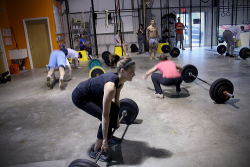
  6. Regular Workout at the Gym: balance your life outside of work by enrolling yourself in a gym. This affords you to gain a healthy lifestyle and with a regular workout program your body tends to reacts well with strenuous activity at your job as well as stress and anxiety. A healthy body helps you become more productive.
  7. Get 8 hours of Sleep: Lastly, make sure you get enough sleep each day you report to work. An average sleep length of 8 hours is enough to reinvigorate the body and prepare it for the next day’s workload. This gives you the adequate energy to combat stress and anxiety that usually develops in the work place. My teacher used to say: “Sleep is your weapon.”

Please feel free to Post a comment or share your thoughts through Facebook, Twitter or comment section below to join the conversation.

Filed Under: Advice, Health Tagged With: affect, anxiety, balance life, copes, coping with stress, endocrine system, hard, health, human interest, individual, nervous system, occurrence, psychology, redundant, sleep, stress, stress related disorders, sympathetic nervous system, symptoms, Work, work stress

Gym And 5 Tips For Injury Prevention

February 9, 2011 by drburt

GYM AND INJURIESWorking out at the gym regularly helps our body to achieve proper fitness and health, but in few instance it can also become a source of soft tissue injury especially if you work out recklessly without following certain guidelines to prepare your body for the strenuous workout ahead. Here are some injury prevention tips one should follow in order to avoid suffering injuries while working out at the gym.

  1. Start slowly: Many people tend to push themselves at the onset of their workout. They start fast immediately by lifting heavier weights in order to speed up their muscle improvement, little do they know that starting quick will create an imbalance to the development of the muscles. It is required to start off slow and let the rhythm of your workout increase at a slow pace until your body gets accustomed to the workout you’re doing. Tissues and muscles need to adjust to any heightened physical activity thus the need for a slow progression of the level of working out in a gym.
  2. Proper Warm Up and Stretching: warming up the body muscles and tissue through a proper stretching is important and should be done prior every workout in the gym. The purpose of warming up and stretching is to prepared the body and increase its temperature so it won’t produce a shock once the actual work out is practiced. Skipping this will result into serious injury to your bones, muscles and other tissues.
  3. Regulated diet based on fitness progress: when an individual goes through a consistent work out at the gym, they also raise their energy level through the increased intensity of their workout regimen. This produces a change in the energy requirement as well, which begs the question of what are the proper diet needed to boost energy brought upon by the increased workout. One should be mindful about the food they eat during these moments, it is important to eat foods that are rich in protein, minerals and vitamins and supplement basic nutrients to keep your body at pace with the ever increasing activity by absorbing more energy from a proper diet. Vegetables, white meat, beans, carrots, fruits and protein shake (affl. link) are just some of the kinds of foods that should be included in your diet.
  4. Keep hydrated at all times: a dehydrated body attracts all sorts on bone and muscle injuries as it becomes less elastic. Hence, the need for more water in the body. Make sure to drink at least 8-10 glasses of water each day. Minimize the intake of coffee and alcohol if one cannot totally avoid it. Make sure to have a bottle of water handy when working out, this will replace fluids in your body that are sweated out during workouts.
  5. Maintain correct posture and balance: most injuries are sustained when an individual continues to put a strain into the body by positioning themselves incorrectly during workouts. It is important to learn the proper posture and balance while lifting weights to avoid strain into the neck, knee, elbow and other body parts. Improper lifting of weights will result to back pains. Hire a personal trainer to teach you the proper posture and balance while working out.

These tips will help you experience a productive time working out at a gym and also helps you avoid unnecessary injuries.

Please feel free to Post a comment or share your thoughts through Facebook, Twitter or comment section below to join the conversation.

Filed Under: Health

Nutrition And Your Health

February 2, 2011 by drburt

NUTRITION AND YOUR HEALTHNutrition is indeed very important to our body. We eat in order to survive. However, if the food that we eat does not contain enough or the right amount of nutritional elements, our organism will not be able to function well, grow and cope with every day stress.

Women need nutrients such as omega-3 so they would function properly. Here is a link to a great post: “11 Omega 3 benefits for women.”  We needs nutrients, simply put, and we get them from the foods we eat whether they are healthy to us or not. The healthier your diet is the better your body will function. There is a saying: “You are what you eat.” We still obtain some of our needed nutrients from fatty foods or from junk foods though they are not in the level that our organism requires. And taking more of these foods wouldn’t be healthy, not because they don’t have the nutrients we need, but because they have more of the sugar or fat that our body does not need much at all.

Having a good nutrition means we eat the right type of foods that provides us needed nutrients. Nutrients have 6 classes and they are protein, carbohydrates, fat, vitamins & minerals and water. All these essential elements have their own role in our wellbeing. Protein is the food of the muscles and they also make our immune system strong. It helps in the repair of cells that have been damaged and it also builds new tissues. Carbohydrates give us energy and the lack of it can lead to ketosis which is a condition resulting from the body’s production of ketones. Fat, just like Carbohydrates, also gives us energy. We may think we don’t need fat since it is, after all, fat! But truth is we still need portions of fat in our diet to absorb vitamins such as Vitamins A and D. Vitamins and minerals are important which is why we take them in pure forms sometimes because we don’t get enough of them from foods we eat. They regulate different biochemical processes. Water is very important and we should keep us hydrated in order to stay alive. After all, our body consists of 80% of water.

Knowing the amount of each of these essential elements that our we require and eating the right foods make up the good nutritional base. If we eat too much of the bad stuff and not get enough of the necessary nutrients, then we are depriving our body of good nutrients. Too much fats and carbohydrates is not good for our health, becasue it increases body weight.

Recommended nutrients of people vary depending on age, weight, gender, blood type and even ethnicity. As we get older, our recommended nutritional requirements change so it’s best to learn about how much of each nutrient your body needs based on your new data. For example, pregnant women, have high requirements of certain nutrients for the benefit of the baby growing inside her and to keep her fit and healthy as well.

Do you have anything to add to this post please feel free to Post a comment or share your thoughts through Facebook, Twitter or comment section below to join the conversation.

Filed Under: Health Tagged With: body, dietary reference intake, Dieting, eat, fatty foods, food, food and drink, health, healthy diet, indeed, junk food, nutrient, nutrients, nutrition, omega 3 fatty acid, survived, vitamin, your health

Stress And Your Health

January 31, 2011 by drburt

STRESSWe go through stress because it’s a natural part of our day-to-day life. Most of us get stressed out over our jobs, our families and also with regards to money and economy. The housing market can get really stressful too. When we do get stressed, we naturally react physically. We notice our heart rate gets to pump faster than usual, our blood pressure goes up, our body temperature, breathing, and muscle contractions change too. Our way of dealing with stressful situation differ from one person to another and those who can’t deal with this level of tension will eventually end up feeling exhausted both mentally and physically.

We think that stressful lifestyle is just a normal day to day function for our body, but it is in fact affecting not only our physical body but also affects our mental and emotional well being. The term stress was first used back in the 30’s as a term used for the condition when stimulus is caused by a stressor. It was an endocrinologist named Hans Selye who noticed the different physical response on animals and humans when demands were placed on them. We notice the signs of tension and we can feel it too. It can present itself through our behavior, emotions or through physical and cognitive symptoms. That means when we get stressed our attitude and demeanor changes. Also, because it affects our emotions and behavior we get to feel anxious or worried or become moody and irritable, easily agitated, can’t relax, feeling lonely, has a poor sense of judgment and eventually have a negative outlook to the situation and in life. Also, we feel isolated or depressed and can’t concentrate well even if we try hard to focus.  Not only do we experience all these but we also suffer from the physical symptoms such as faster breathing, faster heart rate, high blood pressure, cholesterol, energy and we also sweat a lot.

When you feel stressed, you may notice that you also eventually feel some pains and aches from different parts of the body. Diarrhea or constipation may also be present. Chest pain, an upset stomach, vomiting and dizziness as well as headache may also be experienced by a person who is high under pressure. If we feel stressed and can’t cope up with it and it continues to lurk its head on our everyday lives then it is called as chronic stress. This could lead to a long-term damage both to the physical and psychological aspects of a person. The immune system gets affected and we become more prone to catching diseases and infections. Stressful environment also promotes the buildup of the visceral fat that eventually leads to obesity. Other diseases such as heart problems, ulcers, cancer, psoriasis, diabetes and also depression could be the cause of  increased physical and mental load in your life.. As for little kids, their growth is stunted as a result of chronic day-to-day stress.

According to Hans Selye there are two types of stress: the good stress and bad stress. Eustress is good and distress is bad. Eustress is experienced when we get married, exercising or getting promoted. Whether it is good or bad, according to Selye, it is still stress. The difference between a person’s perceptions of stress whether it is good or bad depends on his/her personal experiences, expectations and way to cope with it.

We adapt differently to stress as some people are having harder time dealing and coping with the same stressor as another person. GAS or the General Adaptation Syndrome describes how our body reacts to stress. Depending on the length of time and intensity you can determine whether the person is suffering from acute or chronic stress. At the first sign of stress, our body reacts in a fight or flight response. Second stage is the coping stage. At this stage the body tries to cope up with the stressor and eventually depletes our resources such as proteins, nutrients, vitamins and amino acids. Once it gets all depleted then we proceed to the third stage which is exhaustion. This is when we feel fatigued, weak and can’t concentrate. If we stay in this stage for long-periods then it eventually affects our overall health and we get sick with all sorts of diseases. Stress management helps people by learning the techniques to handle the day to day stressors. This way you prevent chronic stress and you’ll feel happier and healthier.

Please Post a comment or share your thoughts through Facebook, Twitter or comment section below to join the conversation.

Filed Under: Advice, Health Tagged With: anxiety, blood pressure, body temperature, chronic stress, coping, day life, endocrine system, eustress, fight or flight response, got stress, hans selye, health, heart rate, human behavior, muscle contraction, personal life, psychology, social psychology, stress, stress levels, sympathetic nervous system, your health

  • « Previous Page
  • 1
  • …
  • 7
  • 8
  • 9
  • 10
  • 11
  • 12
  • Next Page »

PLEASE FOLLOW & LIKE B.C.

RSS
Follow by Email
Facebook
Facebook
fb-share-icon
Twitter
Visit Us
Follow Me
Post on X
YouTube
YouTube
LinkedIn
LinkedIn
Share

15200 Hesperian Blvd #104

San Leandro, CA. 94578

(510) 481-2225

drburt@burtchiropractic.com


SEARCH

Categories

Recent Posts

  • San Leandro Chiropractor for Auto Accident & T-Bone Collision Rehabilitation
  • The Hidden Danger of Whiplash: Why Minor San Leandro Intersections Lead to Major Pain
  • How to Sleep with Lower Back or Neck Pain: Practical Advice from a San Leandro Chiropractic Office