Top Chiropractor in San Leandro, CA

San Leandro Chiropractor

  • blog
  • About Our Practice
  • What is Chiropractic?
  • SERVICES
    • Personal Injury
    • Cold Laser Therapy
    • Massage
    • Ultrasound
    • Electric Stimulation
    • Sports Injury
    • Workers Compensation
  • FAQs
  • Locations
  • CONTACT US
  • New Patient Forms
  • Nutrition Store
  • Home

Powered by Genesis

Computer Related Injuries and Chiropractic Care

March 22, 2016 by drburt

COMPUTER RELATED INJURIESComputer Related Injuries and Chiropractic Care

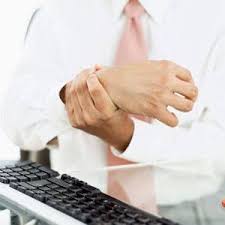
The computer is a vital tool in many different jobs and activities, for adults and children. But long periods of using a computer can increase your chance of developing an computer related injuries. Inappropriate computer use can cause muscle and joint pain, overuse injuries of the shoulder, arm, wrist or hand, and eyestrain.

Children can experience particular physical and psychological problems if they play computer games too much. You can reduce or avoid these risks with the correct furniture, better posture and good habits, such as taking rest breaks and restricting time spent playing computer games. Typical injuries include

  • Posterior cervical dorsal syndrome (“computer back”)
  • “Mouse shoulder”
  • Carpal tunnel syndrome
  • Tennis elbow
  • Lumbar sprains and strains
  • Disc injuries
  • Eyestrain from computer use
  • Health risks from computer games

Learn how to identify and help prevent these computer related injuries and learn when to get help with chiropractic care.

Basic Terminology For Computer Related Injuries

To understand computer related injuries requires an introduction to some of the basic terminology of musculoskeletal injury.

Muscle spasm: excessive muscle tone; usually caused by a reaction to postural fatigue, tissue injury, or psychogenic stress.

Strain: injury to a muscle or tendon (the tissue that connect muscles to bones); usually due to repetitive overuse, fatigue, over stretching, excessive contraction, unguarded movements, postural loading, or direct blows.

Repetitive strain injury (RSI): damage to the tendons, nerves, muscles, and  other soft tissues of the body caused by specific repeated movements which overstress the tissues; another name for RSI is cumulative trauma disorder (CTD).

Tendonitis: inflammation of a tendon; usually caused by excessive repetitive or abnormal motion.Sprain: injury to a ligament (the tissue that connects bones together); usually due to the same things which cause strains and the additional stress added  when the muscles fatigue.

Myofascial trigger points: local points of severe muscle spasm caused by postural strain and repetitive use; they may be initiated or perpetuated by many physical, chemical, or psychological stresses; and trigger points can “trigger” local and referred pain when pressed or when severe they cause pain
without pressure.

Joint dysfunction: abnormal joint operation due to weak or lax supporting muscles or ligaments, or conversely excessively tight supporting tissues; dysfunction can result in pain, abnormal motion, and eventually degeneration and nerve interference.

Cervicogenic headaches: headaches caused by irritation of the tissues of the neck by any of the tissue dysfunctions.

Posterior cervical dorsal syndrome (“computer back”)

A very common postural syndrome in modern society involves excessive rearward curving of your lower, middle, and upper back; forward drawn head; rounded shoulders; and excessive forward curving of your upper neck. This syndrome has been given several names including sterno-symphyseal syndrome, posterior cervical-dorsal syndrome, or more commonly, computer back or student syndrome. It is a natural result of prolonged sitting work, especially with computers. These postural defects in turn can cause

  • headaches
  • excessive muscle tension in your neck, chest, shoulders, arms and forearms, back, abdomen, hips, and thighs and legs
  • strains and trigger points the above muscles
  • joint dysfunction and sprains in your neck, back, and ribs
  • increased loading on the intervertebral discs of your spine
  • impaired function of your breathing muscle (your diaphragm), causing the muscles lifting your upper ribs and shoulders to become overactive and subject to problems

To help prevent computer back try adopting the postural relief position every 20 minutes i order to aoid computer related injuries.

“Mouse shoulder”

“Mouse shoulder” (as good a name as any) is a syndrome arising from prolonged elevation and bracing of the shoulder to accommodate an inappropriately positioned mouse, or performing short range movements of the mouse, or (usually) both. This syndrome results in severe shoulder and shoulder blade muscle spasm (in the trapezius, deltoid, and teres muscles) and trigger points with referred pain in the arm.If left untreated, this problem can develop into a much more serious rotator cuff injury. Call your clocal chiropractor and avoid these computer related injuries.

Carpal tunnel syndrome and Computer Related Injuries

Carpal tunnel syndrome arises primarily from compression of the median nerve as it passes through the wrist. It is the most common nerve compression injury in the body and it is the most common and costly RSI. Typical symptoms include

  • paresthesias (abnormal sensations) such as tingling and numbness in the thumb and index and middle fingers
  • night pain
  • weakness in grasping, thumb and index finger pinching, and other thumb movements
  • clumsiness, such as awkward hand movements and dropping things

For more information, see Carpal tunnel syndrome.

Tennis elbow

Classic tennis elbow, or lateral epicondylitis, is another type of RSI. It is a tendonitis affecting the common extensor tendon at the lateral (outside) area of the elbow. Tennis elbow is a very common cause of elbow and forearm pain. It can cause mild to severe pain in the lateral elbow and may be aggravated by grasping and excessive finger motions. The pain may also radiate up the arm or down into the forearm.For more information, see Tennis elbow.

Lumbar sprains and strains

Lumbar spine sprains (ligament or joint capsule tears) and strains (muscle or tendon tears) are common in office workers due to the high loads placed on the spine during sitting.Sprains and strains may cause back and hip pain as well as muscle swelling and tightness.For more information, see Lumbar sprains and strains.

Disc injuries

Increased loading on the spine due to prolonged and faulty sitting postures may cause sprains of the outer (annular) fibers of the intervertebral discs. In more advanced cases the soft inner material (nucleus) of the disc may protrude into or even through the annular fibers of the disc, resulting in a herniated disc.Herniated discs may cause back pain, leg pain and altered sensation down to the foot, weakness, walking difficulties, or combination of these symptoms.For more information, see Disc injuries.

Eyestrain from computer use

Focusing your eyes at the same distance point for long periods of time causes fatigue. The human eye structurally prefers to look at objects more than six metres away, so any work performed close up puts extra demands on your eye muscles.The illuminated computer screen can also cause eye fatigue. Although there is no evidence that eye fatigue damages your eyesight, computer users may get symptoms such as blurred vision, temporary inability to focus on faraway objects and headaches.

Preventing eyestrain from computer use

Tips to avoid eyestrain include:

  • Make sure your main source of light (such as a window) is not shining into your face or directly onto the computer screen.
  • Tilt the screen slightly to avoid reflections or glare.
  • Make sure the screen is not too close to your face.
  • Put the screen either at eye level or slightly lower.
  • Reduce the contrast and brightness of your screen by adjusting the controls.
  • Frequently look away from the screen and focus on faraway objects.
  • Have regular eye examinations to check that any blurring, headaches and other associated problems are not caused by any underlying disorders.

Health risks from computer games

Playing computer games for too long or without correct furniture and posture can lead to health problems such as:

  • Overuse injuries of the hand
  • Obesity
  • Muscle and joint problems
  • Eyestrain
  • Behavioural problems including aggressive behaviour
  • Photosensitive epileptic seizures (caused by flashing or rapidly changing lights – this is rare).

Parents can reduce the risk of children developing computer-related health problems. You can encourage your child to:

  • Sit at least one metre away from the screen
  • Take frequent breaks
  • Pursue other activities. Encourage your child to enjoy different hobbies and interests, particularly sports and physical activities.

You can also:

  • Set sensible time limits on your child’s game playing. Some guidelines recommend no more than two hours of screen time each day
  • Set up the computer, desk, chair and keyboard to suit your child’s height. For example, adjust the chair so that your child’s feet rest flat on the floor
  • Buy an ergonomic chair
  • Buy a smaller mouse, which suits the size of your child’s hand
  • Teach your child to use the keyboard and mouse properly and safely, such as pushing the buttons and other controls gently. Using unnecessary force increases the risk of overuse injury.

Eight basic steps for preventing common computer-related injuries

The key to preventing common computer-related injuries is to identify and remove the abnormal stresses acting on your body while you work. Eight ways to do this are

  1. Adopt proper sitting posture by changing the arrangement of your desk, chair, and computer screen and keyboard. See Ergonomics at Work and Microsoft’s Healthy Computer Guide. Check yourself to ensure you maintain proper posture throughout the day. A good idea is to have someone else watch your posture while you work.
  2. Support easily compromised areas of the body. A lumbar support pillow and wrist supports for your keyboard and mouse can prevent many injuries.
  3. Don’t sit too long at your desk, get up and move around at least every half-hour. Also, try adopting the postural relief position every 20 minutes.
  4. Recognize that the psychological stress of your work could be altering your posture. Slumped shoulders and shoulders pulled upward are common self-defense postures.
  5. Improve your overall fitness level to make your muscles strong and flexible so that they do not fatigue as quickly. Start simple, balanced exercise program that you will continue, for example, brisk walking at lunch.
  6. Stretch and relax your tight (or overactive) muscles and strengthen and tone up your weak (or underactive) muscles. Periodically perform these simple stretches.
  7. Take a few minutes to massage your muscles to help work out the kinks. Use gentle kneading motions and strokes towards the heart.
  8. At the end of your long day, relax your muscles in a warm bath or shower. You deserve it!

Consider using a computer program like Workrave, a freeware program that assists in the recovery and prevention of RSIs. To quote the website: “The program frequently alerts you to take micro-pauses, rest breaks and restricts you to your daily limit.” It also provides helpful examples of stretches and exercises for you to perform during the breaks. Also consider using one of the many posture apps available for smartphones.

When to get additional help

You should seek help for

  • problems different than your “usual” ones
  • weakness
  • persistent (lasting more than 2-3 days) or worsening symptoms
  • symptoms that disrupt your work or home life

Contact Dr. Burt if you have any of the symptoms mentioned in this article. Your symptoms can get progressively worse if not fixed on time with proper chiropractic care.

Workplace environment computer_comfort from Shankar Myadharaveni

Office Ergonomic Training from jdecarli

Filed Under: Advice, Children, Chiropractic, Posture Tagged With: Chiropractic Care, computer related injuries

Human Body Energy Clock and Qi Building and Balancing

March 2, 2016 by drburt

human body energy and qi balancingHuman Body Energy Clock and Qi Building and Balancing

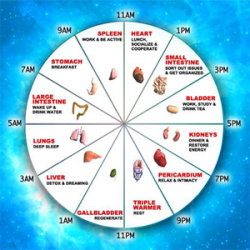
Human body energy clock works on Qi (energy) according to the traditional Chinese medicine (TCM). Our 12 main meridians have a maximum and minimum energy flow. Each meridian is linked to specific organs in our body. Issues with organs generally appear either during the maximum or minimum energy flow. Knowing this can help treating the correct area that needs the most.

The nearest Western equivalent to qi human body energy is an inspiration. But there is a decisive difference between Eastern and Western attitudes. Westerners tend to regard this sweet spiritual inebriation as something that either fills us or deserts us, completely out of our control. In the Eastern mind, though, this is something that you can control. You can awaken, stimulate, increase and utilize the qi energy, according to your will.

Therefore, this post is focused on the strictly practical aspects of qi energy: how to get it started and make it grow, and how to use it. Inspiration is yours to call upon at your own wish.

It is not even difficult.  Anyone can do exercises without much effort. Nor do they take much time. There is just one snag: You have to repeat them, preferably every day, and you should do that long enough to establish new habits. It is the only method to make your body act in a way that stimulates your qi, without your mind having to think about it constantly.

You will soon find that life gets another luster. So give it a chance.

 Building Qi in the Body

Human body energy can be increased. Consequently, the development of Qi can make an ill person robust or a weak person vibrant. More Qi can enhance mental capacity too.

The concept of Qi also extends beyond the physical body, to the subtle energies that activate all human functions, including emotions and thought. Unbalanced Qi causes your emotions to become agitated and distressed. Balanced Qi causes your emotions to become smooth and more satisfying.

From the perspective of thought, when your mental Qi becomes more refined it enhances your creativity at all levels–art, business, relationships, child bearing, etc.

Spiritual Qi makes it more possible for us to personally enter into higher states of consciousness, which lie at the heart of religious experience.

Qigong, tai chi and other form of Taoist martial and healing arts, help you to develop subtle chi-energy, not as an idea but rather lead you to directly feel and experience what this is in your body.

Qi Circulation

To maintain pain-free, optimal health, Qi or energy should circulate throughout your entire body, without disruption, in a smooth, powerful fashion.

The classic Chinese medical phrase is teng jr bu tong. If the circulation of your chi is blocked (bu tong), you have pain and disease (teng). Conversely, if your Qi or life force energy in your acupuncture meridian lines if fully connected and circulating without blockages (tong), you have neither pain nor disease (bu tong) – tong jr bu teng.

Making your Qi tong i is the most basic goal of Chinese medicine and most apparent with tai chi, qigong and acupuncture. Balancing out and connecting your chi so that it has no blockages will both get rid of the pain of disease and make you feel a whole lot better.

Filed Under: Advice, Health Tagged With: energy, health, human body energy, qi, tcm, traditional chinese medicine

Avocado Seeds and Health Benefits for a Human Body

February 3, 2016 by drburt

benefits of avocado seeds Avocado Seeds and Health Benefits for a Human Body

Everyone knows about Avocados and and many delicious dishes one can prepared. But did you know that Avocado Seeds are full of great health benefits. When crashed in a food processor the mixture can be added to morning smoothies as well as delicious fruit snack.

Avocado Seeds have more antioxidants than most fruits and vegetables  on the market and polyphenols like green tea. They are full of more soluble fiber than just about any other food which is great for your digestive system.

In fact Avocado Seed has 70% of the antioxidants found in the whole Avocado, and Avocado Seed Oil is also full of antioxidants, lowers cholesterol, and helps fight off disease and keep cardiovascular system strong, lowers cholesterol and prevents strokes. Studies show that Avocado Seed has more soluble fiber than oatmeal and just about any other food.

Avocado Seed is a great for anti inflammatory properties of the GI tract and helps to fight diarrhea too! In fact in South America Avocado Seeds are used for dysentery and other GI tract problems. Avocado Seeds has lots of phenolic compounds that help to prevent gastric ulcers, and prevent bacterial and viral diseases.

Avocado Seed contains a flavonol that prevents tumor growth.  Studies with rats with cancer given Avocado Seed powder looks promising.

Avocado Seeds boost your immune system and keep you from coming down with debilitating diseases. Keeping your immune system high, because antioxidants keep free radicals at bay… and slows the aging process. Avocado Seeds seems to have a good anti-inflammatory ability and thus helps with arthritis and other joint diseases.

Avocado Seed Oil has been shown in studies to increase collagen in your skin thus helping to keep your skin looking young and wrinkle free and will make your hair shinny and help get rid of dry dead skin.

Avocado Seed Extract studies show that it lowers blood glucose and helps you lose weight. Avocado Seed grated, roast, and made into a tea is really great for asthma.

Avocado Seed Green Goddess Smoothie

  • 1 cup nut milk or water
  • 1 ripe pear
  • 2 handfuls of fresh spinach
  • ½ Hass avocado
  • ½ Hass avocado seed
  • Small piece ginger grated
  • ½ apple

Blend well and enjoy!

So, the next time you cut in the fleshy, nutrient-packed goodness of an avocado, don’t be so quick to throw the seed away.


Filed Under: Advice, Diet, Health Tagged With: antioxidants, avocado, avocado seeds, health benefits

Rheumatoid Arthritis patients often suffer from depression!

July 30, 2014 by drburt

Rheumatoid ArthritisRheumatoid Arthritis patients often suffer from depression!

Majority of the world’s population suffer from rheumatoid arthritis. As a result pain in the joints is a common symptom. But are you aware that depression is a major concern amongst the patients suffering from this ailment? The higher the pain, the higher the rate of depression in the patient. A lot of research has been done in this field. As per the research and their findings nearly 13 to 20% of the patients suffer from depression. This percentage is highly dependent on the social demographics as well as the characteristics of the ailment. Thus the patients have a double chance of suffering from depression compared to the general public. There is another thing that we need to consider here. The way a patient deals with depression has a lot to do with how they deal with their pain and their level of interaction with their practitioner.

Now there is an interesting angle to the depression and pain syndrome. As per the research the relationship between the two can be calculated on the basis of symptoms, cognitions and behaviors of the patients. As already mentioned it is said that the level of depression increases with the increase in pain. But surprisingly it is seen that even if the pain is brought under control there seems to be no decrease in the level of the depression factor. It is often seen that the intensity of the depression is associated with the verbal description of the pain. Say for example if as per the patient the pain is unbearable, then there has been a rise in the depression factor and not with the frequency with which the pain occurs. So there is a debate amongst the researchers as to whether the intensity of the pain causes this depression or whether it is vice versa.

The decrease in functional ability also seems to contribute to the depression level. This happens more if the patient is unable to do certain activities that they consider important such as visiting one’s family over the weekend, taking a holiday and so on. As per research nearly 10 % reductions in these activities leads to about 7 fold increase in depression. As a result the patient lacks the determination and will to carry out any activity.

However if you are looking for a definite link between the pain and disability to carry out activities that may lead to depression – then you will be disappointed on this as the relation between all these factors are unclear. It is true that pain and stress are vital factors but then there are many patients who suffer from disability and chronic pain and yet they have not experienced depression. So what we can conclude is that although these factors are vital they are not a must in having depression. There are many other factors that can be equally influencing. Stress and lack of social support play important role.

So there is no specific hard and fast rule as to what contributes to depression in patients suffering from rheumatoid arthritis. It varies from one patient to another and depends on various characteristics and symptoms.


Ashley is a graduate of NUS university of Singapore. After graduating, she starts writing as her carrier. She has 7 years experience for writing and writes wide range of topics on diet, health, nutrition finance, travel etc. She wants to share an informative article for Rheumatoid Arthritis patients.

Filed Under: Advice Tagged With: joint pain, paijn, rheumatoid arthritis

  • « Previous Page
  • 1
  • …
  • 4
  • 5
  • 6
  • 7
  • 8
  • …
  • 18
  • Next Page »

PLEASE FOLLOW & LIKE B.C.

RSS
Follow by Email
Facebook
Facebook
fb-share-icon
Twitter
Visit Us
Follow Me
Post on X
YouTube
YouTube
LinkedIn
LinkedIn
Share

15200 Hesperian Blvd #104

San Leandro, CA. 94578

(510) 481-2225

drburt@burtchiropractic.com


SEARCH

Categories

Recent Posts

  • Loss of Cervical Lordosis: How a Straight Neck and Pain Impact Your Health—and How a San Leandro Chiropractor Can Help Restore It
  • Hidden Injuries from Car Accidents That a San Leandro Chiropractor Can Help You Detect
  • Best San Leandro Chiropractor for Sciatica Pain Relief: Natural, Drug-Free Solutions That Work