Top Chiropractor in San Leandro, CA

San Leandro Chiropractor

  • About Our Practice
  • What is Chiropractic?
  • SERVICES
    • Personal Injury
    • Cold Laser Therapy
    • Massage
    • Ultrasound
    • Electric Stimulation
    • Sports Injury
    • Workers Compensation
  • Testimonials
  • FAQs
  • Locations
  • CONTACT US
  • New Patient Forms
  • Nutrition Store
  • Tele Chiropractic Health
  • Memberships
  • Home

Powered by Genesis

Tennis Elbow Physiology and Causes

September 24, 2010 by drburt

What is Tennis elbow?

Elbows can get injured through repetitive actions. Tennis elbow is a term used for lateral epicondylitis which is an injury to the tendons and muscles located on the outside or the lateral part of the elbow. This is opposite to the golfer’s elbow which is the medial epicondylitis, a similar injury but instead of the pain and injury experienced laterally, it’s on the inside or the medial part of the elbow.

It can be an inflammation, pain or soreness on the lateral side of a person’s upper arm just near the elbow. This could be caused by a partial tear to the tendon fibers that connects the muscle to the bone. It is called tennis elbow not because it is suffered by tennis players only but because it is a usual problem for tennis players. Nonetheless, anyone who uses their arm for repetitive movement can suffer from this injury.

What are the causes?

The major cause of tennis elbow is the repeated motion of the forearm and/or wrist. Many tennis players have suffered from this condition at least once in their career but it can also affect athletes of other sports too. People who have work activities or participates in a leisure sport that requires a repetitive motion of the arm, wrist and elbow may also suffer from lateral epicondylitis.

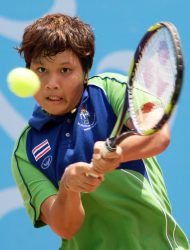
For tennis athletes and enthusiasts, they can experience tennis elbow as a result of a poor technique for one-handed backhand, or serving with the palms turned downward that results to the snapping of the wrist while hitting the ball in full speed and power, or with the snapping of the wrist as a result of a late forehand preparation swing.

What are the symptoms?

  • Elbow pain on the outside part that worsens gradually and radiating to the forearm as well as the back of the hand
  • Weakness and difficulty grasping
  • Pain worsens as the person shakes hands or is squeezing an object
  • Pain worsens when lifting an object or using tools that would move the wrist as a result of putting force on it
  • Stiffness
  • Restriction of movement
  • Tightness

What are the Risk Factors?

More men are affected by this condition than women. 1 to 3% of the population suffers from laterl epycondylitis at least once in their life and tennis players are the ones who have the highest risk factor. People who have jobs that require repetitive movement on their arms, elbows and wrists are more likely to suffer from tennis elbow. Such jobs include carpentry, mechanics, assembly-line workers, household cleaners, gardeners, baseball players, golfers, bowlers and landscapers.

Tests and diagnosis

X-rays may be required for diagnosis but physical examination can also determine whether the patient suffers from this debilitating condition. When the doctor presses the tendon that attaches the bone on the upper arm and outside of the elbow, the patient would feel tenderness and pain. Also, when the wrist is being extended, the patient would also feel pain. Fro more information and rehabilitation options please read this guide – “Cure Tennis Elbow eBook and Step-by-Step System.” (affiliate link)

Question: Have you or anyone you know suffered from Tennis Elbow?

Filed Under: Tennis Elbow

Golfer’s Elbow Treatment and Rehabilitation Options

September 22, 2010 by drburt

What immediate treatments to follow?

The golfer’s elbow is an injury to the soft tissue of the tendons and muscles that surrounds the elbow joint. Treatment for such injury would be similar to other soft tissue injury therefore immediately after the injury occurred or when the pain started to first set in, the patient must follow the RICE+R regime. RICE is Rest, Ice, Compression and Elevation with an additional R meaning Referral to a professional for a proper diagnosis. The RICE regime must be implemented for at least 48 hours for optimum results.

You can ice the injured elbow for 15 minutes at a time, 6 times a day for 2 days. Give it enough time to rest and after 2 days of icing, you can start applying heat to your elbow. To help with its healing, you can use an elbow support or brace to reduce the load on the elbow. If this won’t work, you should seek a professional to rehabilitate the elbow.

Golfer’s Elbow Rehabilitation by a Sports Injury Specialist

If immediate treatment does nothing to ease the pain on your elbow, a sports injury specialist would be able to treat your injured elbow by having an ultrasound, electrical stimultation or with the use of a laser treatment. If you see a Medical Doctor as your PCP he or she may prescribe you with pain and antiinflammatory medications such vicodin and ibuprofen. You will also undergo rehabilitation exercises. You will begin with some light exercises that will mostly be stretching exercises. By doing so, the level of pain could substantially be reduced and you will gain your range of motion again. Strengthening exercises would also be required to bring back the strength of your elbow and wrist. Do take note that your elbow and arms must not be exercised to the point that it gets painful. If pain is felt, the exercise must be stopped or lessened.

It is advisable that stretching begins as soon as possible gradually increasing the duration as rehabilitation progresses. Stretches can start by holding the stretch position for just 10 seconds at a time gradually increasing it to 40 seconds. Do this 5 times per set at 3 sets a day.

The specialist may also prescribe you with sports massage therapy. This is to be applied after the acute stage and must begin lightly just below the pain level of the patient. After treatment, cold therapy would be applied.

The last stage of rehabilitation is the returning to activity. This is done gradually as well and this stage must only begin when the patient can perform his or her activity with no pain. If pain is felt, this stage must be delayed further. This stage may begin once the strengthening exercises won’t cause the patient any pain. The use of a brace or strap is recommended once you begin this stage. Gradually increase the activity in duration of 6 weeks. If during the increase of activity the patient starts to feel pain, the activity must be reduced by one notch or until there’s no pain experienced. Stretching and strengthening exercise must be maintained throughout this routine. If you don’t have the time to see your local chiropractor or pain specialist you might want to try to read this great guide: “Discover How to Eliminate Golfers Elbow Pain In As Little As 72 Hours And Cure It Completely Within 30 Days, Guaranteed” (affiliate link). All It Takes Is 5 Simple, Easy-to-Follow Techniques You Can Do Sitting In A Chair Watching Your Favorite Television Show from the Comfort of Home – Without Any Special Exercise Equipment!

Question: Was this Post Helpful in Answering Your Question Regarding Golfer’s Elbow?


Filed Under: Golfer's Elbow

Ultrasound Therapy and Chiropractic Rehabilitation

September 17, 2010 by drburt

When people hear the word “ultrasound” the first thing that comes to mind is the ultrasound from the OB-GYN where you can view a 2-dimensional or 3-dimensional image of what’s inside your tummy. But, this therapy is not this type of ultrasound as it is a therapeutic procedure that uses sound waves in treating injuries such as with soft tissues, muscles or joints.

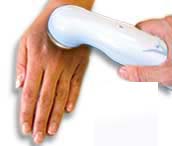
The sound waves would vibrate at a frequency that is higher than the range that human ears could hear and it provides a mechanical vibration that provides a micro-massage.  I can either be a thermal or non thermal application at frequencies ranging from 0.72 MHz to 3 MHz.

Ultrasound therapy had been used as a treatment for years for musculoskeletal injuries as it helps in rapidly healing the injured tissue as well as decreasing the pain. However, it is underutilized despite its great potential and this is because of a few factors including the lack of education for therapists to use this treatment. The technique in using this treatment is very specific and some therapists are reluctant as they have been disappointed with previous outcomes which may have been a result of their insufficient training regarding ultrasound therapy.

Therapists must understand how this treatment works in order to get the desired outcome. The potential for success is increased as you combine the knowledge, correct technique and pathology of injury. Things that should be considered by the therapists to ensure a maximum effect for patients are the factors that would affect the absorption of the muscles, hemoglobin and fat, the physiology as well as the delivery process and contraindications for this treatment.

The basic benefits of the ultrasound therapy includes an increased in the elasticity of the collagen found in joint capsules, tendons and scar tissues; an increase in the motor as well as the sensory nerve conduction that helps in reducing the pain; the increase in blood flow; the reduction of muscle spasm from an altered contractile activity of the skeletal muscle; and the muscle spasm reduction through the reduction of the activity of the muscle spindle.

US therapy is just one of the treatments that must be considered in treating musculoskeletal injuries. Other treatments to be considered are electromagnetic radiation, hot packs, electrical stimulation, massage, cryotherapy, heat therapy, Erchonia Cold Laser PL 5000 and exercise. The choice really depends on the therapist and with the type of injury and the location of the injury as well as the condition of the patient.

There certain contraindications. If the patient has these medical conditions then this treatment must be avoided. Medical conditions include malignancy, pregnancy, myositis ossificans, circulatory insufficiency, acute infection, sepsis (severe) infection. Also, if the injury is situated over the heart, spine, eyes, testes, growing bones, carotid sinuses, epiphyseal plates, cervical stellate ganglion, pacemaker or vagus nerve then ultrasound therapy must also be avoided.

Precautions must also be observed for hypersensitivity to the treatment, area of the tendon repair, cemented prosthesis, or of reduced in circulation and with the diminished sense of pain and change in temperature or the lack of it. This type of therapy is available in our office for rehabilitation of our injured patients.

Question: Have you ever experienced ultrasound therapy while rehabilitating your injury?

Filed Under: Ankle, Modalities Tagged With: 3d ultrasound, cryotherapy, frequencies, frequency range, heat therapy, human ears, manipulative therapy, massage, mechanical vibration, medicine, orthopedic surgery, physical therapy, sounds waves, therapy, trigger point, ultrasound, ultrasound therapy, vibrates, wave

Electric Stimulation and Chiropractic Rehabilitation

September 15, 2010 by drburt

Electric stimulation rehabilitation or electrotherapy had been discovered way back in 400 BC with the help of a torpedo fish that produces an electric shock reaching up to 150 volts. People used to take these fish from streams and they place them on the body’s painful area and the electricity produced from the fish controlled the pain.

It was when the gate control theory of pain in 1965 that reintroduced electric stimulation rehabilitation after it had lost the interest of many skeptics in the nineteenth century. The theory suggests that when the large nerve fibers activity increases, it tends to close the gate blocking information or signals of pain to the brain.

Electric stimulation rehabilitation is a form of therapy that introduces electricity to stimulate the muscles and treat the pain & spasms. This type of therapy can be administered to the patient by a professional or you can purchase a home kit and use it at home.

There are three types of the electrical stimulation rehabilitation and they are the general electric therapy, muscular electric therapy and the transcutanous electrical nerve stimulation otherwise known as TENS. The general electric therapy relieves the pain and also heals wounds while the muscular electrical therapy helps in strengthening the muscles by reducing the spasms, while the TENS is used for treating chronic types of pain.

Electric stimulation rehabilitation has several applications. It is used to manage pain either acute or chronic. TENS is most successful in the control of the postoperative incision pain especially if it’s on a small area and self limiting with regards to time, severity and course.

IFC or interference current is another form of the electric stimulation rehabilitation treatment used for pain control. Some clinicians believe that this is more effective in treating muscle pain compared to TENS.

Electrotherapy is also applied to reduce edema of various types. Edema can be a result of trauma that disrupts the blood vessels and the electrical stimulation with voluntary muscle pump activity is effective. Other than this approach, sensory level stimulation is also used but this does not contract the muscles.

Electric stimulation also improves circulation through the neuromuscular electrical stimulation or NMES. It is most effective at a frequency of just 20 to 30 pps with a 10 to 30% contraction at a maximum of 30 minutes of treatment at a time.

Electric stimulation is also applied for a speedier wound healing.

This type of treatment has contraindications. It should not be placed peripherally to the heart or when the patient has a pacemaker. It shouldn’t be placed near the phrenic nerve and must not be used in the presence of malignancy.

If a recently sutured tendon or nerve is present, a superficial metallic implant, pregnancy during the first trimester and active bleeding are experienced by the patient then this type of treatment must also be avoided.

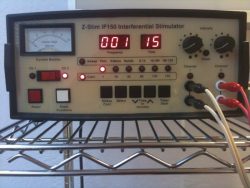
There are several electric stimulators available such as the Z-Stim IF 150 and the H-Wave electric stimulator. The Z-Stim IF 150 produces TRUE interferential therapy by its two channels with 4 pad output. It is used to stimulate the nerves and muscles for edema, acute pain and for rehabilitation of muscles. The H-Wave is an ultra low frequency electric stimulator that helps in pain control and functional restoration. It has a 3-channel and 2-channel models. The 3-channel model is used in clinics while the 2-channel is a home therapy model. Both of these models are available for rehabilitation of our patients.

Question: Have you ever experienced electrical stimulation therapy while rehabilitating your injury?

Filed Under: Ankle, Modalities Tagged With: bc, electric shock, electric stimulation, electric therapy, electrical muscle stimulation, electrical stimulation, electroanalgesia, electrotherapy, fishing, functional electrical stimulation, medicine, neuroprosthetics, neurotechnology, nociception, pain, produce, rehabilitation, sacral nerve stimulation, torpedo fish, transcutaneous electrical nerve stimulation

  • « Previous Page
  • 1
  • …
  • 47
  • 48
  • 49
  • 50
  • 51
  • …
  • 59
  • Next Page »

PLEASE FOLLOW & LIKE B.C.

RSS
Follow by Email
Facebook
Facebook
fb-share-icon
Twitter
Visit Us
Follow Me
Post on X
YouTube
YouTube
LinkedIn
LinkedIn
Share
Instagram

Burt Chiropractic Rehabilitation Center

15200 Hesperian Blvd #104

San Leandro, CA. 94578

(510) 481-2225

drburt@burtchiropractic.com

https://shorturl.at/nDHP2

SEARCH

Categories

Recent Posts

  • “Understanding Headaches: Exploring the Role of Chiropractic Care in Relief”
  • Decoding Soft Tissue Injuries: A Comprehensive Exploration of Motor Vehicle Accidents (MVAs) and Their Impact on Health
  • The Role of Chiropractic Care in Whiplash Injury Recovery
Get Microsoft Windows OS or Microsoft Office suite activated free.
Activated kms activator