Top Chiropractor in San Leandro, CA

San Leandro Chiropractor

  • blog
  • About Our Practice
  • What is Chiropractic?
  • SERVICES
    • Personal Injury
    • Cold Laser Therapy
    • Massage
    • Ultrasound
    • Electric Stimulation
    • Sports Injury
    • Workers Compensation
  • FAQs
  • Locations
  • CONTACT US
  • New Patient Forms
  • Nutrition Store
  • Home

Powered by Genesis

Injury Prevention Tehcniques During Exercises

February 25, 2011 by drburt

INJURY PREVENTIONWe all want to lower our chances of getting injured whether we are athletes or ordinary people who don’t exercise often. If we suffer from an injury, it can hamper our performance and lower our fitness. If it goes untreated, arthritis could be the end result. By knowing the causes of injuries we could prevent ourselves from suffering from these injuries. Not only that, but if we change our diet we could also lessen our chances of getting an injury.
Training, once done properly, could help in reducing the injury development. Studies showed that an intense training could cause muscle’s wear and tear and if this is not given enough time to rest then it could lead to an injury. What happens is the muscles don’t work as well anymore and can’t protect the tissues that it connects to which in turn could increase the chances of damage to our bones, tendons, cartilages as well as ligaments. That is why if you do a regular activity or exercise you should not forget to do them moderately and properly to avoid any injury or ailments.
If you over-train, you could suffer from several physical effects such as high blood pressure, lower performance, muscle pain, weight loss and many others. By over-training, your muscles would be weaker than it normally would and if you push it to work too hard, let’s say with a sport that has a high demand for the muscles, it could lead to an injury. Health specialists usually advise that people who do such intense sports or training should also have resistance training aside from their regular training. This will help in increasing the muscle strength and power as well as endurance. You don’t even need to use any resistance training objects as you can use your own body weight. This is done through pushups or situps, chin-ups and other exercises that utilize your own body weight.
Before you start with any exercise or activity, never forget to warm-up. Warm-up exercises together with stretching exercises greatly reduce your risks for injuries. Warm-up exercises should last between 15 to 30 minutes. It can help in lengthening the muscles and increasing blood flow and making you feel warm as the muscles prepare for the hard training ahead. If your muscle gets shocked by the training because you didn’t perform a warm-up exercise, it could cause muscle stiffness and pain.
There are other ways that you could prevent injury and many injuries can actually be prevented with your common sense. When you feel really tired you should avoid training. If you increase your time of training you should also increase your resting time for your body to recuperate. Keep yourself hydrated. This is very important as your body needs water so it won’t get too hot and you won’t be dehydrated. Use proper footwear and gears, increase carbohydrates consumption, monitor your signs of fatigue and make sure you get immediate treatment when you noticed signs of injury.
Preventing injury would help your training in the long run. If you suffer from injury you would need to rest and get treatment which means you’d be spending more time to let your injury get better and not have the exercise or training you should be having simply because you didn’t follow the right techniques and didn’t listen to your body. Prevention is indeed better than cure so it’s best to seek advice from health specialists before engaging in the training or activity you want.

If you have anything to add to this post, please feel free to Post a comment or share your thoughts through Facebook, Twitter or comment section below to join the conversation.

Filed Under: Advice, Sports

Chiropractic Care, Golf and Back Injury

January 21, 2011 by drburt

GOLF AND BACK PAINMost everyone who plays golf has a greater chance of low back injury. Recent study shows that about 35% of amateur and 22-24% of professional golfers susceptible to lumbar spine injuries. Collectively, the incidence of lower back pain in the male golfer is 25% to 36% and 22% to 27% in the female golfer. Many just want to learn how to hit the ball as far as possible and forgetting the basics of soft tissue trauma prevention. Below is the list of the risk factors that could cause lower back pain:

  • Arthritis, disc injuries or stress fractures
  • Weak abdominal musculature
  • Poor muscle trunk stabilization and strength
  • Poor warm up and flexibility
  • Overuse or repetitive stress from technique
  • Improper swing or technique
  • Poor posture or scoliosis
  • Age
  • Overweight and general poor health
  • Previous history of back pain or injury

What Is the Mechanism Injury of Lower Back While Playing Golf

Lumbar Spine consists of the following structures: vertebral bodies, IVD – Inter Vertebral Disc, Ligaments, Muscles and Tendons. Lower back injuries are the most common golf related injuries followed by, elbow, wrist and shoulder injuries.  Occasionally golfers suffer from hip and knee pain as well. The most common mechanism of injury is the twisting and pulling that takes place during the golf swing against a spine that is not moving through its full range of motion. During golf swing the spine is exposed to extra load and tensile movement. It is estimated that during the swing phase the soft tissue of the lumbar spine is exposed to a force eight times of the body weight. Prolonger standing, twisting, and bending are the contributing factors for stress accumulation on the supporting structures of the lumbar spine. When the force dissipates through the vertebral body, muscles, discs and ligaments can be damaged and be the cause of low back injury.

Preventing Low Back Injuries from Golfing

  • Less than 5% of amateur golfers fail to adequately stretch or warm up before the game. A proper warm up will provide the following benefits to the spine:
  • Increasing circulation
  • Increasing the range of motion
  • Preparing for increased loading and stress
  • Below is an example of good warm up activities:
  • light jog or brisk walk, stretching the larger muscles or major muscle groups, swinging a club in both directions to mobilize the trunk muscles and increase circulation, Fluid, gentle practice swings preparing the relevant structures of the spine and muscles groups for the activity.

Improve Muscle Strength and Tone and Flexibility

Strengthening the abdominal and lower back muscles will help to stabilize the spine during the swing phase and in turn produce more powerful, longer shots. Strong quadriceps, buttock and hamstring muscles are another important key factor that should not be neglected. Here is link to a “Two Stretching Exercises for Golf Back Pain.”  Pilates for Golfers (affiliate link) has been a very popular technique in preventing back injuries and elbow injuries while golfing. Pilates for Golfers is a step-by-step guide to identify and correct golf swing faults using the Pilates Method.

Consult Your Personal Chiropractor or Medical Professional

If you injured yourself while golfing, you must do the following in order to prevent farther injury:

  1. Discontinue any activities that aggravates the pain
  2. Apply ice to injured area ASAP – 15 minutes on and 45 minutes off
  3. After 72 hours you can switch to heating moist pads for increased blood flow
  4. Do not lye in bed for a prolonged period of time
  5. Force yourself for light activity
  6. Avoid Heavy Lifting
  7. Avoid Prolonged Sitting
  8. Avoid Prolonged Bending
  9. Suspend Golfing Activities

A visit to your local chiropractor would be a great benefit to your lower back pain. Make sure that your local chiropractor has physical therapy modalities such as, electric stimulation, moist heat, ultrasound, cold laser and certified massage therapist as a staff member. Spinal Chiropractic Adjustment can do wonders to your spine and overall well being.

Filed Under: Chiropractic, Sports Tagged With: back injury, chiropractic, Chiropractic Care, disc injuries, Golf, golf injuries, golf injury, golf swings, injuries, lumbar spine, lumbar spine injuries, play golf, professional golfers, shoulder injuries, spine

Runners, NSAIDs, Pain Medications and Misery at the Hospital

December 3, 2010 by drburt

Runners and NSAIDs

This is a recap story written by Christie Aschwanden in Runner’s World. I will try to use a lighter language for a better reading digestion.

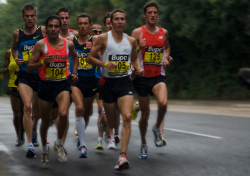
Stephanie Ehret won a 24-hours track run with an excellent timing. However, she was celebrating her victory in Phoenix E.R., constantly vomiting unknown substance.  Stephanie was nauseous, had fever and she had feeling at that moment that these were the last moments of her life. Doctors have diagnosed her with – rhabdomylysis, which is a potentially deadly precursor to kidney failure. Part of this diagnosis was severe dehydration after the race. After all, it was not 2 or 3 hours race it was 24 hours. In addition to the strenuous demand on a system, Stephanie has taken 12 ibuprofen pills, which were the result of her being in E.R.

Proper dosage of OTC (over-the-counter) pain medication can be helpful to a runner who had fresh sprain/strain of an ankle. Tylenol can reduce the pain and NSAIDs like ibuprofen, aspirin, and naproxen can reduce swelling during acute stage of healing. Stephanie Ehret treated this Ibuprofen like ”vitamin I”, not realizing the side effects of its usage during intense competitive run. Experts confirmed that taking ibuprofen even during 10K run could be extremely dangerous. NSAIDs inhibit prostaglandins; it is a hormone that helps normalize blood flow to the kidneys. When you combine the effect of NSAIDs, competitive run and dehydration, kidneys would be the first organ to feel the overload.

NSAIDs will raise a blood pressure, and when we combine it with usual increase of blood pressure during cardiovascular exercise, all of sudden a person has two things that increase blood pressure. An individual with already increased blood pressure can have a risk of a heart attack. The reason for this heart attack is that NSAIDs inhibit the function of an enzyme called cyclooxygenase (COX) that protects the heart. COX also protects the stomach lining from digestive acids. Individuals whose COX is blocked could experience nausea, diarrhea, intestinal bleeding and cramps. COX inhibition could also be the cause of electrolyte imbalance during marathon. Study proves that increased dosage of ibuprofen during race does not reduce inflammation or pain tolerance. In a contrary, runners who use this ibuprofen had more inflammation at the end of the race. Also takers and none takers of ibuprofen did not notice increase or reduction in amount of pain during the race.

Pain and inflammation is a warning sign that our body communicates to us that there is something wrong the part of the body that is hurting. Pain and inflammation are just the symptoms. An individual must find the cause of this problem. Taking NSAIDs or OTC pain medications is not a solution to a problem. One must address the total biomechanical and musculoskeletal component of the body before competing on races of such level. Body is just like a vehicle, it needs a constant maintenance. However, many fail to maintain their bodies. Two good posts come to mind that I have written in the past: Chiropractic Rehabilitation and 4 Stages of Soft Tissue Healing and 13 Facts of Chiropractic and Wellness Care. Every serious athlete must treat their bodies with respect.

Since her last misery, Stepahnie Ehret shares her experience with other racers. If she sees them downing vitamin I, she tells them about her ER visit. “That’s usually enough to change their habits,” she says.

Image provided by Sheffield Tiger

Have you had a similar experience or known somebody who has?  Will this article make you reconsider your own health choices?  Post a comment below or share your thoughts through Facebook, Twitter or comment section below to join the conversation.

Filed Under: Sports

Granite Bay Race at Folsom Lake by TBF racing

November 3, 2010 by drburt

MTB 50 miler Race Granite Bay at Folsom Lake
My 2nd Lap @ 50 miles Race

I was debating for a while if I should publish this event on my blog. Suddenly I have come to realization that Doctor should show his patients what he is recommending to his patients, which is exercises on regular bases. Previous post was about chiropractic adjustments that I get regularly, and this post is about sport activities that I can not live without. Many of my patients already know that I am an avid Mountain Biker. I really enjoy riding my bike 3 times a week for couple of hours. This sport activity provides my body a great cardiovascular exercise and for my  mind a necessary energy for my activities of daily living.

Most of my training is done on a 29er bike, which is a bike with slightly larger wheels than a traditional bike that most people ride and see in the department stores. Also this bike has only one gear, which is called Single Speed. Single Speed rides provides a better  workout than a geared bike. A rider simply does not have an option to shift gears when climbing steep hills. This combination provides building blocks for longer endurance rides which at times go as long as 30 miles and take about 4 hours to complete. It is not an easy task to accomplish and everyone feels how the gravity fights against the muscle strength and oxygen capacity of each rider.

MTB 50 miler Race Granite Bay at Folsom Lake
Malvin 1st lap @ 50 miles race

On 10/24/2010 was my third race of the season which was organized by TBF Racing. My friend Malvin and myself were doing 50 mile relay between the two of us. Four laps total, twelve and a half miles each. We were a team of two riders, who were the only team among 17 teams in our category with single speed bikes. Yes, we were racing against geared bikes and were ready to test our limits on this race.

The forecast was not favorable at the time of the race. It was going to rain but we did not know how hard it was going to rain.

Race began sharp at nine o’clock in the morning. We strategically planned  that I will begin the race and Malvin will finish it as he is a stronger and faster rider than I am.

This strategy would provide us a better finishing time.

As soon as I began the race I have realized that this will be a real challenge racing bike in these harsh conditions. The most difficult part was to slow the bike down while going down the hill. The terrain on this trail is very sandy and water with sand gets into the brakes pads and rotors. This created sand paper effect. Basically on a ninth mile of this race my brake pads were gone, and I had to use my left foot to slow the bike down and finish my first lap. We were concentrating our efforts on strong climbs and tried avoiding the crashes as much as possible.

After my first lap, I had a little over an hour to find new brake pads for my Shimano XT  calipers. I knew if I failed to find these pads Malvin would have to ride his bike for 37.5 miles in these conditions, which I didn’t think he would have enjoyed.

After twenty minutes of search one of the racers informed me that he has two sets of pads that I was looking for and he was willing to sell it to me. I could not have been any happier when he told me that. It took me about twenty minutes to install front and rear. When I took out old pads there was nothing left on them. I actually burned them all the way to the metal base plate.

By the time Malvin finished his first lap the rain began coming down even harder and the wind speed has increased. When I began my second lap the trail was not saturated with the riders as it was when I began my first lap. It was open and no one could slow me down at that point, except deep waters and strong head wind. It felt like I was moving much faster on my second lap, occasionally passing other riders.

When I was done with my second lap Malvin was ready to for his final run. The rain and the wind has not slowed down throughout the entire race. Many riders had flat tires, broken chains, shifting problems,  crashes and some other mechanical problems. The most common problem was the problem with the brake pads as everyone burned them really fast.

We finished this 50 miler challenge on our Single Speed Bikes in five hours and six minutes (Look under Male Relay Under 80 – Team Tropa). Out of seventeen teams we have arrive to a finishing line as team number six. We were both shocked by these results. If we had geared bikes we had a chance to be on a podium and  get a prize, or never get to a finishing line because of the mechanical problems. Overall  our Finishing Place was #22.

This was the most exciting, exhausting, endurance challenging, mind  blowing and harsh weather conditions race. Both of us have never experienced this kind of riding before. And yes, if opportunity arrives we will do it again. Happy trails everyone.

Question: What was yours the most challenging riding experience? Do you ride bikes on regular bases as an exercise?

Filed Under: Sports Tagged With: adventure travel, bicycle, bikes, captions, cycling, endurance riding, folsom lake, gear bikes, granite bay, green vehicles, lapping, mountain bike, mountain biking, race, racing, single speed bikes, sport bike, tbf, women's little 500

  • « Previous Page
  • 1
  • 2
  • 3
  • 4
  • Next Page »

PLEASE FOLLOW & LIKE B.C.

RSS
Follow by Email
Facebook
Facebook
fb-share-icon
Twitter
Visit Us
Follow Me
Post on X
YouTube
YouTube
LinkedIn
LinkedIn
Share

15200 Hesperian Blvd #104

San Leandro, CA. 94578

(510) 481-2225

drburt@burtchiropractic.com


SEARCH

Categories

Recent Posts

  • Loss of Cervical Lordosis: How a Straight Neck and Pain Impact Your Health—and How a San Leandro Chiropractor Can Help Restore It
  • Hidden Injuries from Car Accidents That a San Leandro Chiropractor Can Help You Detect
  • Best San Leandro Chiropractor for Sciatica Pain Relief: Natural, Drug-Free Solutions That Work