
Top Chiropractor in San Leandro, CA

San Leandro Chiropractor

  • blog
  • About Our Practice
  • What is Chiropractic?
  • SERVICES
    • Personal Injury
    • Cold Laser Therapy
    • Massage
    • Ultrasound
    • Electric Stimulation
    • Sports Injury
    • Workers Compensation
  • FAQs
  • Locations
  • CONTACT US
  • New Patient Forms
  • Nutrition Store
  • Home

Powered by Genesis

High Fructose Corn Syrup and Your Health

December 29, 2010 by drburt

HIGH FRUCTOSE CORN SYRUPHigh Fructose Corn Syrup (HFCS) has been around only for a little bit over 50 years. Before that everyone used a regular sugar for household consumption and food production. What has happened in the last fifty years? Why the consumption of HFCS is growing despite the health risk such a nationwide obesity factor? I will try to cover as much as I can in one post.

HFCS got its name from isomerization of glucose, which is the process when natural glucose in corn syrup is converted to fructose. The percentage of fructose in this new product is much higher and therefore it is sweeter, thus is the name High-Fructose Corn Syrup. This scientific discovery coincides with 1997 new tariffs and sugar quotas and increased consumption by companies like Coca-Cola and Pepsi. The production of HFCS jumped from 3 million tons in 1980 to 8 million tons to 1995.

High Fructose Corn Syrup is genetically altered product. Our body does not react to this product as a natural food item. Our pancreas produces insulin during carbohydrate consumption. However, when a person consumes HFCS our pancreas does not produce insulin. Natural carbohydrate is digested by normal pathways but HFCS goes directly to the liver, where it is treated like a chemical and turned into a fat. Another concern with HFCS is a level of mercury in this product – which is a known neurotoxin.

Recent study from Princeton University provides evidence that HCFS causes more weight gain in experiment on laboratory animals. However, it does not mean that we have to substitute High Fructose Corn Syrup with cane sugar. Too much of both evil will cause the weight gain. The key is the moderation. Consider substituting HFCS with honey and natural gems which can be prepared from any fruit. This will provide necessary nutrients for your body and a healthy dose of sweet carbohydrates. Make sure to read the labels each and every time you go to the store.

Post a comment below or share your thoughts through Facebook, Twitter or comment section below to join the conversation.

Filed Under: Advice, Health Tagged With: chemistry, coca cola, consumption, corn syrup, food and drink, fructose, fructose corn syrup, health, health risks, hfcs, high fructose corn syrup, little bit, monosaccharides, nutrition, starch, sugar, sweeteners, syrup, your health

Vitamin D Supplementation and Your Health

December 1, 2010 by drburt

VITAMIN D
Lake Chabot 11/28/2010

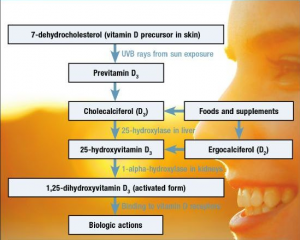
Vitamin D is a fat-soluble vitamin. This Vitamin is produced by our bodies from cholesterol via process that is activated by action of ultraviolet B rays from the sun on our skin. The following factors are taken into consideration when figuring out how much of Vitamin is our body producing: skin color, age, amount and time sun exposure, and geographic location. This important vitamin can play an important role in influences of control of cell cycles, brain, muscles, pancreas, cardiovascular and immune system, intestines and bones. Its primary functions are to maintain normal blood concentration of phosphorus and calcium and to support bone health.

Forms of Vitamin D Cholecalciferol (vitamin D3)

Vitamin D

There are two types of vitamin D. Calcitriol (1,25-dihydroxyvitamin D3) with half life of 15 hours and Calcidiol (25-hydroxyvitamin D3) with  half life of 15 days.Naturally occurring form of vitamin D; made by the skin upon sun exposure; found in foods and most supplements Calcidiol (25-hydroxyvitamin D3) Prehormone made directly from cholecalciferol in the liver; low biologic activity, but major form circulating in the bloodstream; concentrations measured by typical blood test for vitamin D deficiency Calcitriol (1,25-dihydroxyvitamin D3) Activated form made from calcidiol in the kidneys and tissues; the most potent steroid hormone in the body Ergocalciferol (vitamin D2) Made in the laboratory by radiating fungus; not naturally occurring in the body; used in prescription vitamin D (Drisdol), available in 50,000-IU capsules

Deficiency, Blood Concentrations, and Toxicity

People who live in northern parts of the world where sun exposure is limited are at risk. Failure to get at least 15 minutes a day of direct sun light, being dark skinned, olderly or overweight is a risk factor as well. Conditions such as rickets or osteomalacia, musculoskeletal and periodontal pain are associated with severe vitamin D deficiency. Conditions such as loss of appetite, diarrhea, insomnia, vision problems, and burning sensation in a mouth or throat are signs of mild deficiency of vitamin D. Specific blood test needs to be done in order to detect the level of this vitamin in the body.

Disease Prevention Cancer

Vitamin D decreases cell proliferation and increases cell differentiation, stops the growth of new blood vessels, and has significant anti-inflammatory effects. Many studies have suggested a link between low vitamin D levels and an increased risk of cancer, with the strongest evidence for colorectal cancer.

Heart Disease

Several studies are providing evidence that the protective effect of vitamin D on the heart could be via the renin-angiotensin hormone system, through the suppression of inflammation, or directly on the cells of the heart and blood-vessel walls..

Fractures and Falls

Vitamin D is known to help the body absorb calcium, and it plays a role in bone health. Also, vitamin D receptors are located on the fast-twitch muscle fibers, which are the first to respond in a fall. It is theorized that vitamin D may increase muscle strength, thereby preventing falls. Many studies have shown an association between low vitamin D concentrations and an increased risk of fractures and falls in older adults.

Autoimmune Diseases and Influenza

Since vitamin D has a role in regulating the immune system and a strong anti-inflammatory effect, it has been theorized that vitamin D deficiency could contribute to autoimmune diseases such as multiple sclerosis (MS), type 1 diabetes, rheumatoid arthritis, and autoimmune thyroid disease. Scientists have suggested that vitamin D deficiency in the winter months may be the seasonal stimulus that triggers influenza outbreaks in the winter. Numerous trials have evaluated the association between vitamin D and immune-system diseases.

Type 2 Diabetes and Depression

Some studies have shown that vitamin D may lower the risk of type 2 diabetes, but few studies have examined the effect of vitamin D on depression. A trial of nondiabetic patients aged 65 years and older found that those who received 700 IU of vitamin D (plus calcium) had a smaller rise in fasting plasma glucose over 3 years versus those who received placebo. A Norwegian trial of overweight subjects showed that those receiving a high dose of vitamin D (20,000 or 40,000 IU weekly) had a significant improvement in depressive symptom scale scores after 1 year versus those receiving placebo. These results need to be replicated in order to determine a correlation between vitamin D and the risk of diabetes or depression.

Dosing

Only a few foods are a good source of vitamin D. These include fortified dairy products and breakfast cereals, fatty fish, beef liver, and egg yolks. Besides increasing sun exposure, the best way to get additional vitamin D is through supplementation. Traditional multivitamins contain about 400 IU of vitamin D, but many multivitamins now contain 800 to 1,000 IU. A variety of options are available for individual vitamin D supplements, including capsules, chewable tablets, liquids, and drops. Cod liver oil is a good source of vitamin D, but in large doses there is a risk of vitamin A toxicity.

Since vitamin D is fat soluble, it should be taken with a snack or meal containing fat. In general, 100 IU of vitamin D daily can raise blood concentrations 1 ng/mL after 2 to 3 months Once the desired blood concentration is achieved, most people can maintain it with 800 to 1,000 IU of vitamin D daily. Even though dosages up to 10,000 IU daily do not cause toxicity, it generally is not recommended to take more than 2,000 IU daily in supplement form without the advice of a health care provider. Individuals at high risk for deficiency should have a vitamin D blood test first; a dosage of up to 3,000 to 4,000 IU may be required to restore blood concentrations.

Drug Interactions

Vitamin D supplements may interact with several types of medications. Corticosteroids can reduce calcium absorption, which results in impaired vitamin D metabolism.

Conclusion

As the number of people with vitamin D deficiency continues to increase, the importance of this hormone in overall health and the prevention of chronic diseases is at the forefront of research. The best evidence for the possible role of vitamin D in protecting against cancer comes from colorectal cancer studies. Evidence also is strong for the potential role of vitamin D in preventing fractures and falls. At this time, further studies are needed to evaluate the role of vitamin D in protecting against heart disease, autoimmune diseases, influenza, diabetes, and depression.

This Post was based on information from US Pharmacist.

Post a comment below or share your thoughts through Facebook, Twitter or comment section below to join the conversation.
Filed Under: Health Tagged With: autoimmune disease, bone health, chemistry, cholecalciferol, fat soluble, fat soluble vitamins, health, heart disease, hypervitaminosis a, hypovitaminosis d, multivitamin, nutrition, rickets, vitamin, vitamin a, vitamin d, vitamin d deficiency, vitamin d supplementation, vitamin d2, vitamin d3, vitamins, your health

Social Media and Your Health

November 29, 2010 by drburt

SOCIAL MEDIA AND HEALTH

We are approaching 10th year of a new millennium. This is almost the amount of time since I have graduate from Chiropractic school. So many things have changed in a digital world around us within the past 10 years. To mention the most popular ones: iPhone, Ipad, Android, super slick computer monitors and digital TV monitors. In a last couple of years the development of 3G by AT&T and 4G by Sprint networks and super fast internet connections for home and business offices. Even cars come with build in GPS and XM radio. All of these advances in technology do not come at the cost of their consumers – human health.

Our gadgets get smaller, faster, cheaper and more multitasking machine every three months. Just imagine for a second you left your house without your cell phone. Immediate panic takes over. That was not the case a decade ago. Smart phones have certainly become an extension of our brain. In this fast pace world multitasking is the only thing that will help you to stay on top of things. We use these devices to send text messages, make phone calls, watch video on Youtube, use twitter to send a link to our followers, Facebook for keeping in touch with friends, millions use it for gaming purposes. It is not such a healthy thing to look at tiny screen for many hours up to the point when battery has no more life. I have seen people playing games in all kinds of positions, wonder how much pain they have in their neck or back. However, there is a great benefit from these devices as well. One can find a lot of information via different blog posts and get in touch with a health care provider via twitter or instant chat. Below are the links to several articles that you might find interesting from a famous Mashable site.

5 Important Tips for Better Eye Health in a Digital World

In attempting to sum up the world in 2010, one word comes to mind: connected. Everywhere we go we carry devices that keep us connected to something important to us. Be it a sleek new tablet letting you share photos with the person helping load your groceries, or a smart phone making sure you don’t miss that late night e-mail from a colleague; we are now constantly connected to the world around us, more than ever before.  READ MORE …

5 Ways Social Media Helps Promote Good Health

This March, a report on chronic disease and the Internet by the Pew Internet and American Life Project and the California HealthCare Foundation showed that people fighting such illnesses are using social media to find information and connect with others who suffer similar ailments.

While the research showed that people who have chronic illness are less likely, on average, to have Internet access, once they’re online they are more likely to blog about chronic disease and participate in online discussions or other forums. According to the report, “Living with chronic disease is also associated, once someone is online, with a greater likelihood to access user-generated health content such as blog posts, hospital reviews, doctor reviews, and podcasts. These resources allow an internet user to dive deeply into a health topic, using the internet as a communications tool, not simply an information vending machine.”  READ MORE …

8 Best Android Apps for Health and Fitness

Spring has sprung, summer’s around the corner — it’s time to get outside and get in shape. We know your iPhone-owning counterparts have plenty of apps for tracking their calories and kilometers to stay in shape, but there are plenty of health-related apps in the Android Market, too.

Here are eight highly rated free and paid Android apps that will help you get and stay in shape. If you’ve got recommendations — particularly for apps that will help folks get outdoors while the weather’s nice — please let us know about them in the comments. READ MORE …

4 Tips for Reducing Social Media Stress

We used to only be digitally connected via computer for part of the day, but today’s hand-held devices enable a “constantly connected” lifestyle. This presents huge benefits, and its share of challenges. An important question to ask yourself is: Are you going to be constantly overwhelmed by “Stress 2.0,” or can you successfully translate this lifestyle into “Wisdom 2.0?”

We are all well aware of the benefits of the social media age, but the challenge is finding a balance, and living a healthy and rich life both online and off. If we are not careful, our increasingly connected life can take a negative toll on our mind and body.

Below are four steps to go from a stressful social media life to a wise one, as well as the apps to help you do it.  READ MORE …

Image Provided by Intersection Counsulting

Post a comment below or share your thoughts through Facebook, Twitter or comment section below to join the conversation.

Filed Under: Advice Tagged With: 10th, android, cell phones, chiropractic schools, cloud clients, computer monitors, computing, google, health, health care providers, health topics, human health, internet, iphone, itunes, mobile phone, smartphones, social media, technology, twitter, world wide web, xm radios, your health

  • « Previous Page
  • 1
  • 2
  • 3

PLEASE FOLLOW & LIKE B.C.

RSS
Follow by Email
Facebook
Facebook
fb-share-icon
Twitter
Visit Us
Follow Me
Post on X
YouTube
YouTube
LinkedIn
LinkedIn
Share

15200 Hesperian Blvd #104

San Leandro, CA. 94578

(510) 481-2225

drburt@burtchiropractic.com


SEARCH

Categories

Recent Posts

  • Loss of Cervical Lordosis: How a Straight Neck and Pain Impact Your Health—and How a San Leandro Chiropractor Can Help Restore It
  • Hidden Injuries from Car Accidents That a San Leandro Chiropractor Can Help You Detect
  • Best San Leandro Chiropractor for Sciatica Pain Relief: Natural, Drug-Free Solutions That Work