Top Chiropractor in San Leandro, CA

San Leandro Chiropractor

  • About Our Practice
  • What is Chiropractic?
  • SERVICES
    • Personal Injury
    • Cold Laser Therapy
    • Massage
    • Ultrasound
    • Electric Stimulation
    • Sports Injury
    • Workers Compensation
  • Testimonials
  • FAQs
  • Locations
  • CONTACT US
  • New Patient Forms
  • Nutrition Store
  • Tele Chiropractic Health
  • Memberships
  • Home

Powered by Genesis

Anxiety and 5 Little Strategies for Prevention

May 22, 2012 by drburt

ANXIETY

Anxiety and 5 Little Strategies for Prevention

Most people use drug and alcohol as a coping strategy for the stresses of life. When you suffer from anxiety, you need to be able to find more effective coping strategies and ways to control your anxiety in order to cut down on the desire to revert back to your old habits. To help you with that process, here are several strategies for coping with it.

Preventing Relapse with Anxiety Coping Strategies

  • Factor in Minor Triggers

When most people think of anxiety causes, they focus on the larger issues like a breakup, a death in the family, job stress, etc. But on the road to recovery, it’s often the smaller triggers you need to account for. Watching horror movies, for example, may sound like an interesting idea, but the little bit of anxiety you get after watching the movie can add up with other life stresses, and ultimately make your anxiety feel more overwhelming. Any little thing that causes fear should be avoided, especially early in your recovery.

  • Find Positive, Optimistic People

Positivity is an important step toward remaining anxiety free and experiencing social support from those around you. Your old friends, your workplace – even your family – if they are negative people that don’t seek out happiness and positivity in their own lives, you may need to cut ties and focus on finding those that will promote better wellness.

  • Staying Physically Active

Exercising is a shockingly effective and an important reduction technique, and an important part of drug recovery. Just 10 to 15 minutes of running can relax your entire body, and maintaining good health helps reduce some of the feelings that may trigger a relapse. You can also consider playing more sports with your friends or strangers, as this puts you in a social and productive situation with some friendly competition and a goal – all of which are useful for both anxiety and recovery.

  • Developing an Anxiety Coping System

You should also consider developing a method of coping that you can do immediately if you feel any anxiety or stress in your life. One idea is to create a space in your home that’s 100% designed for relaxation – a space that is drug free, technology free, and distraction free. Any time you feel any level of anxiety, acknowledge it and go directly to your coping space. If you don’t have room in your home, finding a location (park, backyard, etc.) that offers the same type of relaxation and go there immediately.

  • Create Network

When you’re in recovery, you often have a sponsor or someone you call when you’re worried about relapse. Develop something similar for your anxiety, because it can lead to relapse if it is not coped with effectively. Make sure you have backup people to call if you feel yourself getting anxious so that there is always someone available and make sure those people are positive and ready to help you no matter the time or day. There may be no such thing as a cure for this condition, but having people around to contact can go a long way toward reducing the effects of stress on your mind and body.

Dealing with this condition to Prevent Drug Relapse

Anxiety on its own may not promote a relapse. Yet, it isn’t controlled can add up, creating stress that pushes you toward your previous, unhealthy coping strategy. If you’re experiencing severe anxiety you should seek out immediate help, calling a therapist and making sure this condition doesn’t make you do something you regret. But the little tips above can also be a big help, by preventing the likelihood of experiencing severe tress in life and focusing your attention on activities that are far more productive.




Filed Under: Advice

Food Allergy vs. Food Intolerance In a Human Body

May 21, 2012 by drburt

food allergy

Food Allergy vs. Food Intolerance In a Human Body

With awareness of food allergies becoming more common, many people may be confusing the food-induced symptoms they have for allergies when in fact they have an intolerance. What is the difference between a food allergy and a food intolerance?

Allergies are triggered by the immune system mistaking food proteins as an infection threatening the body. The immune system produces chemicals to combat the supposed infection, and these chemicals cause the allergic reaction. Symptoms commonly include itchiness of the mouth, throat, or ears, hives, and facial swelling around the eyes, lips, tongue, or roof of the mouth. Severe reactions can cause life-threatening breathing problems with anaphylactic shock. The severity of a reaction can vary with each exposure.

Common childhood allergies include dairy, nuts, and eggs. Adults are often allergic to various fruits, nuts, and vegetables. The majority of children with food allergies also have eczema. The earlier the onset of eczema and the worse it is, the more likely the child has a food allergy. Asthma and hay fever are also commonly associated with food allergies. If a child’s parent or sibling has asthma, dermatitis, or a food allergy, then the child is more likely to have a food allergy, though not necessarily to the same foods as the relative.

There are two basic versions of food allergies. The most common version is triggered by the antibody known as immunoglobulin E. The symptoms occur rapidly after exposure, often within minutes or even seconds, and there is a greater likelihood of anaphylactic shock. The other version is called non-immunoglobulin E, with symptoms exhibiting hours or even days after exposure.

There is no cure for food allergies, but milder symptoms can be treated with antihistamines. Adrenaline pens are prescribed to patients at risk for anaphylactic shock. There are home tests available, but it is critical to properly identify the allergic foods in order to control reactions, so you should be properly tested and diagnosed by a specialist. Many children outgrow their allergies by the age of five, particularly allergies to milk, eggs, soy, and wheat. Allergies to peanuts, tree nuts, seafood, and those that began in adulthood are generally lifelong allergies.

Food intolerance, on the other hand, is not an immune system issue but a digestive issue and is never life-threatening. Symptoms commonly include diarrhoea, bloating, and cramps. It is caused by the body’s inability to digest certain substances. One of the most common intolerances is to lactose. This is caused by the body’s lack of the lactase enzyme which breaks lactose down, so the lactose remains in the system long enough to be fermented by bacteria; the fermentation creates the symptoms.

Intolerance symptoms usually start several hours after the food was consumed. While a trace amount of an allergic food can cause a reaction, intolerance usually happens after larger amounts. Elimination of triggers may not be necessary; sometimes small amounts digest fine. It is up to you to determine what you can handle, but be aware the amount may change with age.

Dr. Gillian Hart is a Scientific Director for YorkTest Laboratories who specialise in food intolerance testing and allergy testing to help people who suffer with irritable bowel syndrome symptoms and wheat intolerance symptoms.


Filed Under: Health

Alzheimer’s Disease and its Warning Signs

May 12, 2012 by drburt

alzheimer's disease

 Alzheimer’s Disease and  its Warning Signs

This is a guest post by Josh Anderson.  According to the Alzheimers’ Association, someone in the world is diagnosed with Alzheimer’s Disease every 70 seconds. Little is known about this debilitating disease and although it is genetically linked, there is no specific race, nationality or sex that it is directly linked to. Everyone is just as susceptible as the next person.

However, scientists have discovered that Alzheimer’s Disease is caused by a chemical change to the neurotransmitters in the brain, which leads to the “loss” of brain cells. Once this change occurs, the disease interferes with how the brain brain functions. Mental abilities then begin to deteriorate. Cognitive functions such as memory, reasoning and perception are usually severely affected, but physical functions, such as muscle or organ control can also be affected. Here are some of the most prominent warning signs of those afflicted with this terrible condition.


Short-term Memory Loss

It’s not uncommon that while someone can seem to remember something that happened in their childhood, they easily forget just what they did the day before.

Problem Solving Impairment

It can often become hard to understand sequences of numbers, including days and months. A simple cooking recipe or instruction sheet can become a challenge too.

Daily Task Obstruction

An average task, such as grocery shopping or remembering to take medication, can become very confusing and hard to follow for someone with Alzheimer’s.

Misperception of Time

Besides losing track of important dates, time spans become altered in many patients. Often, one will live in the past and mistake people for relatives that have departed. They also, at times, cannot remember where they are or who they are with.

Visual Perception

Not only does eyesight deteriorate, perception is altered. For instance, someone with Alzheimer’s might perceive people on television or a reflection in a mirror to actually be in the room.

(Mis)Communication Skills

Conversations may become repetitive, and it can be hard to follow what others are saying. As the illness progresses, often times one will just “ramble” on, lose track of what they are saying or “babble” without making any sense at all.

Misplaced Objects

Many forget where they have placed items and cannot retrace their steps, while others “hide” objects in unusual places and then forget where they placed them.

Strange Decisions

Priorities, such as daily hygiene, often become forgotten, while something frivolous like watching television or feeding the birds over and over again becomes priority.

Shuffling Feet

Strange but true, many suffering from Alzheimer’s constantly shuffle when they walk, without picking up their feet, and not just when they are tired.

Emotional Outbursts

Quite often, someone will state that “you just don’t understand them” and outbursts of anger will erupt even in the gentlest of people, and physical confrontation is possible.

Swearing

Even the most mild-mannered among may cuss like a sailor, especially during emotional outbursts. Don’t be surprised to hear things you never imagined.

Insomnia

Even though as the body ages, it requires less sleep, a person with Alzheimer’s may just take frequent naps, avoiding sleeping overnight all together.

Paranoia

People with Alzheimer’s become paranoid believing that others want to do them harm, are stealing from them or strangers are “after” them.

Wandering

Many will wander from their home to look for the home they “remember” from the past and can get lost even routes all the time.


Alzheimer’s occurs differently with everyone. In some, the progression is very sudden, while in others, warnings can plateau years down the road. Unfortunately, death usually occurs within 7-10 years of the onset. Professionals use a 7-stage scale to determine the severity of the case, with #1 having no cognitive decline (otherwise normal), while #7 will be marked by severe cognitive decline. If diagnosed at an early stage, there is some medication available to slow down the progression, but no cure.

If you have anything to add to this post, please feel free to Post a comment or share your thoughts through Facebook, Twitter, Google+ or comment section below to join the conversation.

Filed Under: Health Tagged With: aging associated diseases, alzheimer's disease, associations, brain cells, brain function, chemical change, cognitive function, cognitive reserve, debilitating disease, depression of alzheimer disease, Diagnose, disease, josh anderson, neurological disorders, psychiatry, warning signs

Broken Leg and 5 Tips How to Deal with Day to Day Activities

April 26, 2012 by drburt

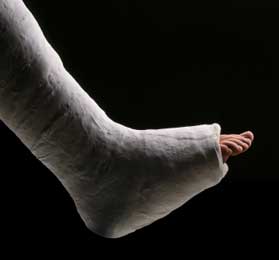
broken legThis is a guest post by Andrew from Patient Handling.                                                                                                                                           Dealing with a broken leg is undoubtedly an arduous endeavor. It requires you to majorly alter your lifestyle in order to carry out the simplest of tasks. This may result in you feeling helpless and dependent, which can be extremely frustrating. Therefore, it is important to deal with the day-to-day activities in an effective manner in order to make it easier for you to cope with your predicament.

The following 5 tips will help you to manage your day to day activities with a broken leg:

Moving Around

This is obviously the biggest challenge that you will face. You can’t afford to put pressure on your broken leg and can’t compromise on mobility, at the same time. Therefore, you should use a walker, which will allow you to easily move around in a stable and convenient manner.

You can also use crutches to support your leg but this isn’t a feasible option for many people. A crutch requires considerable upper body strength and, therefore, can be difficult to use. A better alternative to a crutch will be a walking cane but you have to be careful that your doctors approve of it. The reason for this is that a walking cane will require you to put a little pressure on your foot in order to maintain balance. This is an absolute no-no in the early stages of your injury.

Taking a Shower

Yes, it is possible to take a shower while protecting your cast at the same time.

All you need to do is to create a strong protective layer over your cast by wrapping around layers of plastic and towels over it and secured them by duct tape. This may sound a bit too much but you absolutely can’t afford water leaking into your cast and, therefore, it is a necessary measure.

Once you are done with creating your protective shield, you are ready to take a shower. Use a water proof chair that is facing away from the water to enjoy a normal shower (almost!).

Maneuvering the Stairs

This is one of the biggest challenges that people with broken legs facing moving up and down stairs. In order to tackle it, you will first have to swallow your pride because you can’t go and up down the stairs in a standing position.

You will have to sit down on the step and raise your self up and down, as required, to maneuvers the stairs. Have someone bring the walker/crutch for you or you can choose to have two or one for each level.

Swallow Your Pride

You may completely resent being dependent on others but you should realize that it is okay to ask for help. This is only a temporary condition and others will be more than happy to assist you, provided you are not being a nuisance.

Keeping Your Spirits High

It can be quite distressing when you think about how restricted your life has become after breaking your leg. Therefore, rather than focusing on what you cant do, you should improvise and make the most of your situation. Take it as a special rest period that you have been granted and enjoy the vast variety of activities that you can still do.

If you have anything to add to this post, please feel free to Post a comment or share your thoughts through Facebook, Twitter, Google+ or comment section below to join the conversation.

Filed Under: Advice

  • « Previous Page
  • 1
  • …
  • 18
  • 19
  • 20
  • 21
  • 22
  • …
  • 61
  • Next Page »

PLEASE FOLLOW & LIKE B.C.

RSS
Follow by Email
Facebook
Facebook
fb-share-icon
Twitter
Visit Us
Follow Me
Post on X
YouTube
YouTube
LinkedIn
LinkedIn
Share
Instagram

Burt Chiropractic Rehabilitation Center

15200 Hesperian Blvd #104

San Leandro, CA. 94578

(510) 481-2225

drburt@burtchiropractic.com

https://shorturl.at/nDHP2

SEARCH

Categories

Recent Posts

  • Soft Tissue Injuries in Tennis: Causes, Common Types, and Chiropractic Rehabilitation in San Leandro, CA
  • The Female Pelvis, Sacroiliac Joint Dysfunction, and Its Impact on Knee Alignment and Pain: A Chiropractic Perspective
  • Chiropractic Rehabilitation of soft tissue after a Car Accident in San Leandro, CA