Top Chiropractor in San Leandro, CA

San Leandro Chiropractor

  • blog
  • About Our Practice
    • YELP REVIEWS
  • What is Chiropractic?
  • SERVICES
    • Personal Injury
    • Cold Laser Therapy
    • Massage
    • Ultrasound
    • Electric Stimulation
    • Sports Injury
    • Workers Compensation
    • HS Sports Physical Examination
  • FAQs
  • CONTACT US
  • New Patient Forms
  • Nutrition Store

Powered by Genesis

Back Pain and Spinal Motion

January 30, 2014 by drburt

back pain

Back Pain and Spinal Motion

Your spine is an intricate system of muscles, bones, tendons, and ligaments that allow you to move in a very complicated manner by working together. It is therefore remarkable. However, when something is not right, you can experience pain even when there is minimal micro-motion at a certain spinal segment. If you experience pain when you move, it is important for you to understand the things that are happening in your spine because this helps you to explain to your physician in a better manner. Hopefully, you can quickly find an effective treatment when you communicate better to your physician. The following are the most common ways in which motion causes low back pain.

• Twisting motions easily strain large spinal muscles:

The main reason motion causes low back pain is not because of your spinal structure. The ligaments or muscles that surround the spine in your back can tear or overstretch. Inflammation and pain occurs because of this while your body makes an effort to heal by limiting motion.

• Cartilage breakdown can occur because of motion:

Spinal arthritis is very common and people who are more than fifty years old are more likely to suffer from it. The mechanical breakdown of your cartilage that is between your aligning facet joints in your spinal back portion is known as spinal osteoarthritis. Inflammation occurs in the facet joints and more frictional pain occurs when the joints degenerate progressively. There is a decrease in the flexibility and motion of your spine when the back pain progresses.

• Compensation for excessive motion can occur because of the formation of bone spurs:

With osteoarthritis, there is a typical formation of osteophytes, which are also known as small irregular growths on your bone (bone spurs) on your facet joints that occurs in response to the instability of your joints that the degeneration causes.

Bone spurs are not responsible for directly causing pain because they can occur when you age. They may entrap or irritate your nerves that pass through your spinal structures by becoming large enough. Consequently, this may diminish the room for your nerves to pass.

Pain (and perhaps tingling and numbness) into your legs can occur when you walk because of most cases and you can relieve the pain with sitting.

• Pain from micro-motion occurs because of disc degeneration:

Degenerative disc disease is a syndrome in which chronic pain in the lower back occurs because of a painful disc, typically in people who are 30-40 years old. Excessive vertebral level micro-motion occurs because of the aforementioned symptomatic disease and it causes pain.

• Pain can occur because of motion in your lower spine:

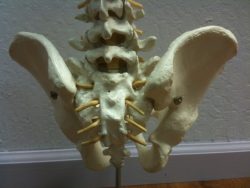
There is a lot of motion in your lower back (lumbar spine) as compared to the four major regions that your spine has. This region carries all the torso weight and in effect, it makes it the spinal area that is injured most frequently.
There is a division of the motion in your lower back between five of your vertebral motion segments (all of which have facet joints that are covered by 2 cartilages and a disc). However, the lower segments (L5-S-1, L4-L5, and L3-L4) have a disproportionate amount of this motion.

You can help your doctors in the accurate identification of the specific cause of your pain by giving a better description of your symptoms when you understand better the pain that you experience owing to motion segment disorders. You should therefore use your EHIC to access appropriate and affordable treatment from them.

Author Bio:

Melody Cleo is a passionate blogger from Manchester, UK. In her free time, she writes articles on various topics such as technology, gadgets, travel…etc. As of now she is focusing on European Health Insurance Card, which provides health insurance services for the European people.

Filed Under: Low Back Pain Tagged With: biology, Chiropractic Care, injuries, low back pain, pain, san leandro chiropractor, spinal motion, your health

Swimming Exercise and Pain Management of a Human Body

March 7, 2012 by drburt

swimming

Swimming Exercise and Pain Management of  a Human Body

This is a guest post by Felicia Baratz-Savage from Eat Breath Blog.

At first, it may seem counter-productive to hit the gym or pool when you experience pain, but science and anecdotal research have shown that exercise may actually help to alleviate pain. While some people are more likely to reach for a painkiller to deal with back pain and others may even go so far as to opt for surgery. Low impact exercise such as swimming is a healthy and enjoyable way to reduce musculoskeletal pain.

The idea that exercise can help to eliminate pain isn’t entirely uncommon. Many people are accustomed to “walking it off” and exercise is one of the main recommendations for a woman who is experiencing pain due to menstrual cramps. It should come as no surprise, then, that exercise can also help to relieve back pain. Because it’s exercise, it can also help strengthen a weak back and, potentially, reduce future pain.

Why is swimming the ideal type of exercise when it comes to pain management? Unlike jogging, weight lifting or other high-impact sports, swimming does not require any twisting or direct stress on your back. There are no hard concrete sidewalks or difficult equipment that can actually increase pain. Swimming relies on fluid motions with less resistance than other sports. Swimming can also help to strengthen muscles to make them less impervious to pain in the future.

Finding a place to swim isn’t difficult either. You can swim in a lake or pond, go to the beach or find a local gym. Some people have above ground pools in their backyards that they can swim in.

Experts especially recommend the front stroke or breaststroke methods for patients who are using swimming as a method of exercise to eliminate back pain and other aches. The common front crawl also offers a pain-free way to strengthen back muscles that can commonly cause pain. However, you can actually do more harm than good by swimming for too long or by using improper form. Consider the following suggestions to maximize pain relief from swimming:

  • Keep your head straight to minimize strain on the neck and twisting the back. Many swimmers over-rotate when taking breaths. The head should remain along the axis of the body.
  • Using wider strokes when performing the breaststroke ensues that the water serves as a cushion while strengthening back muscles in a therapeutic form.
  • The body should remain flat when doing the front crawl. The best form involves strong leg kicks so that the lower body does not drag in the water.
  • Strokes should always remain fluid. Jerky movements can further increase pain and lead to damage to the back or other parts of the body.
  • The sidestroke is ideal for alleviating back pain because it doesn’t require excess amounts of pressure on any part of the body. However, you should always alternate sides to prevent exhausting of and muscle strain. Switching it up also helps swimmers to maintain the sidestroke for longer periods of time.
  • The backstroke can quickly exhaust neck muscles if you don’t consistently practice it. You should take it easy when picking it up once more, or for the first time.

Physical therapists and chiropractors agree that swimming is one way to reduce both current and future pain, and can complement any current pain management program.


Filed Under: Low Back Pain

Sciatica Pain or Subluxated Sacroilliac Joint Pain

August 15, 2011 by drburt

sciatica painLast month I had two patients who came to my clinic because they thought they had sciatica pain. One of the patients has self diagnosed himself and the other patient was diagnosed by a medical doctor. Both of these patients had excruciating pain in their lower back, which radiated down to a lower extremity. It is very common that many patients will wait for their pain to go away with rest, anti-inflammatory and pain medication. As a result, pain symptoms will get worse and get to the point where pain medications will stop working.

The first patient was a male in his early 60’s. He came to my clinic on his crutches. The pain level was so intense that he was not able to support his upper body. The pain would shoot all the way down his right lower extremity past the knee level but did not effect his toes.  After thorough examination it was evident that his right SI (sacroiliac joint) was about 2 inches lower than the left SI joint. All of the nerves that were exiting from sacral foraminas (openings) were very irritated and inflamed. Every time this gentleman would place a load on his legs he would cry and I could see tears of pain on his face. After three sessions of full spine chiropractic adjustment, physical therapy (moist heat and electrical stimulation) and deep tissue massage from my CMT (Certified Massage Therapist) he was completely free of pain. I have recommended him to stop by once or twice a month for maintenance care in order to avoid future flare up and pain.

The second patient was a female in her early 50’s. She has had very similar symptoms as the patient I have mentioned above. Her medical Doctor diagnosed her with sciatica and prescribed her pain medications, which eventually stopped working. The examination finding were very similar to a patient I have mentioned above, except the part that the pain symptoms were on a left side. The pain intensity was so great that it would wake her up at night. The treatment parameters were the same  with addition of stretching to her lower back and some dietary changes. She was also advised on taking more frequent brakes from prolonged sitting that her job required. After 4 sessions she was pain free and was advised on a once a month maintenance care.

Sciatica Pain and Misaligned Sacroiliac Joint are two conditions that can be misdiagnosed or misunderstood by patients and other medical care providers. It takes much longer for a patient with Sciatica nerve entrapment to respond to a care. Often times Sciatic Pain is presented in athletes with intense training. In conclusion I would like to say that it is important to treat the cause of the problem instead of masking it with pain killers and anti-inflammatory medications. The sooner the cause is fixed the faster the road to recovery is.

If you have anything to add to this post, please feel free to Post a comment or share your thoughts through Facebook, Twitter, Google+ or comment section below to join the conversation.

Filed Under: Chiropractic, Low Back Pain Tagged With: biology, chronic pain, Diagnose, general practice, joint, joint pain, low back pain, medicine, nervous system, neurology, nociception, pain, pain medication, pain symptoms, patient, pelvis, sacroiliac joint, sacroiliac joints, sacroilliac, sacroilliac joint, sciatica, sciatica pain, self diagnose

Major Don’ts During Low Back Pain

July 14, 2011 by drburt

LOW BACK PAINEveryone is experiencing lower back pain sooner or later in their lifetime. However, when that time come many sufferers are ready to do anything for the pain to go away. Over the past ten years I have seen people doing all kind of things by an advice of a friend, neighbor or a close relative. My mind was always wondering: “How is that supposed to help a soft tissue injury or misaligned vertebrae?” Some of these recommendations will do more harm to lower back than help. Dr. Orly Avlzur advises to avid the major none professional recommendations.

Bed Rest is not a good idea at all. During prolonged bed rest lower back muscles loose their tone and can lead to a greater pain. Also prolonged supine position can cause loss of lumbar lordosis. One must move around and stretch. That is correct, physical activity is in favor against resting state. Do you remember those days when you get up from a bed and everything is sore in your body. As a day progresses thing seems to get better and the pain level goes significantly down.

People need to learn how to listen to their bodies. It is not recommended to sit up straight during pain with certain lumbar spine conditions. This position can cause an excessive pressure on already pinched lumbar nerve root. Short periods of fetal positioning may help alleviate this pain. Posture has a direct relationship to the health condition of your spine. Read this post – “Why is Posture so Important” and “Stabilizer Muscles’on Role on Role in Injury Prevention.”

People must watch how much they eat. Pendulous Abdominus will cause alteration in a lumbar lordosis and will eventually cause lower back pain. If you are already over weight please consider changing your diet. Getting rid of refined products, white bread and sodas will do good to not only your back but an overall well being.  Weight gain can expedite lumbar disc degeneration.

Some buy shoe orthotics with the hope that it will help the pain. These orthotics only work for rare conditions when one leg is shorter than the other. But for most part they will not resolve lower back pain. I always emphasize to my female patients to avoid frequent use of high hill shoes. They will also increase lumbar lordosis.

Several studies suggest that people who suffer from low back pain actually benefit more from a medium-firm mattress. Why? If a mattress is too firm, it won’t support the body evenly and may cause discomfort at the heaviest points like hips and shoulders. If the mattress is too soft, a sleeper could sink into the bed and have a harder time moving, which could cause stiffness and pain come morning. Having a slightly softer mattress places less compression on your body and may grant you a better night’s sleep. Take a look at this post on how to chose a mattress.

Do not use surgery as the first choice of therapy. Surgery is recommended when a patient is experiencing serious motor or nerve deficit. Many common back problems can be fixed by your local chiropractor. If you are a local Bay Area resident try our facility at San Leandro Chiropractic Clinic. And not everyone that undergoes surgery is happy with the end result. A 2009 survey of almost 1000 consumerreports.org subscribers who had undergone surgery for low back pain found only 60 percent said they were completely or very satisfied with the results of their operation.

While the advice is sound and it’s better to: bend at your knees, not at your waist; lift using your leg muscles; tighten your abdominal muscles; and hold the object close to your body – if you have a known back problem, like a herniated disc, it’s best to avoid strenuous lifting entirely. It’s fairly common for me to see return patients who get into trouble because they continued to lift heavy weights at the gym, moved furniture, or shoveled snow.

If you have anything to add to this post, please feel free to Post a comment or share your thoughts through Facebook, Twitter, Google+ or comment section below to join the conversation.

Filed Under: Advice, Low Back Pain

  • « Previous Page
  • 1
  • …
  • 4
  • 5
  • 6
  • 7
  • 8
  • …
  • 10
  • Next Page »

PLEASE FOLLOW & LIKE B.C.

RSS
Follow by Email
Facebook
Facebook
fb-share-icon
Twitter
Visit Us
Follow Me
Post on X
YouTube
YouTube
LinkedIn
LinkedIn
Share

15200 Hesperian Blvd #104

San Leandro, CA. 94578

(510) 481-2225

drburt@burtchiropractic.com


SEARCH

Categories

Recent Posts

  • Nutrition and Habits That May Support Pineal Gland Health and Reduce Factors Linked to Calcification
  • Fluoride in San Leandro Drinking Water, the Pineal Gland, and Questions About Human Free Will: A Local Holistic Perspective
  • San Leandro Chiropractor: How Expert Care Helps Injured Patients Navigate SDI and EDD Benefits