If you live in San Leandro or the East Bay and you’re dealing with nagging neck pain that radiates into your shoulder, you might be experiencing C4 nerve root impingement. This condition, also known as C4 radiculopathy, can make everyday activities like driving, working at a desk, or even turning your head incredibly uncomfortable. Many local residents find lasting relief through chiropractic care without surgery or heavy medication.
At Burt Chiropractic Rehabilitation Center in San Leandro, we see patients every week struggling with this exact issue. In this comprehensive guide, we’ll explain what C4 nerve root impingement is, its common symptoms, causes, and how targeted chiropractic treatment can help you recover naturally.
What Is C4 Nerve Root Impingement?
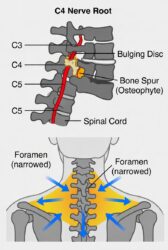
Your cervical spine (neck) consists of seven vertebrae labeled C1 through C7. Nerve roots exit the spinal cord at each level and branch out to supply sensation and muscle control to different parts of the body. The C4 nerve root exits between the C3 and C4 vertebrae. When this nerve becomes compressed or irritated a condition called impingement or radiculopathy — it disrupts normal nerve signaling. This leads to pain, numbness, tingling, or weakness in the areas the nerve supplies.
Unlike lower cervical nerves (like C6 or C7) that send symptoms down the arm and into the fingers, C4 impingement typically produces symptoms higher up — in the neck, upper shoulders, and trapezius region. This “cape-like” distribution across the shoulders is a classic sign.
Common Causes of C4 Nerve Root ImpingementSeveral factors can lead to compression of the C4 nerve root:
- Herniated or bulging discs — The soft inner material of a disc pushes out and presses on the nerve.
- Degenerative changes Bone spurs (osteophytes), arthritis, or facet joint hypertrophy narrow the space where the nerve exits (foramen).
- Poor posture Forward head posture from prolonged phone or computer use is extremely common in the Bay Area.
- Trauma or injury Whiplash from car accidents, sports injuries, or falls.
- Spinal stenosis Narrowing of the spinal canal or foramina due to age-related changes.
- Muscle tension Tight scalene or trapezius muscles can contribute to irritation.
In younger patients, disc herniations are more common. In older adults, degenerative changes and bone spurs tend to be the primary culprits.
Symptoms of C4 Nerve Root ImpingementC4 radiculopathy has a distinctive symptom pattern. Patients often report:
- Deep, aching pain in the lower neck and upper shoulder girdle.
- Sharp or burning pain that may feel like it’s spreading across the shoulders in a “cape” distribution.
- Pain that worsens with neck extension, rotation, or looking upward.
Sensory Changes
- Numbness or tingling in the upper shoulders and trapezius area.
- A pins-and-needles sensation that doesn’t always travel far down the arm.
Muscle Weakness
- Difficulty with shoulder elevation or shrugging (involving the trapezius and levator scapulae muscles).
- Fatigue or heaviness in the shoulders and upper back.
- In more severe cases, subtle weakness in neck stabilization.
Other Associated Symptoms
- Headaches, especially at the base of the skull.
- Muscle spasms in the neck and upper back.
- Reduced range of motion in the neck.
- Sleep disturbance due to discomfort when changing positions. aafp.org
Many patients describe the pain as constant but fluctuating in intensity. Activities like driving, carrying bags on the shoulder, or even deep breathing can aggravate symptoms. Why Accurate Diagnosis MattersC4 symptoms can overlap with other conditions such as shoulder impingement, rotator cuff problems, or even thoracic outlet syndrome. A thorough examination by an experienced San Leandro chiropractor includes:
- Orthopedic and neurological testing.
- Range of motion assessment.
- Palpation of the cervical spine.
- Review of posture and daily habits.
- Referral for imaging (X-ray, MRI) when necessary.
How Chiropractic Care Helps C4 Nerve Root Impingement
Chiropractic treatment focuses on addressing the root cause restoring proper alignment, reducing nerve compression, and improving function rather than just masking symptoms.
Common Techniques Used:
- Gentle Cervical Adjustments — Specific, low-force manipulations help restore normal joint motion and take pressure off the C4 nerve root.
- Spinal Decompression Therapy — A gentle traction technique that creates more space in the cervical foramina, allowing the nerve to breathe.
- Soft Tissue Therapy — Trigger point release, myofascial release, and massage to relax tight muscles that may be contributing to compression.
- Corrective Exercises — Strengthening deep neck flexors and scapular stabilizers while improving posture.
- Postural Correction & Ergonomic Advice — Practical tips for your workstation, phone use, and sleeping position.
Studies and clinical experience show that many patients with cervical radiculopathy experience significant improvement with conservative care, including chiropractic adjustments, often within weeks.
What to Expect During Treatment
Most patients begin noticing relief within the first few visits, with progressive improvement over 4–8 weeks. Treatment plans are customized based on severity, duration of symptoms, and individual goals. At Burt Chiropractic in San Leandro, we combine hands on care with home exercises and lifestyle modifications. Our goal is not only to reduce your current pain but also to prevent recurrence.
Prevention Tips for San Leandro Residents
- Maintain good posture while commuting on BART or driving.
- Take regular breaks from desk work (follow the 20-20-20 rule).
- Strengthen your neck and upper back with simple daily exercises.
- Use a supportive pillow that maintains neutral neck alignment.
- Stay active with low-impact activities like walking or swimming.
When to Seek Help
Don’t wait until symptoms become severe. See a chiropractor promptly if you experience:
- Persistent neck and shoulder pain lasting more than a few days.
- Numbness, tingling, or weakness in the shoulders/arms.
- Pain that interferes with sleep or daily activities.
- Symptoms following a car accident or injury.
Early intervention often leads to faster, more complete recovery and helps avoid chronic issues. Find Relief with a Local San Leandro Chiropractor. Living with C4 nerve root impingement is unnecessary when effective, natural solutions are available right here in San Leandro. Chiropractic care offers a safe, non-invasive path to recovery by addressing the underlying mechanical problems in your neck. If you’re tired of dealing with neck and shoulder pain, we invite you to schedule a consultation at Burt Chiropractic Rehabilitation Center. Dr. Eduard Burt and our team have helped hundreds of East Bay residents overcome similar conditions and return to the active lifestyles they love. Call (510) 481-2225 today or visit burtchiropractic.com to book your appointment.