
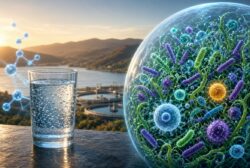
Residents of San Leandro, California, enjoy high-quality drinking water delivered by the East Bay Municipal Utility District (EBMUD). Like most major U.S. water systems, EBMUD disinfects its supply to protect public health. The residual disinfectant used throughout much of the East Bay, including San Leandro, is chloramine formed by combining chlorine with ammonia rather than free chlorine alone. Recent system data show chloramine levels commonly in the range of roughly 2.5–3.9 mg/L at treatment plants serving the region, with the Upper San Leandro plant among the facilities that treat water for local customers when online.
This disinfection step has virtually eliminated waterborne diseases such as cholera and typhoid that once plagued communities. Yet many people wonder how residual chlorine or chloramine and the disinfection byproducts (DBPs) that form during treatment interact with the body’s internal “biodome” the complex ecosystem of trillions of microorganisms, especially the gut microbiome, that plays a central role in immune function, metabolism, and overall health.
Understanding San Leandro’s Water Treatment Approach
EBMUD sources water primarily from the Mokelumne River watershed and local reservoirs, treating it at several plants, including the historic Upper San Leandro Water Treatment Plant. The utility conducts tens of thousands of tests annually and consistently meets or exceeds state and federal standards. Chloramine is preferred over free chlorine in many California systems because it is more stable, maintains a residual farther into the distribution network, and generally produces lower levels of certain regulated DBPs such as trihalomethanes. Customers occasionally notice changes in taste or a more noticeable “chlorine” character when source water or plant operations shift seasonally. These aesthetic differences do not indicate unsafe water; residual disinfectant is intentionally present to prevent bacterial regrowth in pipes. Sodium hypochlorite is also used at San Leandro’s wastewater treatment facilities for effluent disinfection before discharge, but that process is separate from the potable supply that reaches household taps.
The Body’s Biodome: Microbiome and Immune Crosstalk
The human body functions as a living biodome. The gut microbiome bacteria, archaea, viruses, and fungi living primarily in the intestines helps train immune cells, produce short-chain fatty acids that strengthen the gut barrier, regulate inflammation, and even influence systemic immunity. A diverse, balanced microbiome supports resilience against pathogens and may reduce the risk of certain chronic inflammatory conditions. Disruptions to this ecosystem (dysbiosis) have been linked in research to altered immune responses. Because drinking water reaches the gastrointestinal tract daily, residual disinfectants and DBPs theoretically could interact with this microbial community. Chlorine and chloramine are oxidants designed to kill or inactivate microbes in water. At the low residual concentrations found in treated tap water, the effect on a healthy adult microbiome appears limited, but scientific inquiry continues.
What Research Shows About Chlorinated Water and the Microbiome/Immune System
Studies present a nuanced picture. A randomized trial in Bangladesh found that chlorinated drinking water did not substantially disrupt the overall diversity or abundance of gut bacteria in young children. In fact, some beneficial bacteria increased, and the intervention reduced diarrhea and antibiotic use outcomes that themselves support healthy microbiome development.
Animal studies have reported more noticeable shifts. Mice given chlorinated water showed reduced alpha-diversity (species richness within a sample) and changes in the relative abundance of certain taxa, including increases in some Lactobacillus and Akkermansia strains and decreases in others. Researchers suggest these shifts may relate to stress responses in the microbial community rather than wholesale destruction. Some work has also examined disinfection byproducts and observed potential effects on macrophage (immune cell) function at concentrations far higher than those in drinking water.
Acute human exposure studies, such as swimming in chlorinated pools, have documented temporary changes in circulating immune markers (cytokines and chemokines). These changes appear linked to both physical activity and DBP exposure, making attribution complex. Older high-dose animal toxicology studies found immune parameter alterations only at chlorine levels many times higher than municipal residuals. Importantly, residual chlorine itself dissipates or reacts once water is ingested and mixes with the rich organic environment of the gut. Most residual disinfectant is neutralized before it can exert strong antimicrobial pressure deep in the intestinal tract. The greater theoretical concern for some researchers involves chronic low-level exposure to certain DBPs and their possible subtle effects on immune cell function or microbial composition over years.
Practical Considerations for San Leandro Residents
For the vast majority of healthy people in San Leandro, EBMUD water remains an excellent, safe choice. The public-health benefits of disinfection far outweigh theoretical risks at regulated residual levels. People with specific concerns those with compromised immune systems, very young infants, or individuals seeking to minimize any oxidant exposure often choose additional home treatment. Effective options include:
- Certified activated carbon filters (look for NSF/ANSI standards that address chlorine/chloramine). Catalytic carbon performs better against chloramine.
- Reverse-osmosis systems that remove a broad range of contaminants, including residual disinfectant and many DBPs.
- Letting water stand in an open container allows free chlorine to off-gas, though chloramine is more persistent and benefits less from this simple step.
Whole-house filtration can protect plumbing and reduce exposure during bathing as well, though shower steam inhalation of volatiles is a separate consideration from drinking-water intake. Supporting the body’s biodome through diet remains one of the most powerful levers available. A fiber-rich diet featuring diverse plant foods, fermented foods, and limited ultra-processed items helps maintain microbial diversity regardless of water source. Adequate sleep, stress management, and physical activity further reinforce immune resilience.
Balancing Protection and Ecosystem Health
Chlorination (and chloramination) represents one of the greatest public-health achievements of the modern era. In San Leandro and across the East Bay, it delivers water free of the pathogens that historically caused widespread illness. At the same time, growing scientific interest in the microbiome and immune interactions encourages ongoing research into the lowest effective residual doses, alternative disinfection strategies, and the long-term ecological effects of DBPs.Residents can stay informed by reviewing EBMUD’s annual water quality reports and real-time data posted online. Those with medical conditions that warrant extra caution should consult healthcare providers about filtration choices tailored to their needs.The relationship between municipal chlorinated water and the human biodome immune system is not a simple story of harm or absolute safety. It is a story of carefully managed trade-offs that have saved countless lives while inviting continued scientific refinement. For San Leandro households, the practical takeaway is clear: the water from the tap is safe and reliable. Thoughtful filtration and lifestyle habits that nurture microbial diversity offer additional layers of support for anyone who wants to optimize the internal ecosystem that underpins immune health.By understanding both the necessity of disinfection and the emerging science of the microbiome, East Bay residents can make informed choices that protect public health without overlooking the intricate biodome living inside each of us.