
Best Sleeping Positions
The goal is a neutral spine—head, neck, and back aligned with natural curves supported, without twisting, excessive arching, or collapsing.
1. Side sleeping (often best for lower back pain)
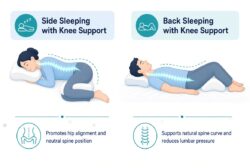
Lie on your side with knees slightly bent. A gentle fetal position works well for many. Place a firm pillow or folded towel between your knees and ankles. This keeps your hips stacked, prevents the top leg from pulling your pelvis forward, and reduces rotational stress on the lower back.
For the neck: Use a pillow that fills the gap between your ear and the mattress. This keeps your head level with your spine—not tilted up or down. Avoid tucking your chin. A body pillow hugged in front can help maintain the position through the night.
2. Back sleeping (excellent for both lower back and neck)
Lie on your back with a pillow or rolled towel under your knees. This slight bend takes pressure off the lumbar spine and supports its natural curve.
For the neck: Use a thinner or contoured cervical pillow that supports the natural curve without pushing your head forward. Avoid stomach sleeping whenever possible. It forces your neck into prolonged rotation and flattens or arches the lower back, increasing strain on both areas. Transition gradually by using a body pillow to discourage rolling onto your stomach.
Pillow and Mattress Tips
- Pillow height and firmness matter more than brand. Side sleepers generally need higher loft to bridge the shoulder-to-ear gap. Back sleepers need lower loft to keep the neck neutral. Contoured or cervical-support pillows often help neck pain.
- Mattress: Medium-firm is frequently recommended for spinal support. Too soft allows hips and shoulders to sink and create misalignment; too firm can create pressure points. If your mattress is old and sagging, it may be contributing to morning pain.
- Extra support options: A small rolled towel under the lower back (for some back sleepers) or along the waist (if there’s a gap while side sleeping) can help. Test what feels supportive without increasing discomfort.
Additional Habits for Better Nighttime Relief
- Prepare before bed: Gentle stretches (hip flexors, hamstrings, or light knee-to-chest), a warm shower or heat pack to relax muscles, or brief relaxation breathing can ease tension. Avoid intense exercise right before sleep.
- Consistent routine: Go to bed and wake at regular times. Keep the room cool and dark.
- Daytime posture carries over: Poor sitting or standing posture during the day loads the same structures that bother you at night. Simple awareness and breaks help.
- After a chiropractic adjustment, prioritize neutral positions (especially back or properly supported side sleeping) to allow the spine to settle.
When to Seek Professional Help
These tips help many people reduce nighttime discomfort, but they are not a substitute for personalized care. Persistent or worsening pain that radiates into the arms or legs, numbness, weakness, or sleep disruption that affects daily life should be evaluated. A thorough exam can identify contributing factors such as joint restrictions, muscle imbalances, disc issues, or posture habits. At a chiropractic office, we assess spinal alignment, advise on sleep setups tailored to your body and preferred position, and provide adjustments that support better rest. Local patients often notice improved sleep quality once underlying mechanical issues are addressed. Small nightly changes—position, pillow placement, and supportive bedding—can make a noticeable difference in how you feel when you wake up. Start with one adjustment, such as adding a knee pillow if you side-sleep, and build from there. Better spinal alignment at night supports healing and helps you start the day with less pain. If lower back or neck pain is interfering with your sleep, consider consulting a chiropractor for individualized recommendations. Rest well—your spine will thank you.