
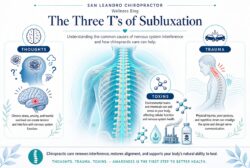
Your nervous system is the master control network of your body. It coordinates every function, from breathing and digestion to movement, immunity, and even your emotional responses. When this system operates without interference, you experience better energy, clearer thinking, stronger resilience, and overall wellness. When interference occurs, however, the body struggles to adapt and heal optimally. Chiropractors often refer to this interference as a vertebral subluxation a misalignment or improper motion of the spine that can irritate or compress nearby nerves. Understanding the root causes of subluxation helps patients take proactive steps toward lasting health. At the heart of this discussion are the “Three T’s”: Thoughts, Trauma, and Toxins. These three categories represent the primary stressors that can disrupt nervous system function and lead to subluxations. A knowledgeable San Leandro chiropractor can help you identify how these factors affect your body and guide you toward effective correction and prevention.
What Is a Subluxation and Why Does It Matter?
A subluxation is more than a simple “bone out of place.” It involves altered spinal biomechanics, muscle imbalance, inflammation, and neurological interference. Because the spine houses and protects the spinal cord the main highway of nerve signals any disruption can affect organ function, pain perception, posture, and the body’s ability to regulate itself (a process known as homeostasis).
Patients in San Leandro and the greater East Bay often seek chiropractic care for back pain, neck stiffness, headaches, or fatigue. Yet the underlying issue frequently traces back to one or more of the Three T’s accumulating over time. Addressing only the symptom without understanding the cause limits long-term results. Education about Thoughts, Trauma, and Toxins empowers patients to partner with their chiropractor for comprehensive care.
The First T: Thoughts (Mental and Emotional Stress)
Thoughts encompass the mental and emotional stressors of daily life. Chronic worry, work pressure, relationship challenges, financial concerns, and even the constant stimulation of modern digital life activate the body’s stress response. When the sympathetic nervous system stays in “fight-or-flight” mode for prolonged periods, muscle tension increases particularly in the neck, shoulders, and lower back. This sustained tension can pull vertebrae out of optimal alignment and create subluxations.
Stress hormones such as cortisol and adrenaline, when elevated long-term, also influence inflammation and immune function. Many San Leandro residents juggle commuting, demanding jobs, family responsibilities, and community life. These accumulated mental loads often manifest physically as tight upper traps, forward head posture, or mid-back tightness. Over time, the resulting spinal stress interferes with nerve communication, potentially contributing to headaches, digestive issues, sleep disturbances, or heightened pain sensitivity.
Chiropractic adjustments help restore proper spinal motion and reduce nerve irritation, allowing the nervous system to shift toward a more balanced parasympathetic (rest-and-digest) state. Patients frequently report feeling calmer and more centered after consistent care, illustrating the powerful mind-body connection. Combining adjustments with stress-management strategies mindful breathing, adequate sleep, and healthy boundaries further supports nervous system recovery.
The Second T: Trauma (Accidents, Injuries, and Posture)
Trauma refers to physical forces that overwhelm the body’s structural integrity. This includes obvious events such as car accidents, sports injuries, falls, or lifting mishaps, as well as the quieter, repetitive trauma of poor posture and daily habits.
In a place like San Leandro, where many people drive regularly, sit at desks, or engage in physical work, micro-traumas accumulate. Forward head posture from smartphone use, rounded shoulders from computer work, and prolonged sitting all place uneven stress on spinal discs, ligaments, and joints. Even a minor fender-bender can create residual misalignments that the body compensates for over months or years.
These physical stressors alter spinal curves and joint motion. When vertebrae lose their normal relationship, the surrounding soft tissues tighten or weaken, and nerve signals become distorted. The result may be localized pain, radiating symptoms, reduced range of motion, or compensatory patterns that affect other areas of the body.
A skilled San Leandro chiropractor evaluates posture, spinal alignment, and movement patterns to detect these effects. Gentle, precise adjustments restore proper motion, reduce inflammation, and support the body’s innate healing capacity. Rehabilitation exercises and ergonomic advice help patients prevent re-injury and maintain healthier posture in everyday activities whether sitting in traffic on the 880, working from home, or enjoying local outdoor recreation.
The Third T: Toxins (Chemical and Environmental Stressors)
Toxins represent the chemical burdens the body encounters through diet, environment, and lifestyle. Processed foods, excess sugar, alcohol, environmental pollutants, household chemicals, and even certain medications can create internal stress. The body must constantly detoxify and neutralize these substances, placing extra demand on the liver, kidneys, lymphatic system, and, indirectly, the nervous system.
When toxic load is high, inflammation rises and cellular function declines. Muscles may become more prone to tightness, joints more irritable, and the nervous system more sensitive. Some toxins can directly affect nerve tissue or disrupt the gut-brain axis, further influencing mood, energy, and pain perception. Over time, this internal stress contributes to the same spinal and neurological interference seen with Thoughts and Trauma.
Supporting the body through cleaner nutrition, adequate hydration, quality sleep, and reduced exposure to unnecessary chemicals lessens this burden. Chiropractic care complements these efforts by optimizing nerve function so the body’s regulatory and detoxification systems can operate more efficiently. Many patients notice improved energy, clearer thinking, and better resilience once both structural and chemical stressors are addressed.
How the Three T’s Interact and Why Chiropractic Care Helps
Thoughts, Trauma, and Toxins rarely act in isolation. Chronic stress (Thoughts) tightens muscles and worsens posture (Trauma). Poor posture and injuries increase inflammation, which is amplified by dietary toxins. The cumulative effect is a nervous system under constant demand, increasing the likelihood of subluxations and reduced adaptability.
Chiropractic care focuses on detecting and correcting vertebral subluxations to remove interference and allow the nervous system to function at its best. Regular adjustments, combined with patient education on the Three T’s, create a foundation for sustainable health. Residents of San Leandro benefit from localized, personalized care that considers the unique demands of East Bay living commuting patterns, work environments, recreational activities, and community stressors.
Beyond pain relief, many patients experience improved sleep, enhanced immune response, better focus, and greater overall vitality. These outcomes reflect a nervous system free to coordinate the body’s innate healing intelligence.
Taking the Next Step Toward Nervous System Health
Understanding the Three T’s of subluxation Thoughts, Trauma, and Toxins gives you practical insight into why your body may feel “off” even when no single major injury has occurred. These everyday stressors accumulate, and addressing them at the neurological level through chiropractic care offers a proactive path forward.
If you live in San Leandro or the surrounding area and want to support your nervous system health, schedule a thorough evaluation with a local chiropractor experienced in identifying and correcting subluxations. Education, precise adjustments, and lifestyle guidance form a powerful combination for reducing interference and helping you feel and function at your best.
Your nervous system works tirelessly on your behalf every second of every day. Giving it the support it needs through awareness of the Three T’s and quality chiropractic care is one of the most valuable investments you can make in long-term wellness